
Next18: Compact Decoder Interface for Digital Model Railways
What does Next18 mean, how do Next18 and Next18-S differ and which locomotive, function or sound decoder suits your vehicle? This guide explains the standard, installation, gauges, functions and product selection clearly.
18 Contacts
Understanding NEM 662
What Is a Next18 Interface?
Next18 is a particularly compact electrical connection between the locomotive circuit board and a digital decoder. The vehicle has a socket, while the decoder is inserted using a matching connector. A total of 18 contacts are available for the track connections, motor, lighting, function outputs and additional connections.
The interface was developed for models with limited installation space. It is therefore particularly common in Gauge N, Gauge TT, small H0 locomotives and individual narrow-gauge vehicles in H0e and H0m. The vehicle description or operating instructions state whether a specific model actually has Next18.
Next18 is not a digital protocol. The interface describes the mechanical and electrical connection. Depending on its design, the decoder may process DCC , Motorola, Selectrix or several protocols. The command station, decoder and required functions must therefore remain compatible.
Compared with permanently soldered decoders, the plug-in connection makes replacement easier. However, it does not prevent an unsuitable product from being selected. The dimensions, output capacity, sound equipment, function outputs and vehicle circuit board must all be checked before installation.





Connector, installation space and functions
Technical Differences Between Next18 and Next18-S
Both versions use the compact 18-pin connection. The main differences concern the intended installation space and the contact assignment for sound or additional function outputs.
Why Does Not Every Decoder Fit Despite Using the Same Connector?
The interface does not automatically define the decoder's output ratings. A particularly small decoder may have a lower permitted motor current than a larger model. The number of amplified function outputs, RailCom support, analogue operation, braking sections and programming options may also differ.
With Next18-S, two contacts are used for the loudspeaker. On a version without sound, those contacts may serve other auxiliary functions. A vehicle prepared specifically for Next18-S should therefore be equipped with a suitable sound decoder.
Compact comparison
Compare Next18 with Other Decoder Interfaces
The number of contacts alone does not determine the quality or range of functions. The interface fitted to the vehicle and the electrical functions provided by its circuit board are decisive.
| Interface | Typical Application | Sound | Special Feature | Suitable Guide |
|---|---|---|---|---|
| Next18 | N, TT, small H0 and compact narrow-gauge models | Next18-S version | Very compact 18-pin plug-in connection | This overview |
| NEM 651, 6-pin | Older and simpler N- and TT-gauge vehicles | Only with additional wiring | Few connections and clearly limited functions | NEM 651 Explained |
| NEM 652, 8-pin | Many older H0 locomotives | Depends on the decoder | Classic wired plug with limited functions | 8-Pin Interface |
| PluX16 | H0 and individual TT vehicles | Possible | More functions and a defined circuit-board arrangement | PluX16 Explained |
| 21MTC | Mainly extensively equipped H0 models | Frequently | Broad range of functions with a greater space requirement | All Interfaces |
Digitisation without unnecessary risk
Install and Test a Next18 Decoder Correctly
Work with the power switched off, without force and preferably according to the vehicle manufacturer's instructions. Sensitive spring contacts and components may be damaged by tilting, unsuitable tools or electrostatic discharge.
Identify the Interface
Check the packaging and instructions for Next18 or Next18-S. Do not rely solely on the size of the socket.
Open the Body
Remove the body according to the manufacturer's instructions. Record or photograph the position of the wires and analogue plug.
Remove the Blanking Plug
Pull the analogue plug straight out of the socket. Avoid levering, twisting or tilting it sideways.
Insert the Decoder
Align the connector and installation space, then press the decoder evenly and carefully into the interface.
Insulate It Electrically
The decoder must not touch metal components. Suitable thin insulation must not obstruct heat dissipation.
Use the Programming Track
Read the decoder on the programming track first. A fault can be detected more safely there than during normal layout operation.
Check the Functions
Test the direction of travel, front and tail lights, auxiliary functions and, on sound decoders, the loudspeaker and sound sequences.
Refit the Body
Route the wires without tension. The decoder, loudspeaker and components must not be crushed when the body is refitted.
Initial Function Test
Technical check before the vehicle is fully reassembled
If the locomotive does not move, switch off the track voltage immediately. Check the decoder position, possible short circuits, bent contacts and permitted motor load. Repeated starting attempts may make an existing fault worse.
Locomotive, function or sound decoder
Which Next18 Decoder Fits My Model?
The Interface Is Only the First Selection Criterion
A locomotive decoder controls the motor, lighting and additional functions. A function decoder is intended for coaches, control cars or vehicles without their own traction motor. A sound decoder adds digitally stored sounds to the motor control and functions.
With a universal locomotive decoder, the motor current, dimensions, digital format and outputs must be suitable. Vehicle-specific sound decoders are additionally matched to a particular prototype, the fitted circuit board and a suitable loudspeaker. A locomotive class stated in the product name is therefore an important indication.
Multiprotocol decoders are suitable for layouts on which different data formats are used. A DCC-only decoder may be the right choice when the entire layout is operated consistently with DCC. Information about the formats is available in the digital protocol comparison .
Selection by typical application
Next18 Decoders and Adapters for Several Gauges
Next18 does not belong to a single gauge. The following groups are based on the product designations and typical applications. On the respective product page, also check the interface version, dimensions, current capacity, protocols and vehicle assignment.
Universal Digital Technology
Next18 Decoders, Adapter Boards and Connection Solutions
These products support general conversions, test setups or connections between different decoder and circuit-board interfaces.
Locomotive Decoder
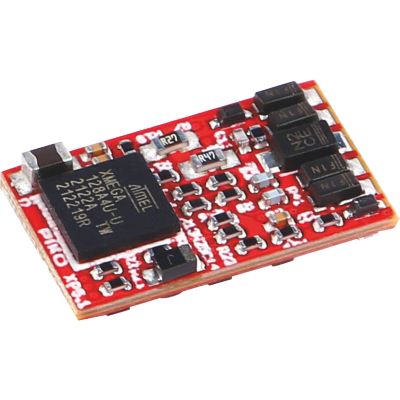
PIKO 46502 PSD XP 5.1 Next18
Compact multiprotocol decoder for universal digitisation projects.
View Product
Adapter Board
ESU 51999 Next18 Adapter
Adapter board for clearly arranged wiring of several function outputs.
View Product
Adapter Cable
ESU 51993 Next18 Adapter Cable
Next18 socket with open wires for individual conversions.
View Product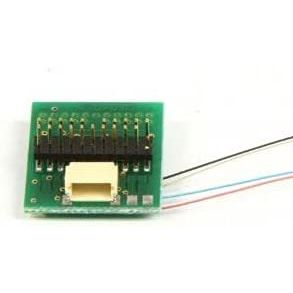
Test Adapter
Uhlenbrock 31040 Interface Adapter
Practical connection for several common decoder interfaces.
View ProductCompact 1:160 Models
Next18 for Gauge N
Installation space is particularly restricted in Gauge N. In addition to the length and width, the decoder height should therefore be checked carefully.

Gauges N and TT
ESU 58928 LokSound 5 Nano
Compact DCC sound decoder with Next18 and a loudspeaker.
View Product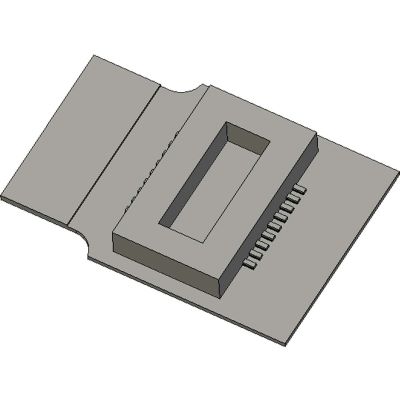
Gauge N
ESU 53956 Next18-MTC14 Adapter
Flexible adapter solution for selected compact N-gauge vehicles.
View Product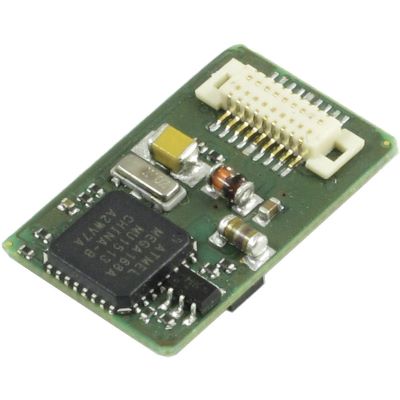
Gauges N and TT
Lenz 10318-01 Silver+ Next18
Compact locomotive decoder for vehicles according to NEM 662.
View Product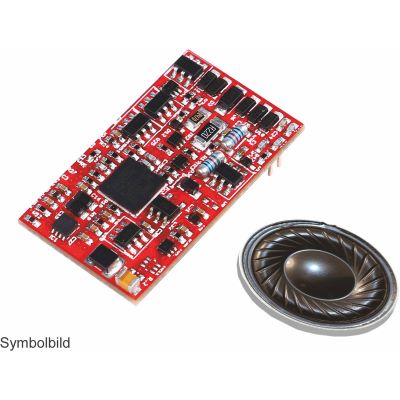
Gauge N
PIKO 46520 Sound Decoder NS 1200
Vehicle-specific Next18 sound decoder including a loudspeaker.
View Product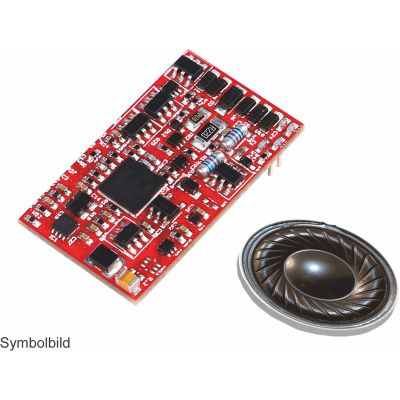
Gauge N
PIKO 46526 Sound Decoder VT 798
Next18 sound solution for the PIKO N-gauge railbus.
View ProductDigital Technology in 1:120 Scale
Next18 Locomotive and Sound Decoders for Gauge TT
TT combines limited installation space with detailed vehicles and extensive digital functions. Next18 and Next18-S are therefore widely used in modern TT designs.
Gauges TT and N
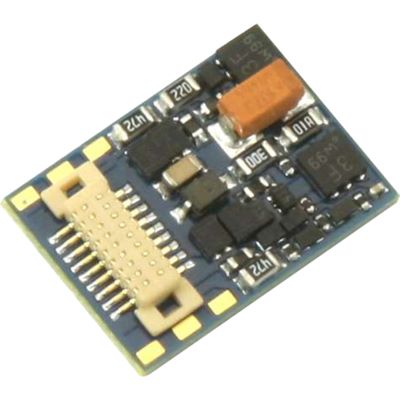
ESU 59818 LokPilot 5 micro
Multiprotocol decoder with Next18 for compact vehicles.
View Product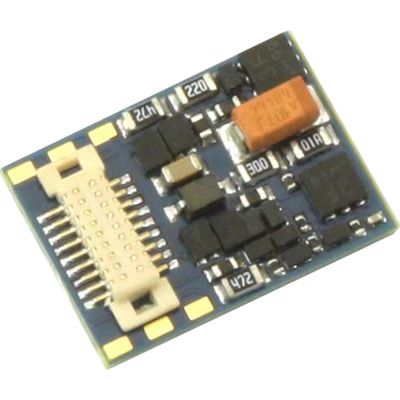
Gauges TT and N
ESU 59828 LokPilot 5 micro DCC
Compact Next18 decoder for consistent DCC operation.
View Product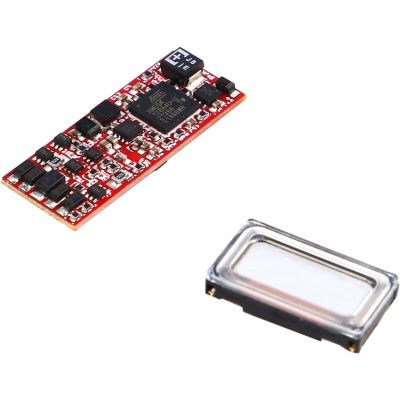
Gauge TT
PIKO 46540 Sound Decoder Class 55
Matched Next18 sound equipment including a loudspeaker.
View Product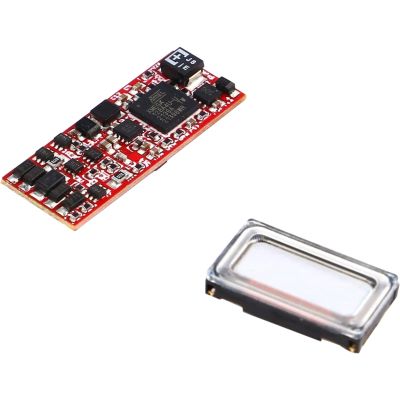
Gauge TT
PIKO 46541 Sound Decoder TGK2
Vehicle-specific decoder for the compact shunting locomotive.
View Product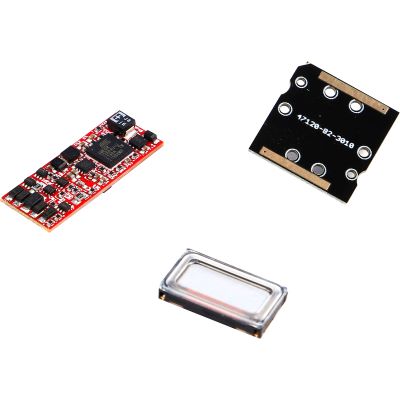
Gauge TT
PIKO 46550 Sound Decoder Class 83.10
Sound project and loudspeaker for the TT-gauge steam locomotive.
View Product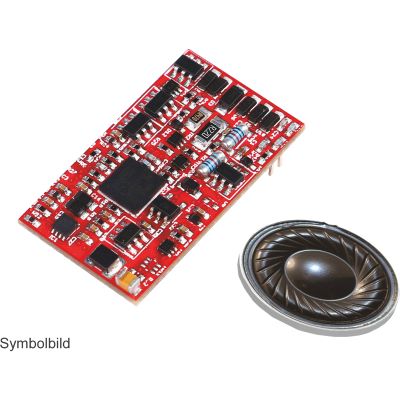
Gauge TT
PIKO 46551 Sound Decoder Class 93
Complete Next18 sound solution for a suitable PIKO model.
View Product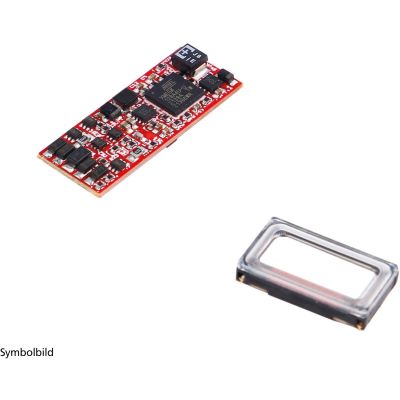
Gauge TT
PIKO 46555 Sound Decoder Classes 243/212
Next18 sound decoder for selected TT electric locomotives.
View Product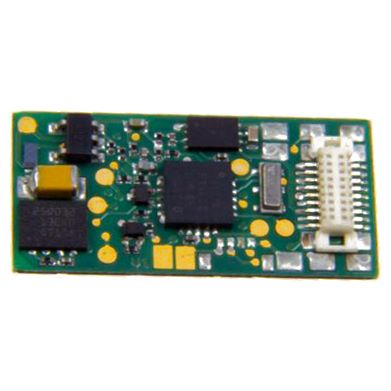
N, TT, H0e and H0m
Uhlenbrock 33334 IntelliSound 6
Compact Next18 sound decoder for several small gauges.
View Product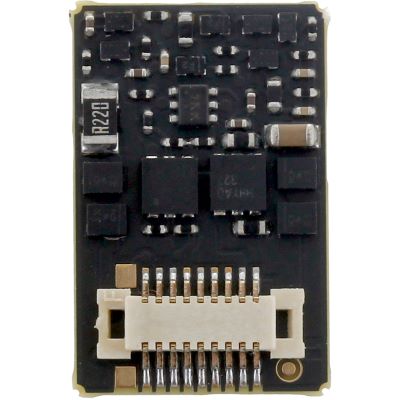
Gauge TT
Tillig 66039 Next18 Decoder
Plug-in decoder for suitable Tillig vehicles with Next18.
View ProductSmall H0 and Narrow-Gauge Vehicles
Next18 in H0, H0e and H0m
Larger interfaces are frequently used in H0. Next18 is nevertheless useful in compact locomotives, railcars and narrow-gauge vehicles when little installation space is available.
Compact H0
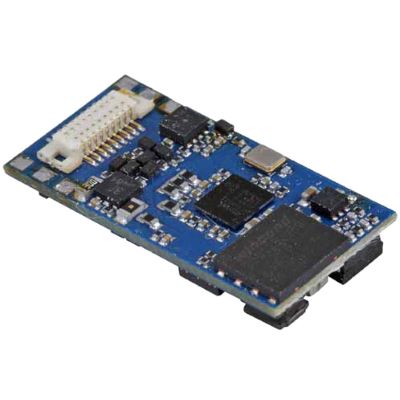
ESU 58818 LokSound 5 micro
High-performance micro sound decoder for suitable Next18 vehicles.
View Product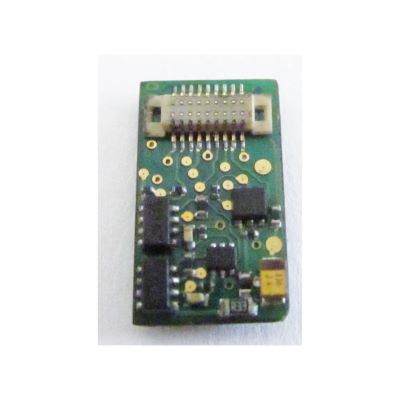
Gauge H0
PIKO 46402 Next18 Locomotive Decoder
Compact plug-in decoder for prepared PIKO vehicles.
View Product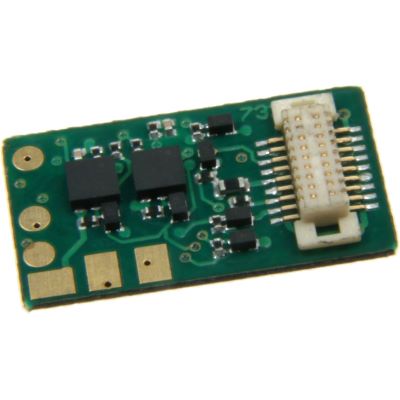
Gauge H0
Uhlenbrock 73236 ID2 Decoder
Next18 locomotive decoder for compact digital vehicle conversions.
View Product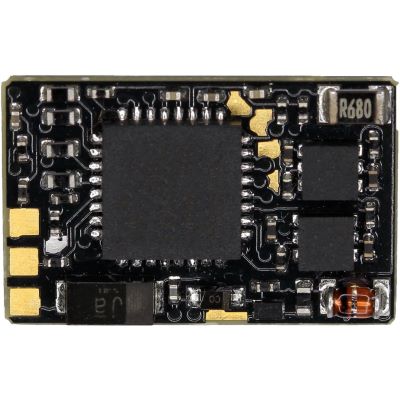
Gauge H0
Tillig 66038 ELNA Decoder
Vehicle-specific Next18 digitisation solution for the ELNA model.
View Product
Answers before purchase and installation
Frequently Asked Questions about the Next18 Interface
The most important questions can be answered using a few basic rules. The technical information for the respective vehicle, decoder and loudspeaker remains binding.
What does Next18 mean on a model railway?
Next18 describes an 18-pin plug-in connection between the locomotive circuit board and a digital decoder. It carries the track voltage, motor connections, lighting and additional functions in a small space.
Is Next18 the same as DCC?
No. Next18 is the interface, whereas DCC is a digital data format. Depending on the product, a Next18 decoder may support DCC or additional protocols.
What is the difference between Next18 and Next18-S?
Next18 is intended for decoders without a sound connection. Next18-S uses contacts for the loudspeaker and allows a larger installation space for a suitable sound decoder.
Can I insert a Next18 decoder the wrong way round?
The compact design and intended installation space assist with orientation. Nevertheless, the decoder must never be inserted with force. Follow the instructions and note the original position of the blanking plug.
Does Next18 fit every N-gauge locomotive?
No. N-gauge vehicles may have different interfaces, a permanently soldered decoder or no digital preparation. The decoder dimensions and output ratings must also suit the model.
Can an analogue Next18 locomotive be digitised?
Yes. The analogue blanking plug is normally removed and replaced with a suitable locomotive or sound decoder. The interface, installation space and motor current must be checked first.
Do I need a loudspeaker with a sound decoder?
Yes. Some products already include a loudspeaker, while others do not. The dimensions, impedance, installation position and sound enclosure must suit the locomotive and decoder.
How many functions does Next18 support?
The standard provides for several lighting and function connections. Not every decoder or vehicle circuit board uses all the available options. The respective connection diagrams are decisive.
Can I replace Next18 directly with PluX16?
No. The shape, number of contacts and pin assignment are different. Replacement is only possible using a suitable adapter solution or a more extensive conversion.
What should I do if the locomotive does not move after installation?
Switch off the power and check the decoder, contacts, installation position and possible short circuits. Then test it on the programming track. When uncertain, have the installation checked professionally.
Does a Next18 decoder also work in analogue mode?
Many decoders support analogue direct-current operation, but not necessarily every operating mode. The analogue function may also be disabled in the settings. Consult the decoder manual.
Which gauges use Next18?
Next18 is particularly common in N and TT. It is also used in compact H0, H0e and H0m vehicles. Larger decoders are normally used in Gauges 0, 1 and G because of the higher output requirements.
From Next18 to Every Digital Model Railway Topic
Discover more explanations about digital protocols, locomotive decoders, sound, command stations, gauges, layout planning and model railway technology in the central guide overview.