1
Switch on the command station
The digital command station generates the SX track signal and supplies the layout through its internal booster or an additional booster.

Selectrix controls locomotives, turnouts, signals and feedback modules through a rapidly updated digital system. The format is especially well known in N scale. Modern multi-protocol decoders also allow it to be used in TT, H0, 0 scale and large-scale model railways.
Selectrix is a digital control system for model railways. It was originally developed for Trix and is especially closely associated with Minitrix and N scale. The abbreviation SX refers both to the digital track signal and to the data bus through which controllers, occupancy detectors, switching decoders and other layout modules exchange information.
A digital command station continuously transmits data packets through the track. Each locomotive decoder responds to its configured address and converts the transmitted commands into speed, direction of travel, lighting or additional functions. At the same time, the SX bus can communicate the status of turnouts, push buttons and feedback modules to other devices.
A characteristic feature is the cyclic and uniform transmission of system information. Response times therefore remain predictable even when many vehicles and layout modules are involved. Selectrix has consequently been used not only for driving trains, but also for feedback, block operation and computer control.
N scale locomotives provide very little installation space. Early Selectrix decoders were comparatively compact while still providing load-regulated, smooth driving characteristics. This made the system attractive for small vehicles. Today, many multi-protocol decoders support DCC, Motorola or M4 in addition to SX.
Selectrix remains relevant for existing layouts. Many SX components operate reliably and can be supplemented with suitable multi-protocol command stations. When building a completely new layout, consider which new decoders, feedback modules and controllers will be required in the long term. DCC now offers the broader cross-manufacturer range, while Selectrix remains important for existing SX buses and older vehicle collections.
A Selectrix layout can include a command station, handheld controllers, boosters, turnout decoders, occupancy detectors, feedback modules, a computer interface and vehicle decoders. The complete layout concept should therefore always be considered before individual components are replaced.
Selectrix does not control trains alone. The SX bus can also carry switching commands and feedback information for an entire model railway layout.
A classic SX locomotive does not register automatically. The command station and decoder must use the same address and matching format.
The digital command station generates the SX track signal and supplies the layout through its internal booster or an additional booster.
Assign the decoder an unused SX1 or SX2 address. Duplicate addresses would cause several vehicles to respond together.
With a multi-protocol decoder, specify whether the vehicle is to operate under SX1, SX2 or another digital format.
The command station continuously transmits the address, speed step, direction and functions through the track to the vehicle decoder.
Load regulation compares the requested speed with the motor’s actual behaviour and adjusts the motor control accordingly.
Occupancy detectors and switching modules can communicate their status through the SX bus to controllers, control panels or a computer.
SX2 expands the capabilities of the original Selectrix format. Multi-protocol command stations can additionally integrate vehicles using other digital systems.
| Format | Speed steps | Addresses | Typical strength |
|---|---|---|---|
| Selectrix 1 | 31 speed steps | 100 locomotive addresses with current D&H decoders | A simple, fast and clearly structured SX system for existing layouts. |
| Selectrix 2 | 127 speed steps | Up to 10,000 addresses | Finer speed control and up to 16 additional functions. |
| DCC | 14, 28 or 128 | Short and long addresses | A very broad cross-manufacturer range for almost every gauge. |
| mfx / M4 | Dependent on the command station and decoder | Unique internal identification | Automatic registration and transmission of locomotive information. |
| Motorola | Traditionally 14 or an extended mode | Dependent on the command station and decoder | Compatibility with older Märklin Digital vehicles. |
SX2 expands the address range, number of speed steps and available functions. Check the instructions for an existing command station to determine whether it fully supports these capabilities.
The SX bus connects controllers and layout modules. Driving commands, turnout positions and occupancy feedback can therefore be processed within a shared system.
Feedback modules detect vehicles in monitored track sections and make this information available to other bus participants.
Switching decoders receive commands for solenoid drives, servos, light signals and other electrical devices.
A suitable interface allows software to evaluate train positions, set routes and control automated operating sequences.
Feedback modules and braking sections enable controlled train sequences and automatic stopping in front of signals.
Additional controllers can be connected to suitable command stations so that several people can operate the layout at the same time.
Before expanding the system, check bus utilisation, address allocation, power supplies and compatibility between the devices being used.
The format is not tied to a specific model railway scale. However, decoder dimensions, motor current and output power must be suitable for the vehicle.
| Gauge | Prevalence | Important selection criteria | Recommendation |
|---|---|---|---|
| Z scale | Specialist application | Extremely small dimensions, low motor current and a suitable track voltage. | Use only nano decoders expressly designed for this application. |
| N scale | Traditionally very widespread | NEM 651, Next18, installation height and heat dissipation. | Very suitable for existing SX layouts and compact decoders. |
| TT scale | Regularly used through multi-protocol decoders | NEM 651, Next18, PluX and the available installation space. | Compare SX1, SX2 and DCC support when selecting a decoder. |
| H0 scale | Broad multi-protocol range | AC or DC system, interface, motor current, sound and functions. | Select 21MTC, PluX22 or NEM 652 to match the vehicle. |
| H0e and H0m | Easily implemented with compact decoders | Installation space, current consumption and reliable current pickup. | Use compact multi-protocol decoders or specialist narrow-gauge solutions. |
| 0 scale | Possible with high-performance decoders | Motor current, lighting, servos, smoke generators and speakers. | Use LokSound L or a comparable high-performance decoder. |
| Gauge 1 and G scale | Multi-protocol operation | High motor current, robust connections and a suitable track voltage. | Select XL decoders and powerful command stations or boosters. |
Also check the decoder dimensions, maximum motor current, track voltage, lighting outputs, sound, speaker specifications and supported protocols. The Decoder Finder helps narrow down the available options.
First determine whether the decoder supports SX1, SX2 or both formats. With a multi-protocol decoder, it is also important to know which track format was programmed most recently. Some decoders do not switch automatically between SX and DCC during digital operation.
Place the locomotive on a separate programming track. Select the appropriate Selectrix format on the command station and assign an unused address. You can then configure acceleration delay, braking delay, maximum speed and any additional parameters.
Determine the interface and motor type before opening the vehicle. Common interfaces include NEM 651, NEM 652, Next18, 21MTC and PluX22. If the locomotive does not have an interface, the decoder must be hard-wired and the motor must be safely isolated from the track.
It is useful when older Selectrix locomotives are to operate alongside new DCC, Motorola or mfx vehicles. Digital command stations such as the ESU ECoS or Uhlenbrock Intellibox support several formats and make a gradual change of system easier.
A list containing the vehicle, catalogue number, address, decoder, format and interface prevents duplicate addresses and makes subsequent maintenance easier.
The selection includes ready-to-run vehicles, compact decoders for N and TT, powerful H0 sound decoders, command stations and large-scale decoders. The interface, electrical system and actual range of supported SX functions are always decisive.
Compact dimensions and low current consumption make these products suitable for small locomotives and space-saving layouts.
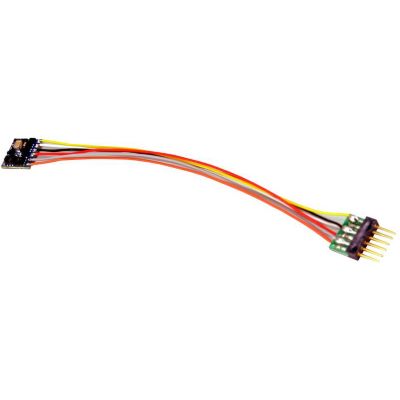
Compact multi-protocol decoder for DCC, Motorola, Selectrix and M4.
View product →
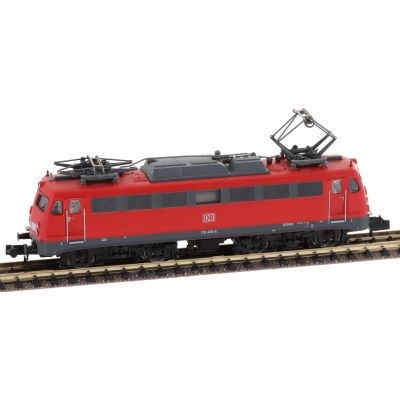
Ready-to-run electric locomotive with a DCC/Selectrix decoder, sound and LED lighting.
View product →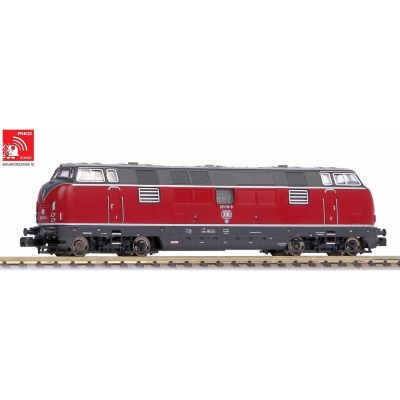
Sound locomotive with a Next18 decoder for DCC, Motorola and Selectrix.
View product →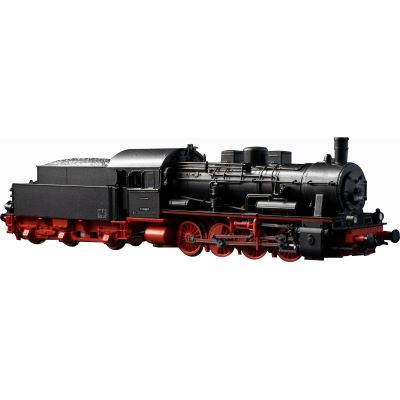
Digital TT steam locomotive supporting DCC, Selectrix 1 and Selectrix 2.
View product →H0 offers powerful multi-protocol decoders and ready-to-run sound locomotives with SX1 and SX2 support.
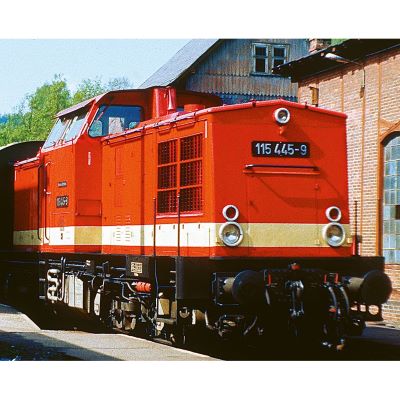
Deutsche Reichsbahn diesel locomotive with a D&H sound decoder, energy storage and PluX22 interface.
View product →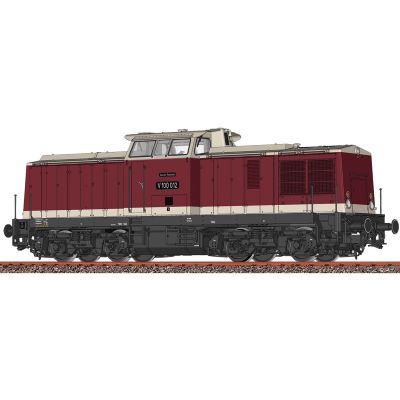
Sound locomotive with SX1, SX2, DCC and Motorola for historic Deutsche Reichsbahn trains.
View product →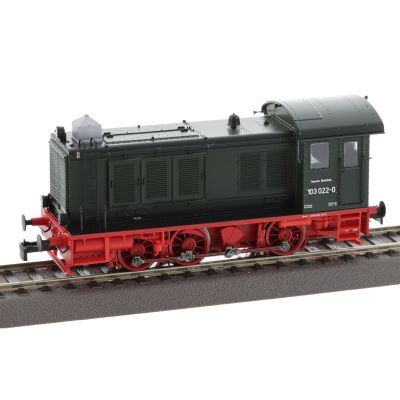
Compact shunting locomotive with sound, energy storage and a digital coupling.
View product →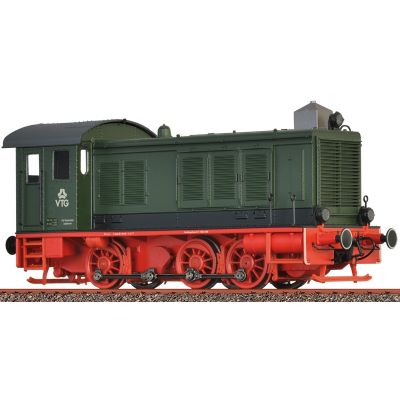
Centre-conductor locomotive with D&H sound, SX1, SX2 and a remotely controlled coupling.
View product →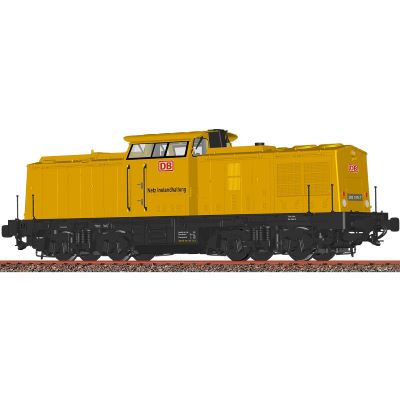
Modern maintenance locomotive with sound, PluX22 interface and energy storage.
View product →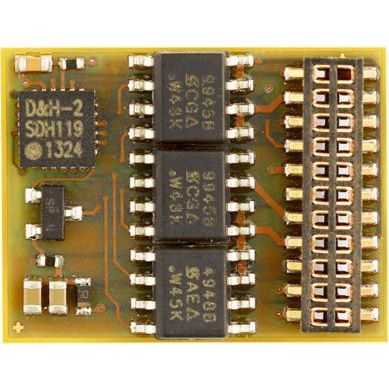
D&H vehicle decoder with load control, SX1, SX2, DCC and Motorola.
View product →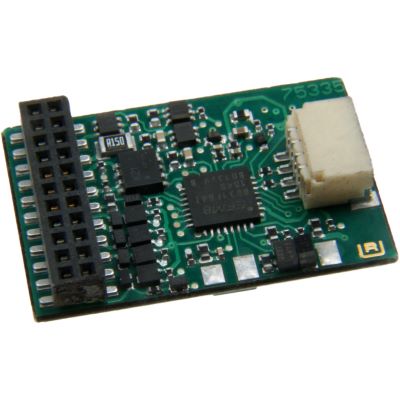
21MTC decoder supporting Selectrix, DCC, Motorola, mfx and RailCom.
View product →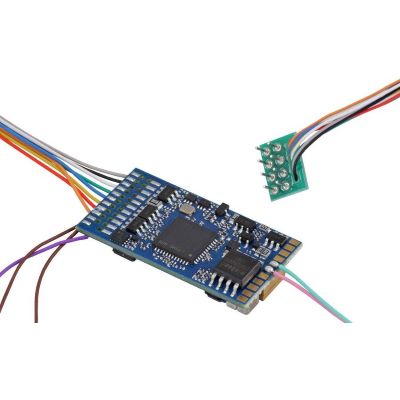
Sound decoder with an eight-pin plug and broad protocol support.
View product →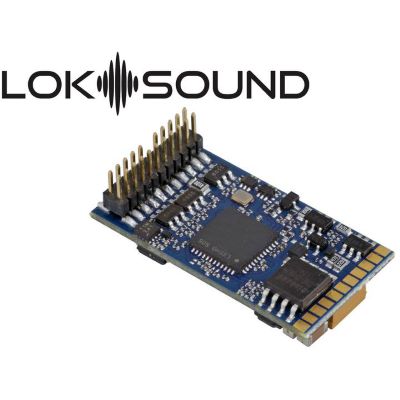
PluX22 sound decoder for SX, DCC, Motorola and M4 with function mapping.
View product →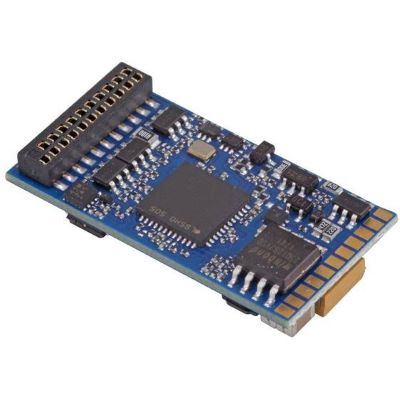
Multi-protocol sound decoder with a speaker and powerful motor control.
View product →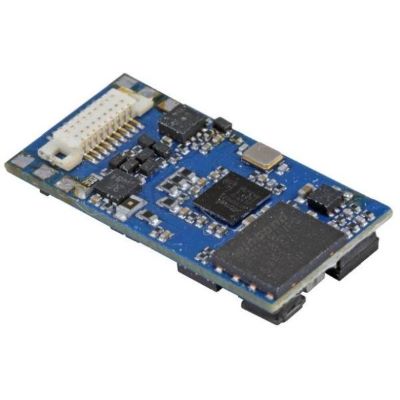
Compact sound solution supporting DCC, Motorola, Selectrix and M4.
View product →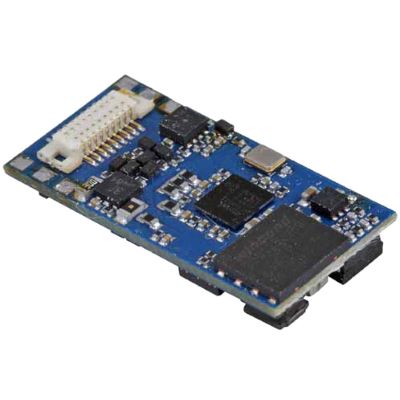
Compact Next18 sound decoder for small H0, TT and N scale vehicles.
View product →Powerful command stations support mixed vehicle collections. L and XL decoders provide sufficient output for large motors, sound, lighting, smoke generators and additional functions.
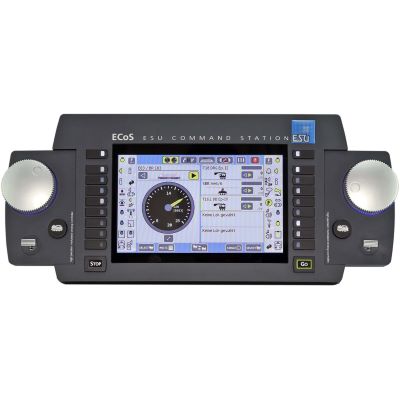
Touchscreen command station supporting Selectrix, DCC, Motorola, M4 and a 6 A booster.
View product →
Modern command station with a touchscreen, Wi-Fi, LAN and several digital formats.
View product →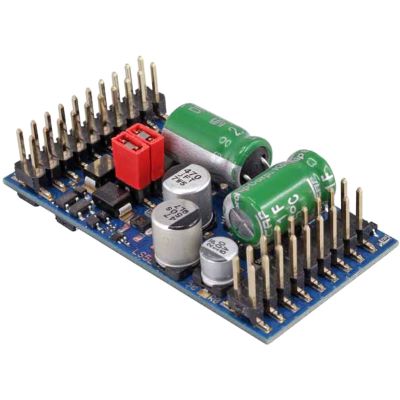
High-performance decoder with an adapter board for larger vehicles and numerous functions.
View product →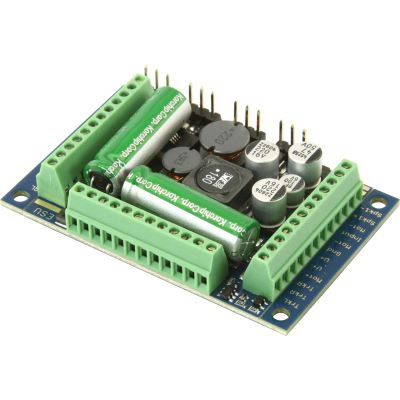
Robust large-scale decoder with screw terminals, sound and multi-protocol operation.
View product →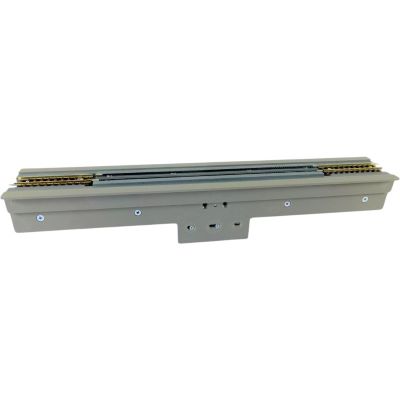
Wheel-cleaning system with a decoder for Selectrix, DCC and Motorola.
View product →The most important answers about SX1, SX2, DCC, addresses, feedback, gauges and modern multi-protocol layouts.
SX is derived from the name Selectrix. The designation is used for the digital track signal and in connection with the SX system bus.
SX1 operates with 31 true speed steps in each direction. Modern decoders can regulate more finely internally and generate intermediate values for smoother operation.
Current SX2-compatible D&H decoders support up to 10,000 addresses, 127 speed steps and 16 additional functions.
Only when the installed decoder also supports DCC. A pure SX1 decoder does not respond to DCC commands.
This is possible when the command station can additionally transmit DCC. Otherwise, the vehicle decoder must be replaced with an SX-compatible model.
A classic SX locomotive is added using its address. Automatic registration with the locomotive name and functions is not one of the basic SX1 features.
No. The format can be used in almost any gauge with a suitable decoder. N scale is simply its best-known field of application.
It modifies the track signal within a braking section. A compatible decoder detects this condition and brings the vehicle to a controlled stop.
Yes. Occupancy detectors and other modules can transmit status information through the bus to controllers, control panels or computer software.
This depends on the existing vehicle collection and the desired modules. For a completely new layout, compare the current availability of Selectrix, SX2 and DCC products carefully.
Further information is available from Döhler & Haass , in the Trix service documents and in the MOROP NEM 680 documentation on the SX signal .
The central model railway guide covers gauges, digital technology, layout planning, track, vehicles, scenery construction and maintenance.