




1. Prototype
Identify the Class and Version
A Class 103, Class 132 or V 60 requires a different sound project. The engine, construction year, railway company and national version can also sound different.

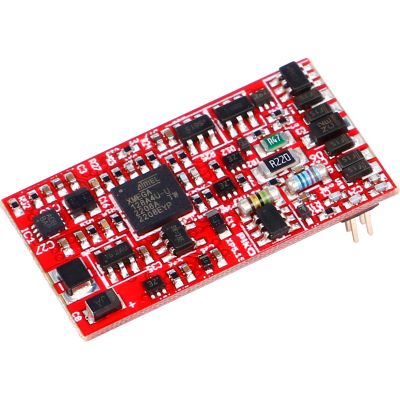
A good sound decoder combines sensitive motor control with appropriate steam, diesel or electric-locomotive sounds. This selection guide takes you from the locomotive model, interface and sound project to the correct loudspeaker for N, TT, H0, Gauge 0, Gauge 1 and garden railways.
A sound decoder is a locomotive decoder with additional sound memory, an audio amplifier and a loudspeaker connection. It controls the motor, lighting and special functions while playing appropriate sounds. With modern decoders, the speed, load and operating condition influence the sound reproduction.
A steam locomotive requires different sequences from a diesel or electric locomotive. Steam exhaust beats must match the wheel rotation. Diesel-engine speed and load stages change, while fans, traction motors, tap changers and the main circuit breaker are important on electric locomotives.
The decoder alone does not determine the sound quality. The loudspeaker, sound enclosure, installation orientation and resonance chamber have a major influence on volume, bass and clarity. A small, high-quality loudspeaker in a well-sealed sound enclosure can sound better than a larger loudspeaker installed without an enclosure.
Before purchasing, the locomotive model, interface, installation space, motor current, digital protocol, sound project and loudspeaker must therefore be checked together. Installation can be straightforward in a prepared locomotive. Older vehicles without an interface require complete electrical and mechanical planning.
A Class 103, Class 132 or V 60 requires a different sound project. The engine, construction year, railway company and national version can also sound different.
Next18, PluX16, PluX22, 21MTC, NEM 651 and NEM 652 are not interchangeable. With PluX16S and other variants, the locomotive circuit-board pin assignment must also be considered.
A blank decoder requires a sound project to be loaded. A model-specific decoder already contains appropriate sounds and often includes adjusted lighting and motor settings.
In addition to length and width, consider the height, cables, connector, sound enclosure and clearances for the flywheel, cardan shaft and body supports.
The motor output must match the actual current consumption. Older H0 locomotives and large-scale vehicles in particular require a substantial power reserve.
Loudspeakers may only be operated with an impedance permitted by the decoder. The shape and resonance enclosure must fit the intended installation location.
The command station and decoder must support a common digital format. Multiprotocol operation is useful when vehicles are used on different layouts.
A compatible energy-storage module reduces interruptions. A manufacturer-specific programming device is usually required for custom sound projects or extensive modifications.
| Decoder Type | Sound Condition | Advantage | Required Preparation | Typical Application |
|---|---|---|---|---|
| Blank Decoder | No locomotive-specific project yet | Free choice from compatible sound projects | Load a project and assign functions | Custom conversions and experienced users |
| Preloaded Universal Decoder | General or preconfigured project | Ready for operation more quickly | Compare the project and prototype carefully | Standard conversions with a matching class |
| Model-Specific Decoder | Prepared for a specific locomotive | Sound, motor and functions are often coordinated | Check the product number and locomotive series | PIKO, Märklin and other production models |
| Micro or Nano Sound Decoder | Blank or preloaded | Small dimensions | Measure the installation space and heat dissipation precisely | N, TT, H0e and small H0 locomotives |
| L or XL Sound Decoder | Blank or containing a project | High motor and audio output | Calculate the total current and loudspeaker requirements | Gauges 0, 1, G and IIm |
| Dedicated Sound Module | Predefined soundscape | Sound without a complete locomotive decoder | Check the control method and power supply | Coaches, older large-scale models and special models |
The loudspeaker must have the impedance required by the decoder manufacturer. An unsuitable load can cause low volume, distortion or damage to the amplifier.
The loudspeaker, enclosure, cables and mounting require space. The component height often determines the possible solution, particularly in N and TT.
When sound waves from the front and rear meet uncontrollably, bass in particular is lost. A sealed enclosure improves efficiency.
Use openings in the chassis, roof or existing loudspeaker grilles. A completely enclosed loudspeaker sounds muffled and quiet.
Constant maximum volume causes distortion more quickly and sounds unnatural on small layouts. The locomotive type and listening distance should remain perceptible.
Two loudspeakers change the total impedance. Series and parallel connections may only be used when the decoder, amplifier and loudspeakers are designed for them.
The number of cylinders, exhaust beats, exhaust rhythm, air pump, injector, whistle and braking sounds define the character. The exhaust beats must be synchronised with the wheel rotation.
Wheel synchronisation and the correct whistle.
The engine type, idle sound, load stages, turbocharger, gearbox and compressor distinguish a V 60 clearly from a Class 132 or a modern diesel locomotive.
Dynamic load dependence instead of simple speed coupling.
The main circuit breaker, tap changer, traction motors, fans, pantograph and transformer must suit the class. Modern inverter locomotives require a different soundscape from older electric locomotives.
Correct fan and traction-motor sequences.
Several engines, doors, announcements, warning signals and direction-dependent sequences make multiple-unit projects more complex than simple locomotive projects.
Door sequences, announcements and engine arrangement.
Coupling sounds, shunting radio, brakes, brief load changes and low speed steps are more important than long main-line sequences.
Fine motor control and directly accessible functions.
Custom projects allow special announcements and function sequences but require compatible software, a programming device and knowledge of function mapping and sound slots.
Back up the original file and decoder project.
Nano and micro decoders, Next18, PluX16 and wired versions are typical. The loudspeaker space is often more restricted than the decoder space.
A very small sound enclosure and low component height.
Next18, PluX16 and sometimes PluX22 provide more functions. Small sugar-cube loudspeakers can already produce a powerful sound.
Measure the circuit board, flywheel and loudspeaker together.
This range offers the widest choice. NEM 652, Next18, PluX16, PluX22 and 21MTC cover both older and modern vehicles.
Match the interface and locomotive-specific project precisely.
Larger loudspeakers provide more bass. At the same time, motor current and function requirements for lighting, couplers and smoke increase.
L decoders, audio output and heat dissipation.
Large models provide space for powerful loudspeakers and numerous function outputs. Interfaces and manufacturer-specific circuit boards must be checked.
XL output and the existing vehicle wiring.
Several motors, smoke generators, powerful lamps and outdoor use require robust large-scale decoders and high-capacity loudspeakers.
Total current, moisture protection and a substantial resonance chamber.
The motor, gearbox, current collection and lighting must operate without faults.
Photograph and measure the circuit board, cable routes, decoder position and loudspeaker mounting.
Match the locomotive class, production series, connector and required sound version precisely.
Seal the sound enclosure and do not block the sound path with adhesive, cables or body components.
Initially test the address, motor, lighting and individual sound functions at a low volume.
Configure the volume, load dependence, acceleration, braking and function assignment realistically.
The interface and circuit board may change between production series.
Without a loaded project, the locomotive-specific sound remains unavailable.
Missing sealing considerably reduces bass and clarity.
An unsuitable load can reduce the sound quality or damage the amplifier.
Distortion and unnatural volume reduce the effectiveness of the project.
Older motors and large-scale locomotives in particular can overload the decoder.
The selection includes universal blank decoders, model-specific sound decoders and powerful large-scale versions. The locomotive series, interface, loudspeaker and installation space must be checked before ordering.
Compact solutions with Next18, PluX16, NEM 651 or a model-specific connection.
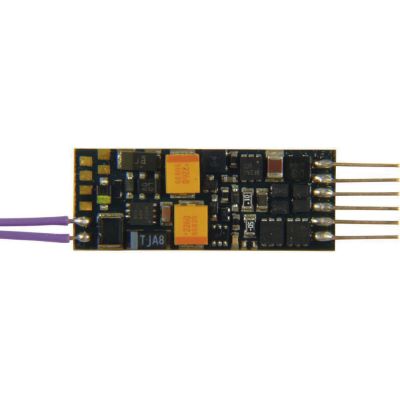
Compact sound retrofit for suitable N-gauge vehicles.
View Product →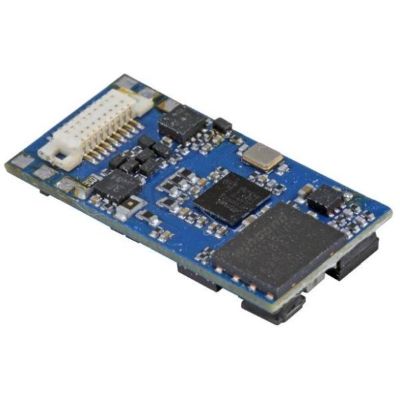
Six-pin version for compact vehicles.
View Product →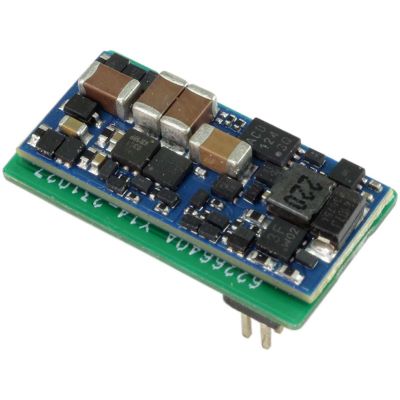
Blank decoder with a compact loudspeaker.
View Product →
Next18 version for small sound conversions.
View Product →Model-specific decoders for steam- and diesel-locomotive classes, supplied with loudspeakers.
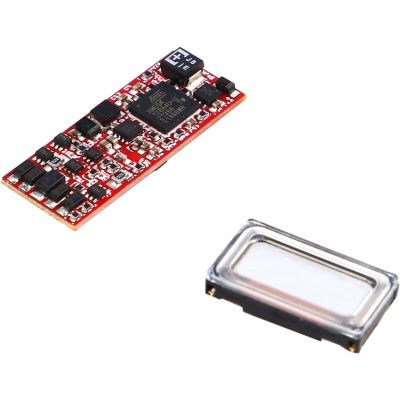
Prepared sound project with a loudspeaker.
View Product →
Class-specific sound and loudspeaker retrofit solution.
View Product →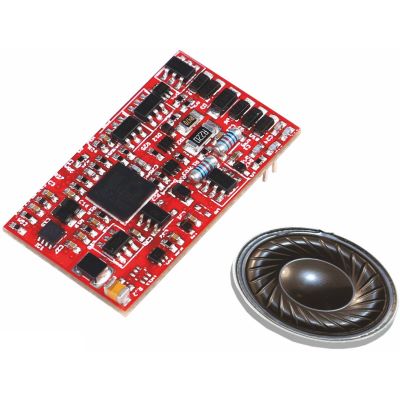
Shunting-locomotive sound with a compatible loudspeaker.
View Product →PluX22, PluX16, Next18, 21MTC and NEM 652 for modern and older locomotives.
Free choice of sound project and multiprotocol operation.
View Product →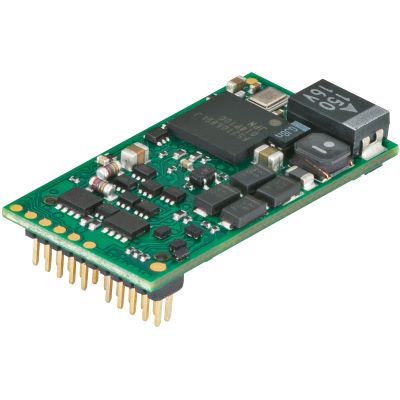
Sound retrofit with mfx, DCC and RailCom.
View Product →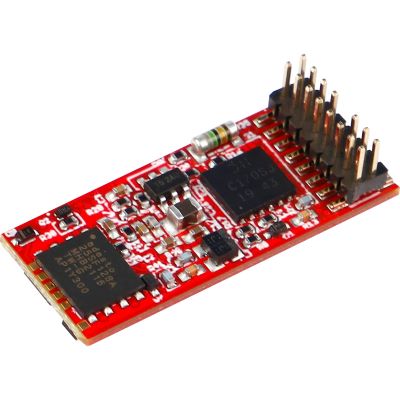
Compact PluX16 version with mfx.
View Product →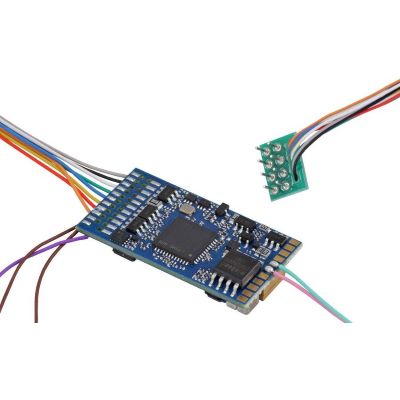
Universal eight-pin version with a loudspeaker.
View Product →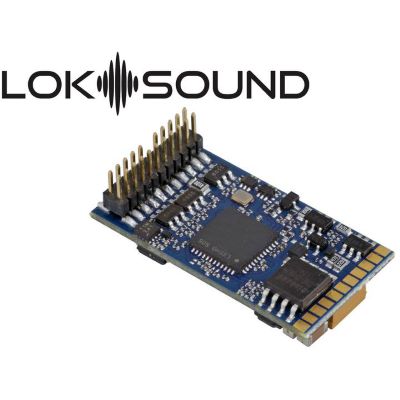
Powerful blank decoder for custom projects.
View Product →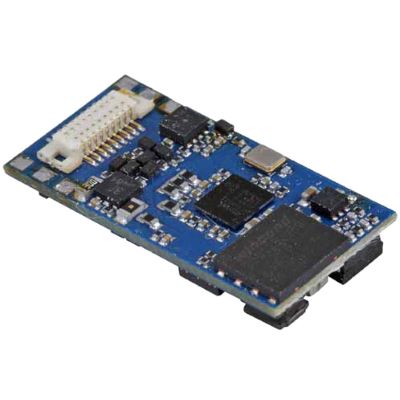
Compact sound solution for small H0 vehicles.
View Product →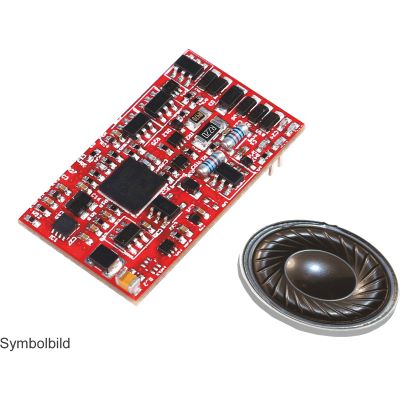
Prepared sound project with a loudspeaker.
View Product →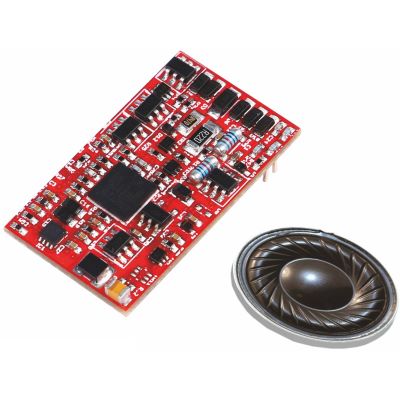
Model-specific sound with a connection adapter.
View Product →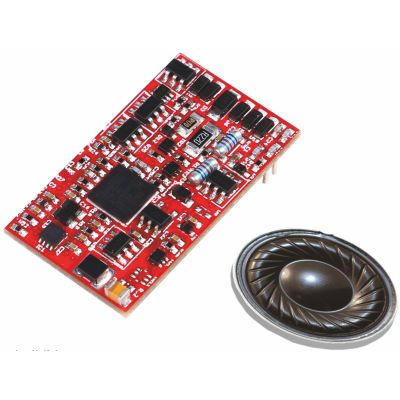
Eight-pin retrofit solution with a loudspeaker.
View Product →High motor and audio output for large models, powerful loudspeakers and additional electrical consumers.
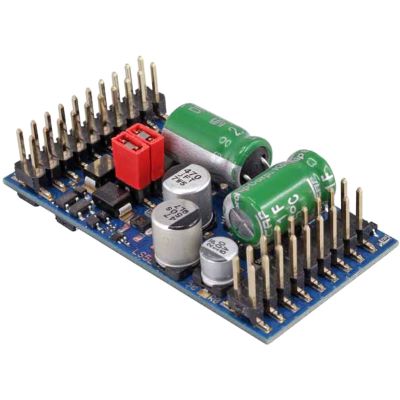
Blank decoder with a pin header and adapter.
View Product →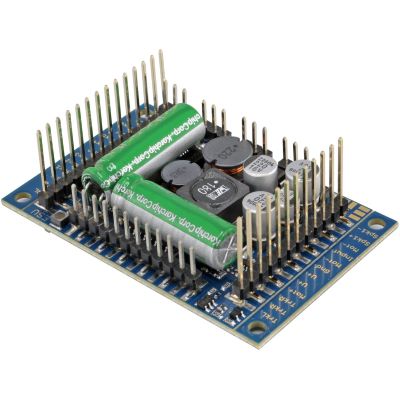
Large decoder for high output and numerous functions.
View Product →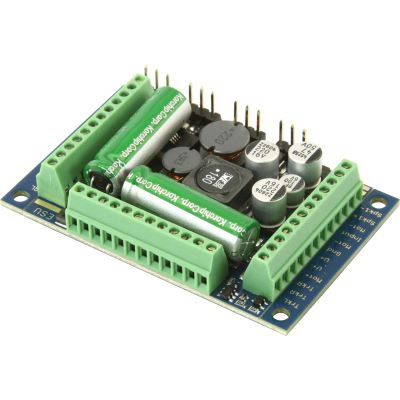
Robust screw terminals for freely wired large-scale models.
View Product →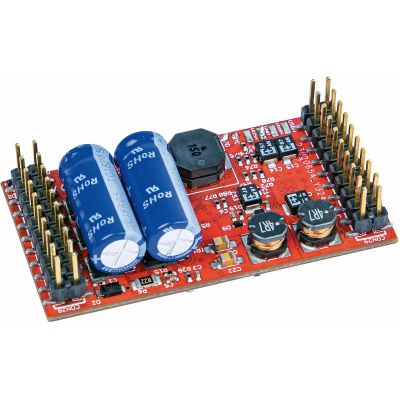
Free choice of sound project for garden-railway vehicles.
View Product →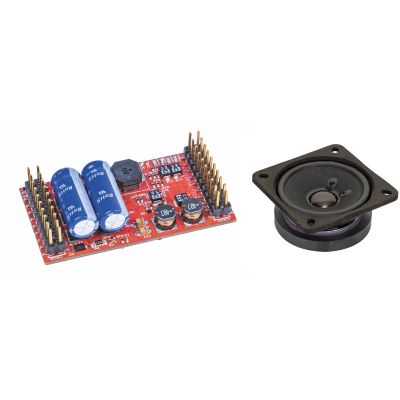
Prepared large-scale sound project with a loudspeaker.
View Product →Check the locomotive model, interface, installation dimensions, motor current, digital format, sound project and intended loudspeaker.
The decoder does not yet contain a locomotive-specific sound project. A suitable project must be loaded using compatible hardware before use.
This is possible with many decoders. A programming device from the respective manufacturer and a compatible project are normally required.
This depends on the product. Check the supplied components, impedance and dimensions on the relevant product page.
No. The impedance, power rating, shape and dimensions must be compatible with the sound decoder and the available resonance chamber.
The sealing, resonance volume and unobstructed sound path are decisive. A small loudspeaker in a good enclosure can produce more convincing sound.
The motor and lighting functions can be checked with some decoders. The sound output should only be operated as specified in the manufacturer's instructions.
Check the motor type, locomotive circuit board, mfx compatibility, interface and existing chassis connections before conversion.
No. RailCom is a DCC feedback function and is not required for sound reproduction.
A compatible energy-storage module reduces brief interruptions to the motor and sound. The connection, charging circuit and programming must be compatible.
The volume should suit the gauge, room size and listening distance. Constant maximum volume usually sounds unnatural.
Specialist conversion is advisable when no interface is present, space is extremely limited, the model is valuable, the motor is old or extensive lighting functions are involved.
This page classifies sound decoders by locomotive type, interface, project condition, loudspeaker, motor output and gauge.
Content status: 17 July 2026. Check the current manufacturer instructions and locomotive circuit-board pin assignments before installation and programming.
The main guide covers digital command stations, locomotive decoders, interfaces, digitisation, maintenance, wiring and layout construction.