
Steam locos
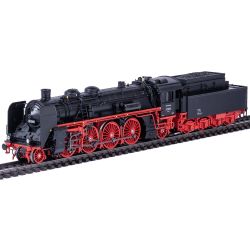


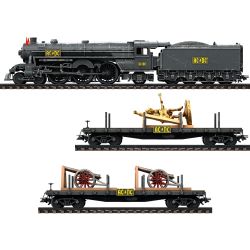


Looking for steam locos that give your model railway more character, more railway atmosphere and the unmistakable appeal of classic train operation?
Then you are in exactly the right place: with the right steam locomotives, tank engines, tender locomotives, narrow gauge steam locos and powerful express steam engines, you can create authentic branch line scenes, classic freight traffic and impressive historical passenger service across many eras and railway companies.
What makes steam locos so special on a model railway?
Steam locomotives are among the most iconic and emotionally powerful vehicles in model railways because they represent the classic age of rail transport like no other traction type. Their wheels, rods, boilers, smoke deflectors and tender shapes immediately create a strong railway atmosphere.
On a model railway, steam locos do much more than simply pull trains. They define entire eras, shape the visual identity of stations and depots, and create a rich operational theme that works equally well in branch line, freight, express and museum-style scenes.
They are especially attractive because the category covers a huge prototype range. From compact tank engines and local branch line locomotives to large express steam locomotives, heavy freight classes and narrow gauge machines, steam traction offers enormous variety for collectors and active operators alike.
That is exactly why steam locos are so important: they bring depth, historical authenticity and a uniquely emotional character to your model railway layout.
Why are steam locomotives so popular with model railway fans?
Many modellers appreciate steam locos because they create a very strong railway atmosphere even with a single model. A well-chosen steam locomotive instantly gives a layout more story, more visual drama and more sense of time and place.
They also cover a remarkably wide prototype field. The category includes Prussian, Saxon, Bavarian, DRG, DR, DB, ÖBB and international steam locomotives, as well as narrow gauge and private railway themes. That makes steam traction highly attractive for both German and broader European railway modelling.
Another major strength is visual diversity. Some steam engines are compact and practical, others elegant and fast, while others look heavy, rugged and powerful. This makes them ideal for both focused collecting and highly varied layout operation.
Which products belong to the steam locos category?
The steam locos category includes a very broad range of tank locomotives, tender locomotives, narrow gauge steam engines, express locomotives, goods train locomotives and special collector models. This wide mix makes the category attractive for branch line layouts, mainline stations, museum scenes and freight-heavy operation.
Visible products include striking prototypes such as BR 19.0 Sachsenstolz, BR 91.3, Big Boy 4000, BR 86, BR 95, BR 01, BR 62, BR 50, BR 83.10, BR 93.0, and many narrow gauge classes such as DR class 99 locomotives in H0e and TTe. This shows how broad the category really is, from classic German state railway themes to huge international steam icons.
The range also includes analogue and digital versions, AC and DC variants, and a particularly strong number of sound-equipped steam locomotives. That is especially useful because steam traction gains a lot of realism from sound and, in some cases, steam effects.
Typical steam loco types at a glance
Which brands are especially important in steam locos?
This category is especially strong because it combines many leading model railway brands across a very broad prototype and gauge range. Especially visible names include Piko, Roco, Brawa, Märklin, Tillig, Trix, Bemo, Fleischmann, Arnold, LGB, Lenz, Rivarossi, Modellbau Veit and others.
Piko is particularly strong in this category and offers a very broad range across H0 and TT, including classic DR and DB classes as well as sound and steam-effect variants. Roco is highly important for H0 and TT and is especially strong in DR and DRG steam locomotive themes. Brawa supports detail-focused H0 models and collector-oriented prototypes.
Märklin and Trix are especially relevant in H0, including AC, DC and mfx-oriented steam locomotives, often with sound. Tillig is very important in TT, while Bemo and Modellbau Veit are especially strong in narrow gauge steam traction such as H0e and TTe. Fleischmann remains highly relevant in N gauge, and LGB supports large-scale G gauge steam locomotives.
This brand diversity is a major advantage because it allows you to match your steam locomotive very precisely to your era, railway company, gauge and modelling style.
Brand overview for steam locos
Which gauges are especially relevant for steam locos?
This category covers a very broad gauge range, which makes it attractive for many different types of modellers. Visible gauges include H0, TT, H0e, N, G, 0, Z, TTe, H0m, H0f and 1.
H0 is clearly the dominant gauge in this category and offers the widest product choice. TT is especially important for DR and DB-oriented steam themes. H0e is highly visible and especially attractive for narrow gauge enthusiasts. N is ideal for compact layouts, while G, 0 and 1 provide very strong model presence for display or large layout operation.
Gauge overview for steam locos
Which railway companies and eras are especially common in steam locos?
One of the strongest advantages of this category is its broad historical background. Visible railway companies include DR, DB, DRG, CSD, PKP, ÖBB/BBÖ, SNCF, SNCB, FS, US Rail, Private Railways, K.Bay.Sts.B. and K.Sächs.Sts.E.B..
The era focus is especially strong in Era III and Era IV, with very substantial coverage in Era II as well. That makes steam locomotives ideal for modellers who want to build classic German Federal Railway, East German Reichsbahn, pre-war DRG or even earlier state railway themes.
Because steam traction has such deep roots in railway history, it is one of the strongest categories for building a layout with a clear historical identity.
What is the difference between analogue, digital and sound steam locos?
Visible filters show that steam locos are available in both analogue and digital form, with a particularly large number of sound-equipped models. This is especially important because steam locomotives benefit strongly from sound and, in some cases, steam effects.
Analogue models are useful for traditional layouts or later upgrades. Digital versions are ideal if you already operate a digital control system and want more precise operational control. Sound models create an especially strong effect with steam locomotives because exhaust beats, whistles and operating sounds greatly improve realism.
Which steam locos are especially good for beginners?
For beginners, steam locomotives are especially attractive when they combine a well-known prototype, good layout flexibility and a clear operating role. Compact tank engines, branch-line locomotives and medium-sized tender engines are often a particularly good starting point because they fit many layouts and train types.
Classes such as BR 86, BR 91, BR 93, BR 50 or similar all-round steam locomotives are often especially beginner-friendly because they can be used in passenger, freight and branch-line traffic without demanding a very large layout.
If you want fast visible value, a well-chosen H0 or TT steam locomotive in a popular DB or DR livery is often one of the best ways to start. It gives you strong atmosphere, broad train compatibility and a very convincing classic railway theme right away.
Beginner-friendly choices in steam locos
Which layouts are steam locos best suited for?
Steam locomotives are ideal for historic layouts, branch lines, classic goods yards, depots, museum themes, early passenger services and narrow gauge railway scenes. They work especially well on layouts where atmosphere, historical identity and visible railway mechanics matter.
They are also highly effective in depot areas, engine sheds, turntable scenes and freight yards because steam locomotives naturally support a richer operational story. Coal, water towers, ash pits and servicing scenes all become much more meaningful when classic steam traction is part of the layout.
Typical uses for steam locos
What should you look for when buying steam locos?
When buying steam locomotives, you should pay special attention to gauge, railway company, era, analogue or digital version, sound, brand and the size and style of your layout. These points help you choose a model that fits both technically and visually.
It is especially important to ask whether the locomotive should work on a branch line, in a freight yard, in front of express coaches or as part of a narrow gauge scene. That will determine whether a compact tank engine, a mixed-traffic locomotive, a freight class or a prestige express locomotive makes the most sense.
A careful choice usually creates a much stronger result than simply buying the most impressive locomotive available. The best steam loco is the one that matches your layout story, your railway era and your operational concept.
Key buying criteria at a glance
Steam locos buy and bring classic railway atmosphere to your model railway
Whether you choose a tank locomotive, a tender locomotive, a narrow gauge steam engine, a classic freight locomotive or a premium model from Piko, Roco, Märklin, Trix, Brawa, Tillig or Bemo, the right products from the steam locos category give your model railway more atmosphere, more history and a much stronger railway identity.
By choosing carefully according to gauge, era, railway company, operating role and layout style, you will find exactly the steam locomotives that suit your project. That means more believable train formations, a richer historic scene and lasting enjoyment on your model railway.