Modellbahn Keks
Welcome!
Our cookies offer you a fast, relaxed and full-featured shopping experience. Some are necessary to operate the website and its functions. Others help us to improve our services. If you agree to this, simply consent to the use of cookies for preferences, statistics and marketing by clicking on "OK". Alternatively, you can deactivate individual cookies under "Customise cookies" or all cookies, except those required for the function of our website, under "Reject all".
Collector’s wagons, brewery history and freight transport

Collecting Beer Wagons – Model Railways, Brands & Eras

Beer wagons combine railway history, regional brewing culture and colourful advertising designs. Discover historic private-owner wagons, refrigerated wagons, covered freight wagons and modern collector’s models from well-known model railway manufacturers in H0, TT, N, Z, G and other gauges.

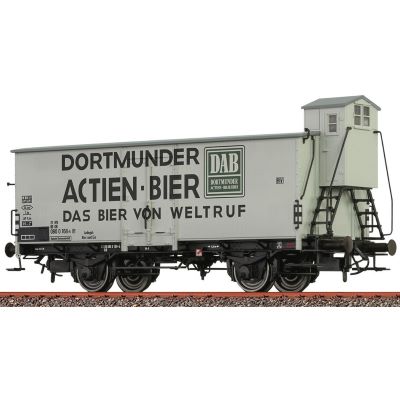
BRAWA H0 beer wagon of the Dortmunder Actien-Brauerei DAB
A freight wagon with a distinctive history

What is a beer wagon in model railways?

In the model railway world, the term beer wagon covers various types of freight wagon associated with a brewery or beer brand. These include prototypical refrigerated beer wagons, insulated wagons, covered freight wagons with brewery lettering and colourful advertising wagons. Some models reproduce private-owner wagons that were actually operated on the railway. Others are attractive livery variations, special editions or collector’s wagons without an exact real-life prototype.

Historically, beer had to be protected from heat, frost and major temperature fluctuations during transport. Breweries therefore used insulated wagon bodies, air cavities, ice containers, ventilators or sun roofs. Standardised refrigerated and insulated wagons were introduced later. The large brewery names and brand graphics displayed on the side walls were particularly striking. The wagon therefore served both as a means of transport and as a mobile advertising medium.

On a model railway, the range extends from strictly prototypical private-owner wagons of Era I to modern special-edition wagons carrying beer brands, anniversary logos or event designs. Beer wagons therefore appeal to several groups of collectors: railway historians, enthusiasts of a particular region, brand collectors, brewery enthusiasts and model railway operators who want to assemble a varied freight train .

Beer wagon, refrigerated wagon or advertising wagon?

These terms overlap, but they are not completely identical. A genuine refrigerated beer wagon was designed or converted specifically for temperature-controlled transport. A covered freight wagon with brewery branding, by contrast, may simply be a standard transport wagon or an advertising wagon. Collectors should therefore look beyond the brand name alone. The wagon type, running number, registered railway company, era and lettering indicate how closely the model follows a historic prototype.

From transporting beer barrels to branded models

The History of Railway Beer Wagons

The development of beer wagons is closely connected with the growth of regional breweries supplying wider markets and the expansion of the railway network.

Early specialised wagons

As early as the 19th century, breweries commissioned special wagons or rented suitable vehicles from state railways. Rail transport opened up new sales regions, while insulated wagon bodies helped preserve the quality of beer over longer distances.

Typical identifying feature

Wooden wagon body, brakeman’s cab, large lettering and regional brewery names.

Private-owner wagons on state railways

Many wagons belonged to breweries or wagon hire companies but were registered with a state railway and authorised for use on the public network. On many models, the [P] marking identifies this kind of private-owner freight wagon.

Important for collectors

The owner, registering railway company and running number must be considered separately.

Cooling with ice

Early refrigeration systems used water ice and air circulation. Ice containers, roof structures and insulated walls were intended to keep the interior cool for as long as possible. Light exterior colours also reduced heating caused by direct sunlight.

Visible on the model

Ice hatches, ventilators, sun roofs, platforms and unusual roof shapes.

DRG, DB and DR

Beer wagons appeared in a variety of basic designs during Eras II to IV. In addition to purpose-built wagons, covered freight wagons and used refrigerated wagons were fitted with brewery lettering. DB and DR models are among the most popular collecting themes today.

Matching theme worlds

DRG , Deutsche Bundesbahn and Deutsche Reichsbahn .

European breweries

Beer wagons are not exclusively a German theme. Models carrying Czech, Austrian, Swiss, French, Belgian or Scandinavian brands create an international collecting field with numerous colour and lettering variations.

Popular railway companies

SBB, BLS, ÖBB, ČSD, SNCF, SNCB, DSB and various private railways.

From transport wagon to collector’s item

As traditional single-wagon freight traffic declined, the role of the beer wagon changed. The subject remained popular in model form: special editions, company wagons and branded series turned brewery wagons into a distinct collecting field with great visual variety.

Especially sought after today

Early releases, rare printing variations, complete series and models with their original packaging.

Collecting and operating with historical accuracy

Which Eras Are Particularly Interesting for Beer Wagons?

Beer wagons are available for almost every model railway era. Their construction, lettering and use, however, differ considerably.

Era I – State Railways

State railway beer wagons often feature brakeman’s cabs, short chassis and elaborate company lettering. K.P.E.V., Bavarian, Saxon and other state railway versions are especially attractive to historically minded collectors.

Era II – DRG

Private-owner wagons carrying the [P] marking, new numbering systems and classic refrigerated-wagon designs characterise this period. Many popular models display well-known regional breweries on white or light-coloured wagon bodies.

Era III – DB, DR and Europe

Era III offers the greatest variety for nostalgic beer trains. Steam locomotives, early diesel locomotives and mixed freight trains work well with covered and refrigerated wagons from numerous German and European breweries.

Era IV – Computerised Numbers

New lettering systems, modernised refrigerated wagons and the final years of traditional brewery traffic characterise Era IV. DB and DR wagons fit well into transfer freight, local goods and mixed freight trains.

Era V – Brands and Heritage Operations

Traditional specialised wagons became less common. Attractive advertising designs, heritage wagons and covered wagons carrying regional brands nevertheless remain interesting splashes of colour on layouts depicting the 1990s and 2000s.

Era VI – Special and Advertising Wagons

Modern beer designs frequently appear on special-edition models, heritage vehicles, containers, swap bodies or event wagons. For strictly prototypical train formations, the description of the individual model should be checked carefully.

From miniature display cases to garden railways

Beer Wagons in H0, TT, N, Z, G and Other Gauges

H0 offers the largest selection, but beer wagons are also represented in both smaller and larger scales.

Gauge Scale Typical range Especially interesting for collectors
Z 1:220 Compact individual wagons and special-edition models A large collection in a small display area
N 1:160 Refrigerated beer wagons, G10 variations and branded wagons Long themed trains with limited space requirements
TT 1:120 DR, ČSD and DB refrigerated wagons and sets Strong range for East German and Central European themes
H0 1:87 Largest variety of prototypical, advertising and special-edition wagons Numerous manufacturers, eras, railway companies and brewery brands
H0e / H0m 1:87 Rare narrow-gauge and heritage versions Unusual regional and small-series releases
0 1:45 Individual models, small-series products and special editions Large lettering and an impressive level of detail
1 1:32 Rare series-production and collector’s models Impressive presentation and high-quality construction
G / IIm usually 1:22.5 Large advertising wagons from PIKO and LGB Highly visible brand designs for gardens and indoor layouts
A systematic collection instead of random purchases

What Should You Consider When Collecting Beer Wagons?

A clearly defined collection remains manageable and makes it easier to search for missing wagons, variations and additions.

Define a collecting theme

Collect by brewery, region, country, era, wagon type, model railway manufacturer or gauge. Themes such as private-owner wagons, white refrigerated wagons or East German beer brands can also work very well.

Distinguish prototypes from fictional models

Not every attractive branded wagon had a real-life prototype. Historically minded collectors should check running numbers, photographs, wagon types and registered railway companies. Decorative livery variations are nevertheless legitimate collector’s items.

Document item numbers and packaging

The manufacturer, catalogue number, year of release, running number and packaging version should be recorded in a collection list. Certificates, outer cartons and inserts are important parts of special-edition models.

Check the condition carefully

Look for damaged steps, missing ladders, bent platforms, worn printing and incorrect wheelsets. Heavily yellowed white wagon bodies can affect a model’s appeal and value.

Consider AC, DC and couplings

Depending on the manufacturer, H0 wagons may be supplied with DC or AC wheelsets. NEM coupling pockets and close-coupling mechanisms make it easier to use different coupling systems.

Store models carefully

Keep beer wagons dry, protected from dust and away from direct sunlight. Acid-free inserts and suitable display cases protect light-coloured paintwork, delicate details and sensitive printing.

How can you identify a valuable beer wagon?

A high price is not determined by age alone. Models with small production runs, regional distribution histories, complete packaging and a good condition are often in demand. Rare running numbers, dealer special editions and variations with modified logos may also be sought after. The actual market value, however, depends on supply, demand and completed sale prices.

Should collectors operate their beer wagons?

Collector’s models can, of course, be operated in a train. Before their first run, the axles, couplings and minimum radius should be checked. Very rare or delicate wagons may be better kept in a display case, while more common versions can enhance a historic freight train.

Brewery wagons from Modellbahnshop

Selected Beer Wagons for Collections and Model Railway Layouts

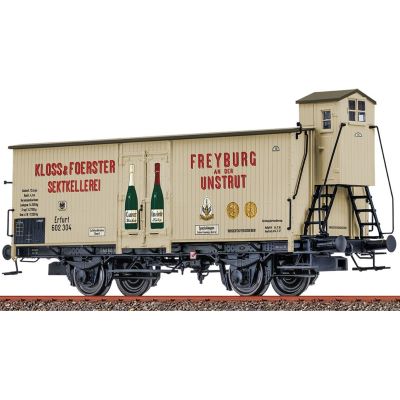
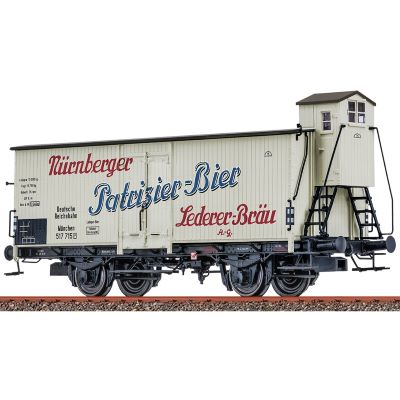
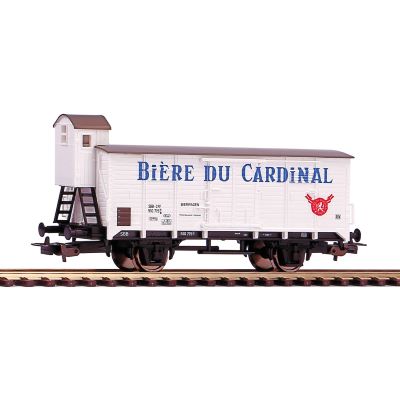
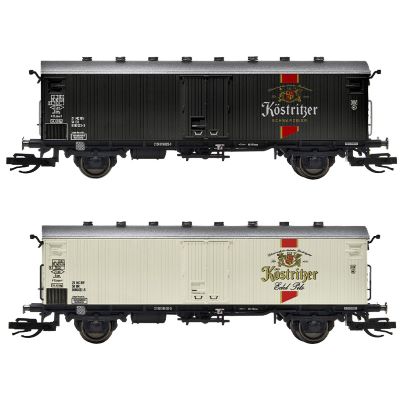
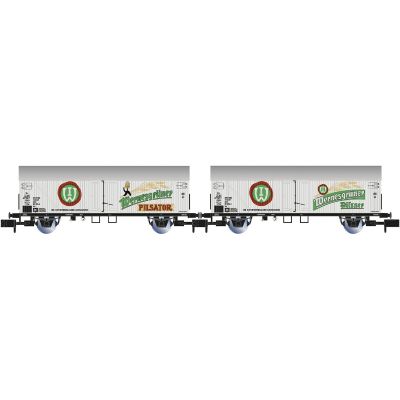
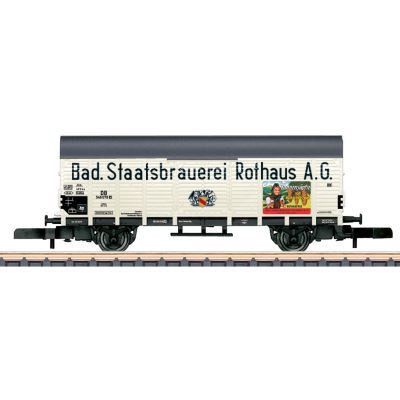
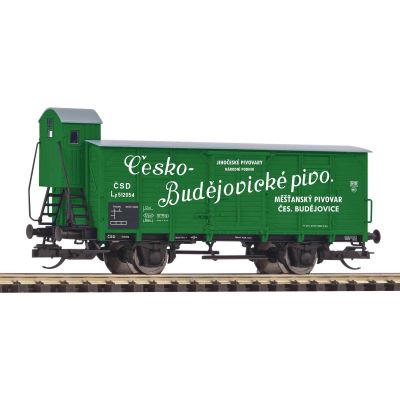
Four different models demonstrate the variety of the subject, covering West German, East German, Swiss and GDR brewery traffic.

Display beer wagons instead of simply collecting them

How Do You Create a Brewery Scene on a Model Railway?

A single wagon becomes especially convincing when the layout explains where it comes from, how it is loaded and where it is going.

Brewery with its own railway siding

A classic brewery scene requires a production building, a warehouse, a loading platform and a short siding. Barrels, crates, pallets, lorries and workers complete the operating sequence. Suitable kits can be found in the Production and Craft Buildings section.

A prototypical freight train

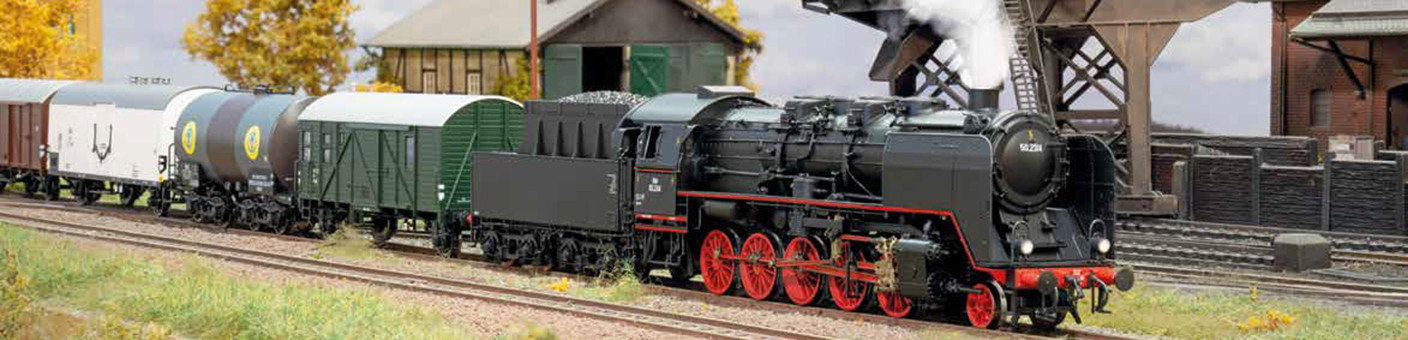
Beer wagons did not necessarily operate in complete block trains. On many layouts, a single private-owner or refrigerated wagon in a mixed local freight train looks more convincing. Add covered wagons, refrigerated wagons, a goods brake van and a locomotive appropriate for the chosen era.

A compact scene for limited space

A loading siding with a platform, brewery gate and two wagons is enough to create a complete shunting scene. A small shunting locomotive places the wagons while a lorry collects crates of beer. This creates a believable operating sequence even on a narrow module.

Answers for collectors and layout operators

Frequently Asked Questions About Model Railway Beer Wagons

Key answers concerning prototypes, gauges, value, compatibility and prototypical operation.

What does the [P] marking on a beer wagon mean?

The marking identifies a private-owner freight wagon. The wagon may have belonged to a brewery or wagon owner but was registered with a railway company and authorised for use on its network.

Are all model railway beer wagons prototypical?

No. Many models reproduce documented prototypes, while others are livery variations or special editions. For a historical collection, the running number, wagon type and brewery lettering should be checked.

Which era offers the largest selection of beer wagons?

The range is especially extensive for Eras II, III and IV. These periods combine classic refrigerated and private-owner wagons with numerous well-known regional breweries and railway companies.

Which gauge is best for collecting beer wagons?

H0 offers the greatest variety of models. N, TT and Z are ideal for space-saving collections. Gauges 0, 1 and G create an especially impressive display but require significantly more layout or display space.

Can an H0 DC wagon operate on a Märklin layout?

Operation is often possible after replacing the wheelsets. The coupling, wheel dimensions and manufacturer’s specifications must, however, be checked for each individual model.

How should light-coloured beer wagons be stored?

The models should be stored in dry, dust-protected conditions away from direct sunlight. UV light can alter light-coloured paintwork and sensitive printing over time.

Are beer wagons a good investment?

Some rare models may increase in value, but there is no guaranteed appreciation. Collect models primarily because you enjoy their history, appearance and presentation.

Which locomotive is suitable for a historic beer wagon?

The locomotive should match the railway company, region and era. State railway steam locomotives suit Era I, DRG steam locomotives suit Era II, and DB or DR steam and diesel locomotives suit Eras III and IV.

Can beer wagons from different breweries operate together?

They can easily run together in a mixed freight train. A complete advertising train is more of a model railway composition, but it can look very attractive as a collector’s parade or special train.

What information belongs in a beer wagon collection list?

Useful information includes the manufacturer, item number, gauge, era, railway company, running number, brewery, year of release, condition, packaging and, where applicable, the production quantity.

Collect Beer Wagons and Preserve Railway History

Discover refrigerated beer wagons, brewery advertising wagons and historic freight wagons for your collection or a varied model railway train.

Discover Freight Wagons