Modellbahn Keks
Welcome!
Our cookies offer you a fast, relaxed and full-featured shopping experience. Some are necessary to operate the website and its functions. Others help us to improve our services. If you agree to this, simply consent to the use of cookies for preferences, statistics and marketing by clicking on "OK". Alternatively, you can deactivate individual cookies under "Customise cookies" or all cookies, except those required for the function of our website, under "Reject all".
FALLER Westerheversand lighthouse in a coastal model railway landscape
Sea · Beach · Dunes · Harbour

Design a Coastal Landscape for Model Railways

A coastal landscape combines railway operation, water and nature to create an especially varied miniature world. Beaches, dunes, rocky coastlines, harbour basins, lighthouses, boats, seagulls and moving waves create powerful focal points and give even compact layouts a distinctive theme.

Maritime Scenery Design

How Do You Create a Believable Coast on a Model Railway?

Designing a coastal landscape for a model railway means much more than placing a blue surface beside the track. Coastlines consist of transitions: water becomes wet sand, beaches merge into dunes or rocks, a harbour connects land and water transport, and vegetation changes according to wind, ground conditions and distance from the water. These transitions determine whether a maritime scene looks natural.

Before starting with model water, decide what type of coastline you want to represent. A flat North Sea coast requires different terrain forms from a rocky sea coast. A fishing harbour needs quays, boats, working areas and buildings, while a bathing beach can work with sand, a beach bar, leisure figures and only a few plants. A lighthouse can also become the focal point of an entire layout.

For planning, use the same construction sequence as for general model railway scenery : begin with the terrain form and water bed, continue with base colours, water, shoreline materials and vegetation, and add figures, boats and small scenes last. This keeps the coastline logically structured instead of making it look like an afterthought.

Water Surface and Depth

Create Realistic Sea and Coastal Water

The most important difference between a lake and a coastal scene is movement. Even calm sea water has a subtle surface structure, colour variations and different reflections. Waves become denser towards the beach and break against walls, stones, groynes and rocky edges.

1

Colour the Water Bed First

Water gains much of its apparent depth from the surface below it. Begin with light sand and blue-green shades near the beach and gradually use darker blue, grey-blue or green towards open water. Several softly blended colours usually appear more convincing than one uniformly intense blue.

2

Select the Right Water Material

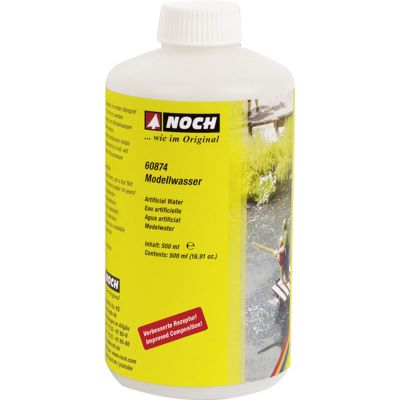
Lake foil provides a quick and controlled construction method. Ready-to-pour model water is suitable for shallow, carefully prepared areas. Other casting materials can be used for larger or individually coloured water surfaces. Always follow the processing instructions for the selected product.

3

Add Waves Only After the Water Is Finished

Transparent or clear-drying effect materials are applied to the completed water surface. Slightly different wave directions appear more natural than perfectly parallel lines. Breaking waves at a beach, pier or rocky shoreline can be highlighted with restrained white foam.

Water Products for Harbours, Seas and Shorelines

Model water, Water-Drops, lake foil, water effects and wave-building materials are available together in the Modellbahnshop Design category.

Open Water Products
Sand, Transitions and Dunes

Build Natural Beaches and Dunes

A model beach looks particularly convincing when dry and wet sand are visually separated. Directly beside the water, the surface is usually darker and more compact. Further inland it becomes lighter, looser and increasingly broken up by vegetation.

Choosing the Right Sand Texture

Fine scatter material is especially suitable for beach areas because coarse grains can quickly look like gravel in smaller scales. Paint the base in a sand colour before applying the scatter material. This prevents bright or white gaps from remaining visible after the adhesive has dried.

The waterline should be slightly irregular. Small bays, shallow depressions and occasional stones make the transition more natural. Footprints, paths and leisure figures should only be positioned where people could realistically reach them.

Suitable sand and ground materials are available in the Spreading Material category. For a modern beach scene, the NOCH Beach Bar is another suitable detail.

Cliffs and Rocky Shorelines

Build Coastal Cliffs with Convincing Depth

A rocky coast introduces strong height differences to a layout. Railway lines running above the water, disappearing briefly into a tunnel or crossing a bay on a bridge can create especially impressive scenes.

A

Keep the Rock Direction Consistent

Rock faces should show recognisable fracture or stratification directions. Avoid randomly mixing vertical, horizontal and diagonal structures. Repeating geological directions make separately modelled rock sections appear connected.

B

Model the Transition to the Water

Scree, individual stones and small projections connect the cliff face to the sea. Waves can be lighter and more active at exposed points. Darker rocks directly at the waterline suggest moisture and increase the sense of depth.

Detailed techniques for rock structure and colouring: Designing Model Railway Rocks .

Connecting Railway and Shipping

Create Fishing Harbours, Quays and Industrial Ports

Harbours are particularly interesting for model railway layouts because rail, road and shipping can meet within a small area. Freight wagons, cargo ships, work boats, cranes, storage areas and sidings create believable operation instead of purely decorative scenery.

Small Fishing Harbour

Boats, a short quay, storage buildings, nets, seagulls and a few road vehicles create a compact maritime scene with plenty of atmosphere.

Marina and Leisure Harbour

Sailing boats, a motor yacht, houseboat, jetty and leisure figures create a modern coastal scene with a tourist character.

Industrial Harbour

Quays, freighters, goods wagons, containers, storage areas and weathered surfaces suit both modern and historical freight scenes.

Coastal Railway Station

A small station near the beach or harbour links railway traffic with holidays, excursions and characteristic maritime buildings.

A Harbour Needs a Visible Purpose

Sidings should lead to storage or handling areas, ships need a plausible berth, and paths must connect buildings with the quay. This allows a harbour to appear convincing without using too many individual accessories. Suitable models are available in the Ships and Design categories.

Maritime Details

Lighthouses, Boats, Seagulls and Everyday Beach Life

Small scenes help viewers immediately recognise the type of coastline being represented. The key is not the quantity of accessories, but combining a few details into a logical scene.

From Z Gauge to Garden Railways

Which Gauge Is Suitable for Coastal Landscapes?

Water and beaches work in every model size. The scale mainly affects boats, buildings, figures, seagulls, vegetation and visible grain size. The smaller the scale, the finer the sand and shoreline materials should generally be.

Gauge Scale Strength for Coastal Layouts Typical Themes
Z 1:220 Large visual water areas in very little space Coast as a background, long railway routes
N 1:160 Extensive scenery and long coastal trains Passenger ships, harbours and cliff railways
TT 1:120 Good compromise between space and detail Harbour railway, Baltic coast and holiday resort
H0 1:87 Very large selection of maritime details Lighthouses, harbours, boats and beach bars
H0e / H0m 1:87 Narrow gauge for islands and tourist railways Light railways, beach railways and coastal towns
0 / 0e approx. 1:45 Strong detail around quays and harbour scenes Fishing harbours, dioramas and harbour shunting
1 1:32 Large water and structural details Modules and highly detailed individual scenes
G / IIm typically approx. 1:22.5 Generous large-scale scenery Coastal railways and garden dioramas

Compare the important model sizes in detail: Model Railway Gauge Comparison .

From the Substructure to the Sea Foam

Build a Coastal Landscape Step by Step

1

Choose the Type of Coast

Planning
Beach, harbour or rocky cliff?

Decide on the region and type of scene first. This determines terrain form, water colour, vegetation, buildings and suitable vehicles.

2

Build the Water Bed and Landform

Structural Work
Prepare the water surface completely level

Seas and harbour basins need a clean, stable base. Dunes, rocks, quays and embankments are then adjusted to this level.

3

Apply the Base Colours

Colour Effect
Depth is created beneath the water surface

Use lighter colours near the shore and darker colours further out. Fully pre-colour rocks, quays and beach areas as well.

4

Texture the Beach and Shoreline

Ground
Combine several grain sizes sparingly

Fine sand forms the beach, while individual stones and scree create transitions. Avoid a perfectly straight shoreline.

5

Create the Water Surface

Water
Follow the material instructions precisely

Cut and fix lake foil or pour model water into the prepared area. Allow the material to dry or cure completely before continuing.

6

Add Waves and Sea Foam

Movement
Align waves with wind and shoreline

Model waves on the finished surface. Breaking water can be emphasised more strongly at beaches, rocks and quay walls.

7

Add Vegetation

Nature
Do not cover dunes and banks completely in green

Group low grass tufts, reeds and individual plants. Keep open sand and rock areas visible.

8

Complete the Maritime Scene

Details
Every accessory needs a logical position

Add the lighthouse, boats, harbour accessories, seagulls and figures sparingly. Paths and access routes should lead logically to the objects.

Current Products from the Online Shop

Find Products for Coastlines, Sea, Beaches and Harbours

The Coastal Product Finder combines a checked selection with a dynamic search of Modellbahnshop. Suitable products for water, sand, harbours, ships, beaches, seagulls, plants and maritime buildings are loaded from current English shop pages. Archived products are filtered out and availability information is deliberately not displayed on these cards.

Checked coastal products are being loaded. Current shop results will be loaded automatically.
Manufacturer Worlds

Brands for Water, Harbours and Maritime Model Worlds

The manufacturer logos lead directly to the corresponding English brand pages within Modellbahnshop.

Practical Knowledge

Common Mistakes to Avoid on Model Railway Coastlines

Painting the Water Only Blue

Different depths, reflections and surface structures create considerably more convincing water than one uniformly blue surface.

Building an Overly Straight Beach

Small bays, stones, vegetation and different sand areas make the transition between land and water look more natural.

Using Too Many Identical Waves

Waves vary in height and spacing. Harbour water is usually calmer, while open beaches and rocky areas show more movement.

Creating a Harbour Without a Purpose

Boats, track, storage areas, buildings and paths should be logically connected and show a recognisable use.

Frequently Asked Questions

FAQ About Coastal Landscapes on Model Railways

The following answers cover water colour, sand, waves, harbour planning, gauges and maritime scenery.

How do you create realistic sea water on a model railway?

First prepare the colour of the water bed. Areas close to the shore are usually lighter than deeper water. Then create the actual water surface using lake foil, model water or a suitable casting material. Waves and foam are added afterwards.

Which sand is suitable for a model railway beach?

Fine spreading material is particularly suitable because coarse grains can quickly appear unnatural in small scales. Paint the base in a sand colour first. Individual fine stones or a little scree can be added to create natural transitions.

How do you create waves on a model water surface?

Complete the basic water surface first. Viscous transparent or clear-drying effect materials can then be shaped with a brush, spatula or suitable modelling tool. Waves can break more strongly at beaches, rocks and harbour walls.

What belongs in a typical North Sea coastal landscape?

Flat terrain, dunes, sand, low vegetation, dykes, a lighthouse, seagulls, individual houses and a small harbour quickly create a northern German coastal character. Open areas are often more important than dense development.

Which products are needed for a model railway harbour?

The basics are a water surface, a quay or reinforced shoreline, suitable boats or ships, access routes and a few accessories. A freight harbour can also include sidings, storage areas, containers and technical equipment.

Can railway and harbour operation be combined realistically?

Yes. Harbour railways provide interesting shunting opportunities. Tracks can lead to warehouses, quays and handling areas, creating a clear reason for the railway to run directly beside the water.

Which gauge is especially suitable for a coastal layout?

Every gauge can be used. N and Z provide plenty of room for large water surfaces, TT combines space efficiency with visible detail, and H0 offers an especially large selection of lighthouses, ships, figures and harbour accessories.

How do you create a rocky coastal cliff?

Build the rocks with a consistent fracture or stratification direction. Scree and individual stones connect the cliff face with the water. Darker shades directly at the waterline can represent damp rock.

Which figures suit beaches and coastal scenery?

Bathers, walkers, anglers, harbour workers, travellers and leisure figures work well in coastal scenes. Seagulls and other birds reinforce the maritime impression. Arrange figures in small, logical groups.

How large should a model water surface be?

It does not have to be enormous. Even part of a bay or a small harbour basin can create a convincing coastal atmosphere. The important point is to avoid making the water look like a narrow blue strip squeezed between unrelated landscape elements.

From the First Water Surface to a Complete Coastal Railway

Combine sea, beach, harbour, vegetation and maritime details into a believable miniature world and discover suitable products directly in Modellbahnshop.

Find Coastal Products

More Knowledge for Your Complete Model Railway

Gauges, planning, track, vehicles, digital technology, scenery construction, maintenance and many further topics are available in the central Modellbahnshop guide.

Open the Model Railway Guide