Modellbahn Keks
Welcome!
Our cookies offer you a fast, relaxed and full-featured shopping experience. Some are necessary to operate the website and its functions. Others help us to improve our services. If you agree to this, simply consent to the use of cookies for preferences, statistics and marketing by clicking on "OK". Alternatively, you can deactivate individual cookies under "Customise cookies" or all cookies, except those required for the function of our website, under "Reject all".
Reichsbahn · DRG · Standard-Design Locomotives

Era II Model Railway | DRG & Reichsbahn 1920–1950

Era II combines state railway traditions with a new and increasingly standardised railway system. Black steam locomotives with red running gear, standard-design locomotives, early electric locomotives, express railcars, MITROPA and intensive freight traffic create one of the most varied historic model railway worlds.

1920–1950 IIa · IIb · IIc DR · DRG Steam · Electric · Railcars Z · N · TT · H0 · 0 · 1 · G
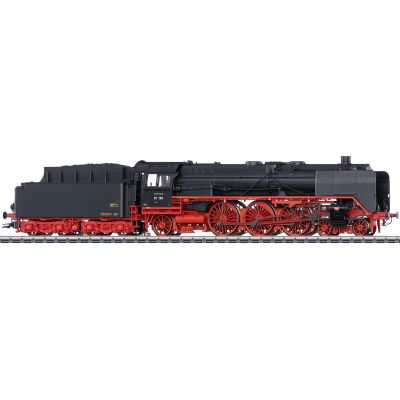
Märklin Class 01 steam locomotive of the Deutsche Reichsbahn-Gesellschaft as an Era II model
The Reichsbahn Period in Model Form
From the State Railways to the Reichsbahn

What Does Era II Mean in Model Railways?

According to the commonly used German NEM classification, Era II in model railways covers the period from 1920 to 1950. The previously independent state railways were brought together under a common German national railway administration. This marked the beginning of a long process of technical and operational standardisation.

For model railway enthusiasts, this creates a particularly attractive mixture of rolling stock. Prussian P 8, G 8.1 and T 12 locomotives as well as Bavarian, Saxon and Württemberg designs remained in service. At the same time, standard-design steam locomotives such as Classes 01, 24, 44, 62, 64 and 86 appeared. The railway therefore looked both historically established and technically modern.

The abbreviation DRG historically stands for Deutsche Reichsbahn-Gesellschaft, whose actual corporate period primarily covers the years from 1924 to 1937. In model railway terminology, DRG is often used as an easily understood collective term for vehicles of the classic Reichsbahn period. Anyone aiming for maximum historical accuracy should therefore check the exact year represented, the lettering and the operating condition of each vehicle.

Typical features include steam locomotive depots, semaphore signals, water cranes, goods sheds, signal boxes and intensive wagonload freight traffic. On electrified routes, early electric locomotives provide an interesting contrast. Further information about the railway administration can be found in the DRG theme page .

Historical Orientation

How Do Era IIa, IIb and IIc Differ?

Vehicle lettering, technology, coach colours and operating conditions changed considerably within these three decades. Choosing a specific year makes it much easier to combine locomotives, rolling stock, road vehicles and buildings convincingly.

1920–1925

Era IIa – Transitional Period

State railway vehicles still strongly dominate the scene. The former state railway administrations are transferred to the Reich, Reichsbahn directorates are established and vehicles are gradually given new markings. Interchangeable freight-wagon designs and the first more standardised passenger coaches already indicate the coming process of standardisation.

1925–1937

Era IIb – Classic DRG

This is the core period of the Deutsche Reichsbahn-Gesellschaft. Standard-design steam locomotives, renumbered state railway locomotives, modern express trains, electric locomotives and early express railcars operate side by side. Bordeaux-red MITROPA coaches provide distinctive colour accents.

1937–1950

Era IIc – Later Reichsbahn

The vehicle fleet changes once again. Simplified and wartime designs are added. After 1945, transitional conditions include damaged infrastructure, new markings and different developments within the occupation zones. Selecting a precise year is especially important for this period.

Why “Era II” Alone Is Sometimes Not Precise Enough

A vehicle in its 1922 condition differs significantly from one represented in 1936 or 1948. On a prototype-oriented layout, the running number, lettering, colour scheme and equipment should therefore always be considered together with the chosen period.

From State Railway Heritage to Standard Designs

Which Locomotives and Coaches or Wagons Belong to Era II?

01

Express Steam Locomotives

Class 01 represents the new standard-design locomotive almost like no other class. State railway express locomotives also remain in service. Large tender locomotives suit main-line stations, long platforms and prestigious passenger trains.

86

Tank and Branch-Line Locomotives

Classes 64 and 86 are ideal model railway locomotives because they can haul short passenger and freight trains and can reverse without a turntable. Older state railway locomotives also remain important on branch lines and in shunting service.

44

Heavy Freight Locomotives

Classes 44 and 42, together with the older G 8.1 and other freight locomotives, form the centrepiece of coal, ore, tank and mixed freight trains. An industrial station provides especially varied operating opportunities.

E

Early Electric Locomotives

E 16, E 17, E 18, E 44 and E 91 illustrate technical progress. Electrified main and mountain lines, however, require overhead-line equipment that suits the selected region and period.

P

Passenger and MITROPA Coaches

State railway compartment coaches operate alongside newer express coaches, luggage and mail vans. Dining and sleeping cars enhance prestigious long-distance trains and provide strong visual accents through their distinctive colour schemes.

F

Freight Wagon Variety

Covered and open wagons, stake, livestock, refrigerated, tank and specialist wagons provide varied operation. Many goods are carried as individual wagonloads directly to local industrial sidings.

Combine Locomotives and Rolling Stock

Four Convincing Train Formations for the Reichsbahn Period

An Era II layout does not require excessively long trains. What matters is a formation appropriate to the intended railway operation. On smaller layouts in particular, shorter and clearly recognisable train types often look more convincing.

01

Express Train

A Class 01 or suitable state railway express locomotive with three to five four-axle passenger coaches. Dining, sleeping or luggage coaches can extend the formation on a larger main-line layout.

86

Branch-Line Passenger Train

A tank locomotive with two to four short passenger coaches and a luggage van. This formation requires little space and suits small through stations or termini.

44

Heavy Freight Train

A freight locomotive with open wagons, tank wagons or covered freight wagons. A block train looks impressive on a large layout; a compact mixed formation is sufficient on a smaller one.

L

Local Goods Train

A small locomotive with five to eight freight wagons serves the goods shed, coal merchant, loading road and factory siding. This provides especially varied shunting operation.

Especially Recommended for Small Layouts

A Class 64 or 86, three short passenger coaches and a small goods area already provide varied Era II operation without requiring huge curve radii or extremely long platforms.

Discover Steam Locomotives
Scenery, Stations and Railway Technology

How to Create a Convincing Era II Model Railway Layout

1

Station with Freight Facilities

Station buildings from the state railway period remain in use in many locations. Add a goods shed, loading road, livestock ramp, signal box and a small industrial siding. This provides meaningful freight operations alongside passenger traffic.

Especially Effective
Short Shunting Routes Instead of Overloaded Track Plans

Three or four well-arranged functional sidings provide more operational value than a large number of track connections that are rarely used.

2

Steam Locomotive Depot

A water crane, coal stage, ash pit and engine shed are enough for a small locomotive servicing facility. Larger layouts can add a turntable, roundhouse, inspection pit and sanding equipment.

3

Semaphore Signals and Overhead Lines

Semaphore signals characterise classic Reichsbahn operation. Anyone operating E 18, E 44 or E 91 locomotives should coordinate the route, mast types and overhead-line installation with the selected region.

4

Towns, Villages and Roads

Wilhelminian-era buildings, timber-framed houses, factories, small shops and paved roads are excellent choices. Bicycles, motorcycles, horse-drawn vehicles and period cars help make the selected sub-period immediately recognisable.

From Miniature Trains to Large-Scale Railways

In Which Gauges Are Era II Models Available?

H0 offers the largest overall variety, but N and TT are also excellent choices for the Reichsbahn period. Narrow-gauge enthusiasts can find characteristic models in H0e, while G and Gauge 1 provide maximum visual presence. The gauge comparison helps with the fundamental choice.

Gauge Scale Strength in Era II Suitable Theme
Z 1:220 Maximum route length with very limited space Main lines and scenic layouts
N 1:160 Many DRG locomotives and long train formations Express trains, main lines and freight trains
TT 1:120 Good visual presence with moderate space requirements Branch lines, DRG and medium-sized stations
H0 1:87 Particularly large selection of vehicles and accessories Almost all Era II scenarios
H0e / H0m 1:87 Historic narrow gauge and tight curves Saxon light and mountain railways
0 / 0e approx. 1:45 High level of detail with short trains Shunting stations and light railways
1 1:32 Impressive steam locomotive models Collections, modules and operating layouts
G / II large scales Robust vehicles with strong visual impact Narrow gauge, industry and garden railways
Range by Vehicle Type

Discover Era II Models by Product Category

Anyone putting together a complete train should not look only for individual locomotives. The most important product categories can be combined directly: a locomotive, suitable passenger or freight rolling stock and specialist wagons for a clearly defined operating purpose.

Manufacturer Worlds

Brands with a Strong Era II Selection

The logos lead directly to the manufacturer pages at Modellbahnshop. Depending on the brand, the main focus may be H0, TT, N or narrow gauge.

Current Shop Selection

Find Locomotives and Rolling Stock for Era II Live

The selection includes steam locomotives, electric locomotives, passenger coaches and freight cars in several gauges. When the page is opened, additional suitable products are loaded from the Era II, DRG and relevant product-category pages at Modellbahnshop. Archived products are excluded.

Current Era II products are being checked …

Märklin 39003 H0 Class 01 steam locomotive, DRG Era II
Märklin

39003 Class 01 Steam Locomotive

H0 DRG Express Train

Iconic standard-design express locomotive for prestigious Reichsbahn trains.

View Product →
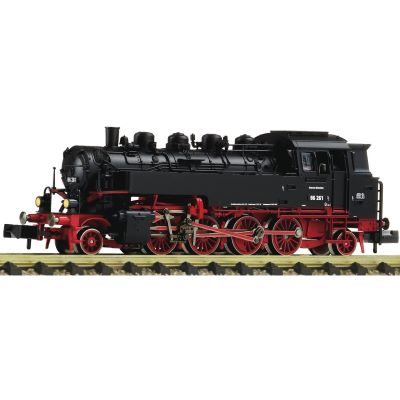
Fleischmann 7170036 N Class 86 steam locomotive, DRG Era II
Fleischmann

7170036 Class 86 Steam Locomotive

N DRG Branch Line

Versatile tank locomotive for passenger, freight and shunting duties.

View Product →
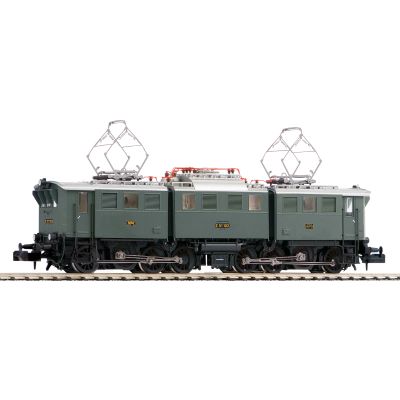
PIKO 40545 N E 91 electric locomotive, DRG Era II
PIKO

40545 E 91 Electric Locomotive

N DRG Electric

Distinctive early electric locomotive for heavy freight traffic on electrified routes.

View Product →
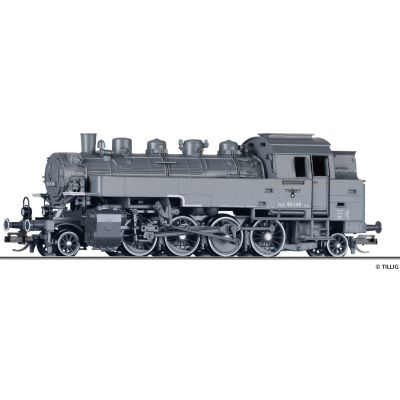
Tillig 02243 TT Class 86 steam locomotive, DRG Era II
Tillig

02243 Class 86 Steam Locomotive

TT DRG Branch Line

Standard-design tank locomotive for compact TT layouts and mixed duties.

View Product →
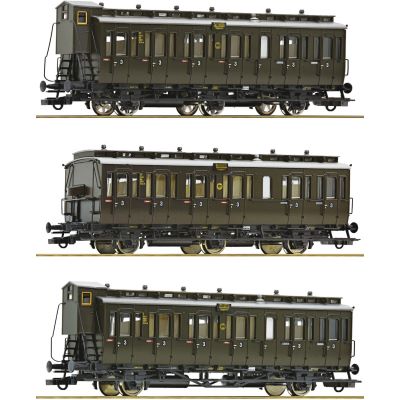
Roco 6200254 H0 three-car passenger coach set, DRG Era II
Roco

6200254 3-Car Passenger Coach Set

H0 DRG Passenger Coaches

Prussian compartment coaches for local traffic and classic passenger trains.

View Product →
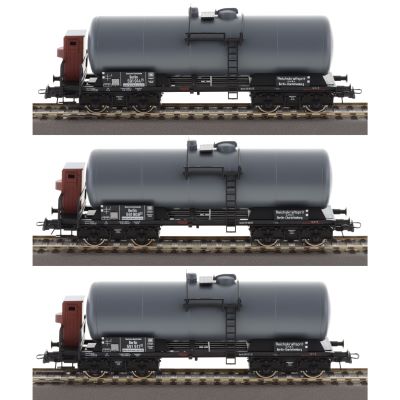
Roco 6600062 H0 three-car tank wagon set, DRG Era II
Roco

6600062 3-Car Tank Wagon Set

H0 DRG Freight Cars

Three tank wagons for industrial, chemical and mineral-oil traffic.

View Product →
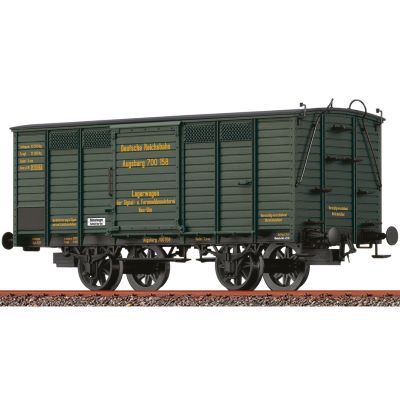
BRAWA 48052 H0 covered freight wagon, DRG Era II
BRAWA

48052 Covered Freight Wagon

H0 DRG Freight Car

Detailed classic wagon for mixed Reichsbahn freight trains.

View Product →
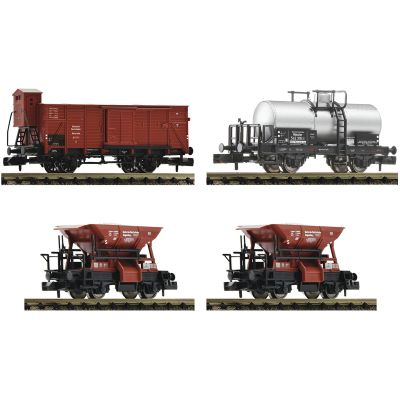
Fleischmann 6660120 N four-car freight wagon set, DRG Era II
Fleischmann

6660120 4-Car Freight Wagon Set

N DRG Freight Cars

Mixed freight wagon set for varied N-gauge operation.

View Product →
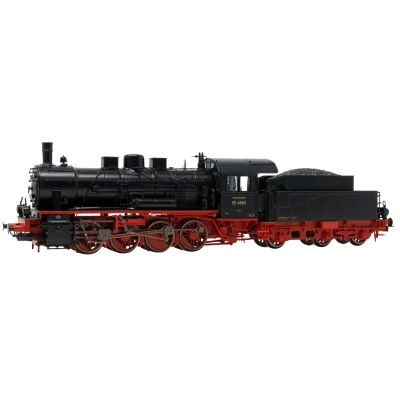
Rivarossi HR2808S H0 Class 55.25 steam locomotive, DRG Era II
Rivarossi

HR2808S Class 55.25 Steam Locomotive

H0 DRG Freight Traffic

Prussian state railway heritage for heavy and mixed freight trains.

View Product →
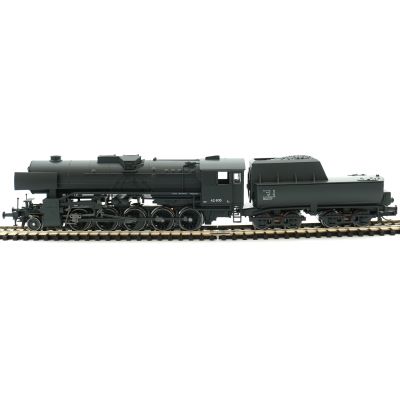
Tillig 02063 TT Class 42 steam locomotive, DRG Era II
Tillig

02063 Class 42 Steam Locomotive

TT Era II Freight Traffic

Heavy freight steam locomotive for the later Reichsbahn period.

View Product →
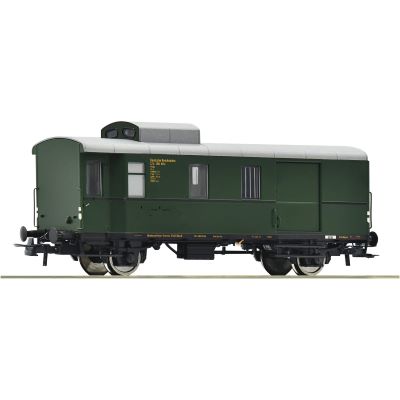
Roco 74223 H0 freight train luggage van, DRG Era II
Roco

74223 Freight Train Luggage Van

H0 DRG Brake Van

Pwgs vehicle for authentic freight and local goods trains of the later Era II period.

View Product →
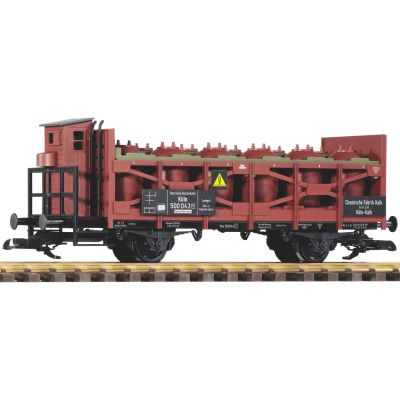
PIKO 37969 G gauge acid pot wagon, DRG Era II
PIKO

37969 Acid Pot Wagon

G DRG Specialist Wagon

Unusual industrial wagon for historic chemical and factory scenes.

View Product →
Frequently Asked Questions

Questions and Answers About Era II

Answers covering the historical period, DRG, vehicles, train formations, gauges and the design of a historically convincing Reichsbahn layout.

When Did Era II Begin and End?

According to the German NEM classification, Era II covers the period from 1920 to 1950. For a more precise model railway representation, the periods IIa, IIb and IIc should also be distinguished.

What Does DRG Mean in Model Railways?

DRG stands for Deutsche Reichsbahn-Gesellschaft. Historically, the actual DRG corporate period primarily covers the years from 1924 to 1937. In model railway terminology, the abbreviation is often used more generally for vehicles of the classic Reichsbahn period.

Which Steam Locomotives Are Typical of Era II?

In addition to inherited state railway locomotives such as the P 8 and G 8.1, standard-design classes including 01, 24, 44, 62, 64 and 86 are particularly characteristic. The appropriate class depends on the route and intended operating duty.

Were Electric Locomotives Already Used in Era II?

Yes. Electric railway operation expanded considerably. E 16, E 17, E 18, E 44 and E 91 are typical examples for suitable electrified routes.

Can State Railway Vehicles Be Used in Era II?

Yes. Many vehicles from Era I remained in service for a long time. The lettering, running number and colour scheme should, however, match the selected year within Era II.

Which Gauge Offers the Largest Selection?

H0 offers the largest overall selection of Era II vehicles and accessories. N and TT are particularly attractive for longer trains in a smaller space, while H0e is ideal for historic narrow-gauge railways.

Which Train Is Suitable for a Small Layout?

A tank locomotive such as Class 64 or 86 with two to four short passenger coaches is especially space-efficient. A local goods train with five to eight freight wagons and several loading points is equally attractive.

Which Coaches Suit a Class 01?

Four-axle express coaches are especially suitable. Depending on the train service, luggage, mail, dining or sleeping cars can be added. Platform length and minimum curve radius should suit the complete train.

Can an Era II Layout Use Digital Control?

Yes. The era describes the prototype rather than the model railway technology. Decoders, sound, digitally controlled turnouts and feedback systems can be used discreetly without changing the historic appearance.

Which Buildings Suit the Reichsbahn Period?

State railway station buildings, signal boxes, goods sheds, engine sheds, water cranes, Wilhelminian-era houses, factories and agricultural buildings are particularly suitable.

Can Era II and Era III Be Combined?

A deliberately represented transition immediately after the Second World War is possible. Later typical DB or East German DR vehicles should not, however, be mixed arbitrarily with classic DRG trains.

Which Era II Layout Provides Plenty of Shunting?

A small station with a goods shed, coal merchant, loading road, livestock ramp and factory siding provides numerous operating tasks. Wagonload freight traffic makes Era II particularly interesting for operation-focused model railway enthusiasts.

From the DRG to a Complete Historic Model Railway Layout

The Model Railway Guide provides further information about gauges, layout planning, track, digital technology, railway companies, train formations, scenery and maintenance.

Open the Model Railway Guide