Modellbahn Keks
Welcome!
Our cookies offer you a fast, relaxed and full-featured shopping experience. Some are necessary to operate the website and its functions. Others help us to improve our services. If you agree to this, simply consent to the use of cookies for preferences, statistics and marketing by clicking on "OK". Alternatively, you can deactivate individual cookies under "Customise cookies" or all cookies, except those required for the function of our website, under "Reject all".
Historic model railway with a steam locomotive and freight wagons representing Era III
Economic miracle, reconstruction and changing traction

Era III Model Railway – DB & DR 1949–1970

Era III Model Railways

Era III combines classic steam operation with the rise of diesel and electric locomotives. The German Federal Railway and the German Reichsbahn develop separately, while branch lines, express trains, railbuses, reconstructed coaches and varied freight traffic shape the railway scene of the 1950s and 1960s.

The classic post-war railway in model form

What Does Era III Mean in Model Railways?

Under the commonly used German NEM classification, Era III covers the period from 1949 to 1970. It begins with the foundation of the Deutsche Bundesbahn in West Germany and the continued independent operation of the Deutsche Reichsbahn in East Germany. Both railway administrations rebuilt their networks and vehicle fleets under different economic and political conditions.

This period is particularly varied for model railway enthusiasts. Numerous steam locomotives inherited from the state-railway and Reichsbahn periods remained in daily service. At the same time, new diesel locomotives, railbuses, modern railcars and electric locomotives appeared. This makes it possible to create both convincing all-steam railways and layouts on which the change in traction is already clearly visible.

Some manufacturers and older catalogues use a broader definition of Era III beginning in 1945. For a historically consistent layout, the precise year represented should therefore be checked in addition to the general era classification. Lettering, class designations, headlight arrangements, railway emblems and vehicle colours could change within only a few years.

Typical scenes range from a small branch-line station with a steam locomotive and short passenger coaches to a railbus or an electrified main-line station with express trains. Local goods trains, transfer workings and international services to neighbouring European railway administrations provide further possibilities.

From reconstruction to modern railway operation

How Do Era IIIa and Era IIIb Differ?

A more precise period helps to combine lettering, colour schemes, coach classes and train formations in a convincing way.

Period IIIa · 1949–1956

Reconstruction and the First New Vehicles

The DB introduced its blue F-train network, the first newly built steam locomotives and 26.4-metre passenger coaches. Passenger traffic still used a three-class system. The DR incorporated additional private railways, made greater use of double-deck trains and tested conversions with pulverised-coal firing. Many older vehicles carried transitional lettering or showed clearly visible repair work.

Period IIIb · 1956–1970

Diesel, Electrification and New Markings

Third class was abolished and both the DB and DR introduced three-light headlights. Diesel and electric operation, TEE services and conversion-coach programmes expanded at the DB. The DR acquired new diesel locomotives, rebuilt its electric network and modernised passenger coaches through reconstruction and modernisation programmes. The DB and DR emblems became an increasingly familiar part of the railway scene.

Why Do Late Era III and Early Era IV Overlap?

International numbering and identification systems began to appear from the mid-1960s. Vehicles with old and new markings could therefore operate together for a limited transitional period. The precise operating condition represented by the model remains decisive.

Two German railway worlds

Deutsche Bundesbahn and Deutsche Reichsbahn in Era III

The DB and DR developed as independent railway administrations. Their vehicles, modernisation programmes and regional themes offer a wide variety of possibilities for model railway layouts.

Deutsche Bundesbahn – DB

West Germany · Economic miracle and changing traction

The DB modernised its network, electrified important main lines and acquired new diesel and electric locomotives. Steam locomotives nevertheless remained indispensable until well into the 1960s.

  • Classes 01, 03, 23, 44, 50, 64, 78 and 86
  • V 60, V 100, V 200 and VT 95 or VT 98
  • E 10, E 18, E 40, E 41 and E 50
  • Conversion coaches, Silberling coaches and green express coaches
  • F trains, express trains, TEE services and extensive freight traffic
Discover the Deutsche Bundesbahn in model form →

Deutsche Reichsbahn – DR

East Germany · Reconstruction, new construction and varied steam operation

The DR retained steam operation for longer, reconstructed many locomotives and developed new classes. Diesel traction and electric operation expanded at the same time. Narrow-gauge railways remained an important part of the network.

  • Classes 01.5, 03.10, 18 201, 22, 23.10, 50.35 and 65.10
  • V 15, V 60, V 100, V 180 and the first V 200 locomotives
  • E 11, E 42 and older electric classes
  • Reko coaches, double-deck trains and modernisation coaches
  • Branch lines, industry, narrow gauge and international East–West traffic
Discover the Deutsche Reichsbahn in model form →
Steam meets diesel and electric traction

Which Locomotives and Coaches Are Typical of Era III?

The simultaneous use of several forms of traction makes Era III one of the most varied periods for vehicles and railway operation.

Steam Locomotives

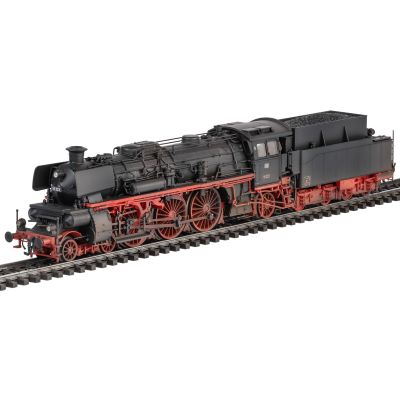
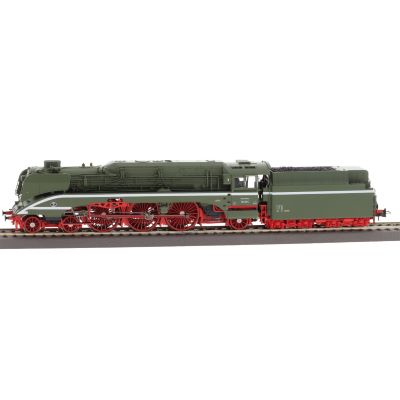
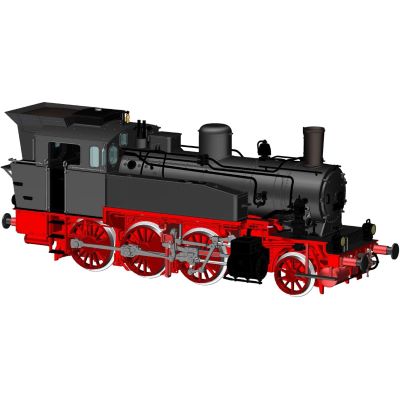
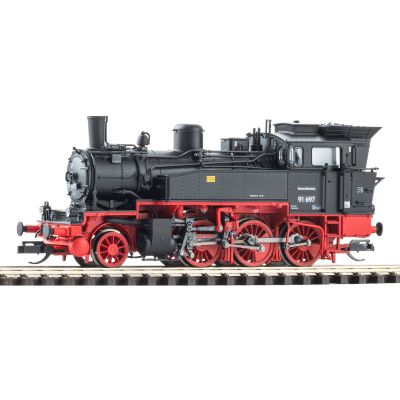
Steam locomotives initially dominated both main and branch lines. Large express locomotives hauled express and F trains, while freight locomotives handled coal, ore and mixed freight trains. Tank locomotives worked shunting duties, suburban services and short passenger trains. Clean showpiece locomotives and heavily weathered everyday machines can be represented at the same time.

Diesel Locomotives and Railcars

Shunting locomotives, the V 100, V 180, V 200 and railbuses represented modernisation. Railcars increasingly replaced short steam-hauled trains on branch lines. A railbus, Köf, V 60 or light main-line diesel locomotive is particularly suitable for a compact layout.

Electric Locomotives

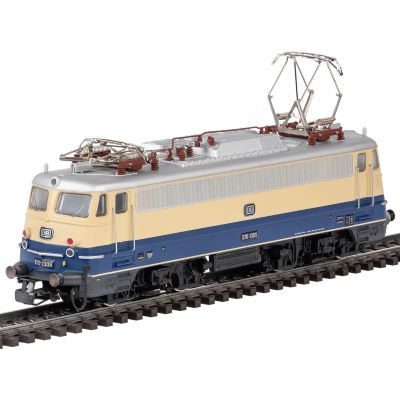
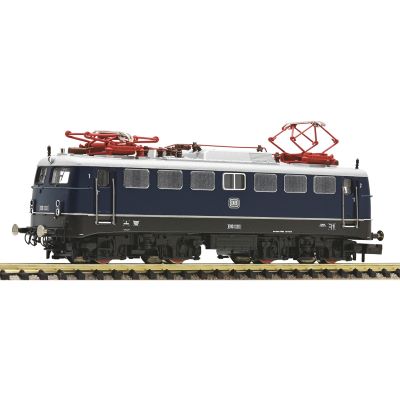
On electrified main lines, older pre-war locomotives operated alongside modern new designs. The E 10 and E 18 suit express trains, while the E 40 and E 42 can haul freight and passenger services. Suitable overhead-line equipment, substations and period-appropriate signals strengthen the appearance of an electrified Era III route.

Passenger Coaches and Freight Wagons

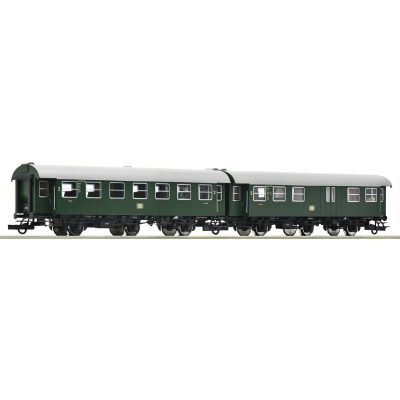
Compartment coaches, Donnerbüchse coaches, conversion coaches, Reko coaches, Silberling coaches, double-deck units and express coaches make numerous passenger formations possible. Covered, open, stake, refrigerated, tank and bulk wagons dominated freight traffic. Many private sidings received individual wagons, creating varied shunting operation.

From branch-line trains to international express services

Prototypical Train Formations for Era III

The following train ideas can be adapted to the available space and the selected railway administration.

Short Branch-Line Passenger Train

A tank locomotive or V 100 with two to four older passenger coaches and a luggage van suits a small station. DB formations can use Donnerbüchse or conversion coaches, while DR trains can include former state-railway coaches and early Reko coaches.

Express and Long-Distance Train

A Class 01, E 10, E 18 or another express locomotive can haul green express coaches together with dining, sleeping and luggage vehicles. International coaches from the ÖBB, SBB, SNCF, NS, PKP or ČSD are convincing on suitable routes.

Local Goods and Transfer Train

Five to twelve different freight wagons, a freight brake van and a medium-sized steam or diesel locomotive provide extensive shunting possibilities. A loading road, goods shed, coal merchant and factory siding create meaningful delivery tasks.

Narrow-Gauge Train

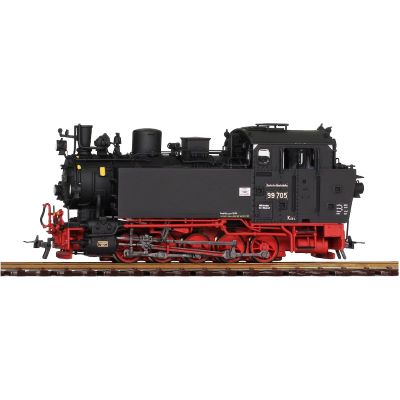
A Saxon IV K or VI K with short passenger, luggage and freight vehicles suits a rural DR route. Transporter-wagon or rollbock operation also allows standard-gauge freight wagons to be carried.

From miniature trains to garden railways

In Which Gauges Are Era III Models Available?

H0 offers the largest selection. Era III vehicles and accessories are also available in Z, N, TT, several narrow-gauge formats, 0 gauge, Gauge 1 and large garden-railway scales.

Gauge Scale Strength Suitable Era III themes
Z 1:220 Very low space requirements DB and DR main lines, long trains and compact collections
N / Nm 1:160 Long trains in a small space Long-distance traffic, main lines, international trains and metre gauge
TT / TTm / TTe 1:120 Good balance between size and space requirements Particularly strong selection for DR, DB and Eastern European themes
H0 1:87 Largest selection of vehicles and accessories Almost all railway administrations, routes and operating types
H0m / H0e / H0f 1:87 Metre gauge, 750 mm railways and field railways Saxon narrow gauge, industrial railways and mountain routes
0 / 0m / 0e approximately 1:45 High level of detail and intensive shunting operation Small stations, locomotive depots, goods sidings and narrow gauge
1 / 1m 1:32 Large and impressive vehicles Steam and diesel locomotives, museum and display operation
G / II often approximately 1:22.5 Robust large-scale and garden railways Branch lines, narrow gauge and DB or DR vehicles outdoors
Coordinating the station, roads and scenery

How Do You Create a Convincing Era III Layout?

In addition to locomotives and rolling stock, buildings, road vehicles, signals and everyday scenes determine the overall historical impression.

Station and Locomotive Depot

Station buildings from the state-railway or Reichsbahn periods remained in use in many places. A goods shed, signal box, loading road, water crane, coaling facility, turntable and engine shed create typical operating sequences. A small locomotive facility with a coal bunker and inspection pit is sufficient for compact layouts.

Signals and Railway Technology

Semaphore signals characterised many main and branch lines. Colour-light signals appeared primarily on modernised routes. Telegraph poles, mechanical barriers, simple platform lights and locally operated points suit the still labour-intensive railway operation particularly well.

Buildings and Street Scenes

Late nineteenth-century houses, small factories, sawmills, farms, filling stations and new buildings from the 1950s and 1960s can be combined. Not every building has to appear new. War damage, repairs and older advertising signs are convincing in scenes set during the earlier years.

Road Vehicles and Everyday Life

VW Beetles and Transporters, Mercedes, Opel and Borgward vehicles suit West German scenes. IFA, Framo, Wartburg, Barkas, Robur and early Trabant vehicles are suitable for East German settings. Bicycles, motorcycles, buses, agricultural vehicles and occasional horse-drawn vehicles complete rural scenes.

Models for steam, diesel, electric and narrow gauge

Important Manufacturers of Era III Models

Märklin, PIKO, Roco, Fleischmann, Tillig, BEMO and Technomodell cover different gauges and themes. Before purchasing, check the power system, digital interface, minimum radius, coupling and, where applicable, the AC or DC version.

H0 offers a particularly large selection. TT includes numerous Deutsche Reichsbahn vehicles and suitable models for cross-border traffic. Fleischmann and PIKO add many N-gauge models, while Märklin offers a wide range for Z gauge. BEMO and Technomodell are important suppliers of Saxon narrow-gauge railways in H0e. Era III vehicles for large layouts and garden railways are available from manufacturers including PIKO.

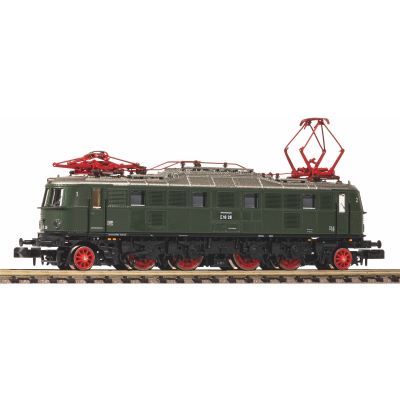
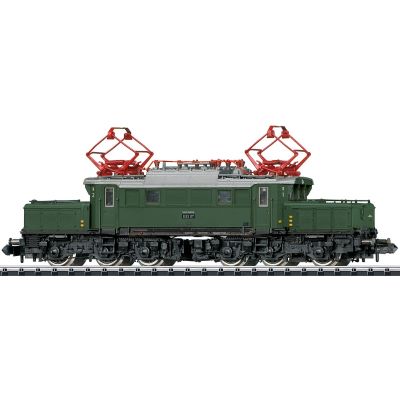
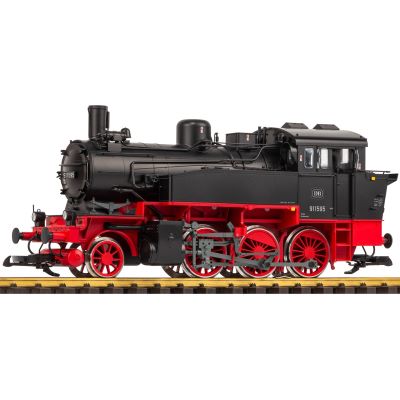
26 suitable locomotives, railcars, coaches and wagons

Era III Models by Gauge

This selection combines DB, DR and other European railway administrations with express, branch-line, freight and narrow-gauge themes. Technical specifications and minimum radii are provided on the individual product pages.

Frequently asked questions

Questions and Answers About Era III

Answers about the historical period, vehicle selection, DB and DR, gauges, train formations and period-appropriate layout design.

When Did Era III Begin and End?

Under NEM 806 D, German Era III covers the period from 1949 to 1970. Older catalogues sometimes include the immediate post-war years from 1945. The precise operating condition represented by the model is therefore more important than the era number alone.

What Is the Difference Between Era IIIa and IIIb?

Era IIIa covers 1949 to 1956 and features reconstruction, the three-class system and the first newly built vehicles. Era IIIb covers 1956 to 1970 and is more strongly characterised by diesel and electric operation, the two-class system, three-light headlights and modernised coaches.

Which Locomotives Are Typical of Era III?

Typical steam locomotives include Classes 01, 03, 23, 44, 50, 64, 78 and 86. Diesel classes include the V 60, V 100, V 180 and V 200, while typical electric locomotives include the E 10, E 18, E 40, E 41 and E 42. The precise selection depends on the DB or DR, the region and the year represented.

Which Coaches and Wagons Suit an Era III Steam Locomotive?

Donnerbüchse coaches, older compartment coaches, conversion coaches or Reko coaches suit branch lines. Express locomotives can haul green express, dining, sleeping and luggage vehicles. Freight locomotives can haul a mixed fleet of covered, open, tank and stake wagons.

Can DB and DR Vehicles Be Operated Together?

Yes, particularly on interzonal trains, international passenger trains, at border stations and in certain freight services. Arbitrary joint operation on the same home route is less convincing. The route and coach order should be historically plausible.

Which Gauge Offers the Largest Era III Selection?

H0 offers the largest selection of locomotives, rolling stock, buildings, signals and road vehicles. TT is particularly strong for DR themes. N and Z allow long trains in a small space, while H0e is especially suitable for Saxon narrow-gauge railways.

Which Era III Train Formation Suits a Small Space?

Suitable formations include a tank locomotive with two or three short passenger coaches, a railbus with a trailer, a Köf with a few freight wagons or a transfer train with five to eight wagons. Platforms, sidings and curve radii can therefore remain compact.

Can an Era III Layout Be Operated Digitally?

Yes. The historical appearance is independent of the control technology. Locomotive decoders, sound, digital couplings, feedback modules and computer-controlled routes can be installed unobtrusively without changing the period appearance.

Which Signals Suit Era III?

Semaphore signals are typical on many main and branch lines. Colour-light signals can be used on modernised or heavily used routes. The specific signal system should match the railway administration, region and selected year.

Which Road Vehicles Suit Era III?

VW Beetles and Transporters, Opel, Mercedes and Borgward vehicles suit West German layouts. IFA, Framo, Wartburg, Barkas, Robur and early Trabant vehicles are appropriate for East German scenes. Bicycles, motorcycles, buses and agricultural vehicles complete the street scene.

Can Era II and Era III Be Combined?

Many Era II vehicles remained in service during Era III. They must, however, carry lettering and national emblems appropriate to the selected year. An unchanged DRG vehicle does not automatically suit a DB or East German DR layout representing the 1960s.

Which Layout Theme Provides Plenty of Operation?

A branch-line station with a loading road, goods shed, coal merchant, factory siding and small locomotive facility provides passenger traffic, freight deliveries and shunting tasks while keeping train lengths and space requirements manageable.

More Planning Guidance in the Model Railway Guide

Discover essential information about gauges, layout planning, digital technology, train formations, railway companies, scenery design, maintenance and model railway control.

Open the Main Guide
Technical basis:
Historical classification based on the MOROP NEM standards . The precise era, power system, digital equipment, coupling and minimum radius should be checked on the individual product page. Editorial status: July 2026.