



1. Application
Control Car, Coach or Special Model?
The application determines the connection, required space and necessary functions.

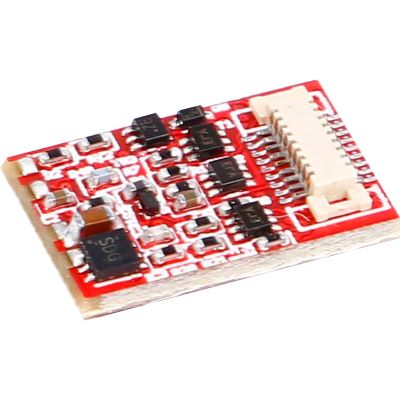
Function decoders switch headlights, tail lights, interior lighting, cab lighting, couplers and effects without controlling a traction motor. This selection guide takes you from the vehicle and interface to the required output rating.
A function decoder receives digital commands from the track and switches electrical consumers inside a vehicle. Typical applications include headlights and tail lights in a control car, interior lighting, destination displays, cab lighting, digital couplers and special lighting effects.
Unlike a locomotive decoder, a dedicated function decoder does not contain a regulated motor output. It can therefore be smaller, less expensive or equipped with a particularly large number of switching outputs. Points and signals on the layout are normally controlled by a stationary switching decoder instead.
Before purchasing, check the interface, installation space, protocol, output type and current rating. LEDs require suitable series resistors. Incandescent lamps, couplers and relays can draw considerably more current and must not overload the decoder.
The application determines the connection, required space and necessary functions.
Next18, PluX, 21MTC and NEM connectors must match the circuit board exactly.
Independently switchable lighting groups normally require their own outputs.
The individual and total current must not exceed the decoder ratings.
Logic-level outputs cannot power electrical consumers without additional circuitry.
At least one common protocol must be supported.
Flashing lights, uncouplers, servos and energy storage require suitable connections.
| Decoder Type | Installation Location | Main Purpose | Motor Output | Typical Application |
|---|---|---|---|---|
| Locomotive Decoder | Locomotive or multiple unit | Motor and vehicle functions | Yes, regulated | Digitising a locomotive without sound |
| Sound Decoder | Locomotive or multiple unit | Motor, functions and sounds | Yes, regulated | Locomotive with driving and operating sounds |
| Function Decoder | Control car, coach or function model | Lighting and auxiliary functions | Normally no | Directional lighting, interior lighting and couplers |
| Switching Decoder | Under or beside the layout | Points, signals and accessories | No | Stationary solenoid accessories and relays |
| Servo Decoder | Vehicle or layout | Control servo movements | Servo pulse | Doors, couplers and moving models |
They can switch suitable LEDs, lamps, relays and couplers directly.
The current per output and permitted total current.
They provide only a control signal and normally require an amplifier.
The circuit-board documentation and external transistor circuit.
Many decoders use a common positive connection for the function outputs.
The wiring and polarity of the vehicle circuit board.
LEDs require current limiting unless this is already provided on the circuit board.
The series resistor, voltage and required brightness.
Time limiting or a kick function protects the coupler and decoder against overheating.
The starting current and maximum activation time.
Outputs can be assigned to function buttons, direction and operating conditions.
The supported buttons and programming options.
Headlights and tail lights are switched according to the direction and selected function button.
Next18, PluX22, 21MTC or NEM 652 to match the circuit board.
Interior lighting, tail lights and destination displays can be controlled separately.
A compact wired or LED version.
Tail lamps remain digitally switchable independently of the locomotive.
A small decoder with only a few outputs.
Couplers require sufficient current and time-limited activation.
A high-current output with an uncoupling mode.
Cranes, doors, hazard lights and working lights can be operated individually.
Numerous outputs or a servo connection.
Large lamps and multiple electrical consumers require a higher current rating.
A robust large-scale function decoder.
Small Next18 or micro decoders fit inside control cars and illuminated vehicles.
Component height and heat generation.
NEM 651, Next18 and PluX12 are frequently used.
The circuit-board pin assignment and installation orientation.
NEM 652, PluX22, 21MTC and wired versions provide numerous outputs.
Distinguish amplified outputs from logic-level outputs.
Higher currents and larger electrical consumers require robust decoders.
The total current and track voltage.
Document the interface, wiring and electrical consumers.
Check lamps, LEDs and couplers individually.
Verify the connector, outputs and digital protocol.
Insulate the wiring against short circuits.
Test the address and individual outputs.
Assign direction, brightness and function buttons.
A dedicated function decoder does not control a traction motor.
The output type and current rating are equally important.
This can damage both the LED and the decoder.
It normally requires an additional amplifier circuit.
The coil and decoder can overheat.
The standard and electrical pin assignment must also match.
The selection includes compact vehicle decoders, versions with standardised interfaces, flexible wired models and robust large-scale decoders.
Micro decoders, Next18, NEM 651 and compact lighting controllers.
Compact lighting and function control.
View Product →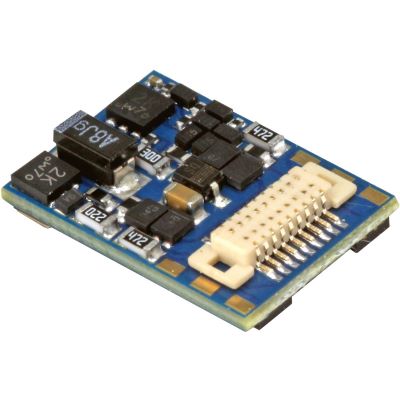
Dedicated DCC version with several outputs.
View Product →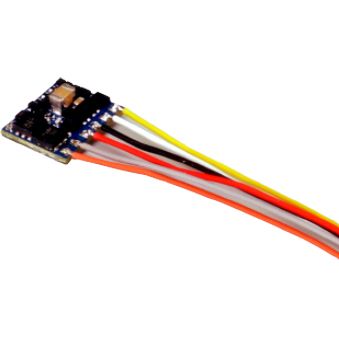
Compact eight-pin version for DCC.
View Product →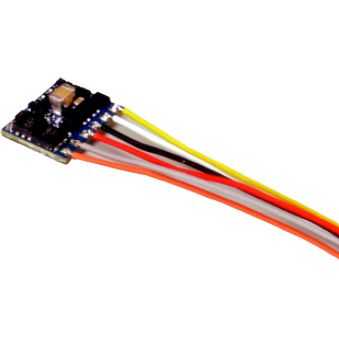
For DCC, Motorola and Selectrix.
View Product →
For coaches and lighting circuit boards.
View Product →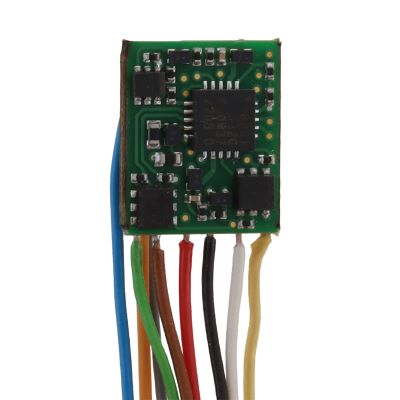
For selected N- and TT-gauge vehicles.
View Product →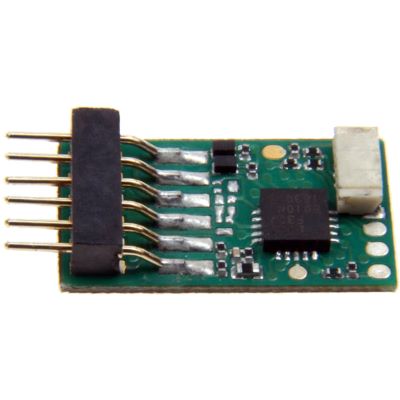
Plug-in decoder for suitable TT-gauge vehicles.
View Product →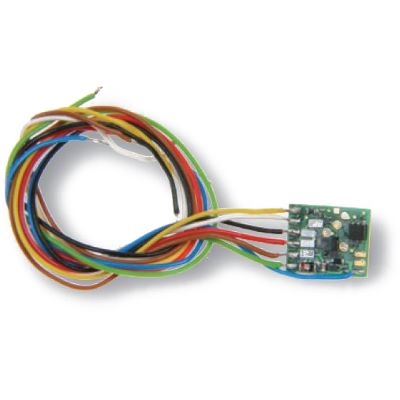
For lighting, flashing and time-controlled effects.
View Product →NEM 652, PluX22, 21MTC and vehicle-specific connections.
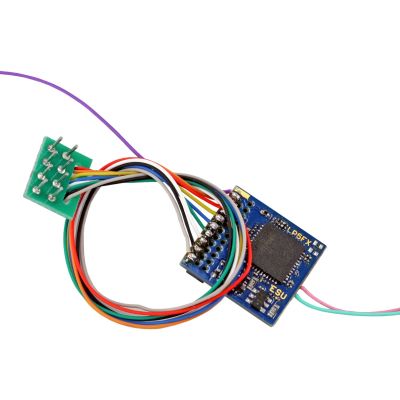
Multiprotocol version with a wiring harness.
View Product →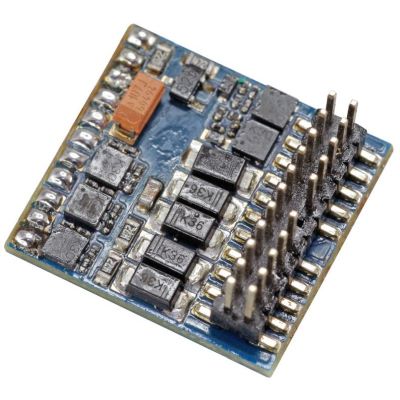
Numerous outputs for modern control cars.
View Product →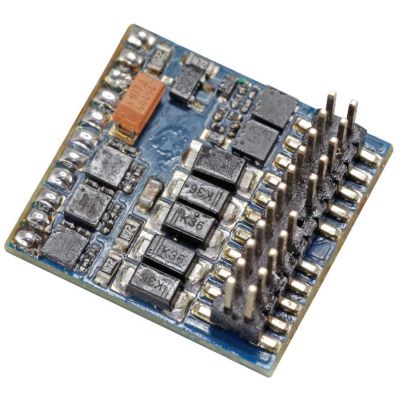
DCC version with extensive function mapping.
View Product →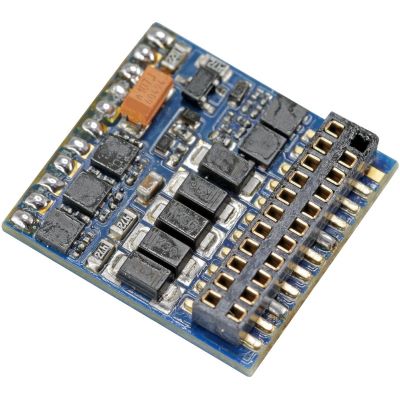
Ten outputs for demanding vehicles.
View Product →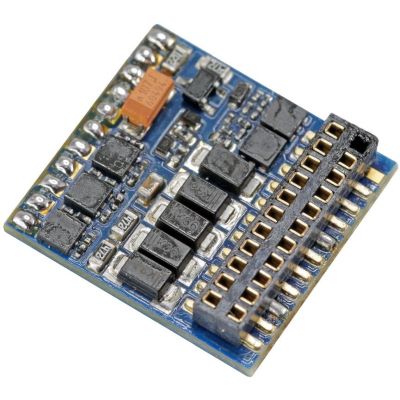
For control cars and function models.
View Product →
For compatible PIKO control-car circuit boards.
View Product →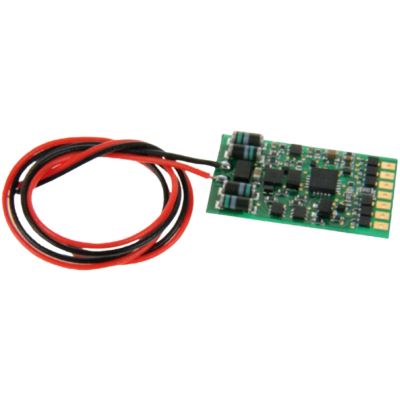
For buffered lighting and special functions.
View Product →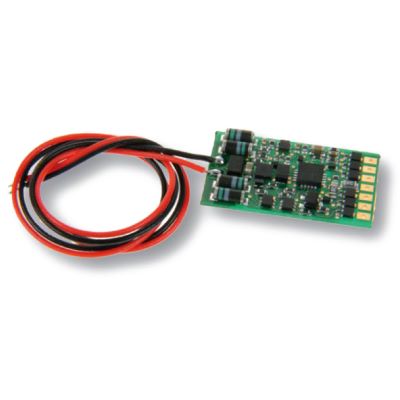
Switching, dimming and flashing inside the vehicle.
View Product →Flexible decoders for coach lighting, special functions and custom conversions.
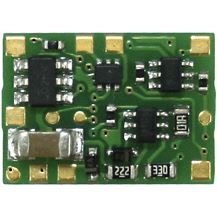
Four outputs and one switching input.
View Product →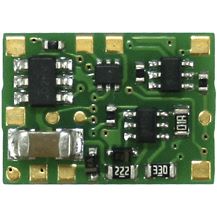
Prewired version for conversions.
View Product →
Numerous switching and connection options.
View Product →
For lighting, servos and special functions.
View Product →
Five outputs and servo options.
View Product →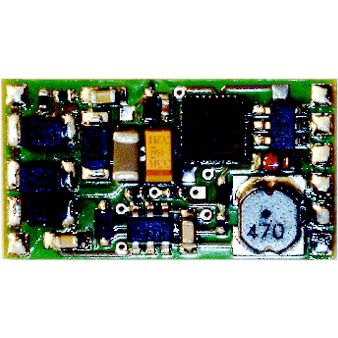
For LED strips and coach lighting.
View Product →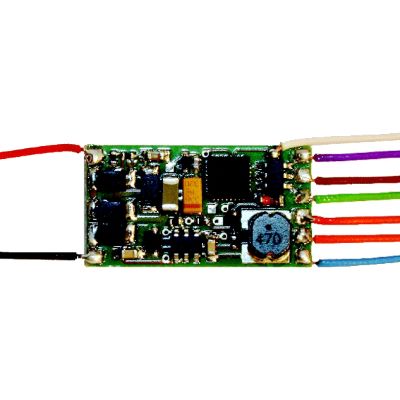
Prewired coach-lighting controller.
View Product →High-capacity decoders for lighting and effects in large vehicles.
It is used for headlights, tail lights, interior lighting, couplers and other switchable functions inside vehicles.
A dedicated function decoder normally does not contain a regulated motor output.
Every independently switchable lighting group or function normally requires its own output.
It can switch a suitable electrical consumer directly, provided that the permitted current is not exceeded.
It provides a control signal and frequently requires an external amplifier.
Yes, unless the vehicle circuit board or decoder already provides suitable current limiting.
Yes, when the output current and time-limited uncoupling mode are suitable for the coupler.
It can bridge brief interruptions in electrical contact and reduce flickering lights.
No. The connector shape, installation orientation and electrical pin assignment are different.
Yes, when the Märklin command station being used can transmit DCC.
A function decoder is normally installed inside a vehicle, while a switching decoder is generally installed in a stationary position on the layout.
Professional conversion is advisable when the circuit board is unknown, currents are high, space is extremely limited or the vehicle is valuable.
This page classifies function decoders by vehicle, interface, outputs, current rating, protocol and gauge.
Content status: 17 July 2026. Check the manufacturer instructions and circuit-board pin assignment before making any connections.
The main guide provides information about locomotive decoders, sound decoders, digital command stations, wiring, lighting and layout planning.