Wagon Keeper, Not Train Operator
VTG lettering primarily identifies the wagon keeper. The train locomotive may belong to DB Cargo, SBB Cargo, a private railway or a foreign railway undertaking.

Compare tank wagons, pressurised-gas wagons, self-unloaders, hood wagons, sliding-tarpaulin wagons and intermodal vehicles in H0, TT, N, Z, 0 and G gauge.
VTG Freight Wagons for Model Railways | H0, TT, N, Z, 0 & G describes models of freight wagons carrying VTG markings or historical VTG lettering. VTG should not be treated as a conventional state railway such as DB, DR, SBB or ÖBB. The company primarily acts as a wagon keeper, lessor and logistics provider. A locomotive belonging to a railway undertaking can therefore haul a train containing wagons from several different leasing companies.
This prototype offers model railway enthusiasts a particularly wide range of operating possibilities. A VTG wagon can run in a short local freight train, a mixed freight train, chemical traffic or a long block train. Depending on its construction and lettering, the model can serve a refinery, tank farm, steelworks, quarry, port, industrial siding, container terminal or international freight corridor.
The selection extends from historical privately owned tank wagons of Era III through wagons from the Deutsche Bundesbahn period to modern vehicles of Era VI . Before purchasing, check the gauge, power system, wheelsets, couplings, minimum radius and period represented by the lettering.
VTG’s development reaches back to the early Deutsche Bundesbahn period. A model railway can therefore represent both historical privately owned wagon traffic and modern cross-border rail freight.
VTG lettering primarily identifies the wagon keeper. The train locomotive may belong to DB Cargo, SBB Cargo, a private railway or a foreign railway undertaking.
Many wagons are designed for international traffic. They can therefore be combined credibly with German, Austrian, Swiss, French, Dutch or Eastern European locomotives.
The logo design, inscription panel, wagon number, keeper marking and inspection dates help establish the period represented. The era stated on the individual product page remains decisive.
VTG, GATX, Wascosa and Ermewa wagons can run together in one freight train. A compatible type of cargo, plausible route and common period are more important than identical ownership markings.
Just a few wagons create shunting duties at a tank farm or steelworks. Several similar vehicles form a convincing block train for the main line, hidden yard or freight terminal.
The wagon design indicates which goods are carried and which industrial buildings suit the scene. Selecting a card applies the corresponding wagon type directly to the product filter.
Tank wagons carry mineral oil, chemicals and other liquids. Their tank shape, insulation, running gear and technical equipment vary according to the intended cargo.
Filter Tank WagonsThese vehicles have distinctive pressure vessels and carry liquefied gases. Uniform wagon groups are especially suitable for refineries and gas-storage facilities.
Filter Gas WagonsModern chemical tank wagons frequently have stainless-steel tanks or a characteristic articulated profile. They are prominent in international hazardous-goods and mineral-oil trains.
Filter Chemical WagonsCoal, ore, ballast, sand and other bulk materials are carried in self-unloading wagons. Several identical vehicles form visually impressive block trains.
Filter Bulk WagonsTelescopic hoods and sliding tarpaulins protect sensitive steel products. Stake wagons carry profiles, pipes, timber and other long loads.
Filter Steel WagonsContainer wagons connect rail, road and port transport. They suit modern terminals, long corridor trains and international logistics scenes.
Filter Intermodal ModelsH0 offers the broadest range of wagon types. TT and N enable longer freight trains within a limited area. Z, 0 and G gauge each place different emphasis on space requirements, visual impact and detail size.
| Gauge | Scale | Strength of the VTG Theme | Check Before Purchasing |
|---|---|---|---|
| H0 Gauge | 1:87 | Largest selection of tank, bulk, hood and tarpaulin wagons | AC or DC wheelsets, coupling and minimum radius |
| TT Gauge | 1:120 | Good compromise between train length, detail and space requirements | Coupling pocket, radius and wagon length |
| N Gauge | 1:160 | Long block trains and extensive freight yards in a small area | Tractive effort, gradients and accessible hidden-yard tracks |
| Z Gauge | 1:220 | Modern freight operation on a particularly compact layout | Clean track, gentle gradients and sufficient tractive effort |
| 0 Gauge | usually 1:45 | Large hood and tarpaulin wagons with a strong visual impact | Large radii, usable track length and storage space |
| G Gauge | large scale | Robust tank and tarpaulin wagons for indoor and garden railways | Vehicle profile, radius and outdoor conditions |
The model railway gauge comparison provides a more detailed overview. In H0, the two-rail or centre-contact system additionally determines the required wheelset design.
Every product image remains permanently connected to its corresponding MBS article number. When this section approaches the viewport, the linked English product pages are checked again. Archive notices remove the affected card. Prices, stock levels and delivery information are not copied into this landing page.
These wagons form the core of many VTG collections and suit refineries, chemical works, tank farms and international block trains.
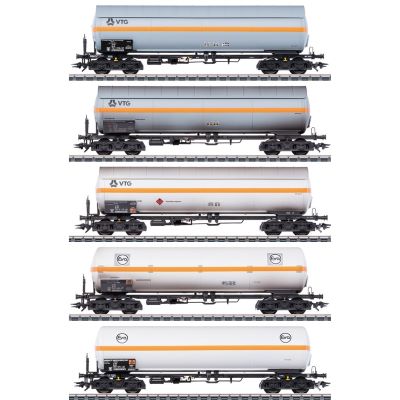
Five four-axle pressurised-gas tank wagons for H0 centre-contact trains of Era IV.
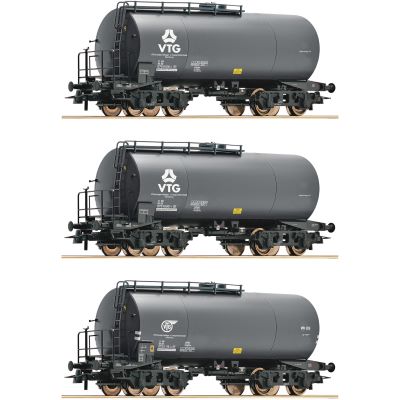
Three-part tank-wagon set for classic DB freight operation in Era IV.
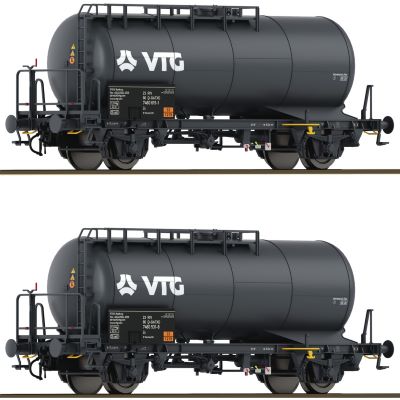
Two compact tank wagons for industrial traffic and modern local transfers.
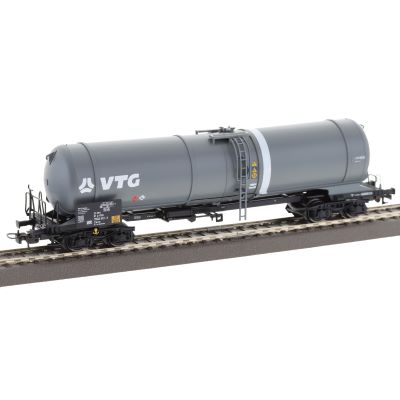
Four-axle Zans wagon for European chemical and mineral-oil trains.
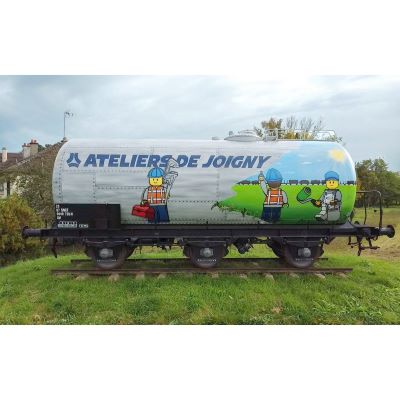
Three-axle VTG wagon with a French connection for Era IV operation.
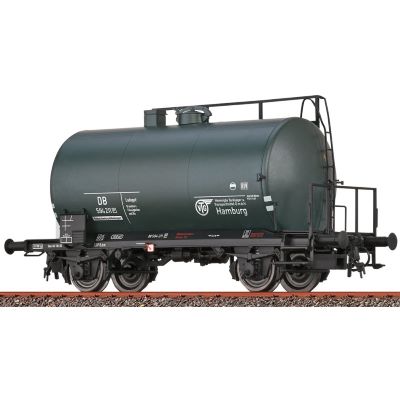
Compact privately owned tank wagon for DB freight traffic in Era III.
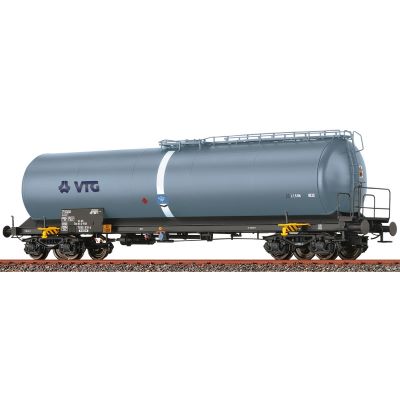
Modern new-build tank wagon for H0 freight operation in Era VI.
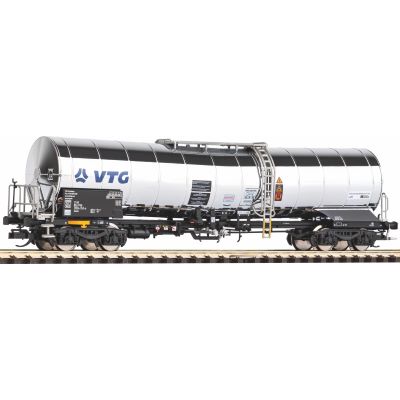
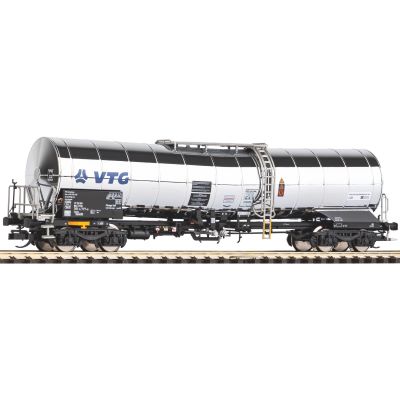
Modern chemical tank wagon with fine VTG lettering for TT gauge.
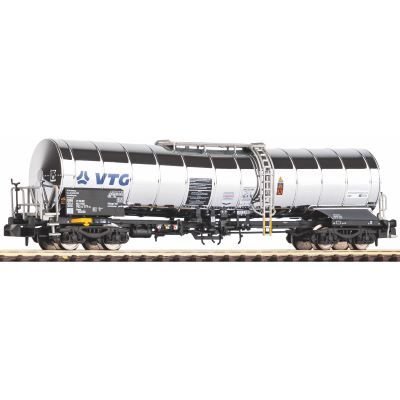
Chemical tank wagon for long, compact N-gauge freight trains of Era VI.
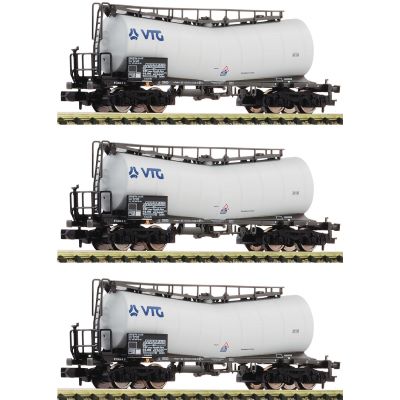
Three Zacns articulated tank wagons for complete block trains in N gauge.
Large-scale chemical tank wagon for modern industrial and tank-train themes.
Self-unloading, silo and high-sided wagons represent coal, ore, ballast, grain, scrap and other bulk-goods traffic.
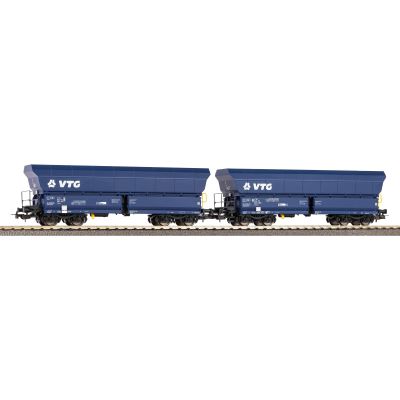
Two self-unloading wagons for modern bulk-goods and block-train traffic.
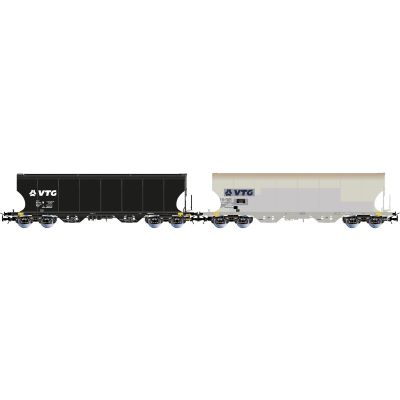
Two silo wagons for grain traffic, ports and the food industry.
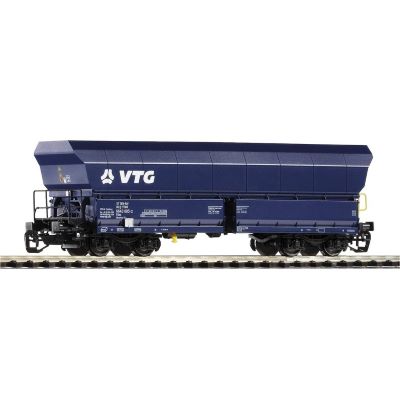
Individual wagon for coal, ore and raw-material trains in TT gauge.
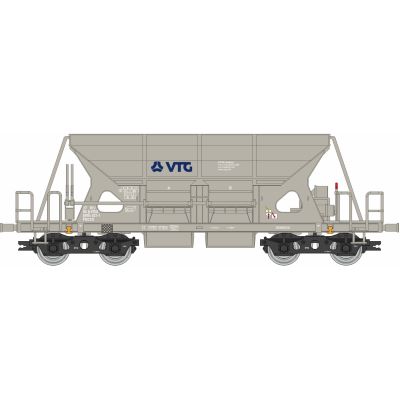
Highly detailed wagon for gravel, sand and mineral raw materials.
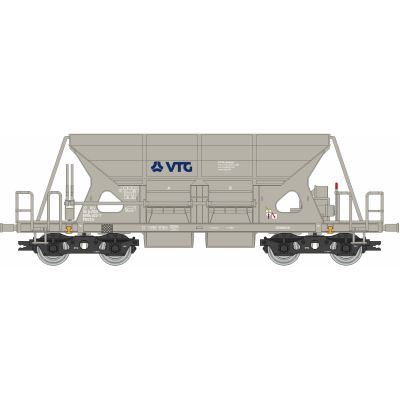
A further running number for credible TT wagon groups and block trains.
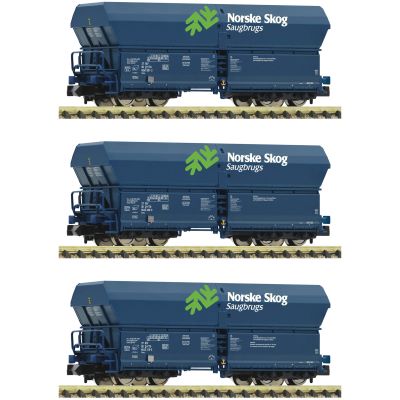
Three wagons for compact but visually long bulk-goods block trains.
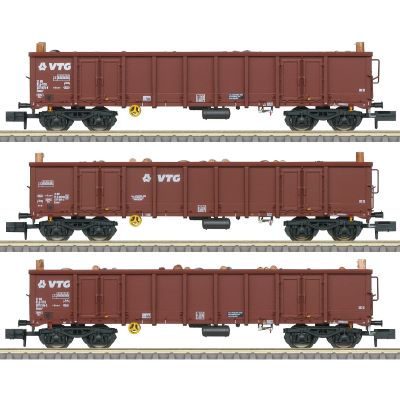
High-sided wagons for scrap, timber and other weather-resistant bulk loads.
Protected hood and tarpaulin wagons together with open stake wagons suit steelworks, rolling mills, mechanical engineering and industrial sidings.
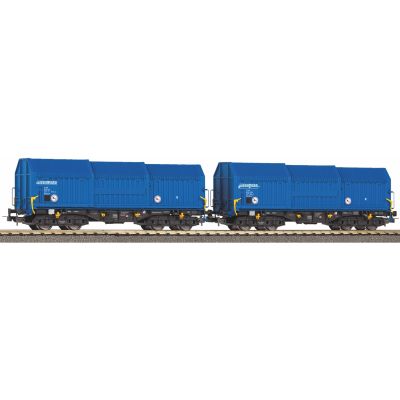
Two protected wagons for steel coils and other sensitive steel products.
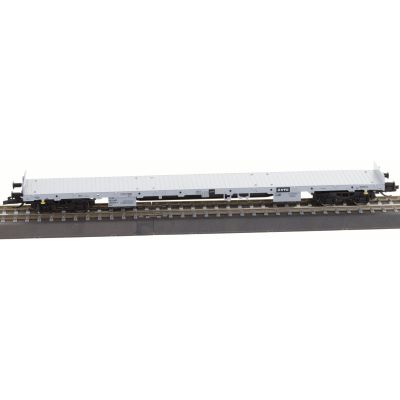
Stake wagon for profiles, pipes, timber and other long loads.
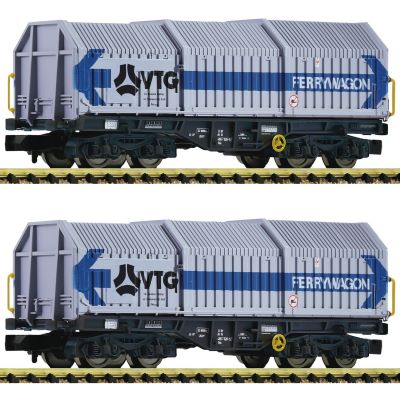
Two Shis wagons for period-appropriate steel traffic in Era IV.
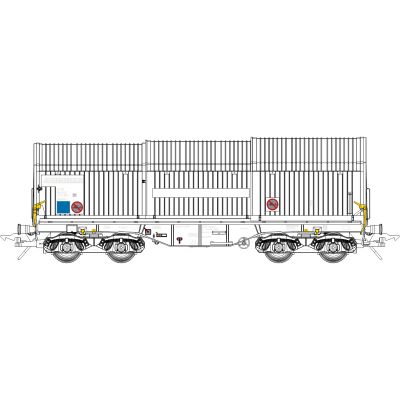
Large Shimmns model with a strong visual impact for Gauge 0 shunting operation.
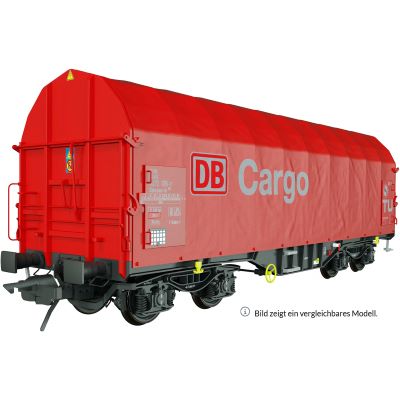
Shimmns-tu wagon for large Gauge 0 steel and industrial layouts.
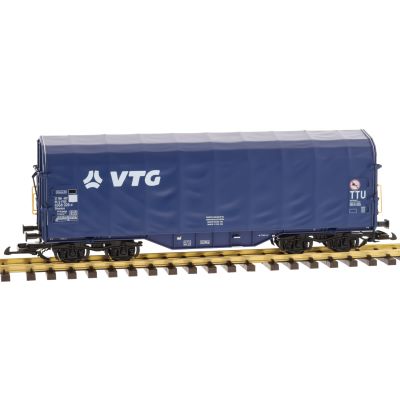
Large-scale wagon for protected steel products and modern industrial trains.
Container wagons complement terminals and port layouts. A complete starter set combines a locomotive, VTG wagons, track and control equipment for a compact introduction.
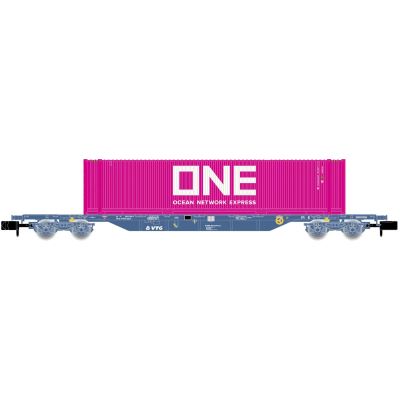
Intermodal wagon for ports, terminals and international corridor trains.
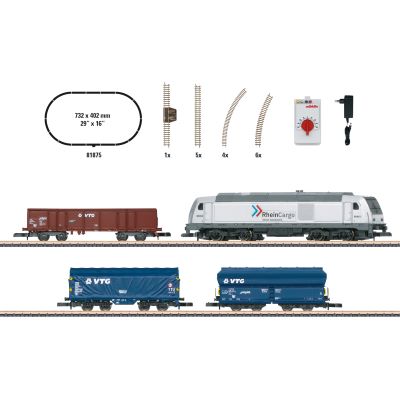
Class 285 diesel locomotive, three VTG wagons, track and controller for compact modern freight operation.
No matching VTG products were found for this filter combination. Remove one filter or reset the selection.
The selection is distributed across several manufacturers and gauges. Each logo leads to the corresponding English manufacturer page at Modellbahnshop.
A locomotive, industrial siding, cargo and additional wagon keepers turn individual VTG models into a coherent operating sequence.
Select further wagon types for mixed freight trains.
Compare passenger and freight wagons by gauge.
Learn about designs, cargoes and operating uses.
Add models from another international leasing fleet.
Discover modern tank, modular and specialist wagons.
Combine further European leased freight wagons.
Create present-day European railway operation.
Find suitable locomotives and national railway themes.
A train does not need to consist exclusively of identical VTG wagons. The era, transport task, route, train length and locomotive are decisive. These six steps provide a coherent framework for the formation.
A historical privately owned tank wagon of Era III requires a different setting from a modern Zacns or Shimmns wagon.
Tank wagons belong at a tank farm, Falns wagons at a bulk-goods facility and hood wagons at a steelworks or rolling mill.
The locomotive does not need to carry the VTG logo. It may belong to DB Cargo, a private railway or a foreign operator.
Mixed wagon fleets are plausible when construction, cargo, period and route are compatible.
Long tank-wagon trains require sufficient tractive effort and usable track length. Short local transfers also work convincingly on a compact layout.
Dust, rust and running traces should suit the cargo without obscuring inscriptions or safety-related markings.
These answers help with the prototype, era, gauge, power system and intended transport task.
VTG primarily acts as a wagon keeper, lessor and logistics provider. It supplies freight wagons for different transport tasks. The locomotive may be operated by another railway undertaking.
Common models include tank, pressurised-gas, chemical, bulk, silo, high-sided, telescopic-hood, sliding-tarpaulin, stake and container wagons. Availability depends on the gauge and era.
H0 generally offers the greatest variety. TT and N are particularly suitable for longer freight trains. Selected models are also available in Z, 0 and G gauge.
Select a freight locomotive appropriate to the represented era and region. Modern VTG trains may be hauled by DB Cargo, SBB Cargo, private railways or foreign operators.
Yes. Mixed wagon keepers are common in European freight traffic. For a coherent model, the wagon types, cargoes, lettering periods and routes should be compatible.
VTG models are available from the early Deutsche Bundesbahn period onwards. The selection is particularly broad in Eras IV, V and VI, which allow numerous tank, steel and logistics services to be represented.
The technical vehicle version must suit the track system. Some wagons require suitable replacement wheelsets when changing between two-rail and centre-contact operation. Check the specification on the individual product page.
Two or three wagons already form a credible local transfer. A block train looks convincing with several identical or closely related wagons. The maximum length depends on the layout, gradients and available tractive effort.
Suitable themes include tank farms, refineries, chemical works, ports and industrial sidings. A storage track, loading facility and shunting possibilities provide more operation than a simple continuous circuit.
Logos, ownership markings and wagon numbers change over time. Acquisitions and new keeper markings may also remain visible. The era stated for the individual model should therefore be observed.
From gauges and eras through track systems to prototypical train formation, the central knowledge overview leads to further planning and technical topics.