Tank Wagons for Liquids
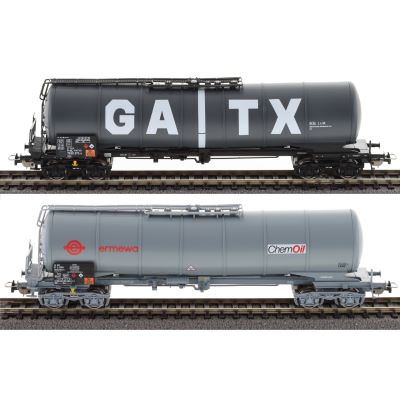
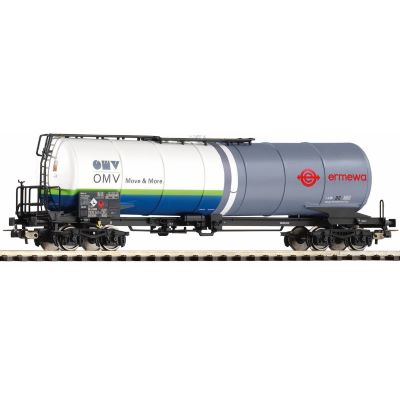
Zacns, Zacens, Zans and similar designs transport petroleum products or liquid chemicals. They are suitable for tank farms, refineries and tank wagon block trains.
Tank wagons, silo wagons, sliding-tarpaulin wagons, container wagons and self-unloading wagons for modern freight trains in Eras V and VI. Discover Ermewa models from different manufacturers and suitable additions for international block trains, industrial sidings and mixed freight traffic.
Ermewa is not a traditional state railway with its own passenger trains, but a freight wagon lessor and fleet manager. Its vehicles are used by different railway undertakings. An Ermewa wagon can therefore run behind locomotives belonging to various railway companies and private operators.
This creates a particularly wide range of possibilities for model railway enthusiasts. An Ermewa tank wagon can form part of an international chemical train, while silo wagons are used in agricultural traffic, sliding-tarpaulin wagons in steel transport and container wagons in intermodal traffic. The lessor's logo does not automatically determine which locomotive hauls the train.
Most of the available models represent modern operating conditions from Era VI. They are suitable for Traxx, Vectron and EuroDual locomotives, modern diesel locomotives, international freight operators and present-day industrial facilities. Individual wagons can also be used in late Era V scenes.
The scene becomes especially convincing when the wagons are selected according to their transport task rather than colour alone. A tank farm requires tank wagons, a steelworks requires sliding-tarpaulin or coil wagons, a mill requires silo wagons and a terminal requires container or pocket wagons.
The wagon design indicates which load is transported. This helps determine suitable industries, locomotives and additional wagons for a convincing train.
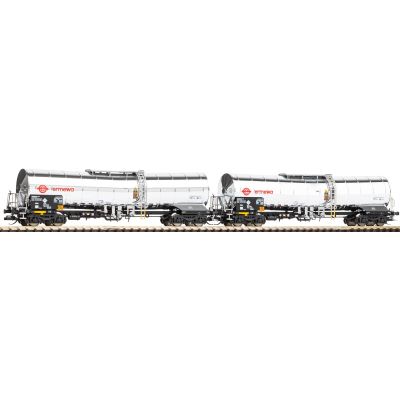
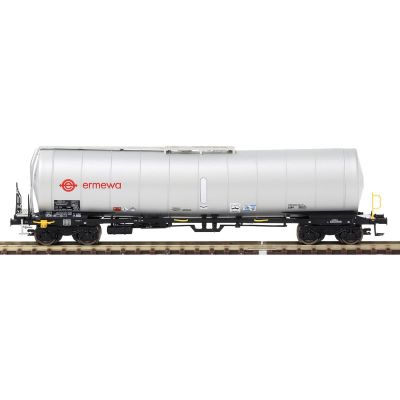
Zacns, Zacens, Zans and similar designs transport petroleum products or liquid chemicals. They are suitable for tank farms, refineries and tank wagon block trains.
Zags wagons have a long pressure vessel and prominent fittings. They form specialised dangerous-goods trains between chemical plants, storage facilities and transshipment terminals.
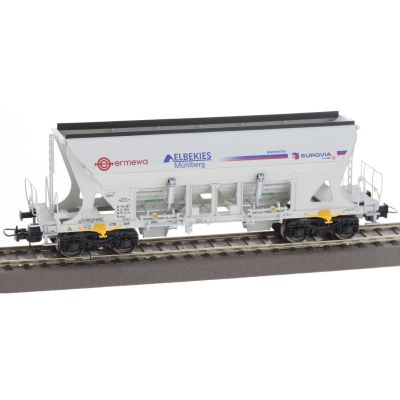
High-capacity Tagnpps and related wagons transport grain, animal feed or powdered materials between agricultural merchants, mills, ports and industrial facilities.
Shimmns and similar wagons protect steel coils, sheet metal and sensitive industrial products. Their large side panels create a clearly recognisable structure within the model train.
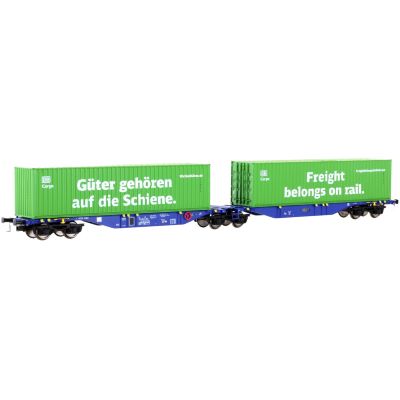
Articulated carrier wagons, container wagons and T3000e pocket wagons are used in intermodal transport. Suitable terminals, gantry cranes and lorries bring this modern layout theme to life.
Faccns and related designs carry ballast, sand and construction materials. They are suitable for infrastructure trains, track works, quarries and construction companies.
The range focuses on H0, TT and N. The right choice depends on the available space, the desired train length and the preferred level of detail.
| Gauge | Scale | Typical Wagons | Key Strength | Suitable Layouts |
|---|---|---|---|---|
| H0 | 1:87 | Tank, tarpaulin, container, silo and self-unloading wagons | Widest selection and clearly visible details | Industry, shunting operations and main lines |
| TT | 1:120 | Chemical, gas and petroleum tank wagons plus container wagons | Good balance between train length and visible detail | Medium-sized rooms and long freight trains |
| N | 1:160 | Sliding-wall and grain silo wagons | Realistic wagon counts in a compact area | Main lines and spacious landscapes |
| Z, 0, 1 and G | Various | Occasional special models or custom liveries | Individual collector and scratchbuilding projects | Specialist themes and large-scale railways |
For more background, see the Model Railway Gauge Comparison .
Several model railway manufacturers produce Ermewa wagons. Differences include the scale, wagon type, detailing, coupling system and wheelset configuration. The brand pages provide access to further locomotives, wagons and accessories.
Tank wagons, sets and modern intermodal wagons for H0 and TT.
H0 wagon sets for the centre-conductor system and modern Era VI trains.
Finely detailed H0 freight wagons and suitable wagons from other lessors.
High-quality tank wagons with numerous separately fitted details.
Ermewa tank, gas and self-unloading wagons in H0 and TT.
Container, sliding-wall and silo wagons for TT and N scale.
French and international freight wagons for modern H0 trains.
Long articulated and container wagons for international intermodal trains.
Modern high-capacity tank wagons in H0 and TT.
N scale vehicles for extending long modern freight trains.
Specialised freight wagons and high-capacity silo wagons.
European freight wagons for international train formations.
H0 offers the widest variety of Ermewa models. Tank wagons are joined by tarpaulin, container, bulk and self-unloading wagons. Clearly visible lettering and fittings make the models suitable for both layout operation and display collections.
H0
Two lessor liveries for varied modern tank trains.
View Product →
H0
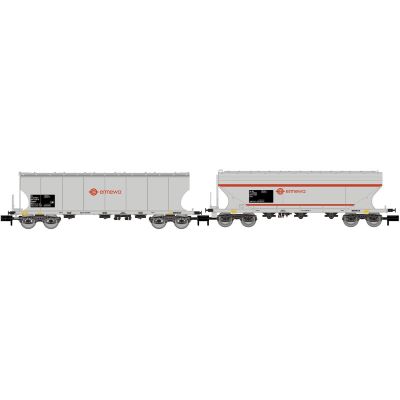
Two-piece set for bulk and industrial traffic.
View Product →
H0
Articulated carrier wagon for long international intermodal trains.
View Product →
H0
Distinctive single wagon for chemical and petroleum traffic.
View Product →
H0
Model for refinery, tank-farm and petroleum trains.
View Product →
H0
Finely detailed wagon for demanding train formations.
View Product →
H0
Two wagons for protected steel and coil transport.
View Product →
H0
Mixed lessor lettering for a varied train formation.
View Product →
H0
International tank wagon with an eye-catching livery.
View Product →
H0
High-capacity tank wagon with a modern silhouette.
View Product →
H0
Versatile wagon for mixed and uniform freight trains.
View Product →
H0
Faccns wagon for ballast and infrastructure trains.
View Product →TT combines clearly visible details with reduced space requirements. Chemical, gas and petroleum tank wagons form the main focus, complemented by modern container wagons.
TT
Two wagons as the basis of a modern TT tank train.
View Product →
TT
Loaded wagon for international intermodal trains.
View Product →
TT
Long pressurised gas tank wagon for dangerous-goods traffic.
View Product →
TT
Modern dangerous-goods wagon with distinctive lettering.
View Product →
TT
Single wagon for extending existing tank trains.
View Product →N scale makes it possible to represent trains with high wagon counts in a manageable space. Sliding-wall and silo wagons create clearly visible accents in mixed or uniform formations.
Modern freight trains do not always consist exclusively of wagons from a single lessor. GATX, VTG or Wascosa wagons can convincingly supplement Ermewa formations when the wagon design and transport task match.
A convincing train formation follows a recognisable transport task. The wagon design, loading point, locomotive and represented era should create a coherent overall scene.
Combine Zacns, Zacens and Zans wagons from Ermewa, GATX, VTG or Wascosa. A modern electric or diesel locomotive can handle traffic between a refinery, tank farm and chemical plant.
Several silo wagons form a complete train between an agricultural merchant, grain store, port and mill. Pipework, silo towers and lorries explain the loading operation.
Shimmns and sliding-wall wagons transport coils and sheet metal. Industrial halls, gantry cranes and stored steel coils create a suitable layout scene.
Container and pocket wagons from different owners are combined into a long train. Its destination is a terminal with a crane, semi-trailers and container stacks.
Self-unloading wagons are suitable for quarries, ballast plants and track works. Even a few wagons can form a convincing transfer working on a small layout.
Individual Ermewa wagons can run between covered wagons, container wagons and open freight wagons. This formation is particularly suitable for transfer yards and branch lines.
Use two to four related wagon designs and several different running numbers. A small number of colour accents usually looks more realistic than a random sequence of completely different vehicles.
The nominal scale must first match the layout. H0 runs on 16.5-millimetre track, TT on 12-millimetre track and N on 9-millimetre track. Vehicles from different nominal scales cannot be used together on the same track system.
The wheelset configuration is also important in H0. Many wagons are supplied for two-rail DC layouts, while Märklin wagons often have wheelsets for the centre-conductor system. The H0 AC or H0 DC guide explains the differences.
Long four-axle tank, container and sliding-wall wagons require sufficient lateral clearance on tight curves. Check the recommended minimum radius and examine platforms, signals, overhead-line masts and loading ramps located near curves.
Long block trains also require sufficient usable track length in stations and staging yards, as well as adequate locomotive tractive effort. On a small layout, a single wagon serving a convincing industrial siding can look more realistic than an excessively long train.
These answers help with choosing the scale, wagon type, locomotive and a prototypical train formation.
The lettering identifies the owner or lessor of the wagon. The railway undertaking transporting the wagon may be a different company.
Ermewa mainly operates as a freight wagon lessor and fleet manager. Its wagons can therefore appear in trains operated by different European railway undertakings.
The main selection is available in H0 at 1:87 scale, TT at 1:120 and N at 1:160. Other nominal scales are represented only occasionally.
Most models represent Era VI vehicles. Individual versions can be assigned to late Era V. The specific lettering and operating condition of the model are decisive.
Suitable choices include modern locomotives from DB Cargo, Captrain and other private operators, as well as international multi-system locomotives. Diesel locomotives are also suitable for non-electrified routes.
Yes. Wagons from different lessors can run in the same train. The combination is especially convincing when the wagon type, load and destination match.
Individual tank, silo or self-unloading wagons are suitable for short transfer workings. A tank farm, agricultural merchant or building-materials siding creates a convincing transport task.
The wagon body is independent of the electrical system. The installed wheelsets and any required track-occupancy detection are decisive. Exchange wheelsets may make conversion possible.
In addition to the wagon lessor, users, shippers, logistics partners or product brands may be displayed. Names such as OMV, Chemoil, Eurovia or Green Cargo indicate the wagon's particular use.
Discover background information on vehicles, eras, model railway technology, layout planning, scenery construction and prototypical operation.