Scale 1:220
Miniature Dimensions
Long railway scenes in limited space
A full-size object is reduced to one 220th of its original dimensions. Even large locomotives can therefore measure less than ten centimetres in length.

Märklin Z Gauge combines a scale of 1:220 with a model track gauge of only 6.5 mm. Since 1972, Mini-Club has made it possible to create long trains, complete stations and detailed landscapes within an exceptionally small area.
Märklin Z Gauge stands for extreme miniaturisation without giving up the essential characteristics of a real model railway. The models use a scale of 1:220 and standard Z track with a model track gauge of 6.5 mm.
Märklin introduced its Mini-Club system in 1972. At the time, it was presented as the world's smallest series-produced model railway.
Its greatest attraction is the amount of railway operation that can be accommodated within a small area. Long main-line routes, stations, sidings, bridges and complete miniature landscapes can be created where larger scales would require considerably more space.
This makes Z especially interesting for apartments, tabletop layouts, display cases, compact dioramas and transportable layouts.
The small size does, however, require careful handling, clean track and precise track laying. Good lighting is also helpful when working on vehicles, couplings and scenery in 1:220.
Märklin's Z programme includes locomotives, train sets, passenger coaches, freight cars, starter sets, track and railway accessories covering historical and modern railway themes.
Despite their small size, Märklin Z models can include highly detailed printing, fine engravings, metal chassis parts, LED lighting and compact precision drives.
Construction varies between individual models. Current locomotives may use bell-type armature motors, powered bogies or multiple driven axles depending on the prototype.
A full-size object is reduced to one 220th of its original dimensions. Even large locomotives can therefore measure less than ten centimetres in length.
Märklin offers straight track, curves, turnouts, crossings and accessories designed for the 6.5 mm standard Z model track gauge.
Modern Z locomotives may use compact bell-type armature motors, powered bogies and maintenance-free LED lighting. Technical equipment must always be checked on the exact product page.
Passenger and freight cars use finely proportioned wheelsets and couplings to create complete train formations at the extremely compact scale.
Because wheels, pickups and contact surfaces are very small, contamination can have a noticeable effect on running quality. Track and wheels should remain clean and vehicles should be handled by robust areas rather than delicate details.
Märklin Z covers locomotives, train sets, passenger coaches, freight cars and special editions from many different railway companies and historical periods.
Historic steam locomotives provide classic railway atmosphere for state-railway, DRG, DB and DR layouts.
Detailed running gear and metal components are possible even at the small scale, but functions vary by individual model.
The programme ranges from historic electric locomotives to modern classes such as the 101, 120, TRAXX and Vectron families.
Fine pantographs and switchable overhead-line pickup are available on selected models.
Diesel traction covers shunting, construction trains, branch lines and main-line operation from historical prototypes to modern railway companies.
Express, regional and international passenger coaches make it possible to build complete period-specific trains while keeping platform lengths comparatively compact.
Car transporters, tank wagons, covered wagons, open wagons and construction vehicles create varied freight operation on even a small layout.
Märklin regularly produces special liveries and limited production runs. Their future market value is not guaranteed and depends on demand, condition and availability.
The decisive advantage of Z Gauge is its low space requirement. Even a relatively small tabletop can accommodate more track, longer visible routes and larger station areas than would be possible in a larger scale.
This leaves additional room for scenery. Bridges, valleys, roads, stations and complete towns can occupy a larger proportion of the visible layout rather than being compressed around oversized track formations.
Z is also suitable for compact dioramas, display layouts and transportable projects.
A small footprint does not automatically make the hobby easier, however. The tiny vehicles require good eyesight or working magnification, clean track and precise handling.
Z is particularly attractive when the railway has to share space with normal furniture and cannot occupy an entire room.
A permanent or removable tabletop can accommodate a complete operational railway with station, passing loops and scenery.
The small scale makes it possible to combine a model collection and an operational railway in a compact presentation area.
Small dimensions make transportable exhibition layouts practical, provided that the baseboard and delicate scenery are adequately protected.
Long railway routes and complete landscape contexts can be represented within relatively small exhibition cases.
A compact test and display track allows collectible locomotives and trains to be operated without requiring a large permanent layout.
Many Märklin Z products contain very small components and individual product pages specify an age recommendation of 14 years. Always follow the safety and age information for the exact product.
Historic tank and tender locomotives for classic railway eras.
Historic and modern electric locomotives with finely reproduced pantographs and liveries.
Shunting, construction, branch-line and main-line diesel traction.
Regional, express and international passenger stock for complete Z trains.
Covered wagons, tank wagons, car transporters, construction wagons and many other freight types.
Coordinated trains, track, controller and power supply for an uncomplicated start.
Straight track, curves, turnouts and crossings for compact 6.5 mm Z layouts.
Miniature figures and accessories for complete scenes at a scale of 1:220.
Märklin presented Z Gauge at the Nuremberg Toy Fair in 1972. Its 1:220 scale and 6.5 mm track represented an extraordinary level of miniaturisation for a series-produced model railway at that time.
During the following decades, Märklin continuously expanded the Mini-Club programme with locomotives, passenger coaches, freight cars, track and accessories based on German and international prototypes.
Drive technology, lighting and manufacturing methods also evolved. Current analogue locomotives often use compact bell-type armature motors and LED lighting, while newer technological developments are opening additional possibilities for selected digital Z models.
The system has developed into an independent model railway and collector community with enthusiasts in Europe, North America, Japan and other parts of the world.
Märklin's anniversary book documents the development of Z Gauge, layouts, special editions, manufacturing and the history of the Mini-Club community.
Märklin Z traditionally uses two-rail direct-current operation. Many current shop models remain analogue, while digital conversion and selected new factory-digital developments require a more model-specific approach than in larger gauges.
| System | Typical Z Application | What to Check |
|---|---|---|
| Analogue DC | Traditional Märklin Z operation with voltage-controlled speed | Correct controller, clean track and reliable current pickup |
| Retrofitted Digital | Individual locomotives converted with compact specialist decoders | Decoder size, motor compatibility, current consumption and heat |
| Factory Digital | Selected newer Z developments with integrated digital functions | Exact decoder protocol, controller compatibility and product specification |
| Digital Sound | Selected technologically advanced Z models | Factory equipment, supported functions and suitable control system |
Current examples such as the Märklin 88529 Class 120 and Märklin 88666 Class 101 W:O:A are still specified by the shop as analogue DC models. Always check the individual product page rather than inferring the control system from the year of release.
Digital conversion in Z requires especially careful attention to available installation space, current consumption and heat development.
Historic state-railway locomotives and early freight and passenger stock for scenes from the pioneering railway period.
DRG steam traction, early electric locomotives and historic freight trains provide classic pre-war railway themes.
Deutsche Bundesbahn and Deutsche Reichsbahn steam, diesel and electric traction together with characteristic post-war passenger and freight stock.
Computerised locomotive numbers, InterCity trains, construction trains and the transition toward modern traction.
DB AG, European railways, modern liveries and the development of international high-speed and freight traffic.
Contemporary railway companies, modern electric locomotives, special liveries and international passenger and freight trains.
Locomotives, coaches, freight cars, road vehicles and scenery look most convincing when they belong to a coherent historical period.
Märklin offers several major model sizes. Z focuses on maximum miniaturisation, H0 provides the broad centre-conductor system and Gauge 1 represents large-scale collector and operating models.
Locomotives, coaches, freight cars, track, control technology and accessories.
The larger 1:87 Märklin system with centre-contact track, mfx digital control and a very broad vehicle range.
Compare Z with N, TT, H0, Gauge 0, Gauge 1 and G by scale, track gauge and space requirement.
The older source page included several examples that are no longer offered. The following selection uses currently reachable Modellbahnshop product pages. Prices and delivery status are deliberately not reproduced here.
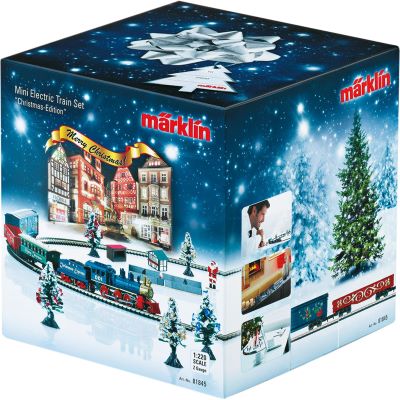
Festive steam freight train with complete track oval, controller and Christmas-market accessories.
View Product →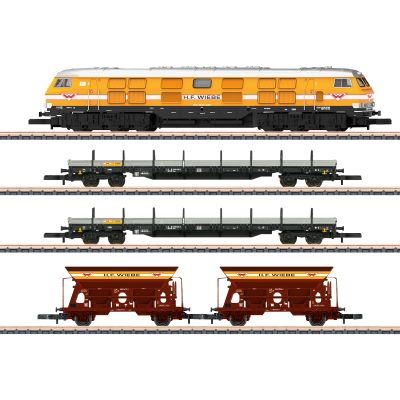
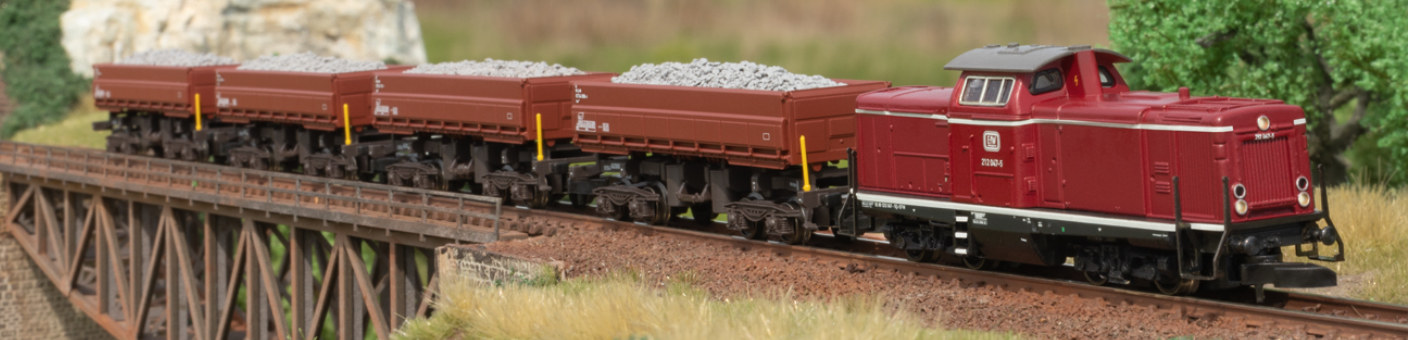
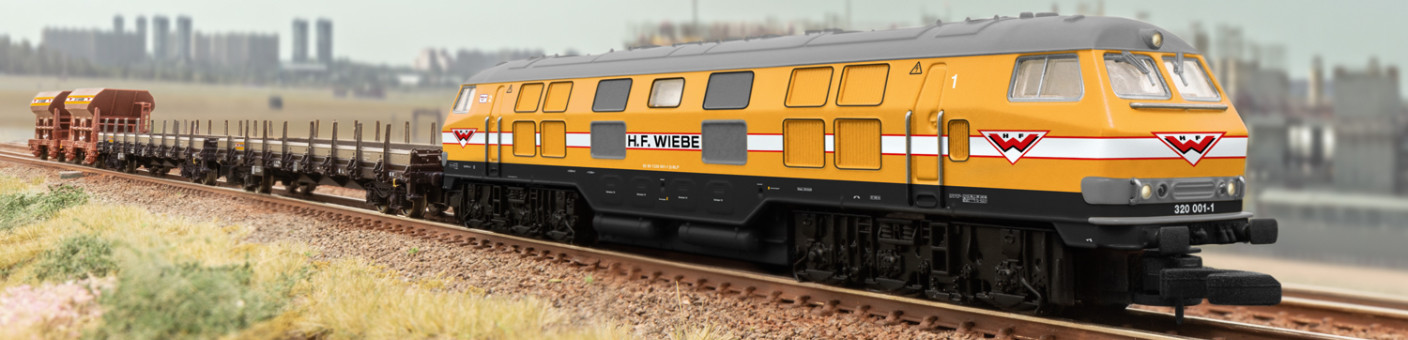
Large V 320 construction-train locomotive with matching low-side and unloading wagons.
View Product →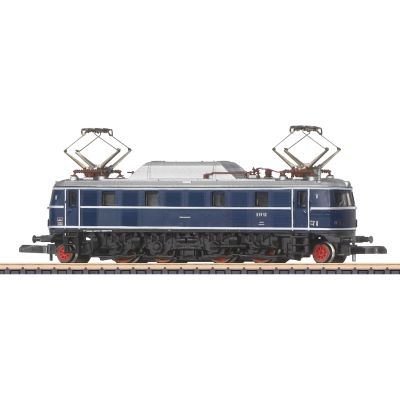
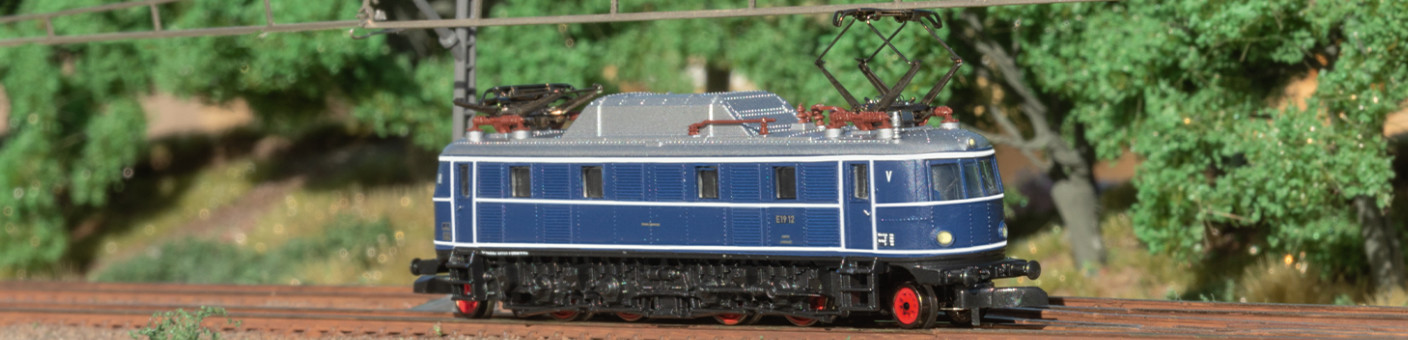
Historic cobalt-blue electric locomotive with bell-type armature motor and LED headlights.
View Product →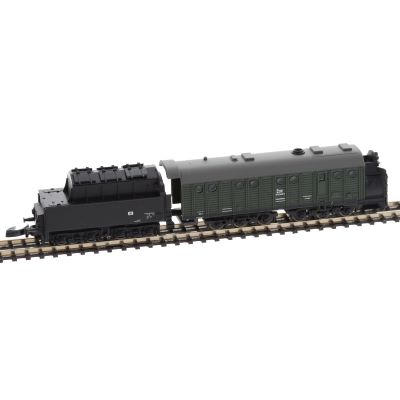
Special railway vehicle with powered blower wheel, tender and detailed winter-service equipment.
View Product →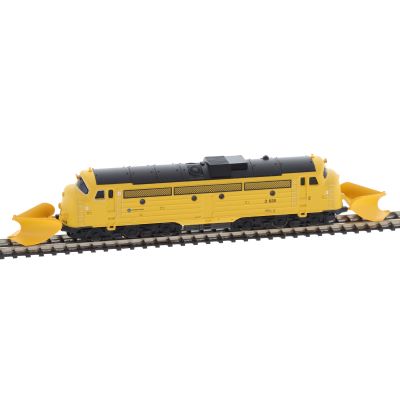
Norwegian NOHAB-derived railway-service locomotive with distinctive snow-clearing equipment.
View Product →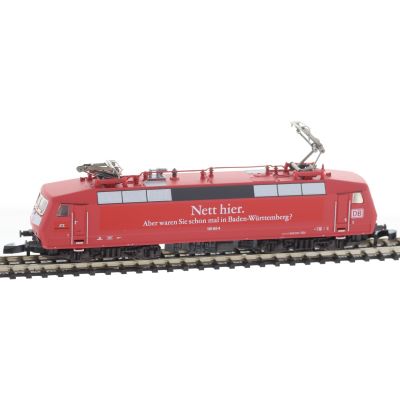
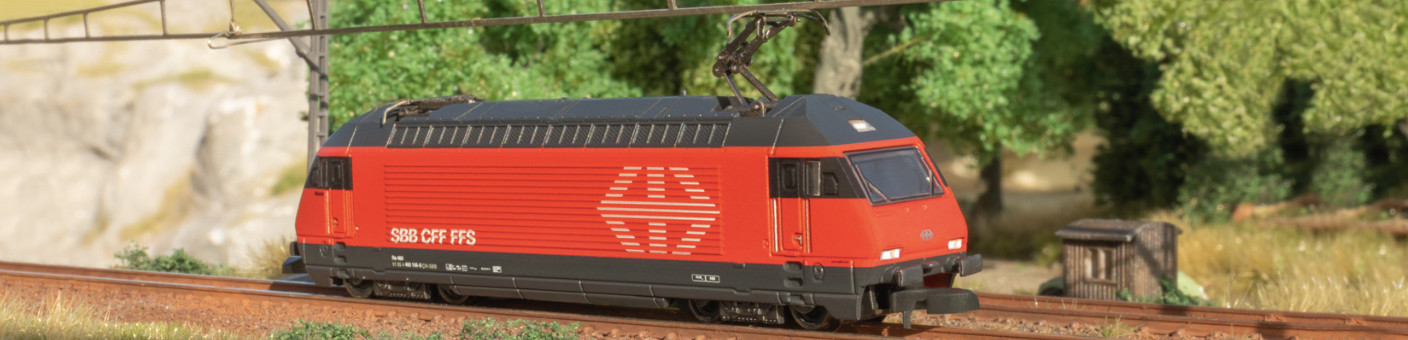
Modern German electric locomotive with bell-type armature motor, powered bogies and overhead-line pickup option.
View Product →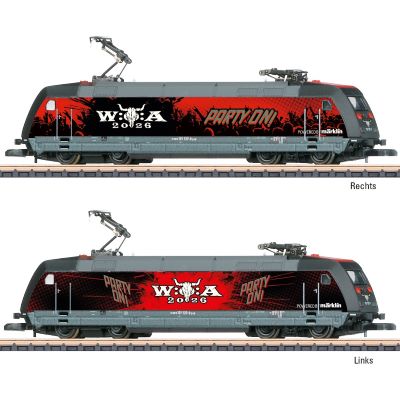
2026 special-edition Class 101 with Wacken Open Air design, LED lighting and analogue DC operation.
View Product →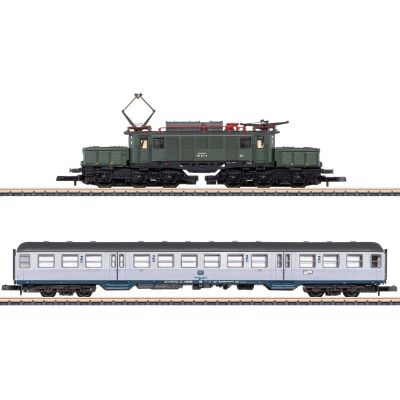
Commemorative Z train set representing 175 years since the opening of the Geislinger Steige.
View Product →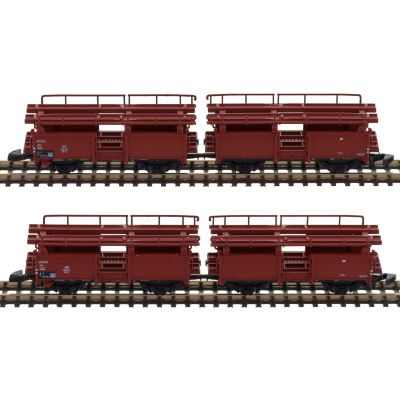
Two permanently coupled wagon pairs for period-correct vehicle transport trains.
View Product →Use the live Märklin brand page and shop filters to select Z Gauge, vehicle type, railway company, era and current availability.
Define the exact usable length and depth before purchasing track. Leave space around the edge for safe operation and access.
Z makes very compact curves possible, but larger radii improve the appearance of long locomotives and passenger trains.
A turnout, siding and passing loop provide significantly more operating interest than a simple continuous oval.
Run every intended locomotive and train in both directions before fixing track, building tunnels or adding ballast.
Small scale does not eliminate derailments. Tunnels and hidden sidings must remain reachable for cleaning and recovery.
The strongest Z layouts do not simply fill the saved space with more track. Leave room for realistic countryside, stations and distance between scenes.
Z saves the most space among the commonly used standard model railway sizes, while larger scales can be easier to handle and offer larger visible details.
Märklin Z is more than simply a smaller railway. Its scale changes how complete railway landscapes can be planned. Long routes, stations and full train formations become possible within an area where larger scales would require considerable compromises.
Z allows a complete operational railway in spaces where larger model sizes may only accommodate a short display track.
The programme covers steam, diesel and electric traction across historical and modern railway periods.
Traditional analogue DC operation remains highly relevant, while selected new developments are expanding digital possibilities in the miniature scale.
The greatest rewards come from careful track laying, clean running surfaces and deliberate landscape planning.
Märklin Z uses a scale of 1:220 and a model track gauge of 6.5 mm.
Märklin presented Mini-Club in 1972. At the time it was introduced as the world's smallest series-produced model railway.
Traditional Märklin Z uses analogue two-rail DC operation, and many current models remain analogue. Digital conversion is possible for suitable vehicles, and selected newer Märklin developments also introduce factory digital and sound technology.
No. Z uses 6.5 mm two-rail track at 1:220. Märklin H0 normally uses 16.5 mm centre-contact track at a scale of 1:87.
The required space depends on the selected track plan and curve radii. Z permits very compact layouts, but additional space should still be allowed for scenery, safe layout edges and access.
It can be, particularly when space is very limited. The small vehicles require careful handling, good lighting and particularly clean track, so some beginners may find larger scales easier to work with.
Märklin has produced Z models covering historical state railways, DRG, DB, DR, DB AG and many international railway companies, allowing themes from early railway history through contemporary Era VI.
Yes. Many current locomotives use direction-dependent LED headlights. Exact lighting functions depend on the individual model.
Selected electric locomotives provide switchable power pickup from the overhead line. Check the exact product specification before planning functional catenary operation.
Its compact size allows a large number of vehicles and complete trains to be displayed in relatively little space. Collector value nevertheless depends on condition, completeness, rarity and market demand and is not guaranteed to increase.
Build a compact Mini-Club layout, expand an existing Z collection or compare current locomotives, train sets, passenger coaches, freight cars and track directly in the Märklin range.
English links, current product status, product images and technical information checked: 15 August 2026.