Starter Set, Safe Base and Maintenance
This equipment is sufficient for initial operation, testing and a temporary railway without permanent scenery.

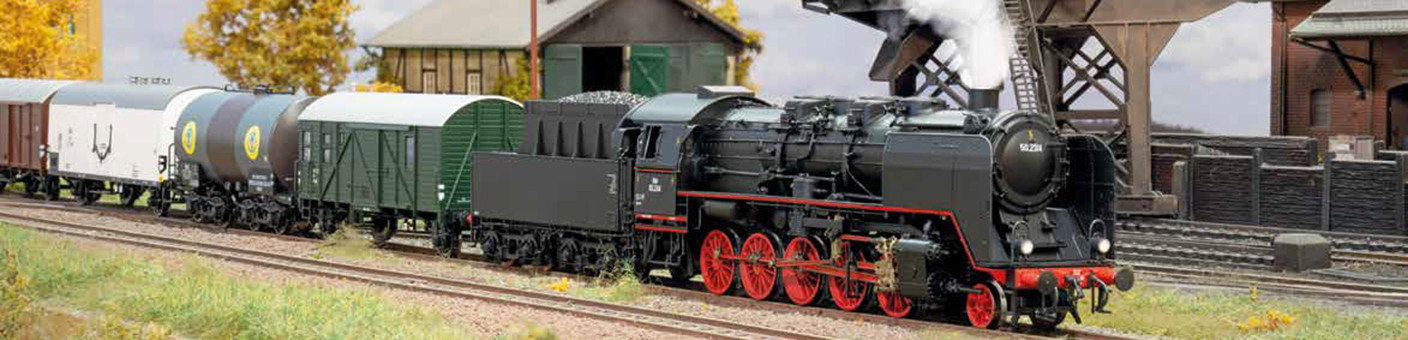
Which components are essential for the first train run? Which accessories improve reliability, and which tools are needed only when building a permanent layout? This complete checklist arranges model railway equipment by purpose and project stage.
The first operating railway requires a train, track, control equipment and a power supply. A complete model railway starter kit normally already contains these coordinated components.
The smallest practical model railway setup consists of a locomotive, matching coaches or wagons, a continuous section of track, an analogue controller or digital command station and the intended power supply.
A temporary setup also benefits from a smooth base, sufficient distance from the table edge, a rerailer matching the selected gauge and suitable cleaning equipment. These simple additions protect the vehicles and prevent dirty rails from being mistaken for a technical defect.
The first operational expansion should normally be a turnout and siding. It creates shunting, loading and vehicle-storage possibilities. The track components must match the exact system. In H0, Märklin C Track, PIKO A-Track, ROCO LINE and Trix C Track are separate track systems.
Tools, a baseboard, additional cables, buildings and scenery become part of the basic equipment only when a permanent layout is being constructed. Begin with a small selection of tools and one completely tested layout section.
This equipment is sufficient for initial operation, testing and a temporary railway without permanent scenery.
Additional routes create shunting tasks and make model railway operation more varied and purposeful.
This equipment is required when track is installed permanently and developed into a complete miniature world.
The finder considers the components already available, gauge, setup type, next project stage and whether the exact track system has been identified.
The table shows which product groups are required for initial train operation, track expansion or permanent layout construction.
| Component | Priority | Purpose | Important Selection Criteria |
|---|---|---|---|
| Locomotive and rolling stock | Essential | Form the first passenger or freight train. | Check gauge, conductor system, minimum radius and coupling. |
| Track | Essential | Creates the route on which the train can operate. | Expand only within one clearly defined track system. |
| Controller and power supply | Essential | Supply power and control locomotives. | Distinguish between analogue, DCC, mfx and other protocols. |
| Setup surface | Immediate | Protects track and vehicles during operation. | Use a level, dry and clean surface with a safe edge distance. |
| Rerailer | Highly Recommended | Guides all wheelsets correctly onto the rails. | Select the correct rerailer for the nominal gauge. |
| Cleaning and maintenance | Highly Recommended | Maintains reliable current collection and running quality. | Use suitable products sparingly and follow instructions. |
| Turnout and siding | First Expansion | Enables shunting and vehicle storage. | Track system, roadbed and geometry must match. |
| Cables and additional power feeds | As the route grows | Maintain the power supply along longer track sections. | Observe polarity, conductor system and manufacturer guidance. |
| Tools | Layout Building | Cut, file, measure, assemble and wire components. | Begin with a knife, side cutter, tweezers and a file. |
| Baseboard | Permanent Layout | Supports track, electrical equipment and scenery. | Plan stability, access points and cable routes. |
| Buildings and scenery | After Testing | Create the station, town, landscape and railway environment. | Match the scale, railway era and layout theme. |
| Additional digital equipment | As Required | Controls turnouts, detects trains and automates operations. | Compare the command station, bus, decoder and protocols. |
Small gauges require precise rerailing and regular cleaning. Large gauges require more space, greater load capacity and a more powerful electrical supply.
| Gauge and Variants | Typical Scale | Particularly Important | Typical Basic Equipment |
|---|---|---|---|
| Z and Zm | 1:220 | Good lighting, a rerailer and clean track. | Compact set, fine maintenance tools and secure storage. |
| N and narrow-gauge variants | 1:160 | Careful rerailing and commitment to one track system. | N-gauge set, rerailer, cleaning equipment and a small turnout expansion. |
| TT and variants | 1:120 | Clearly distinguish roadbed track from conventional model track. | TT set, track plan and a matching expansion set. |
| H0, H0e, H0m and H0f | 1:87 | Separate two-rail, centre-contact and narrow-gauge systems. | Large selection of starter sets, track, tools and scenery. |
| 0 and variants | Usually 1:45 | Stable baseboard and generous curve radius. | Digital control, shunting track and secure vehicle storage. |
| 1 and variants | 1:32 | Vehicle weight and a sufficiently powerful supply. | Load-bearing track base, large radii and maintenance space. |
| II and IIm/G | 1:22.5 | Weather, drainage and outdoor electrical equipment. | Robust track, outdoor maintenance and weather-protected storage. |
This sequence prevents scenery, tools and additional vehicles from being purchased before the track and power supply operate reliably.
Compare the available space, desired train length and preferred model size.
Choose a complete starter set or carefully coordinated individual components.
Assemble the track on a level, clean surface with sufficient distance from exposed edges.
Position every wheelset correctly and clean the railheads regularly.
Add a system-compatible turnout, straight sections and a buffer stop.
Clearly label connections, additional power feeds and cable routes.
Purchase only the tools required for the next planned construction stage.
Begin permanent scenery only after successful and extensive test operation.
A long shopping list is not automatically a good selection of basic equipment. Compatibility and the correct purchasing order are more important.
Rail profile, roadbed, geometry, connectors and conductor systems may differ.
Without turnouts and sidings, the additional vehicles have no meaningful operating task.
Dirty rails cause intermittent running and unreliable electrical contact.
Specialist tools are useful only when a specific construction task requires them.
Faulty joints and transitions become difficult to reach after the track has been glued.
The controller supplied with a starter set is frequently sufficient during the first project stage.
The electrical system must remain accessible after scenery construction.
Buildings, figures, vehicles and scenery details should match the selected model scale.
The examples represent different parts of a complete model railway setup. Product cards do not make any statement about current availability.
A starter set creates the technical foundation. Rerailers then make the daily handling of locomotives and rolling stock considerably easier and gentler.

A locomotive, three wagons, roadbed track, connection, controller and power supply form a complete operating foundation.
View Product Details →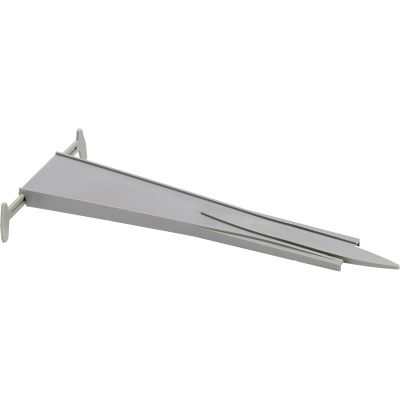
Guides the wheelsets of H0 locomotives and rolling stock cleanly onto common track and simplifies frequent handling.
View Product Details →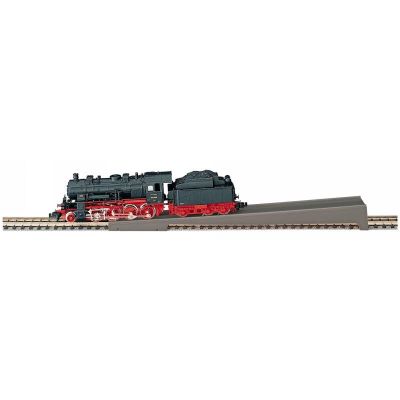
Supports the correct placement of small N-gauge vehicles and protects wheelsets, couplings and delicate details.
View Product Details →A cleaning block belongs in the equipment box early. A siding then expands the existing circuit with a specific operating task.
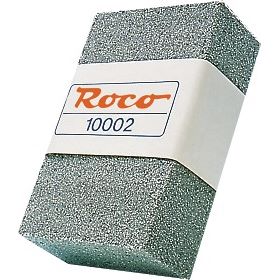
The cleaning block removes dirt and residue from railheads and supports reliable electrical current collection.
View Product Details →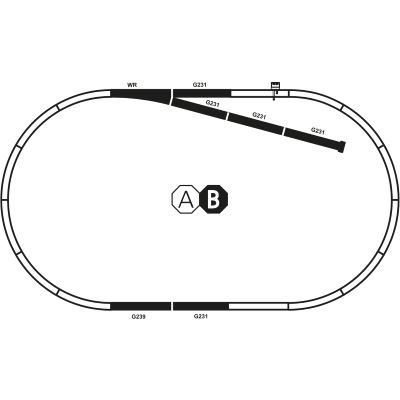
A turnout, straight sections and a buffer stop create a first storage, loading or shunting track within the PIKO A-Track system.
View Product Details →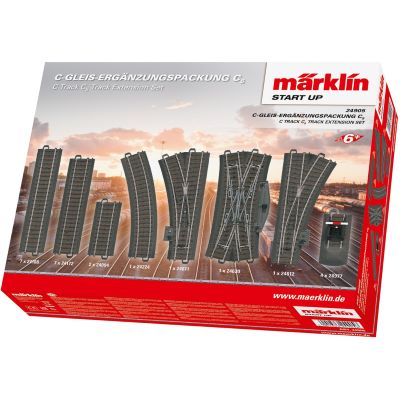
Turnouts, additional track and buffer stops add further routes to suitable Märklin C Track starter sets.
View Product Details →A small selection of tools is sufficient at first. Scenery materials should initially be tested on a separate sample section.
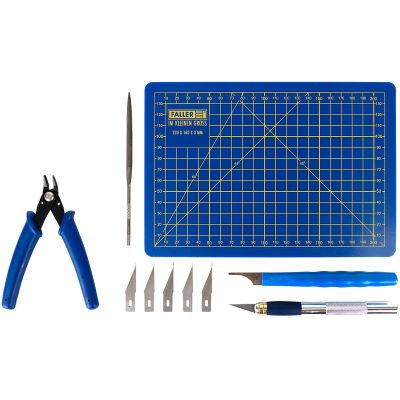
Side cutter, craft knife, file and further tools form a compact foundation for building kits and layout construction.
View Product Details →
Different scenery materials allow initial design techniques to be tested on a small sample away from the layout.
View Product Details →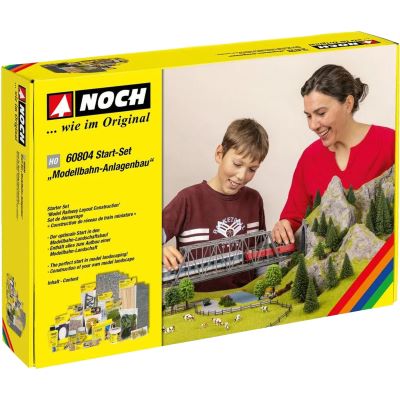
A coordinated selection for terrain and scenery once the route, baseboard and technical operation have been established.
View Product Details →Track and digital technology must be selected according to the exact system. Tools and scenery materials can often be used more universally across different manufacturers and gauges.
These answers cover starter sets, track, maintenance, tools, electrical equipment and the first permanent layout.
The technical basics are a locomotive, rolling stock, track, control equipment and a power supply. Useful additions are a stable base, rerailer, track cleaner and later a turnout with a siding.
A complete starter set is normally sufficient for initial operation. Check that the train, track, controller or digital control, connection equipment and power supply are included.
A safe setup surface, a rerailer matching the gauge and suitable cleaning equipment are useful first purchases. A siding usually provides more operating value than a second locomotive.
The track must match the exact system. Gauge alone is not sufficient. Roadbed, profile, connectors, geometry and, in H0, the conductor system must be compatible.
No. Analogue control is suitable for one train. Digital control becomes useful when several locomotives should run independently or lighting, sound and later turnouts should be controlled.
A side cutter, craft knife, tweezers, file and cutting mat are sufficient for the first building kits. A soldering iron, multimeter and specialist tools are needed only for electrical work or conversions.
Carefully remove loose dust and use products intended for cleaning model railway railheads. Aggressive household cleaners and excessive oil are unsuitable.
Longer routes benefit from several power feeds. Their number, connection method, polarity and cable cross-section should be planned according to the manufacturer instructions and layout size.
Begin only after extensive and successful test operation. Turnouts, cables and hidden track must remain accessible until the technical system operates reliably.
Tools, figures and scenery materials frequently can. Track, turnout drives, electrical connections, decoders and digital command stations must be checked for technical compatibility.
The product's age labelling and safety information are decisive. Mains connections, knives, adhesives, soldering equipment and electrical conversions remain the responsibility of suitable adults.
Plan separate budgets for train operation, track, rolling stock and layout construction. This prevents additional locomotives from using the funds required for the baseboard, electrical equipment and maintenance.
Explore gauges, track systems, layout planning, digital technology, scenery, rolling stock and maintenance in the central model railway guide.
Editorially reviewed and updated on 30 July 2026. The package contents, technical specifications and safety information on the individual product page remain decisive.