Limited hobby rooms
TT provides more station and route length than H0 without becoming as delicate as N gauge.

TT gauge combines a scale of 1:120 with a standard-gauge model track width of 12 millimetres. It offers more visible detail than N gauge while requiring considerably less space than H0. This overview connects vehicles, track, digital equipment, buildings, figures, scenery and more than 100 suitable shop destinations.
TT traditionally stands for “Table Top”. On the European market, standard-gauge vehicles are predominantly represented at a scale of 1:120 on track measuring 12 millimetres between the rails. A full-size passenger coach measuring 24 metres is approximately 20 centimetres long in the model.
TT sits exactly between H0 and N. Compared with H0, longer stations, hidden yards and open routes can be built within a smaller area. Compared with N, vehicles, couplings and separately fitted detail parts remain larger and easier to handle.
The range is particularly strong for DR, DB, DB AG, ČD, PKP, ÖBB and private railway companies. In addition to historic Reichsbahn trains, modern Vectron, Taurus, Traxx and regional multiple-unit models are available.
A common TT model-track radius is 310 millimetres. Long coaches, express steam locomotives and modern multiple units look considerably more natural on radii of 353 or 396 millimetres.
TT provides more station and route length than H0 without becoming as delicate as N gauge.
Locomotives, rebuilt coaches, Städteexpress trains and freight wagons from Eras III and IV are particularly well represented.
Vectron, Taurus, Traxx, Desiro and international freight wagons support contemporary Era VI layouts.
DCC, sound, PluX12, Next18, function mapping and modern command stations can be integrated effectively.
Model track, flexible track, roadbed track, slim turnouts and extensive scenery accessories provide considerable freedom.
Complete train formations require less display space than H0 while remaining clearly visible.
Main line, branch line, shunting layout or compact continuous circuit.
310 mm is compact; 353 and 396 mm provide a more natural appearance.
Size platforms and storage sidings for the longest train formation.
Keep tunnels, turnout drives and the hidden yard accessible.
| Planning area | Recommendation | Practical benefit |
|---|---|---|
| Curves | Check the vehicle-specific minimum radius | Long coaches and large locomotives operate more reliably. |
| Gradient | Keep it as gentle as possible and use smooth transitions | Tractive effort and coupling reliability are maintained. |
| Platform | Position the longest planned passenger train | Future extensions to the train remain possible. |
| Hidden yard | Provide large access openings and feedback | Faults remain detectable and accessible. |
| Power supply | Use several feeds and short cable runs | Voltage remains even throughout the layout. |
For TT, divide the prototype measurement by 120. A platform measuring 120 metres in real life requires one metre in the model. A 24-metre passenger coach measures 20 centimetres.
The calculator compares the model length with Z, N and H0. This quickly shows how much layout space TT saves compared with H0.
Enter the prototype length in metres.
Voltage and polarity control the speed and direction. Starter sets provide a straightforward introduction.
Each locomotive has an address. Lighting, sound, shunting mode and additional functions can be controlled individually.
PluX12, Next18, PluX16 and NEM 651 are particularly common in TT.
Check the vehicle instructions, contact count, installation space and motor current. A decoder that fits mechanically may still be electrically unsuitable.
| Track system | Construction | Strength | Suitable for |
|---|---|---|---|
| TILLIG Roadbed Track | Track with integrated roadbed | Quick assembly and straightforward expansion | Starter sets, floor layouts and portable layouts |
| TILLIG Model Track | Track without a fixed ballast bed | Individual radii, flexible track and detailed scenery | Permanent layouts and modules |
| Kühn TT Track | Fine track system without fixed roadbed | Slim geometry and custom layout construction | Prototype-oriented track plans |
| Track Sets | Pre-planned complete track combinations | Suitable quantities for specific layout plans | Horka, Breitungen and Lößnitz |
| Designation | Model track gauge | Typical prototype |
|---|---|---|
| TT | 12 mm | Standard gauge 1,435 mm |
| TTm | 9 mm | Metre-gauge railways |
| TTe | 6.5 mm | 750, 760 and 800 mm narrow gauge |
| TTi / TTf | Approximately 4.5 mm | Industrial and field railways |








TT locomotives, rolling stock and track systems.
Specialist VehiclesRailcars and specialist TT models.
LightingCoach lighting and electronic modules.
Signals and CatenarySignal technology, lighting and layout control.

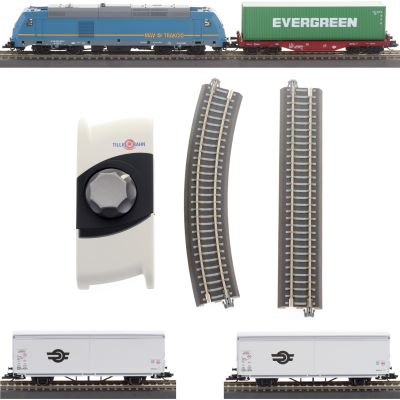
TRAXX locomotive, three wagons and a roadbed-track oval.
View product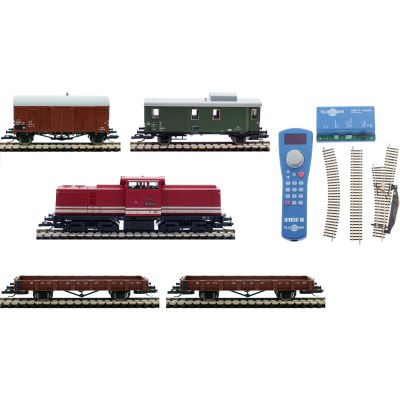
Digital starter set for classic Reichsbahn themes.
View product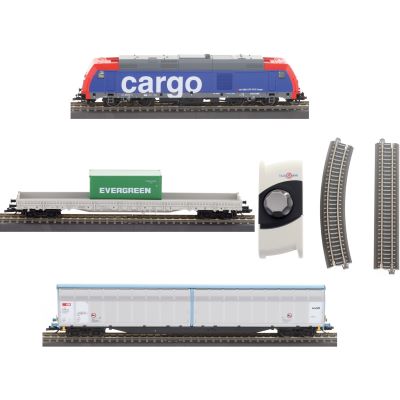
Swiss railway theme with a roadbed-track oval.
View product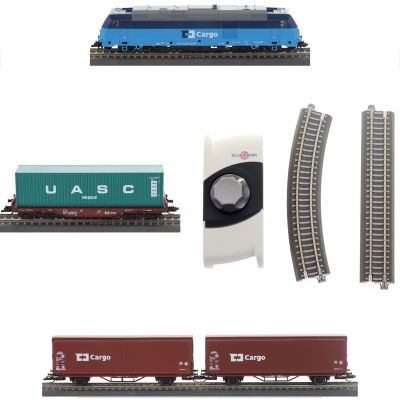
International Era VI theme with roadbed track.
View product
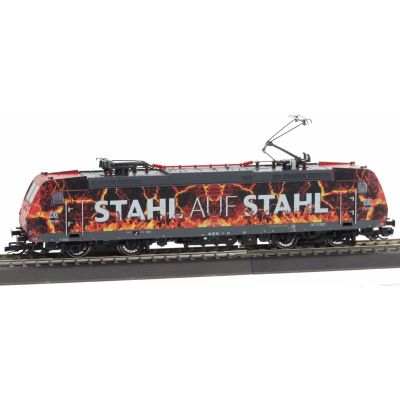
Modern DB electric locomotive with digital sound.
View product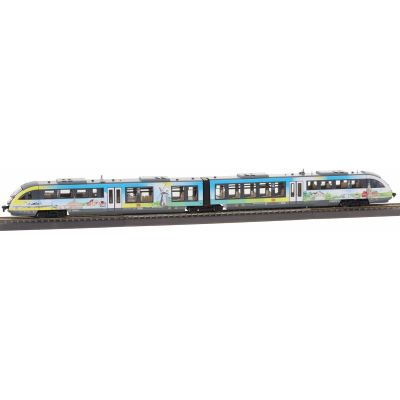
Modern DB AG diesel multiple unit.
View product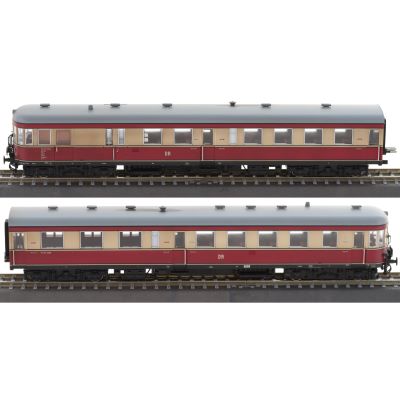
Historic DR railcar with sound and weathering.
View product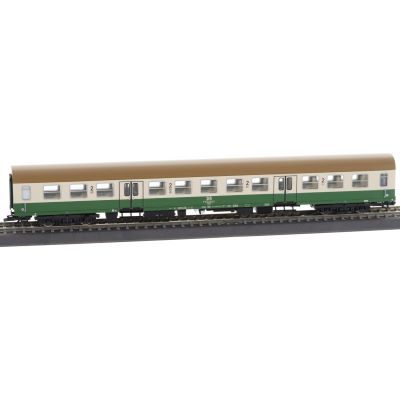
Typical second-class Reichsbahn passenger coach from Era IV.
View product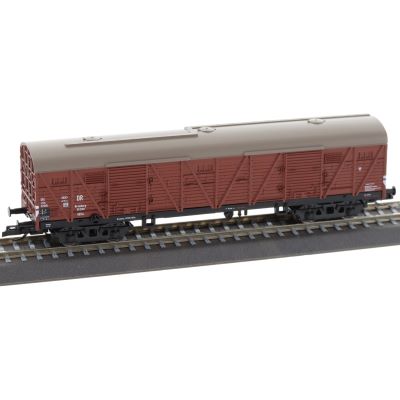
Covered freight wagon for Era II trains.
View product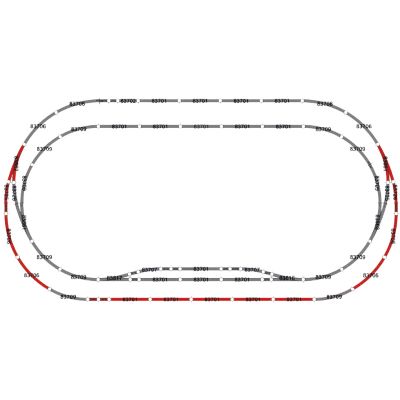
Extension set for the TT roadbed-track system.
View product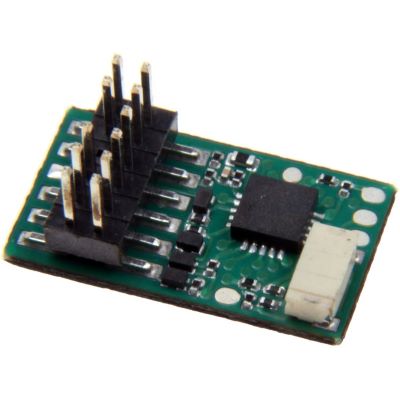
Decoder for suitably prepared TT vehicles.
View product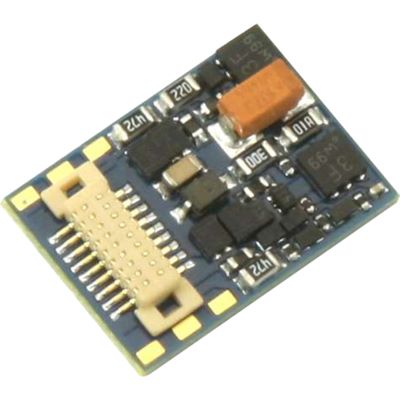
Multi-protocol micro decoder with Next18.
View product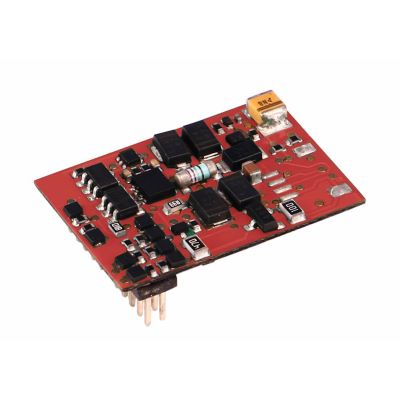
Compact multi-protocol decoder with PluX12.
View product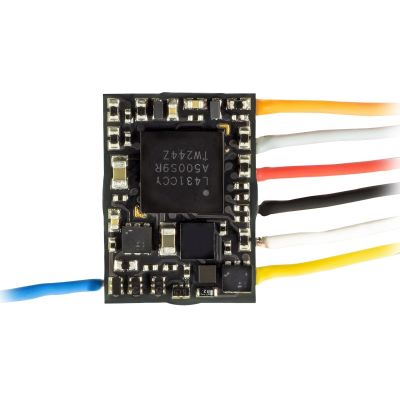
Very compact direct decoder for small vehicles.
View product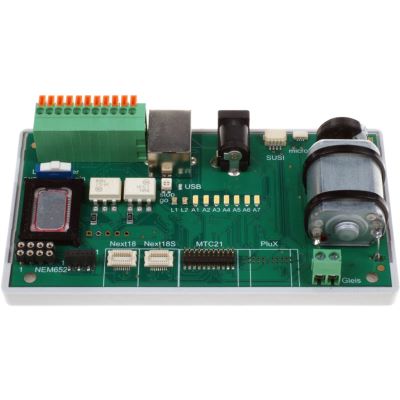
Test decoders and outputs outside the vehicle.
View product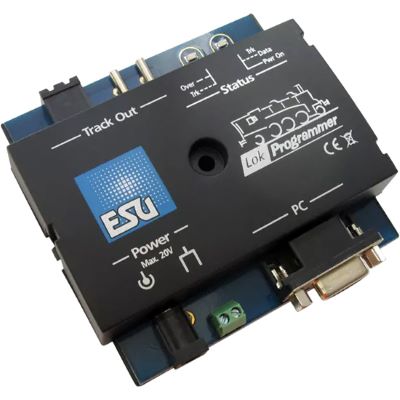
Edit decoders, sound, mapping and motor parameters.
View productStandard-gauge TT is produced at a scale of 1:120. The distance between the rails is 12 millimetres.
A compact track oval requires approximately a tabletop area. Considerably greater depth should be allowed for generous curves, stations and hidden yards.
Yes. Roadbed track and beginner sets provide a straightforward start. The vehicles are easier to handle than N-gauge models.
A radius of 310 millimetres is a common compact choice. Long vehicles look better on radii of 353 or 396 millimetres.
Roadbed track can be assembled quickly and suits portable layouts. Model track provides greater freedom for ballasting and route alignment.
Yes. DCC is widely used. Modern TT vehicles frequently have PluX12, Next18 or PluX16 interfaces.
TT has a long tradition in eastern Germany. The range of Reichsbahn locomotives, rebuilt coaches and freight wagons is correspondingly extensive.
Yes. Their scale and track gauge are the same. The coupling, minimum radius, era and electrical equipment should nevertheless be checked.
PluX12, Next18 and NEM 651 are frequently encountered. The specific vehicle instructions remain decisive.
In addition to 12 mm standard gauge, TTm uses 9 mm, TTe uses 6.5 mm, and very narrow industrial and field-railway variants are also available.
Further gauges, planning tools, manufacturer guides and step-by-step instructions are available in the central model railway guide.