ROCO LINE Without Roadbed
Code 83 track with a rail-profile height of 2.1 millimetres. The base, ballast, roadbed width and weathering can be designed freely. Flexible track and broad radii support flowing, prototypical alignments.

From modular ROCO LINE and geoLINE extensions to 21 complete layout plans, seven Hohenstein stages, a hidden yard and Easy-Track: this page brings together the current Roco H0 track packages and explains their geometry, radii and individual components.
H0 gauge represents standard gauge at a scale of 1:87 using a model track gauge of 16.5 millimetres. Most of the Roco sets listed here belong to the two-rail system: the two rails are electrically isolated from one another and together provide traction current.
ROCO LINE is the finer track system with a Code 83 rail profile measuring 2.1 millimetres in height. It is available without roadbed and with an elastic roadbed body. geoLINE also has an integrated roadbed but uses its own particularly straightforward geometry with a basic length of 200 millimetres. The two track families must not be regarded as directly plug-compatible merely because they share the same model track gauge.
System Sets A to E expand an existing arrangement by adding a station, second circuit or shunting tracks. The place-based layout sets, by contrast, provide the track combination for a complete plan. Hohenstein is divided into seven consecutive stages and an additional hidden-yard set.
The Easy-Track packages contain a track list coordinated with a prefabricated NOCH route plan. The route-construction kit, buildings, scenery, vehicles, controls and electric turnout drives are included only when the relevant product page expressly lists them as part of the package.
The Roco 81397 H0 Track-Plan Book supplements the range with layout ideas, parts lists and guidance on combining the track geometry correctly.
For digital operation: The track itself can be used for analogue or digital operation. Feeder tracks or connection clips containing interference-suppression components from analogue arrangements should nevertheless be checked and, where necessary, replaced with a digitally suitable power feed.
The decision depends on scenic design, assembly speed and existing track. A new layout should ideally use one principal system, with every required transition planned deliberately.
Code 83 track with a rail-profile height of 2.1 millimetres. The base, ballast, roadbed width and weathering can be designed freely. Flexible track and broad radii support flowing, prototypical alignments.
ROCO LINE geometry is combined with an elastic roadbed body. The track formation can be assembled quickly, while visible edges can still be coloured and ballasted at the sides.
A stable roadbed body, 200-millimetre basic length and compact 22.5-degree turnouts. Suitable turnout drives and decoders can be installed beneath the roadbed.
| Feature | ROCO LINE Without Roadbed | ROCO LINE with Roadbed | geoLINE |
|---|---|---|---|
| Basic Length | G1 at 230 mm | G1 at 230 mm | G200 at 200 mm |
| Profile and Appearance | Code 83, individually ballasted | Code 83 with elastic roadbed | Independent roadbed-track system |
| Small Radii | R2 358 mm, R3 419.6 mm | R2 358 mm, R3 419.6 mm | R2 358 mm, R3 434.5 mm |
| Flexible Track | F4 at 920 mm | Plan individual roadbed transitions | Fixed system geometry is the main focus |
| Turnout Angle | Normally 15° | Normally 15° | Normally 22.5° |
| Typical Application | Permanent, individually designed layout | Quick and tidy system-based assembly | Compact construction and existing geoLINE layouts |
These packages expand existing circuits or solve a specific track-construction task. ROCO LINE and geoLINE must be treated as separate geometries.
From the basic circuit to an extensive station expansion.
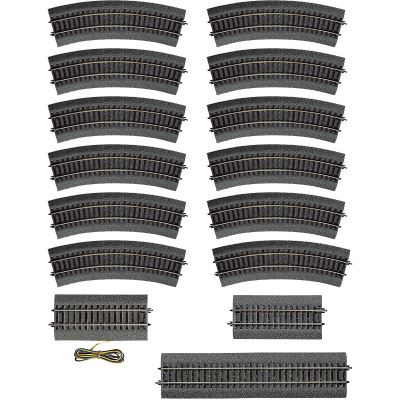
A closed circuit forming the basis for further ROCO LINE extensions.
View Set A →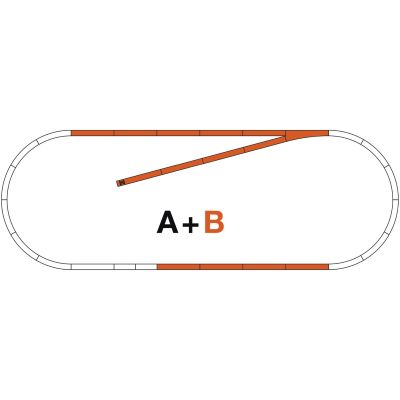
Expands the basic formation with a turnout and an additional track connection.
View Set B →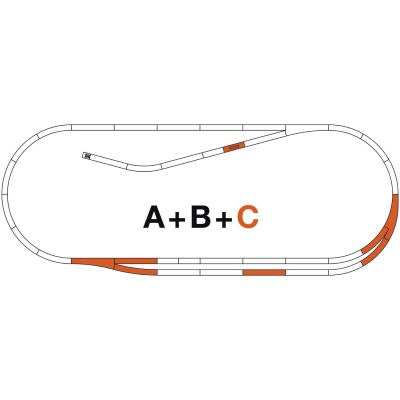
Coordinated track for the next stage of route and station expansion.
View Set C →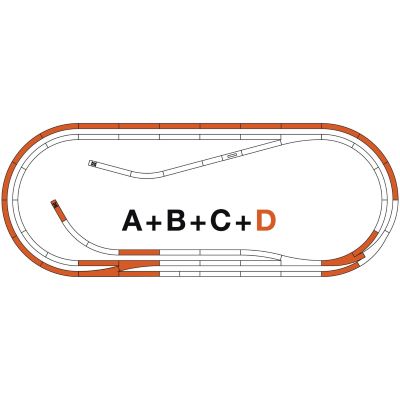
An expansion package providing additional running and shunting possibilities.
View Set D →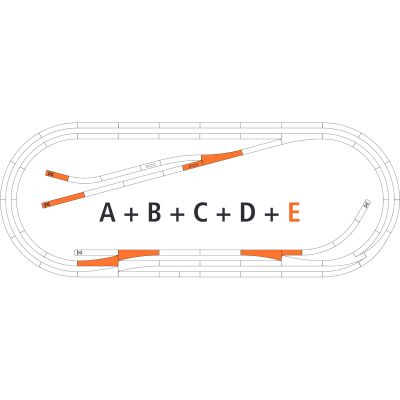
A current Set E version for an expanded ROCO LINE arrangement.
View Set 42013 →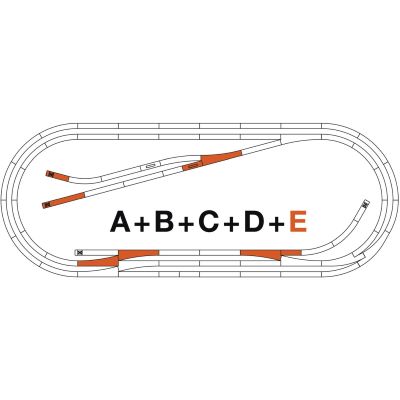
A second currently listed Set E track combination.
View Set 42023 →Roadbed-track packages for a basic formation, station and route extensions.
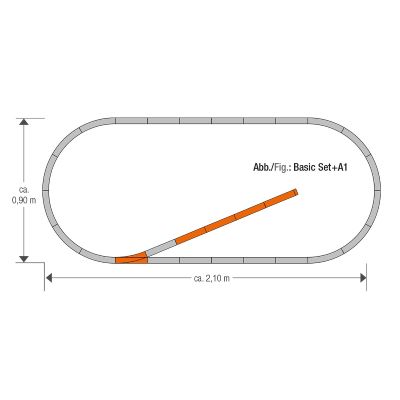
The basic formation for an introduction to geoLINE geometry.
View A1 →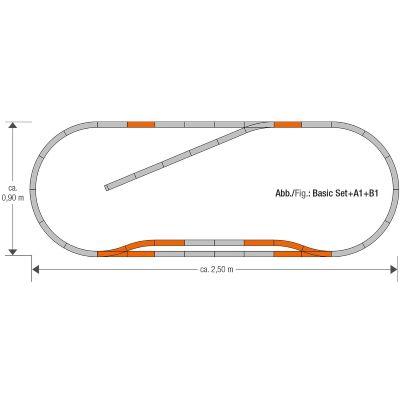
Adds the first branch to the basic formation.
View B1 →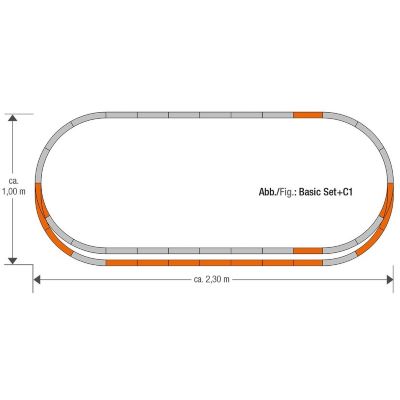
A further expansion adding route and station tracks.
View C1 →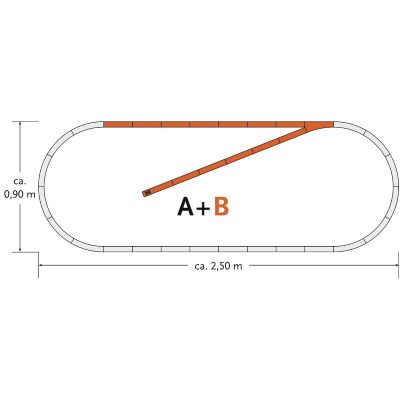
A systematic B extension using roadbed track.
View Set B →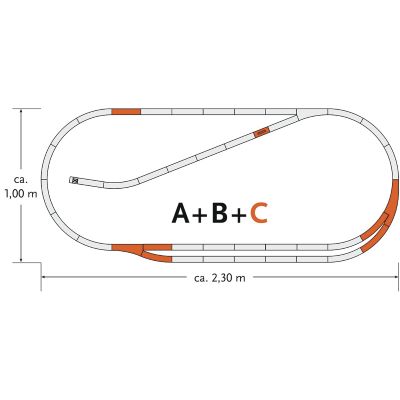
A C extension for a more extensive track plan.
View Set C →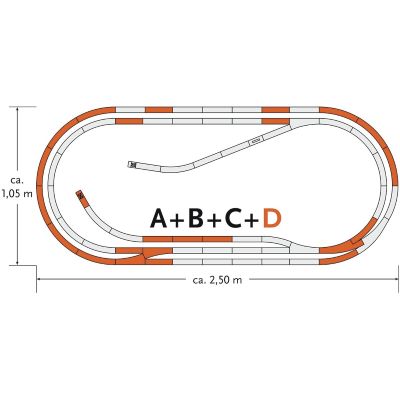
A D extension providing additional operational locations.
View Set D →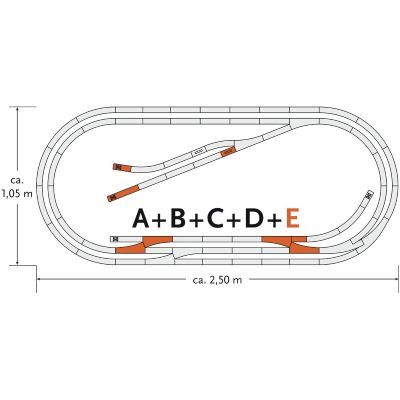
A further track package for an extensive geoLINE expansion.
View Set E →Two specialist packages for specific layout tasks.
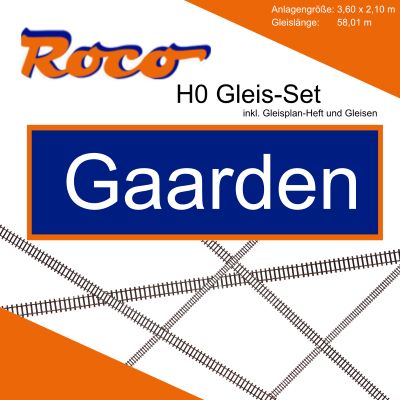
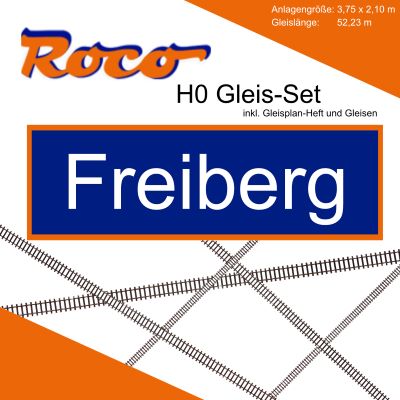
The place names identify different operating concepts. Versions with a branch line or hidden yard build on the respective basic plan. Dimensions and track lengths follow the information shown in the set illustrations.
Manageable projects for smaller rooms and first permanent H0 layouts.
Larger stations, branch lines, concealed storage and longer running routes.

For extensive stations, locomotive depots and intensive multi-train operation.
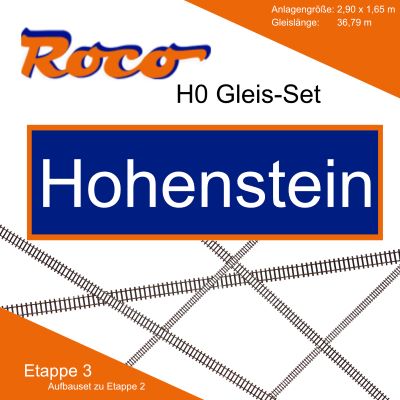
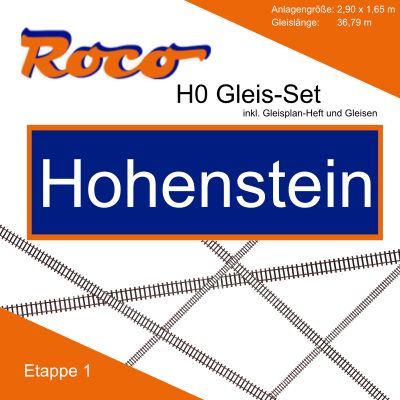
Hohenstein is a layout project constructed in stages. The set illustrations state a total area of 2.90 × 1.65 metres and 36.79 metres of track for the complete plan. These figures apply to the complete project rather than the contents of an individual stage.
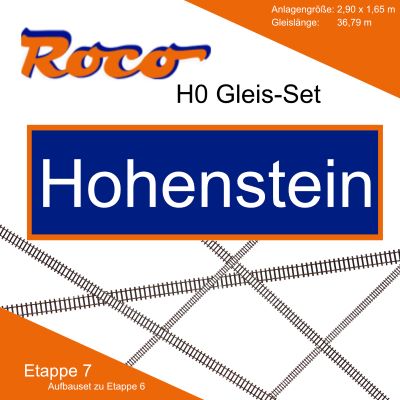
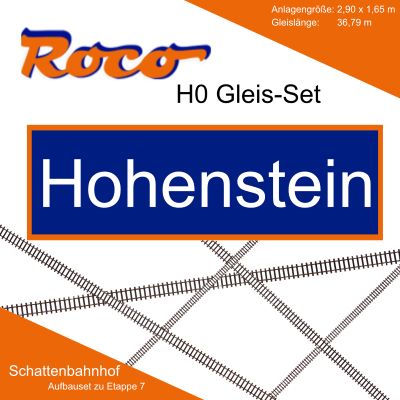
Each track package is coordinated with a specific route- construction kit. The Easy-Track substructure is a separate product. Karlsberg is available with a choice of ROCO LINE with or without roadbed.
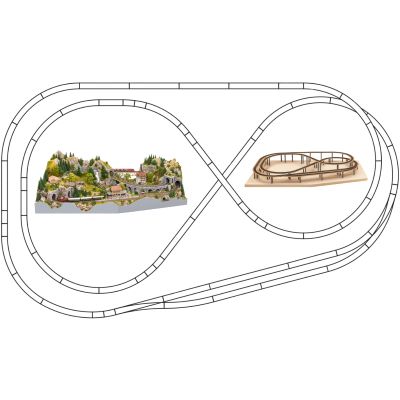
A ROCO LINE combination without roadbed for long and interwoven running routes.
View Andreastal →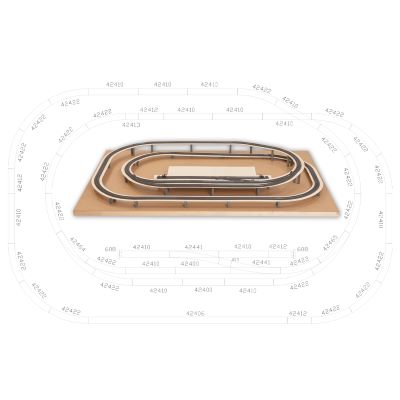
A ROCO LINE version permitting individually designed roadbed and ballast.
View Karlsberg →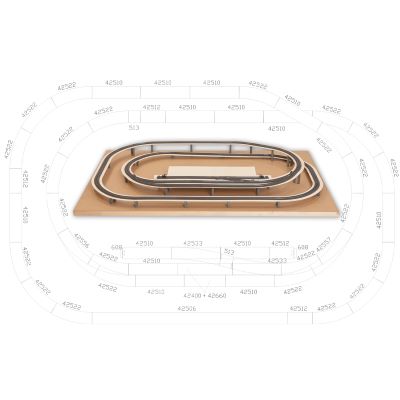
The same layout concept using an elastic ROCO LINE roadbed body.
View Karlsberg →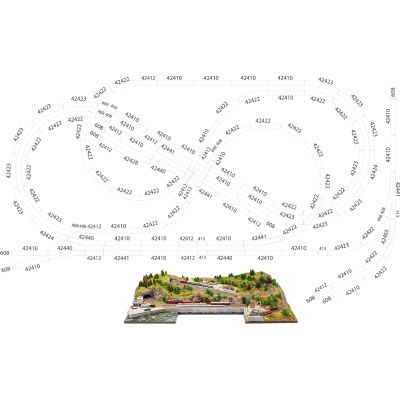
An extensive ROCO LINE package for a station, main route and shunting connections.
View Martinstadt →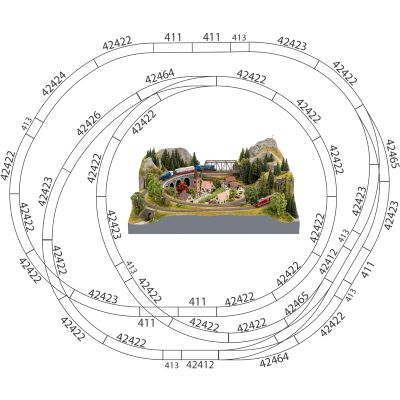
The smallest Easy-Track plan in the group, with several possible running routes.
View Theisensee →Understanding the basic elements makes it easier to check parts lists and alter an existing plan using individual tracks , turnouts and track accessories .
G1 measures 230 millimetres, G1/2 115 millimetres and G1/4 57.5 millimetres. The partial lengths complete station throats, platform tracks and parallel connections.
The 920-millimetre flexible track permits individual radii, transition curves and long routes with fewer rail joints.
R2 has a radius of 358 millimetres and R3 a radius of 419.6 millimetres. Check the relevant product specification to establish whether a vehicle can negotiate R2.
R4 measures 481.2 millimetres, R6 604.4 millimetres and R9 826.4 millimetres. Larger radii improve the appearance of long passenger coaches.
Standard turnouts are 230 millimetres long. Their slender branch, with a radius of 873.5 millimetres, is suitable for stations and passing loops.
Curved turnouts begin a second route within the curve. They save length but require an especially accurately laid transition.
G200 forms the basis of geoLINE geometry. G185 and G100 compensate for turnout connections and shorter track sections.
Standard turnouts are 200 millimetres long. With suitable versions, an electric drive and digital decoder can be installed beneath the roadbed.
Joiners keep the rail profiles aligned. On long layouts, however, the power supply should not depend entirely on numerous mechanical rail joints.
Additional feeds reduce voltage loss. Insulated joiners separate occupancy-detection, storage or booster sections.
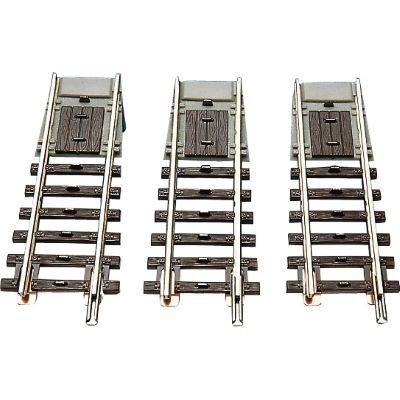
Buffer stops terminate loading, storage and shunting tracks. Sufficient braking distance for the longest vehicle should remain in front of the track end.
With track supplied without roadbed, the base and track bedding are selected separately. Moving turnout components must remain unobstructed.
In addition to the external dimensions, train length, minimum radius, access to concealed track and the intended operating style determine the correct choice.
Include the operating aisle, wiring and maintenance access in addition to the plan area.
Do not mix ROCO LINE with or without roadbed and geoLINE without a planned transition.
The stated minimum radius of the longest vehicle remains decisive.
Station and hidden-yard tracks must accommodate complete trains.
Define power feeds, occupancy detectors, turnout decoders and booster districts at an early stage.
Test every vehicle, turnout and gradient transition before fixing the track.
Thierstein requires approximately 1.70 × 0.95 metres.
Hohenstein divides construction into seven stages.
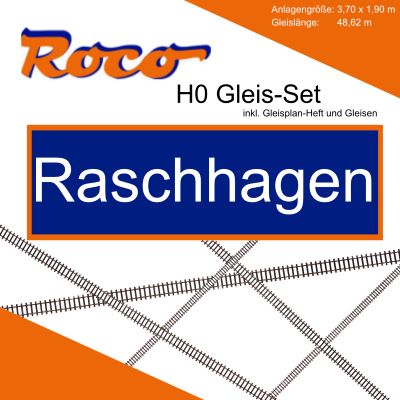
Raschhagen incorporates a turntable into the layout plan.
Großkorbetha reaches a total track length of 69.99 metres.
Further guidance is available under Plan a Model Railway , in the Track Planning category, in the Model Railway Calculators and on the Roco Z21 and z21 topic page.
The illustrated layout and system sets principally belong to H0 gauge. AC access tracks 42617 are an expressly identified specialist product and do not turn the remaining two-rail sets into centre-conductor track.
| Model Size | Scale | Model Track Gauge | Relationship to These Sets |
|---|---|---|---|
| H0 DC / Two Rail | 1:87 | 16.5 mm | Principal application of ROCO LINE and geoLINE |
| H0 AC / Centre Conductor | 1:87 | 16.5 mm | Requires a centre-conductor system; 42617 is a specialist AC turntable set |
| H0m | 1:87 | 12 mm | Metre gauge using its own track; not intended for the regular H0 sets |
| H0e | 1:87 | 9 mm | H0 narrow gauge; Marienschacht combines corresponding diorama elements |
| TT | 1:120 | 12 mm | Roco supplies separate TT track sets using their own geometry |
| N | 1:160 | 9 mm | Considerably smaller and not compatible with the H0 track packages |
The model railway gauge comparison and the H0 AC or H0 DC overview explain the differences in greater detail.
These answers help with roadbed, digital operation, radii, Hohenstein stages and transitions between systems.
The overview contains 49 current entries: 15 system, extension and specialist sets, 21 layout and diorama sets, eight Hohenstein packages and five Easy-Track packages.
ROCO LINE uses Code 83 profiles and 230-millimetre basic geometry. geoLINE has a fixed roadbed body, a basic length of 200 millimetres and more compact 22.5-degree turnouts.
Yes. Without roadbed, the substructure and ballast can be designed freely. The roadbed version combines the same underlying ROCO LINE geometry with an elastic ballast body.
Yes. The track is not restricted to one control method. Digital operation requires a suitable command station, decoders, digitally suitable power feeds and appropriate wiring.
A two-rail layout can be controlled digitally using Roco Z21 or z21. Turnouts require suitable drives and decoders for digital switching, while feedback is planned separately.
No. The stages are coordinated construction sections. The stated dimensions of 2.90 × 1.65 metres and 36.79 metres of track refer to the fully developed plan.
The Roco product provides the suitable track combination. The routes, pillars and assembly documents belong to the separately selected NOCH Easy-Track route-construction kit.
Among the complete place-based plans, Thierstein is particularly compact at 1.70 × 0.95 metres. Marienschacht is an even smaller diorama rather than a traditional continuous-running layout.
No. The minimum-radius specification for the individual vehicle remains decisive. Long passenger coaches and large locomotives normally run and appear more smoothly on R3, R4 or larger radii.
Only vehicles equipped for that system are suitable. Typical Roco H0 DC vehicles collect current separately through the two outer rails and do not have a centre pickup shoe.
A transition must be constructed deliberately. Roadbed height, joiners, rail-profile position and geometry must align. Every type of vehicle should test the transition before it is fixed permanently.
There is no fixed number. Track length, rail joints, occupancy- detection sections and booster districts determine the requirement. Several evenly distributed power feeds are sensible on large layouts.

Explore individual ROCO LINE and geoLINE track, turnouts, drives, Z21 digital technology, locomotives, coaches and wagons for further expansion of your H0 layout.