Entry-Level Solution
z21start and z21 START newGen
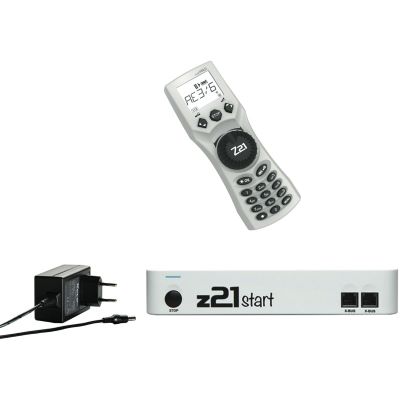
Compact DCC command station for starter sets and basic sets. The wired multiMAUS is the typical controller. Network functions on the z21start can be activated when required.
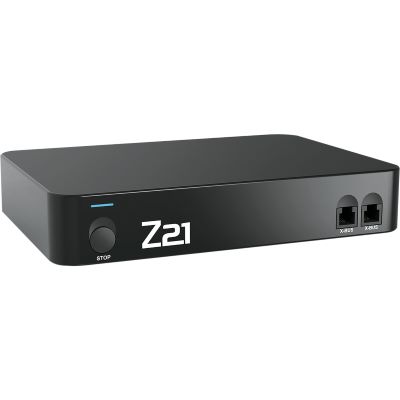
The different capitalisation is intentional. The black Z21 is the extensively equipped digital command station for model railway enthusiasts who require a separate programming track, adjustable track voltage, feedback through CAN or R-BUS, LocoNet components and a connection for older command stations.
The white z21 was mainly supplied with digital starter sets. Its network function is already activated, allowing smartphones, tablets and the WLANMAUS to be used directly through the supplied network. It is suitable for users who want uncomplicated digital control with an app.
The z21start is the compact entry-level version. It is frequently supplied in starter sets or basic digital sets together with a wired multiMAUS. Driving and programming work immediately. For app, WLANMAUS and PC network control, however, the network function must be activated with the appropriate Wi-Fi package or activation code.
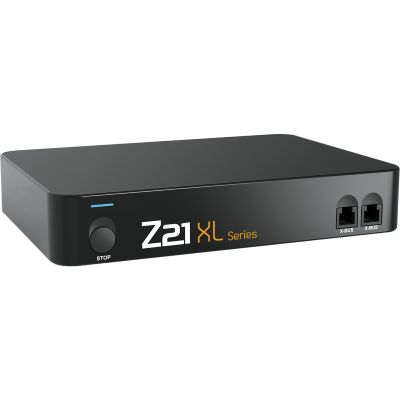
The Z21 XL is available for Gauges 0, 1, II and G. It uses the familiar Z21 operating environment, but its output stage supplies 6 amps at 20 volts. This makes it better suited to large motors, sound, smoke generators and illuminated large-scale trains.
Compact DCC command station for starter sets and basic sets. The wired multiMAUS is the typical controller. Network functions on the z21start can be activated when required.
The white z21 already has its LAN function activated. The app and WLANMAUS can therefore be used without an additional activation.
Adjustable track voltage, a separate programming track, CAN, LocoNet, R-BUS, X-BUS, a sniffer bus and extensive automation options.
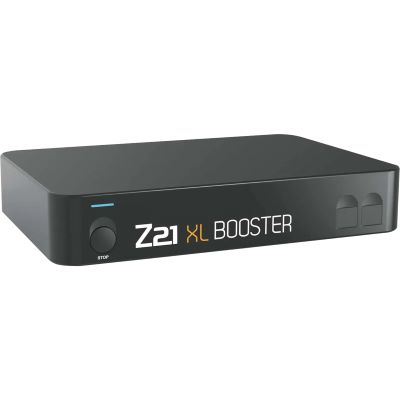
The XL command station combines app and WLANMAUS control with 6 amps of output. Additional XL boosters are connected through Z-CAN.
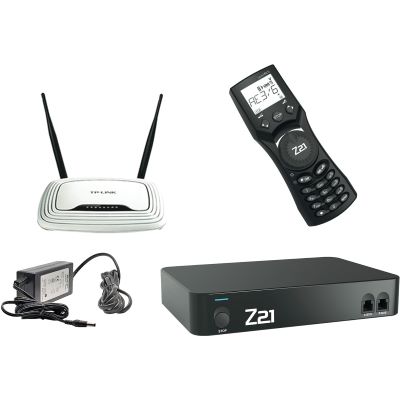
Includes the black Z21, WLANMAUS, router and power supply. App, handheld controller and network are therefore available together immediately.
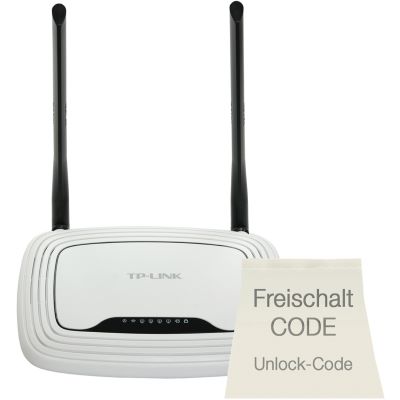
The router and activation unlock the network functions of a compatible z21start. The app, PC and WLANMAUS can then be integrated.
| Feature | z21start | White z21 | Black Z21 | Z21 XL |
|---|---|---|---|---|
| Typical use | Digital entry and starter sets | Starter sets with app and Wi-Fi | Large or demanding layouts | Large model railway gauges |
| Network function | Activation required | Already activated | Already activated | Already activated |
| Smartphone and tablet | After activation | Immediately available | Immediately available | Immediately available |
| Programming track | No separate output | No separate output | Separate output | Designed for large-scale applications |
| Track voltage | Determined by the power supply | Determined by the power supply | Adjustable | 20 V with the supplied power source |
| Feedback | R-BUS | R-BUS | R-BUS, CAN and LocoNet | Z-CAN and large-scale extensions |
| Special connections | X-BUS, R-BUS, B-BUS and LAN | X-BUS, R-BUS, B-BUS and LAN | Additional CAN, LocoNet and sniffer connections | Z-CAN for XL boosters |
| Output power | For small and medium-sized layouts | For small and medium-sized layouts | 3 A with a suitable power supply | 6 A at 20 V |
A smartphone or tablet displays locomotive images, functions, turnouts, signals and routes. A tablet provides a particularly clear view of an extensive track diagram.
The physical rotary controller enables precise shunting, while the Wi-Fi connection allows free movement along the layout.
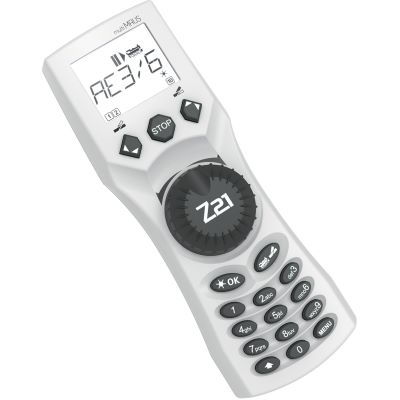
The wired multiMAUS does not require a wireless network and is a reliable throttle at a fixed operating position.
Model railway software can control routes, block operation and staging yards. Reliable feedback modules are additionally required.
Track-occupancy detectors identify occupied sections. RailCom- compatible components can additionally transmit vehicle or decoder information to the command station.
Stations, staging yards and main lines are better supplied separately. A short circuit will then not shut down the entire layout.
Small vehicles require little current but can be sensitive to excessive track voltage. The black Z21 with adjustable voltage is particularly interesting for demanding small-gauge layouts.
z21start for compact layouts and the black Z21 for precise system planning.
Set the track voltage according to the decoder and vehicle specifications.
The Z21 system family is particularly versatile in these gauges. Beginners can start with a z21start and multiMAUS. Large H0 layouts benefit from CAN, LocoNet, feedback and several boosters.
z21start, white z21, black Z21 and the Z21 Professional Digital Set.
Separate accessory power from track power on larger layouts.
Large motors, sound, lighting and smoke generators create a significantly higher power demand. The Z21 XL provides 6 amps at 20 volts and can be expanded with XL boosters.
Z21 XL Series and Z21 XL Booster.
Use large cable cross-sections, several feed points and secure electrical isolation points.
Use only a suitable power supply and remove unsuitable interference suppression capacitors from old feeder tracks.
First check the direction, address, lighting and emergency stop with a single locomotive.
Connect the command station, router and smartphone to the same local network. A z21start must be activated beforehand.
Enter the address, protocol, speed steps, function icons and a clearly identifiable vehicle image.
Test accessory decoders individually first. Then label every feedback section and assign it in the software.
Mark isolation points, power supplies and booster districts on a layout plan so that later faults can be found quickly.
A router alone does not activate the network function. The appropriate Wi-Fi package includes the router and activation.
On the black Z21, the two outputs must be electrically separated clearly so that several decoders are not changed accidentally.
The required isolation points depend on the track system, feedback modules and manufacturer instructions.
Turnouts, signals and lighting can unnecessarily reduce the available output. An external supply provides additional reserves.
Train operation works through the local network. Internet access is primarily required for activation, downloads or updates.
Address counting may differ when changing from another DCC system. The Z21 Maintenance Tool provides suitable configuration options.
The selection includes central system components and suitable extensions. Before purchasing power supplies, boosters or individual handheld controllers, check which additional components are required.
From an uncomplicated introduction to DCC to extensive network and computer control.
Command station, wired multiMAUS and power supply as a basic digital system.
View Product →
Extensive network command station with adjustable voltage and a separate programming output.
View Product →
Black Z21, WLANMAUS, router and power supply as a coordinated complete set.
View Product →
Activates app, WLANMAUS and network control on a compatible z21start.
View Product →
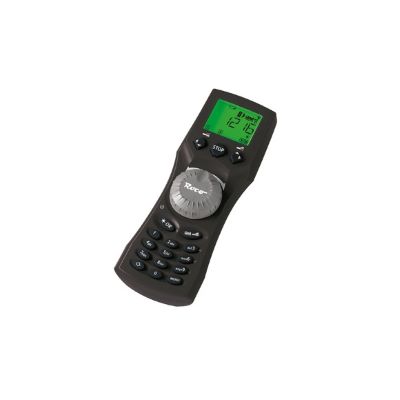
Physical rotary controller for wireless locomotive and turnout control.
View Product →
Ergonomic X-BUS controller for locomotives, CVs and electromagnetic accessories.
View Product →
Android-based wireless handheld controller for compatible Z21 networks.
View Product →
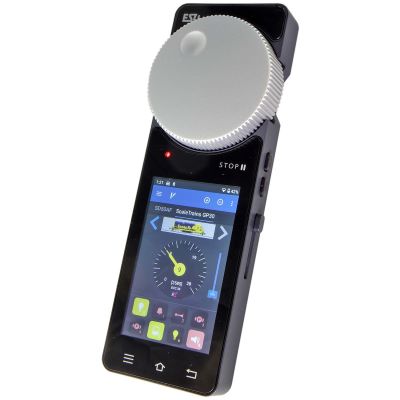
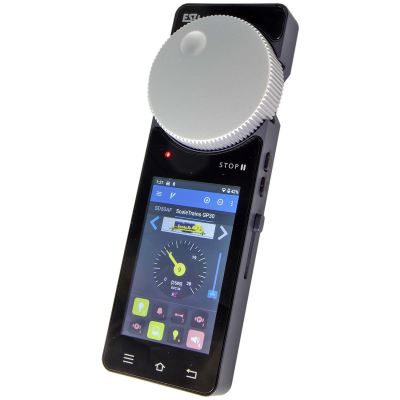
Mobile touchscreen controller with an access point for extensive layouts.
View Product →Z21 system modules for track-occupancy detection, turnouts, signals, CAN distribution and reverse loops.
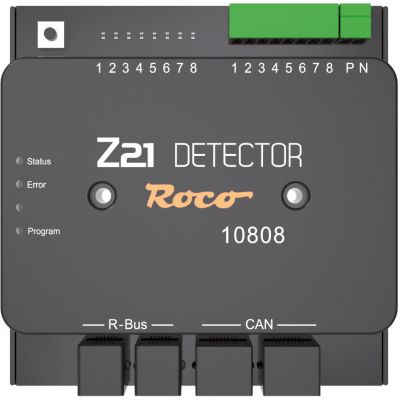
Monitors eight track sections and connects them through R-BUS or CAN.
View Product →
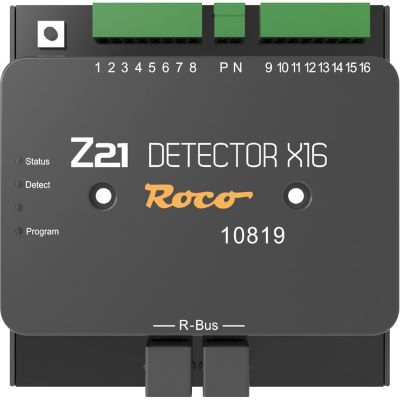
Current-sensing feedback module for extensive block and staging-yard control.
View Product →
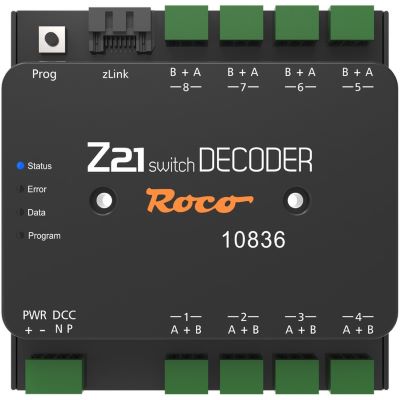
Controls up to eight turnouts or sixteen lighting and switching outputs.
View Product →
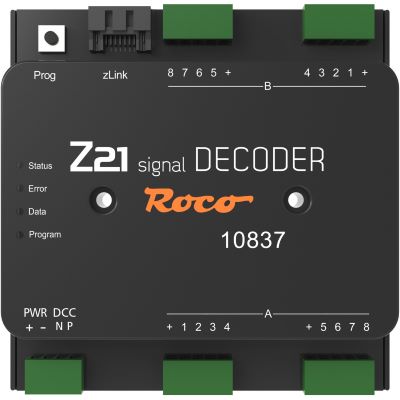
Preconfigured signal aspects for German, Austrian and Swiss signalling systems.
View Product →
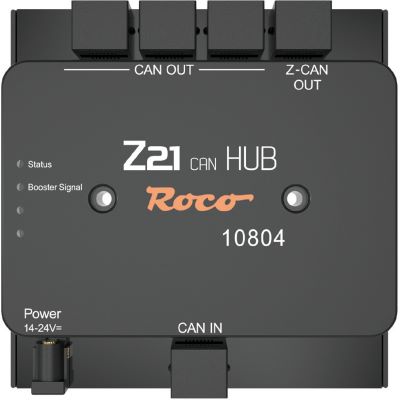
Adds further CAN and Z-CAN connections to extensive layouts.
View Product →
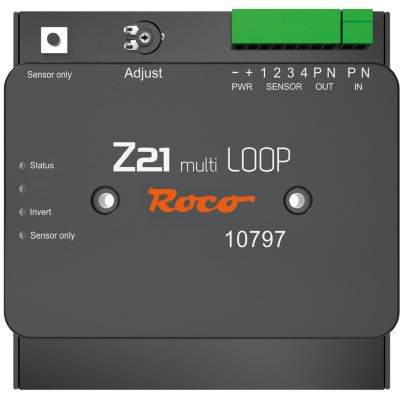
Automatic polarity reversal for reverse loops, wyes and turntables.
View Product →Power extensions for separate stations, staging yards, main-line sections and several simultaneously active trains.
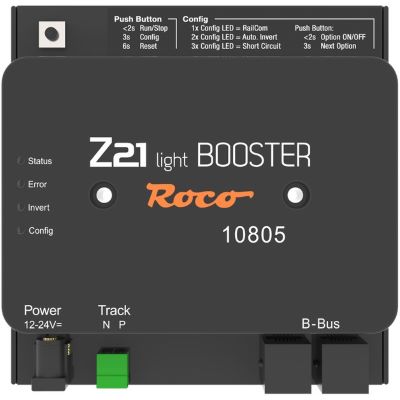
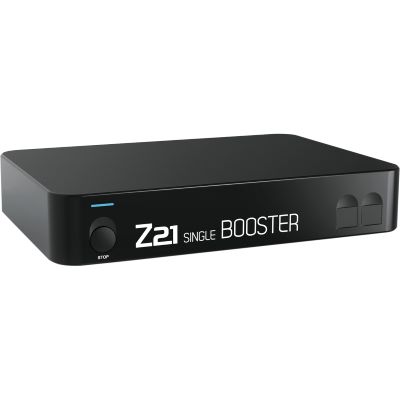
Three amps for an additional track or layout district.
View Product →
Three amps, adjustable voltage and a RailCom receiver for one booster district.
View Product →
Two separately configurable three-amp outputs for extensive layouts.
View Product →
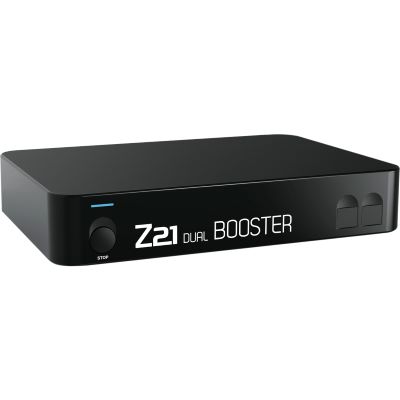
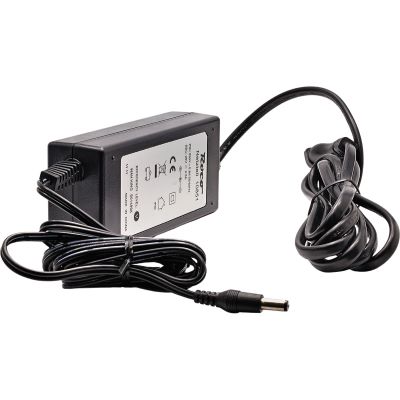
Suitable supply for the Z21, z21, light Booster and single Booster.
View Product →
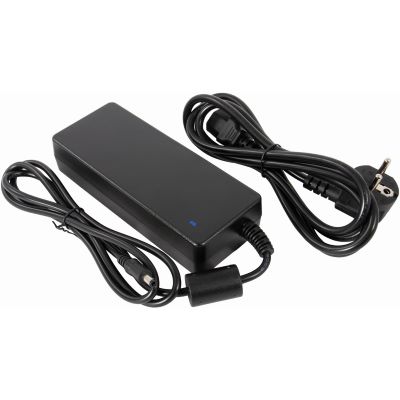
120 watts and 20 volts for the Z21 dual Booster and high-output applications.
View Product →Z21 convenience with high output for large motors, long trains, sound, lighting and garden-railway operation.
The black Z21 provides more connections, adjustable track voltage and a separate programming track. The white z21 versions are more compact and are focused more strongly on starter sets and uncomplicated DCC operation.
Yes. The network function must first be activated with the appropriate Wi-Fi package or activation code. The Z21 App can then be used through the local Wi-Fi network.
The white z21 was supplied with a fully activated network function. It should not be confused with the externally similar z21start.
Yes. Train operation takes place through the local network. Internet access is required, for example, for the initial activation of a z21start, app downloads or firmware updates.
In addition to DCC, the black Z21 supports Motorola. However, it does not provide complete mfx functionality as an mfx system command station.
Yes. When the network function is activated, several control methods can be used in parallel. One person can operate the track diagram on a tablet while other users drive trains with handheld controllers.
It is useful when a separate programming track, adjustable voltage, CAN feedback, LocoNet, a sniffer bus or particularly extensive automation is planned.
A booster is required when the current demand exceeds the output of the command station or when the layout needs to be divided into several power and short-circuit districts.
The Z21 Detector and Detector X16 are designed for the Z21 system family. Depending on the command station, additional R-BUS, CAN or LocoNet-compatible feedback modules can also be used.
The Z21 XL is intended for Gauge G, Gauge II, Gauge 1 and Gauge 0. It supplies six amps at 20 volts and can be expanded with Z21 XL Boosters for additional power districts.
Further guides cover gauges, digital protocols, decoders, Wi-Fi, feedback, wiring, track planning and layout construction.