
Sound decoder


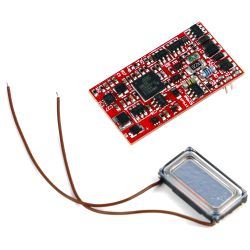


Are you looking for a sound decoder that gives your model railway locomotive realistic engine noise, smooth digital control and impressive driving functions?
Then this category is exactly the right place: with suitable model railway sound decoders, DCC sound decoders, multi-protocol sound decoders, mfx sound decoders, LokSound decoders, SmartDecoder sound, micro sound decoders, PluX22 sound decoders, Next18 sound decoders, NEM 651 sound decoders, G scale sound decoders and matching loudspeakers, you can turn locomotives into lively digital models with authentic sound.
Why are sound decoders important for digital model railways?
Sound decoders combine locomotive control with realistic audio effects. They make steam, diesel and electric locomotives feel more alive during starting, braking, shunting and main line operation.
What belongs to the Sound decoder category?
This category includes locomotive sound decoders, blank sound decoders, preloaded sound decoders, micro sound decoders, large-scale sound decoders, sound modules, speaker-equipped decoders and interface-specific versions for modern digital locomotives.
Why start with a locomotive sound decoder?
A locomotive sound decoder controls motor, light and sound in one compact unit. It is the central upgrade when a locomotive should not only run digitally but also sound realistic.
When should you choose a blank sound decoder?
A blank sound decoder is useful when you want to load a specific sound project later. It gives advanced modellers more flexibility for individual locomotive conversions.
Why choose a preloaded sound decoder?
A preloaded sound decoder already contains a suitable locomotive sound. This is practical when you want a faster installation with a sound project matched to a specific model.
What does a micro sound decoder add?
A micro sound decoder is designed for locomotives with limited space. It is especially useful for N scale, TT scale, small H0 locomotives and narrow-gauge models.
Why are large-scale sound decoders important?
Large-scale sound decoders provide more current reserve for larger motors, lighting and speakers. They are ideal for G scale, gauge 0 and gauge 1 locomotives.
Which interfaces are common for sound decoders?
Common interfaces include PluX22, PluX16, Next18, NEM 651, NEM 652, 21MTC and wired versions. The correct interface makes installation cleaner and reduces unnecessary soldering.
Typical sound decoder interfaces at a glance
Why are H0 sound decoders so popular?
H0 sound decoders are popular because many H0 locomotives offer enough space for decoder, speaker and sound enclosure. They are ideal for detailed steam, diesel and electric locomotive upgrades.
When should you choose N scale sound decoders?
N scale sound decoders are useful when very small dimensions are essential. Speaker placement, heat management and cable routing are especially important in this scale.
Why are TT sound decoders practical?
TT sound decoders offer a good balance between compact size and strong sound functions. They work well in modern TT locomotives with Next18, PluX16 or PluX22 interfaces.
What makes G scale sound decoders special?
G scale sound decoders are designed for larger locomotives with stronger motors and more space for speakers. They can create powerful sound for garden railways and large display layouts.
What is a DCC sound decoder?
A DCC sound decoder works with DCC digital command stations and controls motor, lights and sounds. It is one of the most common choices for two-rail digital model railway operation.
Why use a multi-protocol sound decoder?
A multi-protocol sound decoder is useful when locomotives should run on different digital systems. It can support mixed fleets and layouts with DCC, Motorola, Selectrix, mfx or M4-compatible operation.
What does an mfx sound decoder add?
An mfx sound decoder is useful for compatible Märklin digital systems. It can make locomotive registration and sound function handling more convenient.
Why is RailComPlus useful?
RailComPlus can support automatic registration and feedback with compatible systems. This makes digital setup easier when decoder and central are designed for it.
How do sound decoders improve steam locomotives?
Sound decoders add steam exhaust, whistle, cylinder sounds, coal shovelling and brake noises. Wheel-synchronised steam sound can make a steam locomotive much more convincing.
How do sound decoders improve diesel locomotives?
Sound decoders reproduce engine start, idle, acceleration, turbocharger, horn and braking effects. Diesel locomotives especially benefit from load-dependent sound changes.
How do sound decoders improve electric locomotives?
Sound decoders add fan noise, compressor sounds, horn, pantograph effects and brake sounds. These details make electric locomotives feel more technical and authentic.
Why is load-controlled sound useful?
Load-controlled sound reacts to motor load, acceleration and train movement. This makes the locomotive sound more natural when climbing, braking or pulling a heavy train.
Why is wheel-synchronised sound important?
Wheel-synchronised sound is especially important for steam locomotives. The exhaust beat should match wheel rotation so the model sounds connected to its movement.
Why is a speaker important?
The speaker strongly affects volume, bass and clarity. Even an excellent sound decoder needs a suitable speaker and sound enclosure to perform well.
Why is a sound enclosure useful?
A sound enclosure improves speaker performance by guiding air movement. It often makes the sound clearer, stronger and less thin.
How do you choose the right speaker size?
Choose the speaker according to available space, decoder impedance and desired sound volume. Sugar-cube speakers are common in compact locomotives, while larger models can use bigger speakers.
Why is impedance important?
Impedance must match the decoder’s audio output requirements. A wrong speaker impedance can reduce sound quality or damage the decoder.
Why is sound memory important?
Sound memory determines how much audio data the decoder can store. More memory allows richer sound projects with many effects and longer recordings.
What are sound projects?
Sound projects are audio and function packages for a specific locomotive type. They can include engine sounds, whistles, horns, brakes, announcements and auxiliary noises.
Can sound projects be changed?
Many sound decoders can be reprogrammed with compatible manufacturer tools. This is useful when a blank decoder should receive a specific locomotive sound later.
Why is function mapping useful?
Function mapping assigns sounds, lights and auxiliary outputs to function keys. It helps organise horn, whistle, lights, shunting mode, cab light and special functions logically.
What are CV settings?
CV settings define how a decoder behaves. They can adjust address, acceleration, braking, volume, speed curve, lighting and sound functions.
Why is volume adjustment important?
Volume adjustment keeps the sound realistic and pleasant. A miniature locomotive usually sounds better when the volume fits the scale and room.
Can sound decoders control lights?
Yes, many sound decoders also control headlights, tail lights, cab lights, firebox glow and interior lighting. The number of outputs depends on the decoder type and interface.
Can sound decoders control smoke generators?
Yes, suitable sound decoders can control smoke generators if current rating and wiring match. This is especially interesting for steam locomotives and large-scale models.
Can sound decoders control digital couplings?
Yes, selected sound decoders can operate digital couplings. This makes shunting more realistic when combined with sound, slow speed and coupling effects.
Can sound decoders improve shunting?
Yes, sound decoders can offer shunting mode, reduced speed and matching sound effects. This makes yard operation, coupling and wagon sorting more convincing.
Why is motor control important?
Good motor control allows smooth starting, steady low-speed running and realistic braking. A sound locomotive should move as convincingly as it sounds.
Why is current rating important?
Current rating must match the locomotive motor and connected functions. Too little reserve can lead to overheating, shutdowns or decoder damage.
Why is decoder size important?
Decoder size determines whether the decoder fits inside the locomotive. Sound installations need extra space for both decoder and speaker.
Why is heat management important?
Sound decoders, motors and speakers can generate heat during operation. Clean installation, enough space and correct current load improve long-term reliability.
Why is clean wiring important?
Clean wiring prevents short circuits, noise issues and function failures. Speaker wires, motor wires and lighting wires should be routed carefully and insulated well.
Can sound decoders be installed without soldering?
Yes, many digital-ready locomotives allow plug-in installation with the correct interface. Soldering may still be needed for speakers, extra lights or older locomotives.
Can older locomotives receive sound decoders?
Yes, many older locomotives can be converted if the motor is isolated and enough space is available. The conversion may require milling, rewiring, speaker installation or adapter boards.
How do you choose the right sound decoder?
Choose by scale, interface, protocol, motor current, sound project, speaker size and available space. Also check whether you need DCC, mfx, multi-protocol support or a specific manufacturer system.
How do you avoid common sound decoder mistakes?
Avoid using the wrong interface, wrong speaker impedance or too little installation space. Always test motor isolation, wiring, speaker position and decoder settings before final assembly.
Which brands are important for sound decoders?
Important brands include Piko, ESU, Uhlenbrock, Zimo, Märklin, LGB, Fleischmann, Roco and Tillig. These brands offer sound decoders, sound modules, micro versions, large-scale decoders and interface-specific digital upgrades.
Why are ESU LokSound decoders useful?
ESU LokSound decoders are useful for detailed motor control, multi-protocol operation and high-quality sound projects. They are popular for H0, N, TT, 0 and large-scale sound conversions.
What makes Piko SmartDecoder Sound practical?
Piko SmartDecoder Sound products are practical for Piko locomotives and matching sound projects. They are available for H0, TT and G scale models with modern interfaces and speaker options.
Why choose Zimo sound decoders?
Zimo sound decoders are interesting for compact installations and strong digital performance. They are useful for N, TT and H0 locomotives where sound quality and fine control matter.
What do Uhlenbrock IntelliSound products add?
Uhlenbrock IntelliSound products are useful for compact sound upgrades and special digital installations. They fit modellers who want sound modules or micro sound solutions.
Why are Märklin mSD3 sound decoders useful?
Märklin mSD3 sound decoders are useful for Märklin digital conversions and mfx-compatible operation. They are especially suitable for layouts based on Märklin digital systems.
What should beginners consider before buying?
Beginners should first check locomotive interface, scale, sound project and speaker space. A preloaded plug-in sound decoder with matching speaker is usually the easiest start.
What should advanced modellers consider?
Advanced modellers often focus on sound project editing, speaker enclosure tuning, CV programming, function mapping, load control and synchronised sound. These details make a sound locomotive feel much more realistic.
What should you check before buying a sound decoder?
Before buying a sound decoder, check interface, protocol, sound project, speaker, impedance, motor current, function outputs, size and installation space. Also consider whether the decoder should be blank, preloaded, micro-sized, large-scale, mfx-compatible or multi-protocol.
Which SEO terms fit this category?
Important SEO terms include sound decoder, model railway sound decoder, model train sound decoder, DCC sound decoder, mfx sound decoder, multi-protocol sound decoder, LokSound decoder, Piko SmartDecoder Sound, micro sound decoder, PluX22 sound decoder, Next18 sound decoder, NEM 651 sound decoder, G scale sound decoder and locomotive sound upgrade.
Additional semantic terms such as sound project, locomotive speaker, sugar-cube speaker, sound enclosure, function mapping, CV programming, RailComPlus, load-controlled sound, wheel-synchronised sound, steam sound, diesel sound, electric locomotive sound, horn, whistle, brake squeal and digital model railway accessories strengthen the topical relevance of this category.
Selection guide for sound decoders
Buy sound decoders for realistic digital locomotive sound
Whether you need a LokSound decoder, Piko SmartDecoder Sound, DCC sound decoder, mfx sound decoder, multi-protocol sound decoder, micro sound decoder, PluX22 sound decoder, Next18 sound decoder, G scale sound decoder or complete sound decoder with loudspeaker: the right decoder gives your locomotive authentic acoustic character.
With carefully selected model railway sound decoders, you can add steam exhaust, diesel engine sound, electric locomotive fans, horns, whistles, brake squeal, station effects, shunting mode, cab lighting, smoke control and realistic digital driving behaviour. This makes sound decoders one of the most emotional digital accessory categories for turning a locomotive into a powerful miniature railway experience.
Price List for Decoder Installation & Repairs
Find our current prices for professional decoder installation, sound decoder installation and model railway repairs.
View Price List