
Digital Command Station
MX10 as a Powerful Layout Core
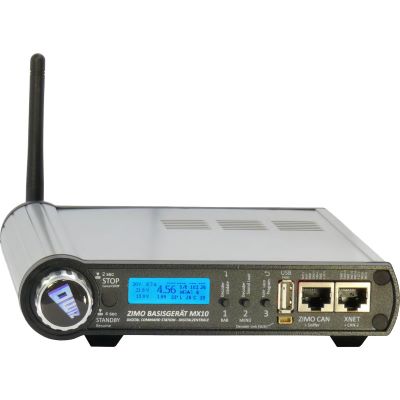
Two track outputs, RailCom detectors, CAN, XNET, LAN, USB, LocoNet and an integrated radio module provide a versatile system foundation.

ZIMO combines powerful digital command stations with ergonomic controllers, intelligent track monitoring and a wide selection of driving and sound decoders. This guide explains the MX10, MX10EC, MX33, StEin, HLU, RailCom and suitable solutions for every important gauge.
ZIMO develops digital command stations, controllers, stationary layout modules, driving decoders, sound decoders and programming devices. The components are intended for model railway enthusiasts who value highly precise motor control, extensive function mapping, high-quality sound reproduction and a layout that can be monitored in detail.
The centre of the current control system is the MX10 base unit. It generates the digital commands, supplies the tracks and monitors voltage, current and short circuits. Its two track outputs can be configured separately. This allows a small-scale section and a power-intensive large-scale section, for example, to use different settings.
The MX10EC provides many MX10 functions but has only one track output and fewer additional connections. It is an interesting choice when a powerful DCC command station is required without a second integrated power district or the complete range of interfaces.
The MX33 and MX33FU are used for operation. Both controllers combine a capacitive touchscreen with numerous directly accessible buttons, a slider, scroll wheel and coloured status LEDs. The MX33 uses a cable, while the MX33FU can additionally communicate through the MiWi radio system integrated into the MX10.
ZIMO is also well known for its decoders. Current MS sound decoders combine 16-bit audio with DCC, mfx, Motorola, RailCom and extensive function mapping. MN decoders provide similar driving and function capabilities without sound. Older MX types that remain available supplement the range for particular interfaces and dimensions.
Two track outputs, RailCom detectors, CAN, XNET, LAN, USB, LocoNet and an integrated radio module provide a versatile system foundation.
One 12 A track output, adjustable voltage, CAN, XNET, LAN, USB and radio communication cover many home and club layouts.
A touchscreen, buttons, slider and scroll wheel enable precise driving and quick access to numerous functions.
Track occupancy, locomotive numbers, RailCom, HLU, turnouts, signals, contacts and servos can be combined locally.
Different dimensions, interfaces and load capacities cover vehicles from Gauge Z to large-scale railways.
Firmware, CVs and sound projects can be checked, updated and transferred to compatible decoders away from the layout.
| Feature | MX10 | MX10EC | Practical Recommendation |
|---|---|---|---|
| Track outputs | Two separate outputs | One track output | Choose the MX10 for two independently supplied districts |
| Maximum track current | 12 A and 8 A | 12 A | Always set lower, appropriate current limits |
| Track voltage | Adjustable from approximately 10 to 24 V per output | Adjustable from approximately 10 to 24 V | Adapt it to the decoder and gauge |
| Radio | Integrated MiWi radio | Integrated MiWi radio | No separate radio module is required for the MX33FU |
| Network | LAN, USB, CAN, XNET and LocoNet | LAN, USB, CAN and XNET | Choose the MX10 for extensive third-party system connections |
| Typical application | Large, mixed or professional layout | Powerful layout with one principal power district | Choose according to the connections and layout structure |
A StEin module monitors several track sections and reports current consumption, short-circuit states and occupancy to the MX10.
Compatible decoders send information back from the monitored track section. The system can therefore evaluate not only occupancy but also the detected vehicle.
HLU-compatible decoders respond to track-dependent commands such as reduced speed, braking or stopping before a signal.
Expansion boards connect solenoid mechanisms, motor-driven turnouts, servos and colour-light signals close to their installation positions.
Additional inputs detect feedback contacts, push buttons, light barriers and other state sensors.
The information can be used for block operation, staging yards, train tracking and computer control.
Small motors require little current and a low, carefully adjusted track voltage. Miniature decoders such as the MX615, MN170N or Next18 types fit into restricted installation spaces.
MX10EC or MX10 with a reduced current limit and NG300.
Never base the overcurrent limit on the command station’s maximum output.
A particularly extensive range of PluX, 21MTC, Next18 and wired decoders is available for these gauges. Sound, servos, couplings and numerous lighting functions can be configured extensively.
MX10EC or MX10 with an MX33 or MX33FU.
Check the interface, speaker impedance and motor current before installation.
Large motors, smoke generators, fans and powerful speakers require greater reserves. The MX10 with an NG600 and large-scale decoders provides a suitable foundation.
MX10, two power districts, StEin and sufficiently heavy wiring.
High currents require professional wiring and safe isolation points.
Record vehicles, sound, smoke, lighting and accessories separately.
Adapt the values to the most sensitive vehicles and cables.
Test the cable connection or register the MX33FU through MiWi radio.
Check the address, functions, speed steps and decoder format.
Trigger and document every detector and output individually.
Update the system, controllers and decoders and save their configurations.
The current limit must suit the cables, track and vehicles.
The NG300 and NG600 provide different total power outputs.
The controller requires an MX10 or MX10EC base unit.
Dimensions, current, function outputs and circuit-board assignments are equally important.
Compatible monitored sections are required for location-specific detection.
The project, decoder family, speaker and loading code must be compatible.
This selection contains central system devices and decoders for different gauges. The available installation space, interface, motor current and required functions must be checked for every vehicle.
Components for constructing a complete ZIMO control system.
Two adjustable track outputs plus CAN, XNET, LAN, USB and LocoNet.
View Product →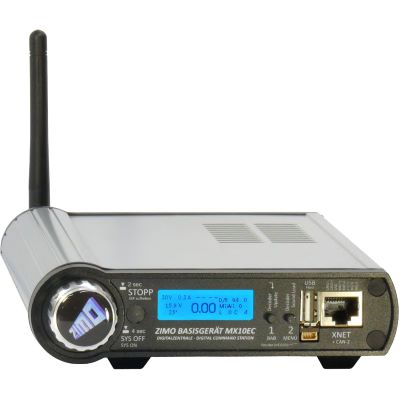
Compact system foundation with one powerful track output.
View Product →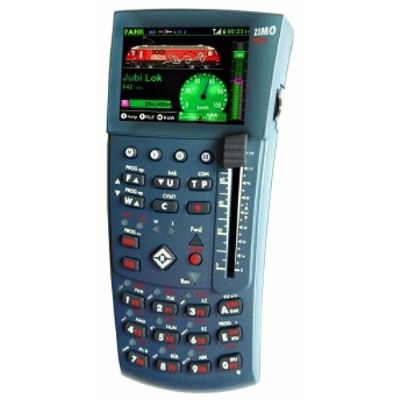
Touchscreen, 29 buttons, scroll wheel, slider and CAN bus.
View Product →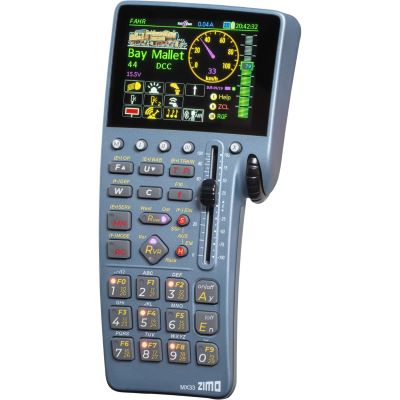
Wireless controller with an additional wired operating mode.
View Product →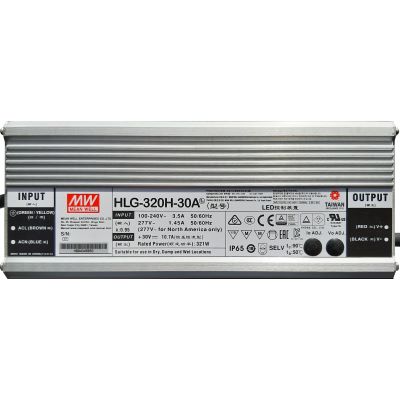
30 V power supply for layouts with a medium total power requirement.
View Product →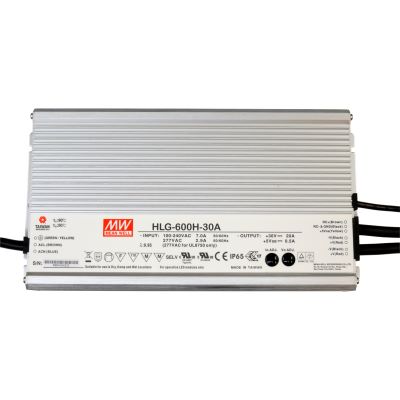
Powerful 30 V supply for large layouts and high current reserves.
View Product →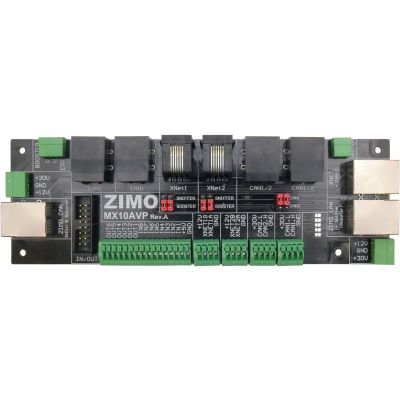
Arranges the MX10 command station’s inputs and outputs clearly.
View Product →Small designs for vehicles with restricted installation space and low current consumption.
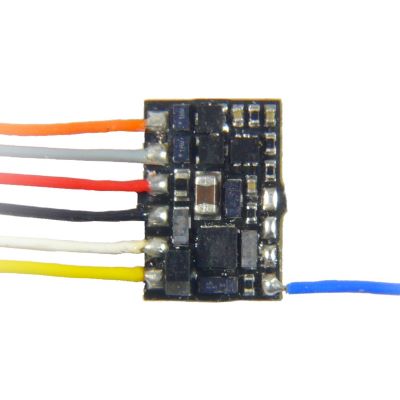
Compact non-sound decoder for particularly small installation spaces.
View Product →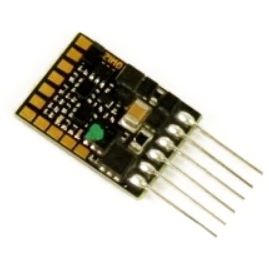
Miniature driving decoder with a six-pin NEM 651 interface.
View Product →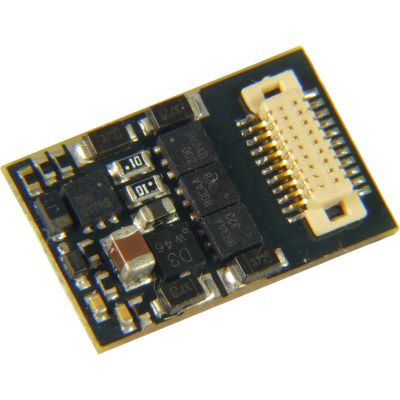
Driving decoder with amplified outputs and additional logic-level outputs.
View Product →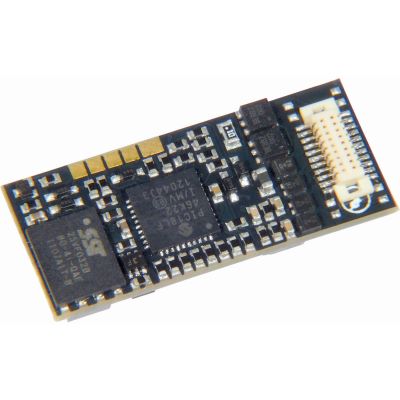
Next18 sound decoder with a 1 W audio output and RailCom.
View Product →Solutions for PluX22, PluX16, 21MTC, wired connections and extensive special functions.
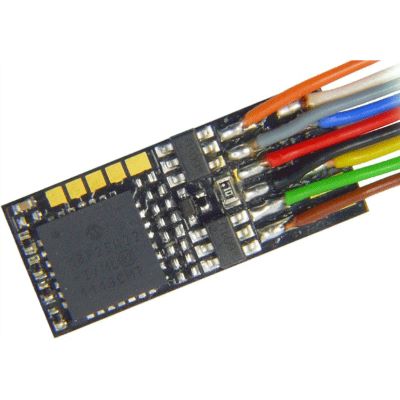
Compact 0.8 A driving decoder with several function outputs.
View Product →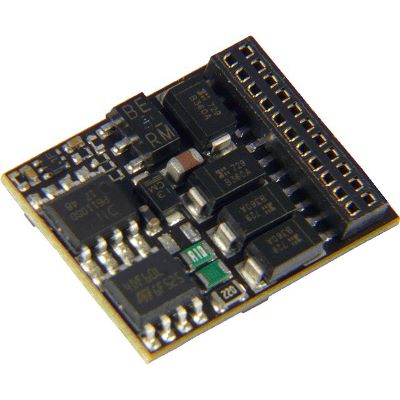
Powerful non-sound decoder for vehicles with a 21MTC interface.
View Product →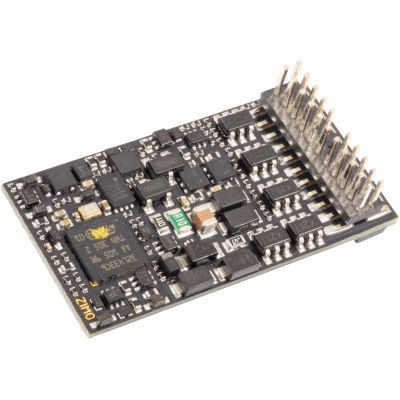
Flat PluX22 driving decoder with 9+1 function outputs.
View Product →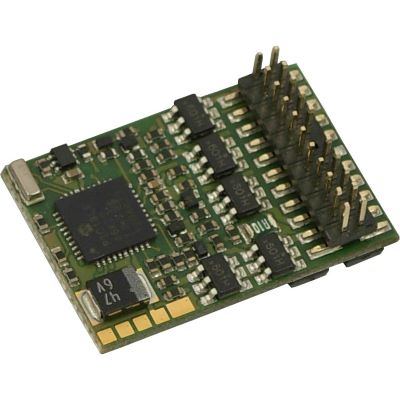
PluX22 decoder with 1.2 A, RailCom, SUSI and servo outputs.
View Product →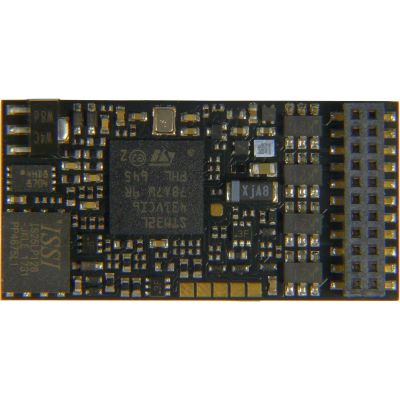
16-bit sound, a 3 W audio output and numerous functions.
View Product →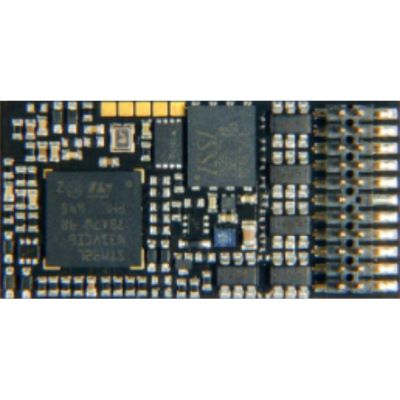
DCC, mfx and Motorola sound decoder with a 3 W output.
View Product →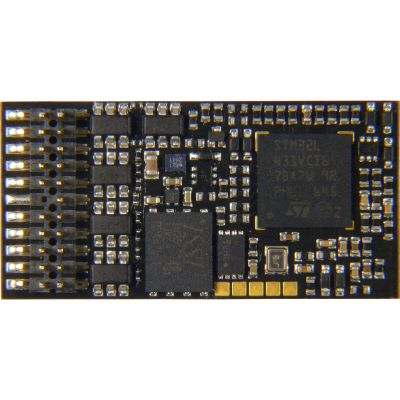
Modern multiprotocol sound decoder for extensively equipped H0 locomotives.
View Product →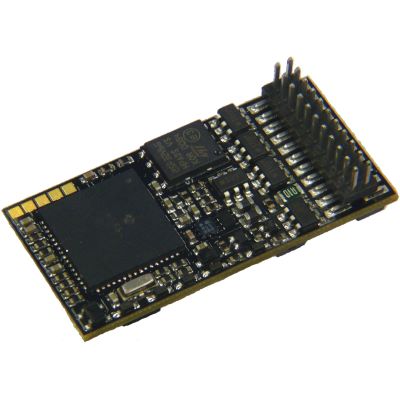
PluX22 sound decoder with RailCom, SUSI and an energy-storage connection.
View Product →Tools for updating, programming and protecting digital vehicles.
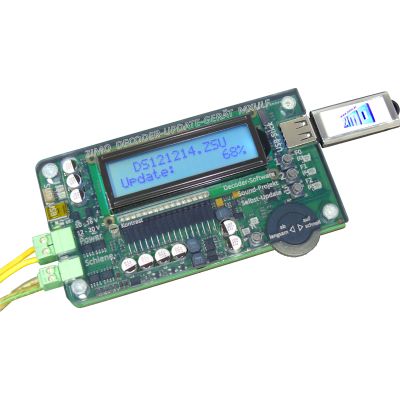
Updates ZIMO decoders and loads compatible sound projects.
View Product →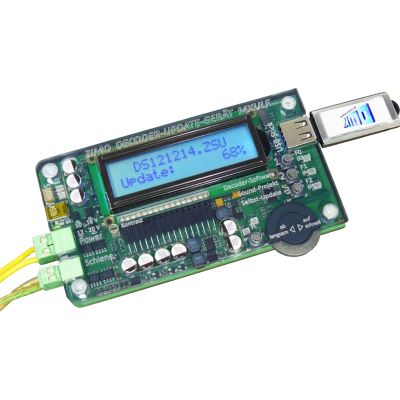
MXULFA version with an additional licence for PC software.
View Product →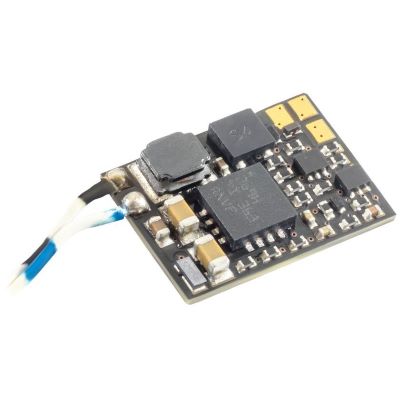
Compact buffer module for short interruptions in current collection.
View Product →The minimum equipment consists of an MX10 or MX10EC, a suitable power supply and a controller such as the MX33 or MX33FU. Tracks, decoders and connecting cables are also required.
The MX10 has two separate track outputs and additional interfaces. The MX10EC has one 12 A output and a reduced range of connections.
No. The MX33 and MX33FU are control devices. The MX10 or MX10EC provides the digital commands and track power.
Yes. The wireless controller can alternatively be operated using a CAN cable. The internal battery can be charged at the same time.
ZIMO offers system configurations with a WLANMAUS and router. The network, firmware and intended connection must be configured correctly.
HLU is a signal-dependent train-control system. Compatible decoders respond to information in the track section and adapt their speed or operating state.
MS refers to current sound decoders and MN to current non-sound decoders. MX covers earlier and, in some cases, still available driving, sound and specialist decoders.
Many current MS decoders support mfx and Motorola in addition to DCC. The specific decoder version and current software status must be checked.
The MXULFA updates compatible ZIMO decoders, reads and programs CVs and transfers sound projects through the track, USB or SUSI.
The MX10 with an NG600 and suitable large-scale decoders is appropriate for large-scale railways. Current limits, cables and track feeds must be dimensioned professionally.
Further guides cover command stations, decoders, gauges, wiring, feedback, track planning and layout construction.