Modellbahn Keks
Welcome!
Our cookies offer you a fast, relaxed and full-featured shopping experience. Some are necessary to operate the website and its functions. Others help us to improve our services. If you agree to this, simply consent to the use of cookies for preferences, statistics and marketing by clicking on "OK". Alternatively, you can deactivate individual cookies under "Customise cookies" or all cookies, except those required for the function of our website, under "Reject all".
Model railway wheelsets and axles for maintaining wagon running gear and axle bearings
Smooth running starts with the running gear

Maintain Model Railway Wagon Axles | Wheelsets & Axle Bearings

Find out why a model railway wagon suddenly becomes difficult to roll, how to clean wheelsets and axle bearings correctly, when a tiny amount of lubricant is useful and how to select a technically compatible replacement wheelset.

Smooth running starts with the running gear

Why Should You Maintain Wagon Axles and Axle Bearings?

A model railway wagon may not have its own drive, but its wheelsets still have a considerable influence on train operation. Every axle should rotate as freely as possible, guide the vehicle cleanly through the track and at the same time remain securely seated in its axle bearings. Even one wagon with excessive rolling resistance can noticeably increase the tractive effort required by a long train.

If you want to maintain a wagon axle, you should not automatically reach for the oil bottle. Maintenance begins with inspection and cleaning. Dust, hair, fibres, old dirt or foreign material between the wheelset and bogie can increase rolling resistance. A bent axle, a damaged pinpoint bearing or an unsuitable wheelset can also be responsible.

Many model railway wagons use what are known as pinpoint bearings. The tapered ends of the axle run in small bearing recesses in the chassis or bogie. Other vehicles use special plain bearings, electrical contact strips or, particularly on large-scale railways, even ball-bearing wheelsets. There is therefore no single maintenance method that is correct for every wagon.

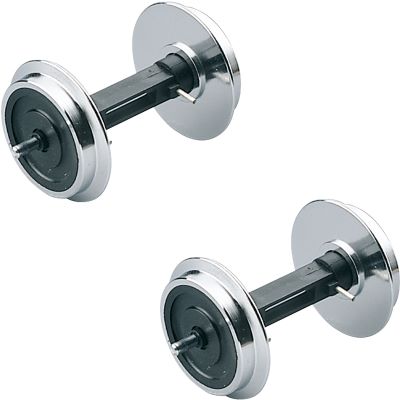
Correct wheelset selection is particularly important. Wheel diameter, axle length, axle-point shape, gauge and electrical insulation must all match. When converting between systems, insulated DC or two-rail wheelsets and non-insulated AC wheelsets may also need to be distinguished.

This guide takes you from a simple rolling test through cleaning and lubrication to replacement. Suitable wagon wheelsets and complete bogies can be found in the Wheelsets & Bogies category.

Find the cause first

Why Does a Model Railway Wagon Suddenly Roll Poorly?

A wagon with excessive rolling resistance does not necessarily need new axles. A few simple checks can distinguish whether dirt, the bearing arrangement, the bogie or the wheelset itself is responsible.

Observation Possible Cause Check
One axle rotates much less freely Dirt or fibres around the axle bearing Remove the wheelset and inspect both axle points and bearings.
Wagon wobbles from side to side Wheelset is out of true, a wheel is seated incorrectly or the axle is damaged Rotate the wheelset freely and observe its run-out from the side.
Wagon derails on curves Bogie is binding or the wheelset does not fit Check bogie movement, wheelset dimensions and free rotation.
Wagon squeaks Dry or contaminated bearing point Clean the bearing and check the vehicle instructions regarding lubrication.
Interior lighting flickers Wheel contacts or contact strips are dirty In addition to the bearings, inspect the electrical wheel contacts.
Not every axle uses the same bearing design

Understanding Pinpoint, Plain and Ball Bearings

1

Pinpoint Bearings

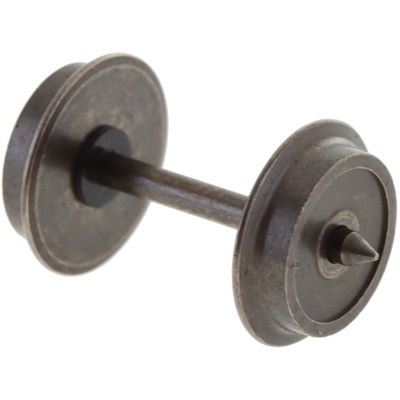
On many H0, TT and N wagons, the axle ends are tapered. These points sit in corresponding recesses in the axle holder. Clean, undamaged axle points and the correct axle length are essential. Axles that are too long can bind, while axles that are too short may have excessive play.

2

Plain and Contact Bearings

Some wagons combine the bearing arrangement with electrical contact strips for interior lighting or occupancy detection. Mechanical freedom of movement and reliable electrical contact must then be checked together. Do not bend contact strips unnecessarily.

3

Ball Bearings

Ball-bearing wheelsets are particularly available for larger garden-railway vehicles. They differ considerably from simple pinpoint bearings. The manufacturer's maintenance and lubrication instructions should therefore be followed precisely.

Step by step

How to Maintain Wagon Wheelsets and Axle Bearings Correctly

1

Carry Out a Rolling Test

Before Disassembly
Compare with a Free-Rolling Wagon

Push the wagon gently along a clean, straight section of track and compare it with a similar vehicle. If it rolls a noticeably shorter distance or stops abruptly, inspect each axle individually.

2

Place the Wagon Safely

Turn the vehicle over on a soft surface. Do not place loads on roofs, handrails, brake pipes or other separately fitted details. With delicate models, consult the operating or spare-parts instructions first.

3

Remove the Wheelset Carefully

Spread the axle holder or bogie only as far as its design permits. Never use force. Note the installation direction before removal, particularly with insulated or current-carrying wheelsets.

4

Clean the Axle Points and Bearings

Remove hair, dust and accumulated dirt using fine tweezers or a soft brush. Dissolve old residue only with a model railway cleaner that is compatible with the materials concerned. Do not allow liquid to run uncontrollably into the wagon.

5

Inspect the Wheels

Check that the wheel discs are firmly seated, the running surfaces are clean and the wheelset rotates visibly true. A bent or clearly wobbling wheelset should not be improvised back into shape by forceful straightening.

6

Lubricate Only When Necessary

Not every wagon bearing requires oil. If the vehicle instructions specify lubrication, use only a suitable resin-free and acid-free model railway oil. An extremely small amount at the specified bearing point is completely sufficient.

7

Reinstall the Wheelset

Position both axle points correctly in their bearings and check that the wheelset rotates freely. On bogie vehicles, then check the full bogie pivoting range as well as the coupling and close-coupling mechanism.

8

Test the Wagon in a Train

Run the wagon first on its own and then within a train over straight track, curves and turnouts. If rolling resistance remains high, recheck the axle length, bearing geometry or complete wheelset and replace the wheelset if necessary.

Too Much Oil Can Make the Wagon Worse

Excess lubricant attracts dust and can migrate along the axle or wheel to other components. Do not flood every axle bearing as a precaution. Clean first, check the bearing design and lubricate only where lubrication is actually intended.

From Z gauge to garden railways

Maintaining Wagon Axles Correctly by Gauge

The basic maintenance principle remains similar, but the components differ considerably in size, bearing design and spare-part availability. Always check the dimensions and the exact vehicle before replacing a wheelset.

Gauge Special Considerations Further Guide
Z Extremely small bearings and wheelsets; work particularly carefully and without force. Z Gauge
N Very fine axle points; even small amounts of dirt can noticeably affect free running. N Gauge
TT / TTe Large selection of metal and replacement wheelsets. Check wheel diameter and axle dimensions. TT · TTe
H0 AC / DC Very large selection. Electrical insulation and the power system must also be considered. H0 · AC · DC
H0e / H0m / H0f Narrow-gauge wheelsets are particularly dependent on the exact vehicle and track gauge. H0e · H0m · H0f
0 / 0e Larger running gear makes inspection easier, but the manufacturer's specified dimensions must still be observed. 0 Gauge
1 High-quality large-scale models may use complex bearing and electrical contact arrangements. Gauge 1
G Metal, plastic and ball-bearing wheelsets as well as robust bogies are widely used. G Gauge

A complete overview is available in the Model Railway Gauge Comparison .

Current wagon spare parts

Find Suitable Wheelsets, Axles and Bogies

The product range in Modellbahnshop is loaded directly from the current Wheelsets & Bogies category. Filter by manufacturer, gauge and design. Prices and stock status are not required for this maintenance guide; technical fit and exact vehicle compatibility are what matter.

Axle Dimensions Matter More Than Similar Appearance

When replacing a wheelset, always compare wheel diameter, axle length, bearing type, electrical insulation and power system. A wheelset that looks similar can still bind in the wagon or have excessive lateral play.

View All Wheelsets & Bogies

Browse replacement wheelsets, metal wheels, AC and DC wheelsets, bogies, axle holders and compatible wagon running-gear parts.

All Wheelsets & Bogies
Clean before lubricating

Suitable Care Products for Axles and Bearings

Precise dosing is particularly important when maintaining wagon axles. Model railway oilers with a fine tip allow extremely small quantities to be applied exactly where required. Cleaning distillates help remove old contamination. Grease is not automatically suitable for a normal wagon pinpoint bearing and should be applied only to locations where it is explicitly specified.

Wheelsets by vehicle manufacturer

Brands for Wagon Axles and Running Gear

The manufacturer's product page is particularly useful when a wheelset must match a specific passenger coach, freight wagon or narrow-gauge vehicle exactly.

Better free running without consequential damage

Typical Mistakes When Maintaining Wagon Axles

1

Automatically Oiling Every Axle

First check whether lubrication is actually specified. A clean bearing that already runs freely does not need oil simply out of habit.

2

Using Too Much Lubricant

Excess oil collects dirt. At approved lubrication points, an extremely small and precisely applied quantity is sufficient.

3

Spreading the Bogie Too Far

Plastic axle holders can become permanently deformed. Release wheelsets only as far as the construction permits.

4

Using the Wrong Axle Length

Wheelsets that are too long increase friction. Wheelsets that are too short can have excessive lateral play or may even fall out of the bearing.

5

Confusing AC and DC Wheelsets

Electrical insulation is relevant to occupancy detection, coach lighting and the track power system. When replacing a wheelset, take the original electrical configuration into account.

6

Continuing to Use a Wobbling Wheelset

A visibly damaged or out-of-round wheelset can cause derailments. An accurately matched replacement is usually the cleaner solution.

Frequently asked questions about wagon maintenance

FAQ About Wagon Axles, Wheelsets and Axle Bearings

Should Model Railway Wagon Axles Be Oiled?

Not as a general rule. Clean the bearings and axle points first. Lubrication should only be applied when it is specified for the particular bearing design. In that case, a very small quantity of suitable model railway oil is sufficient.

How Can I Recognise a Wagon Axle with Excessive Rolling Resistance?

The wagon rolls noticeably worse than comparable vehicles, or an individual axle rotates only briefly after being spun. Squeaking can also indicate excessive friction.

Why Does a Wagon Roll Worse After Oiling?

Too much oil can bind dust and dirt. The original cause may also have been an incorrect axle dimension or a damaged bearing. Clean the bearing again and check the technical fit.

What Does a Pinpoint Bearing Mean on a Wagon Wheelset?

The axle has tapered points that run in corresponding bearing recesses. With the correct geometry, this design allows the wagon to roll with very little resistance.

How Do I Find the Correct Axle Length for My Wagon?

The safest method is to identify the manufacturer and spare-part number. With universal replacement wheelsets, the axle length, wheel diameter, axle-point shape and gauge must additionally be compared with the existing wheelset.

What Is the Difference Between AC and DC Wagon Wheelsets?

Electrical insulation is the main difference. Two-rail systems require insulated wheelsets, whereas centre-contact systems can use non-insulated axles for certain functions. Always follow the vehicle instructions.

When Should a Complete Wheelset Be Replaced?

Replacement is preferable to an improvised repair when the axle is bent, the axle points are damaged, a wheel is loose, significant lateral run-out is present or the dimensions are incorrect.

Are Metal Wheelsets Better Than Plastic Wheelsets?

Metal wheelsets are frequently chosen for smooth running, electrical contact possibilities and visual improvement. The decisive factor, however, remains whether the dimensions, bearing arrangement and electrical configuration match the wagon.

Why Does a Wagon Derail Even Though Its Axles Are Clean?

Possible causes include a binding bogie, incorrect wheelset dimensions, coupling problems, damaged wheel flanges or faults in the track. The wagon axle is only one part of the complete running gear.

Can Older Wagons Be Improved with New Wheelsets?

Yes, provided suitable replacement wheelsets are available. Before conversion, the gauge, wheel diameter, axle length, bearing arrangement and power system must all match.

Free-Rolling Wagons Reduce the Load on the Entire Train

Further guides covering vehicle cleaning, wheelsets, traction tyres, pickup shoes, digital technology, gauges and layout maintenance are available in the central Modellbahnshop guide.

Continue with the Complete Model Railway Guide

Discover further information about vehicle maintenance, wheelsets, track systems, digital technology, gauges, scenery construction and reliable model railway operation.

Open the Main Guide