Saxon narrow-gauge railways
IV K, VI K and VII K locomotives form typical passenger trains with load-carrying coaches, rebuilt coaches and luggage vans.

TTe combines the TT scale of 1:120 with track measuring 6.5 millimetres between the rails. It can represent 750, 760 and 800 mm narrow-gauge railways, small rural stations, transporter wagon operation and typical Deutsche Reichsbahn trains within a particularly compact area.
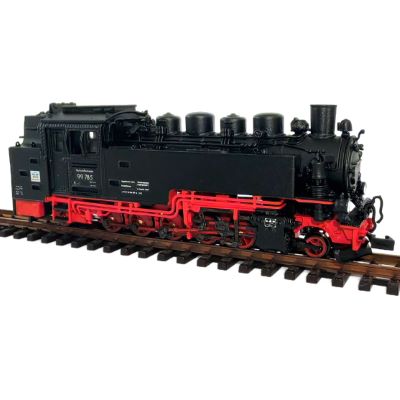
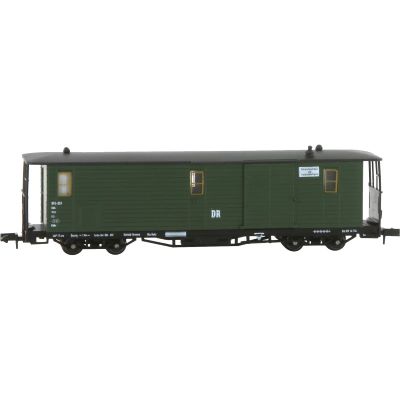
The capital letters TT describe the scale of 1:120. The suffix “e” denotes narrow-gauge railways with prototype track gauges between approximately 650 and less than 850 millimetres. TTe vehicles run on model track measuring 6.5 millimetres between the rails.
Saxon 750 mm railways can be represented particularly well. Suitable prototypes include Deutsche Reichsbahn routes, the modern Sächsische Dampfeisenbahngesellschaft, the Preßnitztalbahn, the Döllnitzbahn and the Zittau narrow-gauge railway.
The limited space requirement supports narrow valleys, small stations, industrial sidings and intensive shunting operation. The vehicles nevertheless remain larger and more visible than comparable models in smaller scales.
TTe uses 6.5 mm track. TTm uses 9 mm track for metre-gauge railways, while TTf represents very narrow field and industrial railways on approximately 4.5 mm track.
IV K, VI K and VII K locomotives form typical passenger trains with load-carrying coaches, rebuilt coaches and luggage vans.
Green passenger coaches, brown freight wagons and Class 99 locomotives characterise Eras III and IV.
Observation coaches, historic train formations and operational steam locomotives also suit modern eras.
Standard-gauge wagons can be carried on narrow-gauge transporter vehicles to industrial sidings and loading tracks.
Austrian and Central European narrow-gauge railways provide additional themes for TTe models and custom-built vehicles.
Sawmills, quarries, coal merchants and rural loading roads create varied shunting tasks.
Define the route, era, vehicles and typical operating locations.
Compare the locomotive and coach requirements before laying track.
Do not combine Karsei, Busch and Veit systems without checking them.
Keep turnouts, tunnels and hidden track sections easily accessible.
| Planning area | Recommendation | Why is it important? |
|---|---|---|
| Locomotive radius | From approximately 195 mm, depending on the model | Articulated sections, coupled axles and vehicle overhang require sufficient space. |
| Coach radius | Frequently at least 220 mm | Long bogie coaches operate more smoothly and reliably. |
| Gradient | Keep it gentle and use rounded transitions | Small locomotives and lightweight coaches have limited tractive effort. |
| Track spacing | Test vehicle overhang practically on curves | Long coaches travelling in opposite directions must not touch. |
| Turnouts | Inspect the frogs and wheel guidance carefully | Short vehicles are sensitive to irregularities. |
TTe uses the same scale as TT. A narrow-gauge coach measuring 12 metres in real life is ten centimetres long in the model. A platform edge measuring 60 metres requires 50 centimetres.
The calculator also compares the length with H0e, N and Z. The track gauge changes the width between the rails rather than the underlying scale of the TTe model.
Enter the prototype length in metres.
Many small-series locomotives are supplied for two-rail direct current and can be controlled using a suitable controller.
Some locomotives have solderable connections. The decoder, voltage and motor current must match the model precisely.
Sound is technically possible but requires a very small decoder, loudspeaker and carefully planned sound enclosure.
Track gauge and operating voltage are separate considerations. Always follow the specifications of the locomotive and decoder manufacturers.
| Track solution | Feature | Important consideration |
|---|---|---|
| Busch TT/TTe Flexible Track Base | Flexible sleeper bases and dual-gauge track | Add suitable rail profiles, track gauge and fixing materials. |
| Rokuhan 6.5 mm Track | Roadbed track with robust clip connections | Test wheel dimensions, turnout geometry and the power supply. |
| Z-Gauge Track as a Basis | Suitable nominal track gauge of 6.5 mm | Not every vehicle is compatible with every rail profile and turnout. |
| TT/TTe Dual-Gauge Track | Standard and narrow gauge share one track formation | Plan the frogs, check rails and electrical separation carefully. |
Era IV version of the Saxon narrow-gauge locomotive.
View product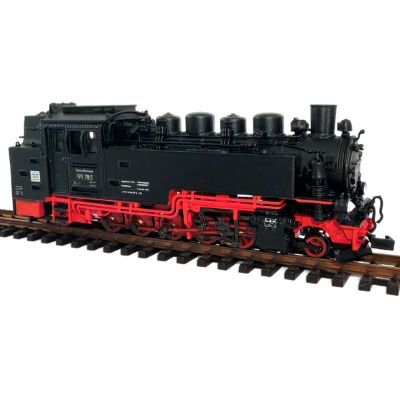
Era III version with solderable digital connections.
View product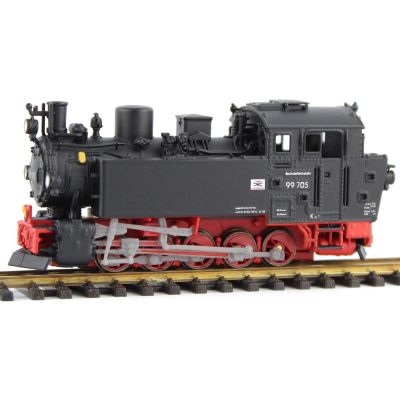
Rebuilt DR locomotive with a bell-type armature motor.
View product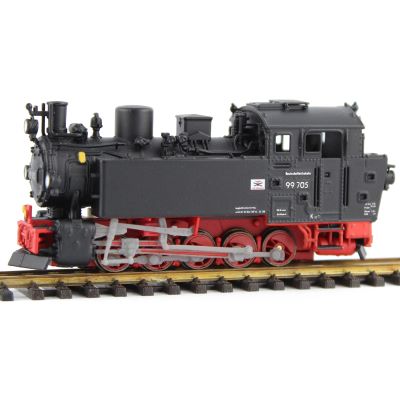
Metal kit for experienced narrow-gauge modellers.
View product
Timber-panelled Deutsche Reichsbahn luggage van.
View product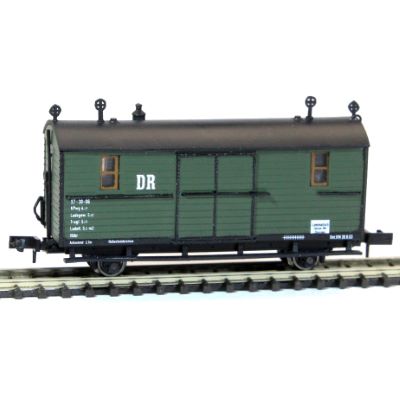
Green luggage and postal van for DR trains.
View product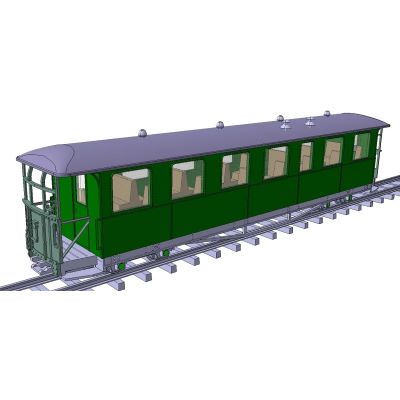
Metal-panelled Deutsche Reichsbahn passenger coach.
View product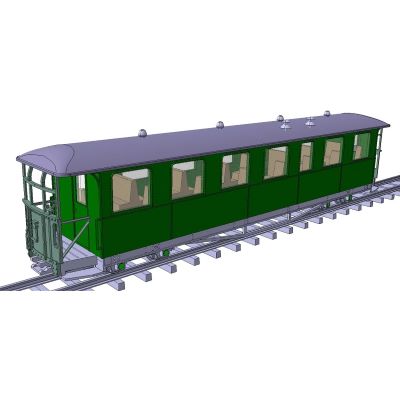
Timber-panelled version for historic passenger trains.
View product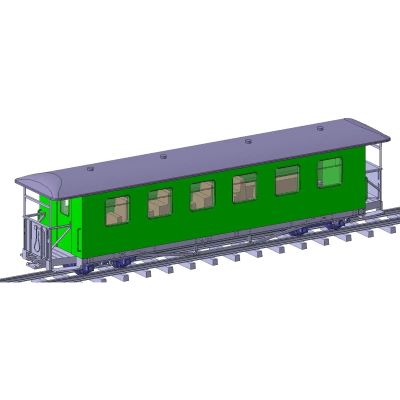
Modernised DR coach for typical Era IV trains.
View product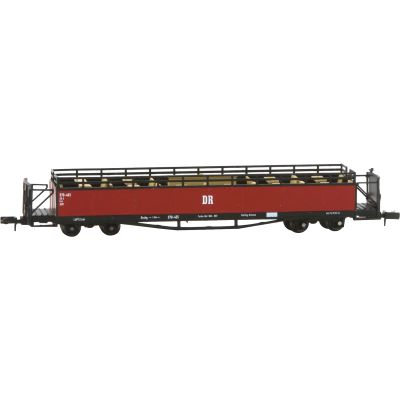
Open observation coach for heritage and excursion trains.
View product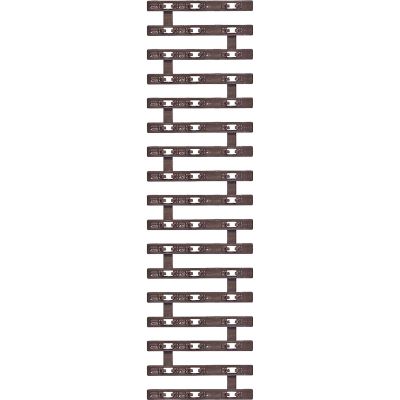
Ten flexible sleeper bases for TT and TTe.
View product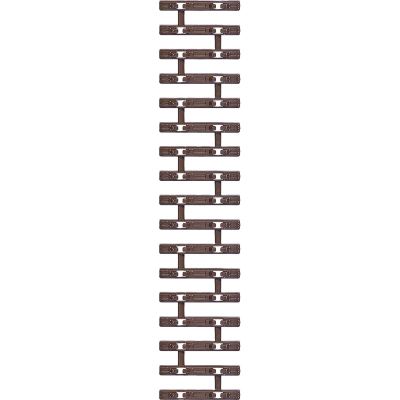
Flexible sleeper bases for custom track alignments.
View product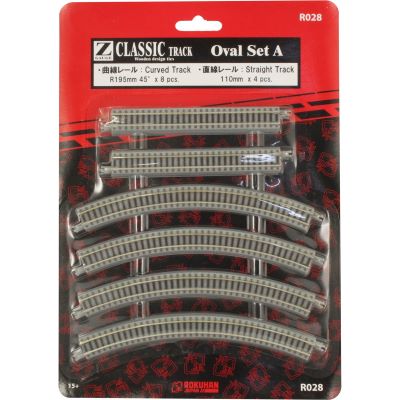
Compact test circuit with a radius of 195 millimetres.
View product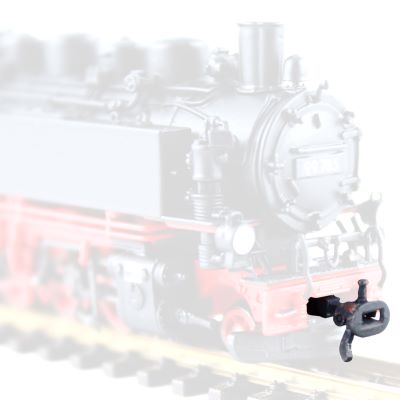
Prototypical coupling pair for VII K locomotives.
View productTTe uses a scale of 1:120 and a model track gauge of 6.5 millimetres.
TTe is particularly suitable for prototype track gauges of 750, 760 and 800 millimetres.
Both use a scale of 1:120. Standard-gauge TT runs on 12 mm track, while narrow-gauge TTe uses 6.5 mm track.
TTm normally represents metre-gauge railways on 9 mm track. TTe uses 6.5 mm track for narrower prototypes.
Some locomotives operate from a radius of 195 millimetres. Many longer coaches require at least 220 millimetres. The product specification remains decisive.
The nominal track gauge is the same. The wheel dimensions, rail profile, turnout geometry and operating voltage must nevertheless be checked.
Yes. A suitable small decoder, a correctly isolated motor and a track voltage appropriate for the locomotive are required.
Some small-series models have solderable connections. This does not automatically mean that they have a standard NEM 651 interface.
The scale and track gauge are compatible, but the coupling systems may differ. Check the coupling height and available adapters first.
TTe is a specialist gauge. A simple test circuit and a small selection of mutually compatible vehicles make the introduction considerably easier.
Further gauges, prototype themes, manufacturer overviews and technical instructions are available in the central model railway guide.