1
Define the Space and Layout Concept
Decide whether the railway will use a room, table, shelf, basement, attic or garden before selecting track geometry.

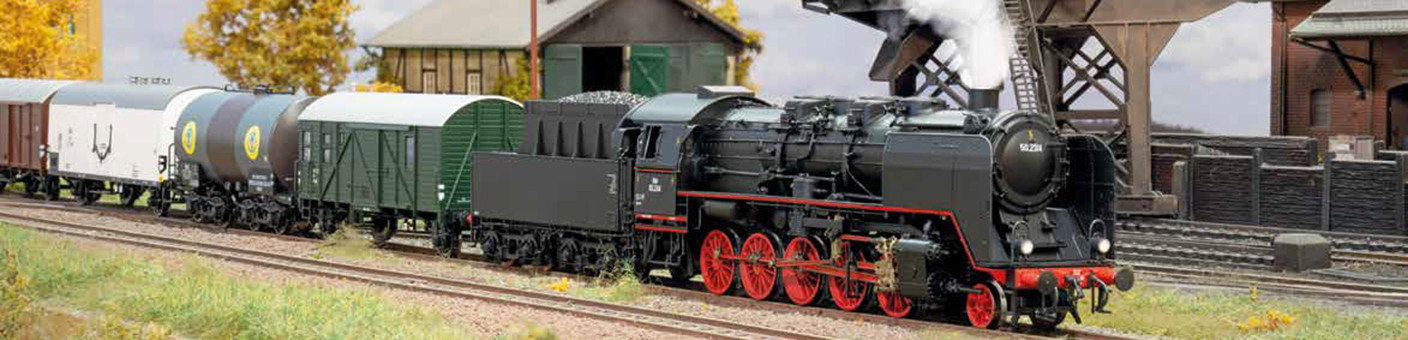
Welcome to the Modellbahnshop control centre. Model Railway Mission Control brings together model railway topics, manufacturers, gauges, track systems, digital technology, railway eras, railway companies, layout construction, scenery, maintenance, new products and current models in one comprehensive starting point for the hobby.
Whether you are planning your first layout, looking for a particular locomotive, solving a digital problem, creating a DR or SBB railway world, or simply browsing Märklin, PIKO, Roco, TILLIG, Fleischmann, BEMO, LGB and many other brands: your next route starts here.
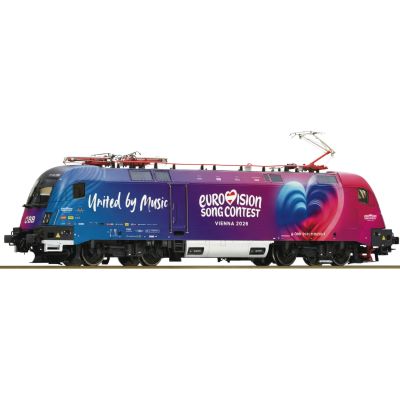 H0 · Roco
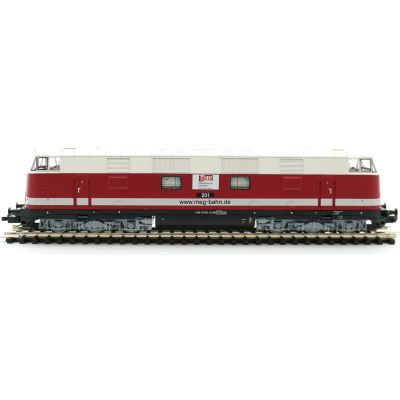 TT · TILLIG
 G · LGB
A model railway is not a single product. The hobby consists of many connected decisions. A locomotive needs the correct gauge, a compatible electrical system and sufficiently large curves. A station needs track, turnouts, signals, platforms and believable train formations. Digital operation combines a command station, decoders, protocols, feedback and accessory control. Then come scenery, roads, figures, buildings and all the small details that turn a technical layout into a world of its own.
This is exactly why Model Railway Mission Control works differently from a conventional directory of links. It does not start with an endless alphabetical list. It starts with one question: What would you like to achieve right now? Beginners get a direct route to introductory guidance, gauge selection and starter sets. Layout builders move on to track, planning, calculators and scenery. Digital modellers reach command stations, decoders and interfaces. Collectors can begin with a manufacturer, railway era or railway company.
The full depth remains available behind these starting points. The Topic Finder contains the extensive Modellbahnshop landing-page library. The manufacturer section leads directly to individual brand worlds. Product Radar can load current product links from manufacturer pages and filter them by search term, gauge and product type. This makes Mission Control equally useful for relaxed browsing and for solving a very specific task.
Do not choose a manufacturer first. Choose your objective first. From there, the links lead deeper into explanations, comparisons, product worlds and suitable brands.
From available space and budget to gauge, starter sets and the first reliably operating model railway layout.
Open the beginner route → Mission 02Compare Z, N, TT, H0, H0e, H0m, H0f, 0, 1 and G by space requirements, scale and visual impact.
Compare gauges → Mission 03Combine the layout concept, room, train length, station, hidden yard and operating patterns into a workable plan.
Plan a layout → Mission 04Bring together manufacturers, roadbed, rail profile, gauges, flex track, turnouts and track sets in TrackAtlas 29.
Open TrackAtlas → Mission 05Understand DCC, mfx, Motorola, Selectrix, command stations, decoders, interfaces, feedback and smartphone control.
Open the digital world → Mission 06Classify Eras I to VI by rolling stock, lettering, railway companies and characteristic appearance.
Discover railway eras → Mission 07Explore DB, DR, DRG, SBB, ÖBB, RhB, SNCF, PKP, ČD and numerous private railway companies as layout themes.
Open railway worlds → Mission 08Create believable terrain, mountains, rocks, tunnels, portals, retaining walls, embankments, vegetation and water.
Build scenery → Mission 09Clean, lubricate, inspect and restore locomotives, wheels, pickups, couplings and track.
Start maintenance → Mission 10Calculate scale, radius, gradient, track helix, train length, platform length, layout area and track requirements.
Open the calculators → Mission 11Discover the 2027 worlds of Märklin, PIKO, Roco, TILLIG, BEMO, Fleischmann, LGB and many other manufacturers.
Explore New Products 2027 → Mission 12Select major manufacturers, accessory brands, digital specialists and small-series suppliers from one central overview.
Open the brand overview →A good layout is not created in a single step. The major subject areas interact with one another. That is why the most important worlds are arranged here like modules in a control centre.
The central knowledge hub for planning, technology, vehicles, track, scenery, maintenance and railway operation.
TechnologyMatch gauge, electrical system, decoder, digital protocol and an existing layout more confidently.
DigitalFind the right decoder by interface and digital protocol.
OperationCombine locomotives and suitable rolling stock into believable trains.
Large ScaleG gauge, track construction, weather, technology and large models.
Narrow GaugeH0e, H0m, H0f and extensive narrow-gauge worlds.
Railway OperationLocomotives, wagons, industry and modern logistics operations.
RoadCars, buses, lorries and commercial vehicles alongside the railway.
InspirationExhibition layouts, clubs, shows and impressive prototypes.
This is where Mission Control reveals its full depth. Search for more than a page title. Terms such as “decoder”, “DR”, “track”, “children”, “rocks”, “SBB”, “2027”, “H0e” or “maintenance” lead directly to suitable landing pages. The major entry points remain easy to navigate, while specialist knowledge is always within reach.
Locomotives and rolling stock from Märklin, PIKO, Roco, TILLIG, BRAWA or Fleischmann represent only one part of the hobby. BEMO and Technomodell cover narrow-gauge subjects, LGB large garden railways, while ESU, Lenz, Uhlenbrock, ZIMO, Massoth and YaMoRC specialise in digital technology. NOCH, Heki, FALLER, Auhagen, Kibri, Vollmer, Busch and Viessmann create the world around the track. This directory therefore includes not only the largest names, but also specialists and smaller manufacturers.
Making decisions in the right order helps avoid rebuilding later. In particular, do not begin with a random locomotive and only afterwards check which track or electrical system it requires. Think of the layout as one connected system.
Decide whether the railway will use a room, table, shelf, basement, attic or garden before selecting track geometry.
Compare vehicle size, desired train length and the amount of scenery depth you would like to achieve.
In H0, distinguish centre-contact from two-rail operation and consider future digital requirements from the start.
Test turnouts, flex track, gradients and the longest vehicles before permanently installing the layout.
Combine DB, DR, SBB, ÖBB, RhB or an international railway world with the period you want to represent.
Buildings and mountains should not occupy space that will later be needed for shunting, stations or maintenance access.
A topic page should do more than explain. It should make visitors want to explore the hobby itself. These models demonstrate how different scale, prototype, manufacturer and layout themes can be.
Modern Alpine and long-distance railway operation for international H0 layouts.
View Product →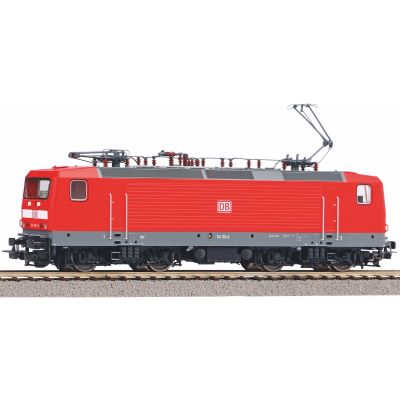
Traffic-red Era VI locomotive for regional and local passenger services.
View Product →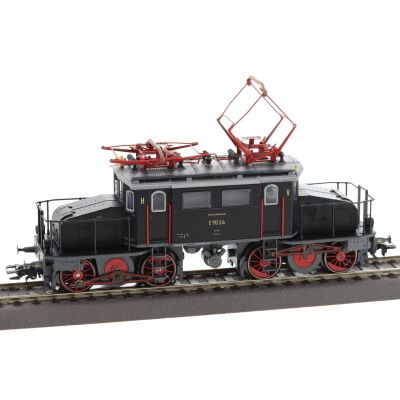
Historic electric-locomotive theme for Märklin centre-contact layouts.
View Product →
The visual impact of a large diesel locomotive in space-saving TT scale.
View Product →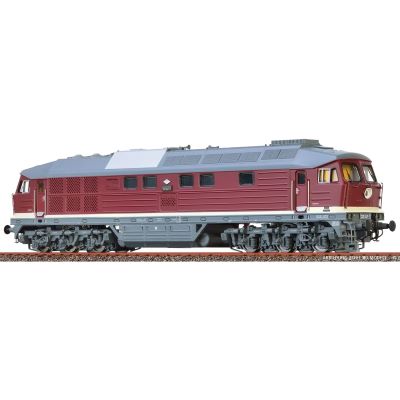
A powerful diesel locomotive for long trains on compact N-gauge layouts.
View Product →
Large and robust model railway equipment for gardens, terraces and generous indoor spaces.
View Product →Gauge does more than determine how large a vehicle appears. It affects curve radii, station lengths, possible train lengths, handling, scenery depth and manufacturer choice. H0 offers an exceptionally broad system world, TT combines good visibility with lower space requirements, N allows generous main-line operation and G turns model railways into a large-scale experience for the garden and terrace.
| Gauge | Scale | Model Track Gauge | Typical Advantage | Direct Topic World |
|---|---|---|---|---|
| Z | 1:220 | 6.5 mm | A great deal of railway in a very small space | Open Z Gauge |
| N | 1:160 | 9 mm | Long trains and large stations | Open N Gauge |
| TT | 1:120 | 12 mm | Strong balance between model size and space requirements | Open TT Gauge |
| H0 | 1:87 | 16.5 mm | Exceptionally broad range of vehicles and accessories | Open H0 Gauge |
| H0e | 1:87 | 9 mm | Saxon and Alpine narrow-gauge subjects | Open H0e |
| H0m | 1:87 | 12 mm | Metre gauge, RhB and mountain railways | Open H0m |
| H0f | 1:87 | 6.5 mm | Field and industrial railways | Open H0f |
| 0 | usually 1:45 | 32 mm | Large details and intensive shunting operation | Open Gauge 0 |
| 1 | 1:32 | 45 mm | Large models and clearly visible technology | Open Gauge 1 |
| G / IIm | often 1:22.5 | 45 mm | Large and robust garden railways | Open G Gauge |
Actual running compatibility always depends on the track system and the individual vehicle. The minimum radius and technical specifications supplied by the manufacturer of the particular model therefore remain authoritative.
Select a manufacturer or allow several brands to be checked in sequence. Mission Control reads product links from current English manufacturer pages, opens the discovered product pages and excludes items when an unambiguous notice states that a product is no longer part of the range. Small shop images are not used: image paths are normalised to the 400-pixel product variant. Delivery and stock information is deliberately omitted from the cards.
Product Radar is ready. The first manufacturer pages will be checked as you approach this section.
Many model railway enthusiasts do not search for a technical term. They search for a specific decision. These questions connect the major topic worlds with one another.
Begin with the available space, desired train length, level of visible detail and intended layout format. Choose the gauge and manufacturer only afterwards.
H0 offers an exceptionally wide selection, TT saves a substantial amount of space and N allows long trains and generous stations within a compact area.
Often, yes. Gauge alone is not sufficient, however. The electrical system, wheelsets, couplings, decoder protocol and minimum radius must also be compatible.
The important factors are the protocols used, layout size, required feedback, smartphone control and possible future automation.
This depends more on radius, train length and layout form than on scale alone. The Model Railway Calculators provide useful initial estimates.
Every era is possible. Choosing a clearly defined period does, however, make later purchases of vehicles, buildings and road vehicles easier to coordinate.
TILLIG has an exceptionally large TT world. Other important names include PIKO, Roco, Kres, Hädl, Schirmer, pmt and further specialists.
ESU, Uhlenbrock, Lenz, ZIMO, Massoth, YaMoRC, tams and other manufacturers offer command stations, decoders, sound and feedback solutions.
Not the largest possible number of products, but coordinated terrain, vegetation, buildings, roads, colours and sufficient open space.
These answers explain how the Topic Finder, manufacturer worlds, gauges and Product Radar work together.
Model Railway Mission Control is the central topic hub within Modellbahnshop. It provides routes to guides, gauges, track systems, digital technology, railway eras, railway companies, scenery, maintenance, new products, manufacturers and current models.
First determine the available space and intended type of layout. Then choose the gauge, electrical system, starter set or track system. Vehicles and detailed subjects should follow afterwards.
Yes. The Topic Finder searches the stored page titles and automatically groups them into areas such as digital technology, gauges, track, new products, maintenance, scenery and railway worlds.
Yes. The manufacturer directory contains the provided brand worlds in alphabetical order and can also be searched by manufacturer group.
Buildings, scenery and many coaches or wagons can often be combined without difficulty. For locomotives and technology, the gauge, electrical system, wheelsets, couplings, interface and digital protocol must be checked.
It reads product references from current English manufacturer pages, checks the discovered product pages and creates filterable product cards using shop images with a minimum 400-pixel source size.
No. Product cards on this topic page deliberately do not display delivery or stock information. Current availability remains on the individual product detail page.
The dynamic Product Radar excludes products when the checked product page contains an unambiguous notice that the item is no longer part of the range.
The central 2027 page and the individual manufacturer worlds can be reached directly from Mission Control. They include Märklin, PIKO, Roco, TILLIG, LGB, Fleischmann, BEMO, BRAWA, ESU, FALLER, NOCH and further brands.
The Model Railway Calculators combine tools for scale, radius, gradient, track helix, train length, platform length, space requirements and required track length.
Digital guidance includes the Decoder Guide, Decoder Finder, explanations of interfaces, command-station comparisons and troubleshooting for programming, sound and function mapping.
If you already have a particular problem or project, open the relevant specialist page. For comprehensive planning, continue with the main Model Railway Guide.
Model Railway Mission Control shows the complete map. The comprehensive Model Railway Guide then takes you through planning, track construction, digital technology, rolling stock, scenery, maintenance and expansion step by step.