Determine the Available Space
Measure the room, table or baseboard. Include operating aisles, access to rear tracks and the intended storage location.

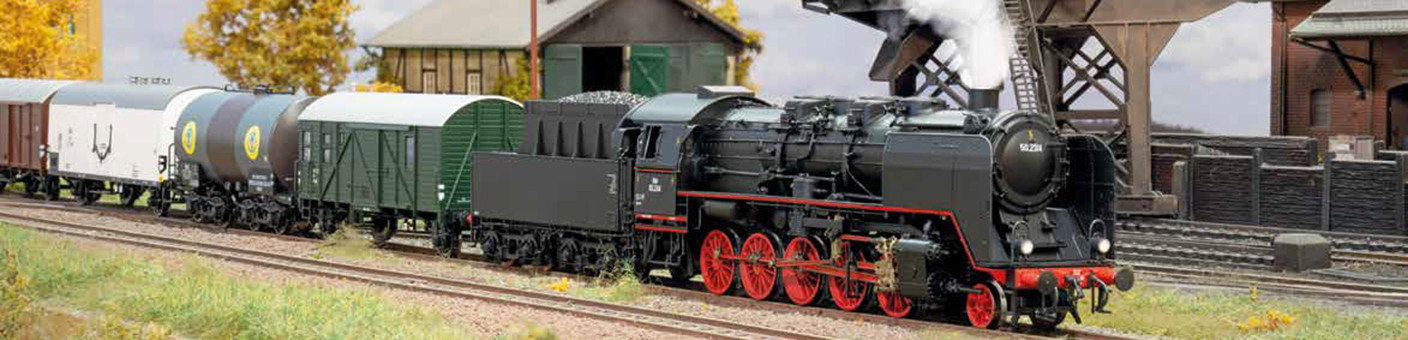
From the first idea to your own miniature world: this overview guides beginners, returning modellers, families and adult railway enthusiasts through all the important decisions about space, gauge, control, starter sets, track planning, layout construction, scenery and suitable vehicles.
A model railway does not begin with the largest locomotive. It begins with a clear understanding of the available space. A permanently installed layout requires different conditions from a railway that is dismantled after every operating session.
First measure the room, table or baseboard. Include doors, furniture, sloping ceilings, radiators, operating aisles and the maximum depth that can be reached safely.
The next decision is the gauge. H0 provides an exceptionally large selection, TT combines visible details with lower space requirements and N permits long routes within a compact area. Z is even smaller.
Narrow-gauge sizes such as H0e, H0m, H0f, TTe and Nm are suitable for branch lines, mountain railways and industrial themes. Large scales such as 0, 0e, 1, G and II require more room but present vehicles and technology with especially strong visual impact.
Only after choosing the gauge should you define the electrical system, track and control method. In H0, the distinction between two-rail and centre-contact operation is especially important. Analogue or digital refers separately to the type of control.
A complete model railway starter kit reduces compatibility questions. Individually selected components offer greater freedom but require more careful technical comparison.
For a layout that can grow over time, begin small, reliable and fully accessible. A straightforward route with a station, siding and a few shunting possibilities already provides varied operation and can later be extended deliberately.
Each step builds on the previous decision. Follow the complete route or begin at the stage that matches the current state of your project.
Measure the room, table or baseboard. Include operating aisles, access to rear tracks and the intended storage location.
Compare model size, possible train length, curve radii, visual detail, handling and the available product range.
In H0, distinguish two-rail from centre-contact operation. Decide separately whether the first trains will use analogue or digital control.
A starter set generally contains a train, track and control equipment. Individual components permit a more personalised combination.
Test the station, sidings, curves, turnouts and future expansion possibilities on paper or digitally before construction.
Test the baseboard, track, power feeds and turnouts first. Secure the track permanently only after reliable test operation.
Build terrain, roads, structures, vegetation and lighting in manageable sections that remain accessible for maintenance.
Locomotives and rolling stock must match the gauge, electrical system, minimum radius, railway company, era and intended theme.
Choose the guide that matches your current situation, available space, budget, age group or preferred way of enjoying the hobby.
The correct route for beginners and returning modellers.
Play, technology, collecting or a shared construction project.
Costs, starter sets and useful additions.
From the first supporting structure to safe trial operation.
The correct gauge depends on more than the available base area. Desired train length, visual detail, handling, radii, layout type and the available product range are equally important.
Exceptionally space-saving for long routes within a very small area.
Open Z Gauge →Compact layouts, long trains and generous scenery within a limited footprint.
Open N Gauge →A strong middle ground between space requirements, train length and visible details.
Open TT Gauge →An exceptionally wide selection of vehicles, track systems, buildings and accessories.
Open H0 Gauge →Compact operating locations, short trains and varied shunting operation.
Open H0f Gauge →Large models for shelf, sectional and intensive shunting layouts.
Open Gauge 0 →Impressive technology and substantial visual detail with correspondingly high space requirements.
Open Gauge 1 →Robust large-scale railways for gardens and generous indoor areas.
Open G Gauge →After the introduction, these guide worlds lead to track systems, digital technology, railway prototypes, layout building, maintenance and compatible equipment.
Compare track systems by manufacturer, gauge, integrated roadbed and intended use.
Open the Track Worlds →Understand command stations, protocols, feedback, smartphone control and future expansion.
Open the Digital World →Select interfaces, locomotive decoders, sound, programming and suitable installation methods.
Open Decoder Guidance →Combine vehicles, structures, signals and scenery within a coherent historical period.
Discover the Eras →Discover DB, DR, SBB, ÖBB, RhB, SNCF and many other railway worlds.
Open Railway Worlds →Build routes, ballast, platforms, bridges, tunnels and railway work scenes.
Start Railway Construction →Check locomotives, rolling stock, track and electrical problems systematically.
Open Repair Guidance →Explore every knowledge world from starting and planning to technology and railway prototypes.
Open the Main Guide →Select a product group and load products from the current English shop category. The local text, gauge and system filters are applied to the products already loaded into this page.
Load up to 48 products from an English shop category and refine the displayed selection without leaving this landing page.
Full-range manufacturers such as Märklin, PIKO, Roco, Fleischmann and Tillig combine vehicles with track and starter sets. Specialists such as ESU, NOCH, FALLER, Auhagen and Viessmann add digital technology, structures, scenery and accessories.
The most important decisions concern the available space, gauge, control system, starter set, expandability and a sensible size for the first layout.
A complete starter set in H0, TT or N is often the easiest introduction. The available space, desired model size and an expandable track system are the decisive factors.
Analogue control is easy to understand for one train. Digital control is useful when several locomotives should operate independently or lighting, sound and shunting functions are required.
This depends on the gauge and track plan. A compact N- or TT-gauge layout requires less area than a comparable H0 layout. A shunting railway along a wall can also provide varied operation.
H0 provides a particularly large selection and clearly visible detail. TT saves space while remaining easy to handle. N permits long routes and extensive scenery within a small footprint.
Useful additions include matching track, a rerailer, suitable tools, cleaning equipment and a safe setup surface. Cables, scenery materials and structures follow later during layout construction.
Yes, provided additional track, turnouts, vehicles and control components belong to the selected system. Check the gauge, conductor system and digital protocol.
A preformed layout reduces construction time and provides a predetermined track plan. A custom build offers greater freedom but requires more planning, tools, time and testing.
Typical mistakes include track plans that are too large, excessively tight curves, inaccessible routes, an unclear system choice and permanent scenery built before complete trial operation.
Short tank locomotives, shunting locomotives, railcars, railbuses and short freight or branch-line trains require less platform and siding length.
Generally yes, when the gauge, conductor system, coupling, minimum radius, wheelsets and digital technology are compatible.
Continue with gauges, track systems, digital technology, layout planning, scenery, vehicles, eras, railway companies and maintenance.
Content reviewed and updated on 31 July 2026. Product contents, technical specifications and compatibility must additionally be checked on the relevant product page and in the manufacturer’s instructions.