19 Lines with Different Roles
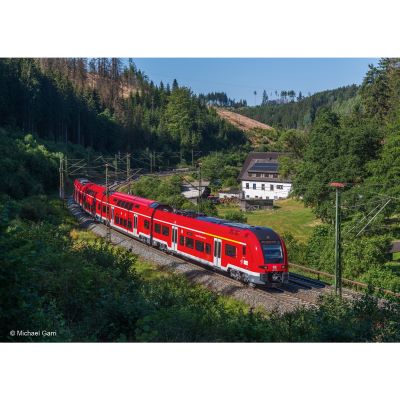
Regionalexpress, Regionalbahn and commuter services support both fast main lines and short branch-line workings.

Direct ODEG models in H0 and TT, related vehicle families in H0, TT and N, plus clear guidance about the fleet, gauges, power systems and layout planning.

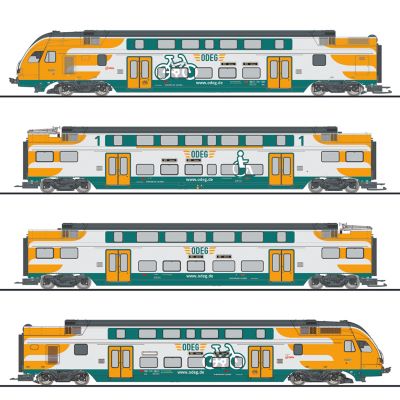
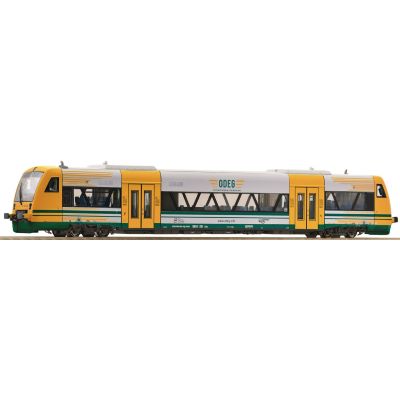
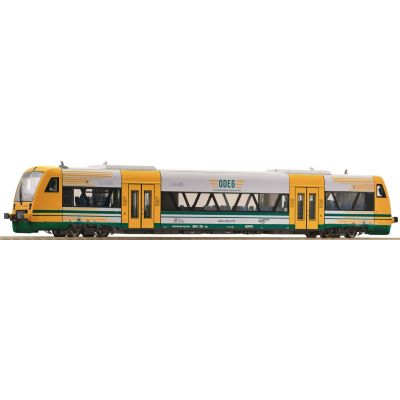
ODEG Model Railway | KISS, RS1 & Desiro covers model vehicles and layout scenes based on Ostdeutsche Eisenbahn GmbH. ODEG is a private railway undertaking operating Regionalbahn and Regionalexpress services in Mecklenburg-Western Pomerania, Brandenburg, Berlin, Saxony-Anhalt and Saxony.
The subject belongs primarily to modern Era VI . Multi-car electric units are characteristic of busy main lines, while compact diesel railcars suit branch lines and rural connections. ODEG's distinctive yellow, orange, green and white appearance gives even a small layout a clearly recognisable private-railway character.
It is particularly important to distinguish a direct ODEG model from a model belonging only to the same vehicle family. A Liliput KISS or Roco RS1 carrying ODEG lettering directly represents the operator. A DB Desiro HC, a Desiro Classic in another regional livery or an RS1 belonging to another railway company shows the same or a related vehicle type, but not ODEG livery.
When buying, scale, power system, digital equipment, minimum radius and train length must all be compatible. In H0, the distinction between two-rail DC and Märklin centre-contact is particularly important. TT and N generally use two-rail technology and allow longer regional routes within a smaller area.
The company combines busy main lines, urban-regional traffic and rural branch lines. This makes several credible layout concepts possible within a single railway company.
Regionalexpress, Regionalbahn and commuter services support both fast main lines and short branch-line workings.
KISS and Desiro HC belong on electrified routes with longer platforms and a modern station environment.
RS1, LINT 54, GTW 2/6 and Desiro Classic suit smaller stations and routes without overhead wiring.
Multiple units reverse at termini when the driver changes cab, creating varied point-to-point operation in limited space.
A double-track main line with KISS or Desiro HC can meet a single-track diesel branch worked by RS1, LINT or Desiro Classic.
ODEG's current official fleet overview combines electric high-capacity units with compact diesel railcars. For a model railway, the chosen vehicle type largely determines the route and station theme.
Four- and six-car units for heavily used Regionalexpress and commuter services.
Four-car double-deck electric multiple unit with high capacity and a particularly striking presence on a layout.
Two-car diesel unit for non-electrified regional routes and modern small stations.
Compact single railcar with characteristic trapezoidal window pillars.
Articulated railcar with a central power module for regional services and larger passenger flows.
Proven low-floor diesel multiple unit for cross-border and non-electrified regional routes.
Four-car electric units of Classes 4746 and 4748 for modern Regionalexpress services.
Direct ODEG liveries in this selection are concentrated in H0 and TT. In N, regional operation can be represented using related vehicle families. Other gauges are mainly suitable for reproducing the stations, scenery and operator environment.
| Gauge | Scale & System | ODEG Classification | Check Before Buying |
|---|---|---|---|
| H0 DC | 1:87 · Two-Rail | direct four-car Liliput KISS | train length, radius, decoder and platform |
| H0 AC | 1:87 · Centre-Contact | direct digital Liliput KISS | pickup shoe, protocol and minimum radius |
| TT Gauge | 1:120 · Two-Rail | direct Roco RS1, analogue or sound version | Next18 interface, interior lighting and radius |
| N Gauge | 1:160 · Two-Rail | RS1 and regional trains from related operators | lettering, train length and interface |
| Z Gauge | 1:220 | modern regional-railway environment without a direct vehicle here | compact platforms and small structures |
| H0e, H0m & 0e | Narrow Gauge | not prototypical for direct ODEG vehicles | ODEG prototype vehicles operate on standard-gauge routes |
| Gauge 0 | usually 1:45 | detailed modern station scenery can be represented | substantial space requirements and long platforms |
| Gauge 1 & G Gauge | Large Scale | theme mainly represented through buildings and scenery | vehicle profile and outdoor operation |
A detailed overview is available in the Model Railway Gauge Comparison . For H0, also use the Model Railway Compatibility Database .
Direct ODEG liveries are clearly separated from related vehicle families. When this section approaches the viewport, the linked English product pages and current railcar category are checked again. Explicitly archived products are removed. Prices and stock information are not displayed in the cards.
The KISS and RegioShuttle models carry the characteristic ODEG design and reproduce specific vehicles from eastern German regional transport.
Four-car double-deck electric multiple unit for the H0 two-rail system.
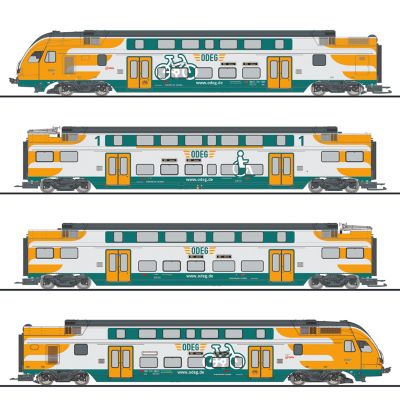
Digital double-deck multiple unit for the H0 centre-contact system.
Analogue RegioShuttle with interior lighting for TT gauge.
Digital RegioShuttle with decoder and sound.
These models represent the Desiro HC vehicle family used by ODEG, but they carry liveries from other operators.
These models complement branch-line and regional railway scenes. They correspond to vehicle families represented in the ODEG fleet but carry other operator liveries.
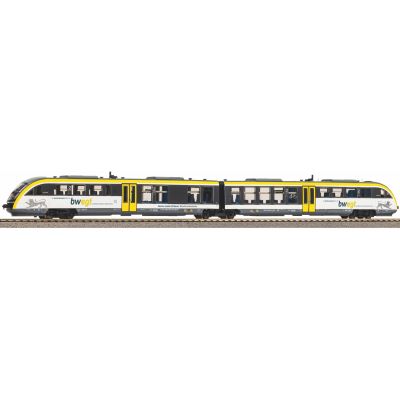
Related Class 642 vehicle type in another livery.
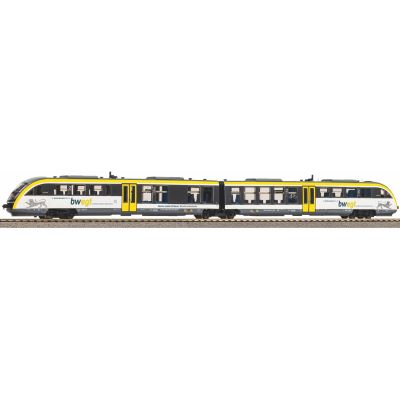
Centre-contact Class 642 family model without ODEG lettering.
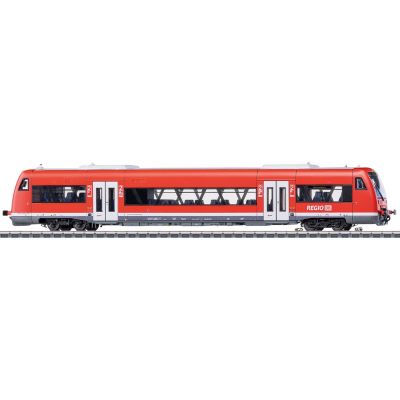
RegioShuttle in DB livery for the centre-contact system.
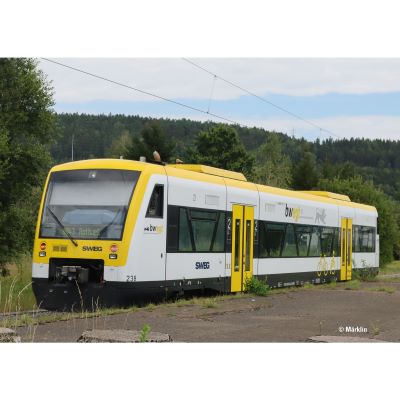
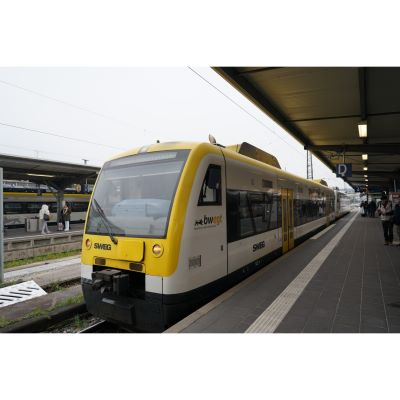
RS1 vehicle family in SWEG livery, not an ODEG model.
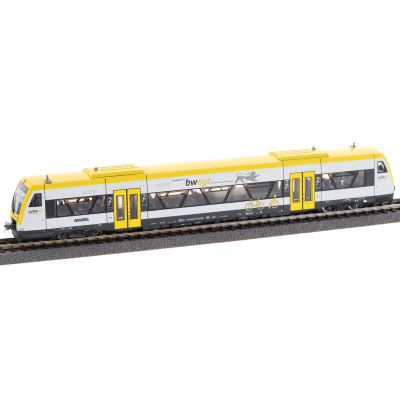
Analogue two-rail RS1 from a related regional operator.
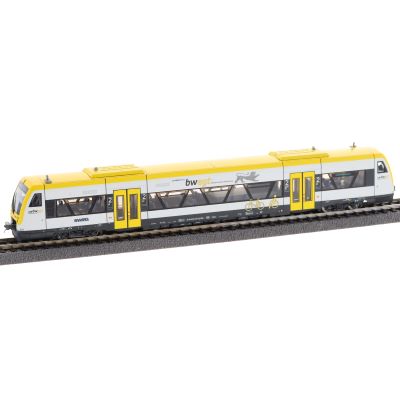
Digital two-rail RS1 with lighting and sound.
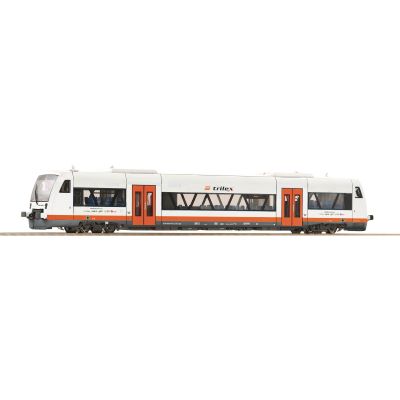
Sound model from the same RS1 family in another livery.
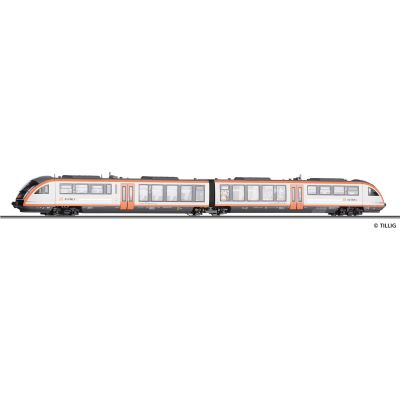
Desiro Classic vehicle family in trilex livery.
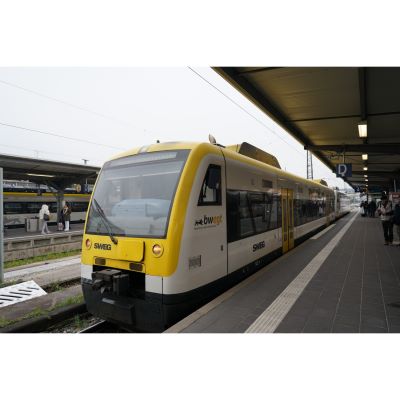
Analogue N-gauge RS1 with Next18 interface.
Digital N-gauge RS1 with interior lighting and sound.
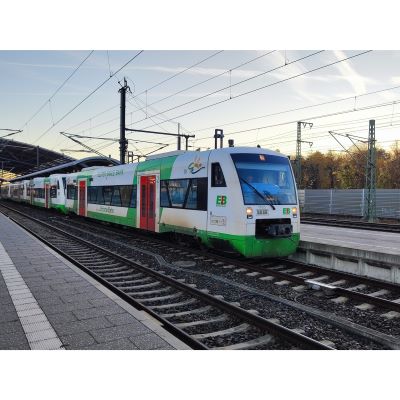
RS1 belonging to another eastern German regional railway, not ODEG.
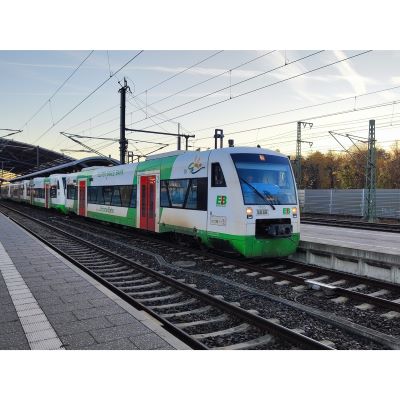
Sound version of the RS1 vehicle family in Erfurter Bahn livery.
No products match this filter combination. Remove one of the filters or reset the selection.
Liliput and Roco provide the direct ODEG models. Märklin, Trix, PIKO and Tillig complement the related vehicle families. FALLER, Auhagen and NOCH provide station and scenery components.
An ODEG train requires sufficient platform length, the correct power system and a contemporary eastern German environment. The following sections lead to suitable product groups and guides.
Compare further electric and diesel multiple units by gauge.
Two-rail technology for the direct Liliput ODEG KISS.
Centre-contact operation for digital AC vehicles.
Compact regional railway operation with a direct ODEG RS1.
Long routes and modern regional trains in limited space.
Prototypical track geometry for modern main and branch lines.
Track and turnouts for compact 1:120 regional stations.
Fine N-gauge track for longer routes and compact layouts.
Build a compact terminus and shuttle service.
Reproduce Brandenburg, the Baltic coast, Berlin or Saxony.
Control sound, lighting and multiple-unit operation correctly.
Compare ODEG with NordWestBahn, Alex and further operators.
The selected vehicle determines the overhead wiring, platform length, track plan and scenery. These six steps help avoid the most common planning mistakes.
KISS and Desiro HC belong on electrified main lines. RS1, LINT, GTW and Desiro Classic operate without overhead wiring on the prototype.
Track, wheelsets, current collection and decoder must suit the selected vehicle version.
A KISS or Desiro HC requires considerably more usable platform length than a single RegioShuttle.
Long multiple units look better on broader curves and need sufficient lateral clearance from masts and platform edges.
A junction station can connect an electrified main line with a non-electrified branch line.
A timetable involving reversals, train crossings and vehicle changes creates varied operation even on a compact layout.
These answers help when choosing between KISS, RegioShuttle, Desiro and the different model railway power systems.
ODEG stands for Ostdeutsche Eisenbahn GmbH. The private railway undertaking operates Regionalbahn and Regionalexpress services in five eastern German federal states.
The page links the four-car Liliput ODEG KISS in H0 for DC and AC operation and the Roco ODEG RegioShuttle RS1 in TT as analogue and digital sound versions.
H0 provides the large KISS double-deck train and extensive matching accessories. TT offers a particularly compact direct ODEG model with the RS1. Related regional multiple units are available in N.
Yes. The Liliput selection contains an H0 two-rail version and a digital centre-contact version. The catalogue numbers and power systems must not be confused.
KISS is an electric double-deck multiple unit. RS1 is a compact diesel railcar. Desiro is the name of several Siemens vehicle families for diesel or electric operation.
Both are electric trains on the prototype. On a model railway, the overhead wiring may be purely visual while traction current is still supplied through the track.
They represent vehicle families also found in the ODEG fleet. Every card states clearly when the model does not carry ODEG livery.
Yes. A single RS1 only requires a compact station and shuttle route. A KISS, by contrast, needs longer platforms and substantially more visible track length.
Yes. Vehicles from different operators meet at modern stations. Era, region, power system and route type should nevertheless remain coherent.
Suitable settings include Berlin suburbs, Brandenburg plains, Baltic-coast scenery, smaller towns in Mecklenburg-Western Pomerania and rural or border-region routes in Saxony.
Explore gauges, power systems, digital technology, track planning, scenery and prototypical operating patterns in the central knowledge guide.