Select the Type of Terminal
Layout Theme
Port, inland hub or industrial siding?
A port requires water and large cranes. An inland hub can be designed much more compactly using rail, lorries, container stacks and a mobile handler.

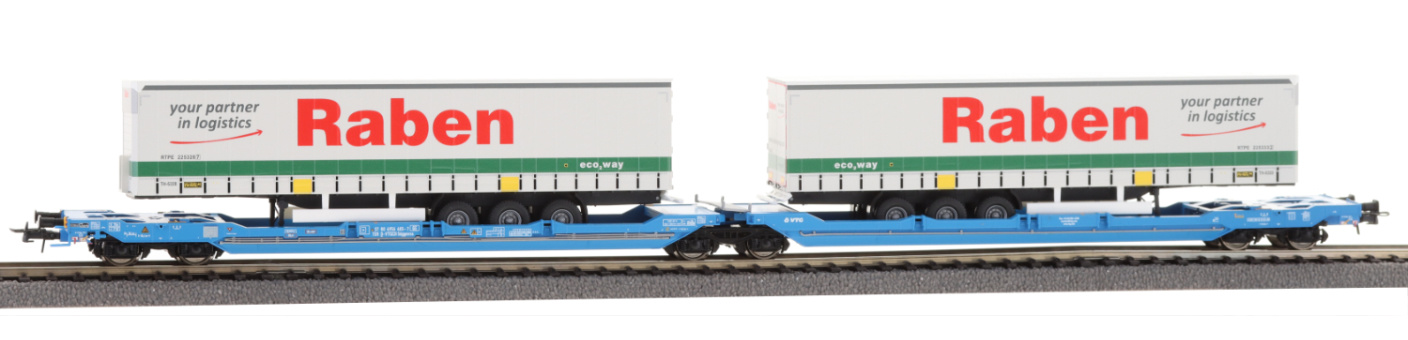
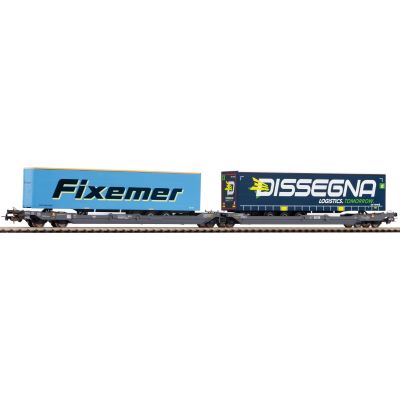
Discover classic Lgs carrying wagons, modern Sgns and Sggmrss articulated wagons, T3000e pocket wagons, ISO containers, swap bodies and accessories for realistic container trains.
An H0 container wagon is a freight wagon at a scale of 1:87 that transports standardised loading units between ports, rail terminals, industrial sidings and roads. On a standard-gauge H0 layout, it runs on track with a model gauge of 16.5 millimetres. On the prototype railway, the goods remain inside the container, swap body or semi-trailer when changing between different modes of transport.
H0 container wagons: models, intermodal transport and terminal guide therefore covers more than classic container carrying wagons. Combined transport also includes pocket wagons for craneable semi-trailers, double carrying wagons, tank containers, swap bodies, handling equipment, lorries and terminal buildings.
The great advantage for a model railway lies in the variety. The same wagon can create a completely different train appearance when loaded with different containers. An empty carrying wagon travelling to the terminal is just as credible as a fully loaded block train with containers belonging to several shipping lines and logistics companies.
Intermodal transport means that the same loading unit is carried successively by several modes of transport. In European combined transport, the longest part of the journey normally takes place by rail, inland waterway or sea. Road transport handles the shortest possible first and final legs between the shipper, terminal and recipient.
The classification letters describe the design and operating possibilities of the prototype wagon. When choosing a model, the most important factors are wagon length, articulated design, load, era and required minimum radius.
| Wagon Family | Typical Characteristics | Suitable Loading Units | Suitable Model Railway Theme |
|---|---|---|---|
| Lgs / Lgjs / Lgkks | Short two- or three-axle carrying wagons, often older designs or conversions | One 40-foot container or several shorter containers | Late Era III, Era IV and short local freight trains |
| Rgs / Rglns | Flat wagons with stakes or container mountings and versatile loading options | 20-foot containers, special containers or other loads | Mixed freight trains, engineering and industrial traffic |
| Sgns / Sgnss / Sggnss | Four-axle carrying wagons with a long loading deck and variable securing points | Two 20-foot containers, one 40-foot container or one 45-foot container | International container trains of Eras V and VI |
| Sggmrs / Sggmrss | Articulated double carrying wagon with a shared central bogie | Several 20-, 40- or 45-foot containers | Long intermodal block trains and port-hinterland traffic |
| Sdggmrs / Sdggmrss | Pocket or double carrying wagons for different intermodal loading units | Containers, swap bodies and craneable semi-trailers | Continental European combined transport and forwarding terminals |
| T5 / T3000e | Deep pockets for modern semi-trailers, frequently built as articulated wagons | Mega trailers, semi-trailers, containers and swap bodies | Present-day traffic with Hupac, Wascosa, DB Cargo and logistics companies |
| Megafret / Sffggmrrss | Particularly low, multi-section articulated construction offering flexible loading lengths | High-cube containers, swap bodies and different combinations | Modern international traffic in Era VI |
The precise combination of classification letters can vary according to subtype, maximum speed, load limit and technical equipment. The complete product designation and the specific prototype remain decisive when choosing a model.
Standardised external dimensions allow loading units to move between ships, trains and lorries. At a scale of 1:87, a 20-foot container is approximately 70 millimetres long, a 40-foot container approximately 140 millimetres and a 45-foot container approximately 158 millimetres.
| Loading Unit | Prototype Dimension | Dimensions in H0 | Typical Use |
|---|---|---|---|
| 20-foot container | 6.058 m long | approx. 70 mm long | Two or three short units on one carrying wagon, including tank and special containers |
| 40-foot container | 12.192 m long | approx. 140 mm long | The most common long box container in maritime and hinterland transport |
| 45-foot container | 13.716 m long | approx. 158 mm long | Modern European and international combined transport |
| 40-foot high-cube container | 2.896 m high | approx. 140 × 28 × 33 mm | High-volume goods and modern container trains |
| Swap body | various lengths | product-dependent | Continental road-rail transport without maritime shipping |
| Craneable semi-trailer | usually approx. 13.6 m long | approx. 156 mm long | T5, T3000e and comparable pocket wagons |
A 20-foot container corresponds to one TEU, while a 40-foot container corresponds to two TEU. High-cube containers have a greater height while retaining the same footprint. Tank containers carry a cylindrical tank inside a standardised frame. Open-top containers, coil containers and tarpaulin-covered units add further specialised loads to the scene.
Scale external dimensions do not automatically mean that locating lugs, pins or mountings are identical. When a container is to be placed on a wagon from another manufacturer, the spacing and shape of the securing points must be checked.
Container wagons should not be selected independently of the era and train formation. Wagon design, container logos, locomotive, infrastructure and road vehicles should represent the same period.
| Era | Typical Wagons and Loads | Suitable Train Formation | Suitable Layout Scene |
|---|---|---|---|
| Late Era III | Early container traffic using converted flat or carrying wagons | Individual wagons within a mixed freight train | Goods station, loading road and early transhipment sites |
| Era IV | Lgjs, Lgs, Sgs and carrying wagons with 20- or 40-foot containers | Wagon group or shorter container block train | DB, DR, Intercontainer, DSR and port traffic |
| Era V | Four-axle carrying wagons, articulated wagons, swap bodies and prominent shipping-line lettering | International block train with wagons belonging to different owners | Privatisation, new terminals and cross-border traffic |
| Era VI | Sgns, Sggmrss, Megafret, T5 and T3000e wagons with 20-, 40- and 45-foot loading units | Long intermodal train with containers, swap bodies and trailers | METRANS, Hupac, Wascosa, Ermewa, DB Cargo and private railway operators |
Suitable Era IV examples include Class 140 or Class 150 electric locomotives, DR diesel locomotives and heavy freight locomotives belonging to the relevant railway administration. Modern container trains are frequently hauled by TRAXX, Vectron, Eurosprinter or multi-system locomotives. A shunting locomotive positions and collects the wagons inside the terminal.
Manufacturers place different emphases on wagon types, electrical systems, detailing and container mountings. Wheelsets and couplings should be checked before assembling a train with models from several manufacturers.







Filter the selected products by product group, manufacturer, era and load. When the product section approaches the viewport, the product pages are checked again in the webshop. Unreachable or explicitly archived items are not included in the updated selection.
The verified product selection is displayed.
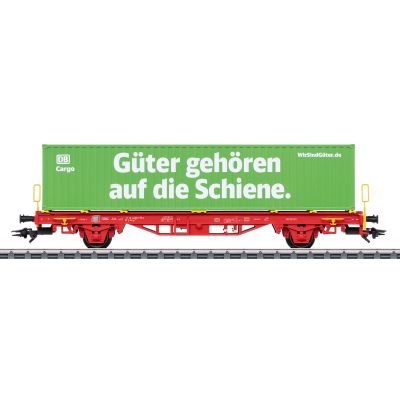
Short DB Cargo carrying wagon with a removable 40-foot container.
View Product →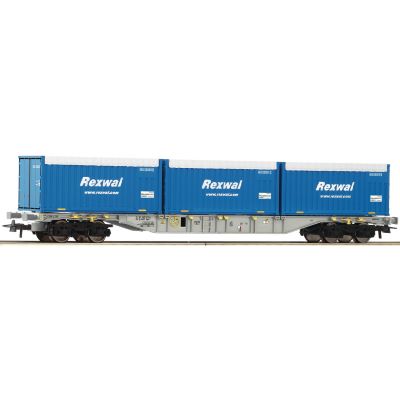
Four-axle wagon with three covered special containers.
View Product →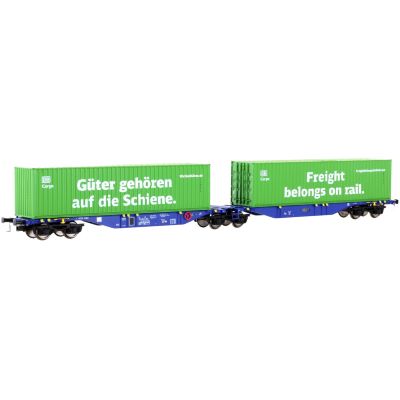
Ermewa articulated wagon with two DB Cargo containers.
View Product →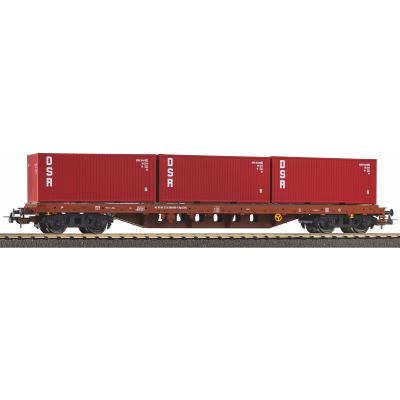
Historic DR carrying wagon for East German and port traffic.
View Product →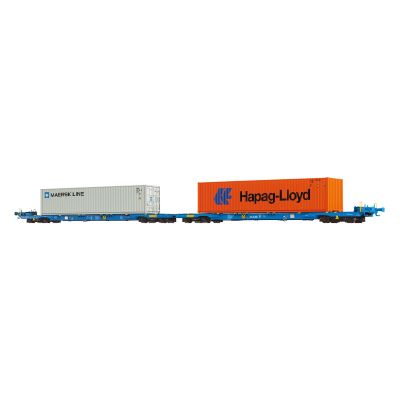
Multi-section AAE wagon with an international container load.
View Product →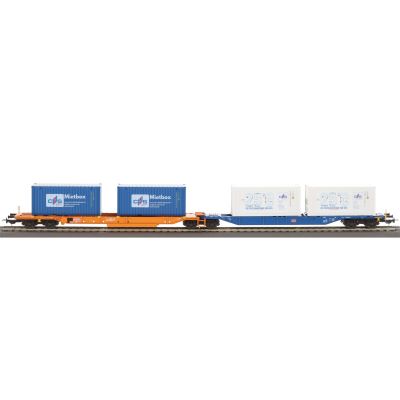
Long DB AG wagon with four CHS containers.
View Product →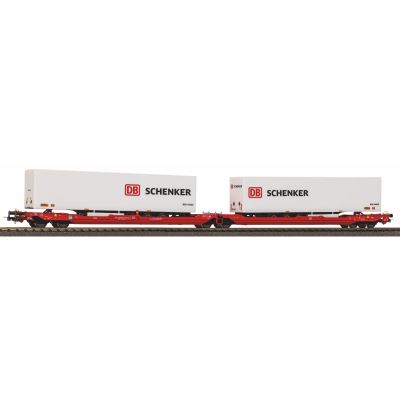
Modern intermodal wagon with two craneable semi-trailers.
View Product →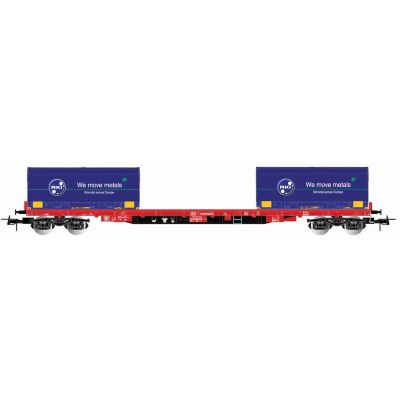
Four-axle wagon with two Rheinkraft coil containers.
View Product →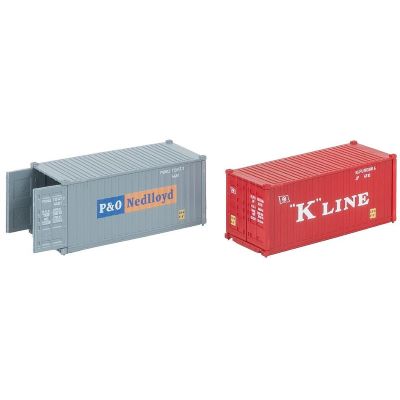
Two short containers for wagons, lorries and terminals.
View Product →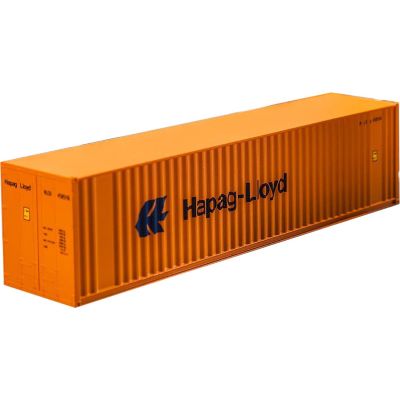
High 40-foot container for modern logistics scenes.
View Product →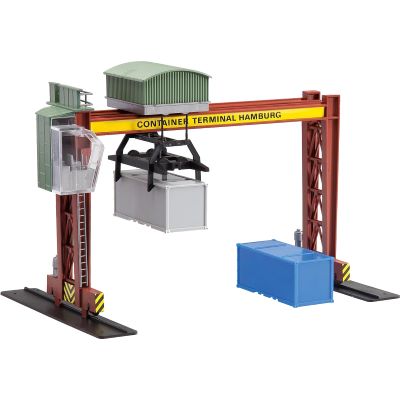
Handling equipment for port, goods-yard and terminal scenes.
View Product →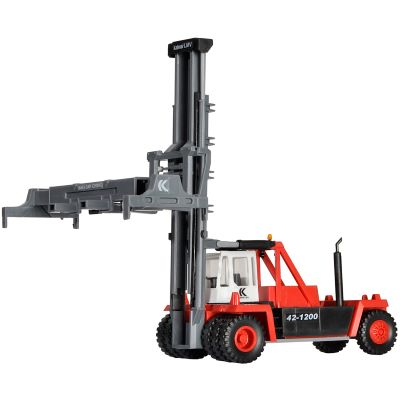
Large container stacker kit for the terminal handling area.
View Product →Combine carrying wagons, different loading units, a suitable freight locomotive, terminal tracks, handling equipment, container stacks and road vehicles to create one coherent scene.
Carrying wagons, pocket wagons and further freight-wagon types.
Locomotives, carrying wagons and terminal ideas for Era VI.
Pocket, container and special wagons for modern combined transport.
International hire wagons for container and industrial traffic.
Swap bodies, lorries and buildings for combined transport scenes.
Leasing wagons for international freight and combined transport.
Modern private-railway locomotives for container and local freight trains.
Combine locomotives, wagons, eras and train formations correctly.
A large seaport terminal requires considerable space. On a model railway, a small inland handling site with two tracks, a crane or reach stacker, container stacks and lorry access is often sufficient.
A port requires water and large cranes. An inland hub can be designed much more compactly using rail, lorries, container stacks and a mobile handler.
Double carrying and pocket wagons are frequently around 39 to 42 centimetres long in H0. They determine curve radius, track spacing, usable length and turnout positions.
Six wagons measuring approximately 39 centimetres each already require more than 2.3 metres of track. On smaller layouts, a shunting locomotive can divide the train into several groups.
A crane requires a clear line of movement across the track and storage area. A reach stacker is more flexible and works well on small inland and industrial layouts.
Tractor units, chassis, swap bodies and container stacks make the transition between rail and road clear. Markings and fences organise the terminal area.
Test shunting routes, couplings, curves and turnouts with the complete train. Buildings, roads and container stacks must not prevent access to the tracks.
Standard-gauge H0 systems always use a model track gauge of 16.5 millimetres. Nevertheless, wheelsets, couplings, curve radii and, where applicable, the wagon’s current pickup must suit the layout.
Two-rail layouts require electrically insulated wheelsets. Uninsulated AC wheelsets are frequently used on centre-contact layouts. Many manufacturers specify suitable replacement wheelsets directly on the product page.
A coupler pocket conforming to NEM 362 makes it easier to change between loop, close and other compatible couplings. A close-coupling mechanism reduces the distance between wagons on straight track.
Numerous H0 articulated and pocket wagons specify approximately 358 millimetres as their smallest radius. This is not a universal value. The specification for the individual product remains binding.
A Megafret wagon almost 42 centimetres long swings out considerably on curves. Masts, platforms, container stacks and parallel tracks must therefore be tested in practice using the longest vehicle.
For ordinary container wagons, specifications such as AC or DC normally refer to the wheelset design rather than a decoder. Digital functions are present only when they are expressly specified for the individual model.
These answers help with wagon types, container sizes, electrical systems, train formation and space-saving terminal layouts.
H0 models are produced at a scale of 1:87. Standard-gauge container wagons run on H0 track with a model gauge of 16.5 millimetres. This applies to both two-rail and centre-contact layouts.
A container carrying wagon has mountings for containers or swap bodies. A pocket wagon additionally has a lowered pocket into which a craneable semi-trailer can be placed.
The figure describes the nominal length. In H0 scale, 20-foot containers are approximately 70 millimetres long, 40-foot containers approximately 140 millimetres and 45-foot containers approximately 158 millimetres.
TEU means Twenty-foot Equivalent Unit. A 20-foot container corresponds to one TEU, while a 40-foot container corresponds to two TEU. The unit is used to describe container capacity.
Not necessarily. The external dimensions may be to scale while locating lugs, pins and mountings differ. The securing points should be compared before combining products.
This is often possible after suitable AC wheelsets have been installed. The coupling, recommended wheelset, minimum radius and, where relevant, pickup-shoe clearance must be checked for the individual model.
Many current models specify approximately 358 millimetres as the technically smallest radius. Larger visible radii improve running, reduce overhang and make long articulated wagons look considerably more convincing.
Early container traffic suits late Era III. Era IV features classic Lgs and Sgs wagons. Eras V and VI provide the greatest variety of articulated, pocket and modern carrying wagons.
The length depends on the layout and storage tracks. Six double or pocket wagons already require more than two metres. A short train of four to six wagons can look convincing on a home layout.
Yes. Wagons travel to terminals, cleaning facilities, workshops or their next loading point. Individual empty wagons add variety to a train and depict a realistic operating condition.
Useful elements include one or two loading tracks, a storage area, container stacks, a gantry crane or container handler, lorry access, fencing, lighting and sufficient room for shunting.
Suitable examples include modern freight locomotives such as TRAXX, Vectron, Eurosprinter or multi-system locomotives belonging to different railway companies. A diesel or hybrid shunting locomotive complements main-line operation inside the terminal.
Select the era and wagon type, check the radius and wheelsets, and then add containers, a locomotive, terminal equipment and road vehicles.
Open the Main Model Railway Guide
Content last updated on 16 August 2026. The information on the individual product page and in the associated instructions remains authoritative.