Key answers about the historical period, DB and DR, locomotives,
train formations, gauges and convincing post-war layouts.
When Did Era III Begin and End?
Under NEM 806 D, German Era III covers the period from 1949 to
1970. Some older catalogues already include the immediate post-war
years from 1945. The specific year represented is therefore
especially important when selecting rolling stock.
What Is the Difference Between Era IIIa and IIIb?
Era IIIa covers 1949 to 1956 and is characterised by reconstruction,
the three-class system and the first newly built vehicles.
Era IIIb covers 1956 to 1970 and features stronger diesel and
electric operation, the two-class system, three-light headlights
and extensive modernisation programmes.
Which Locomotives Are Typical of the Deutsche Bundesbahn?
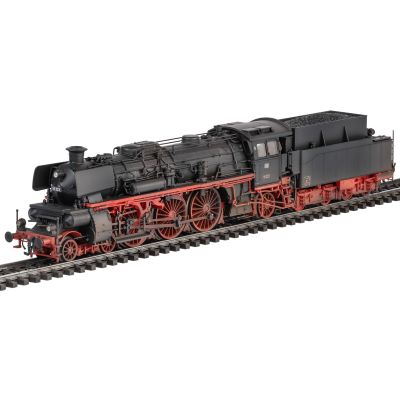
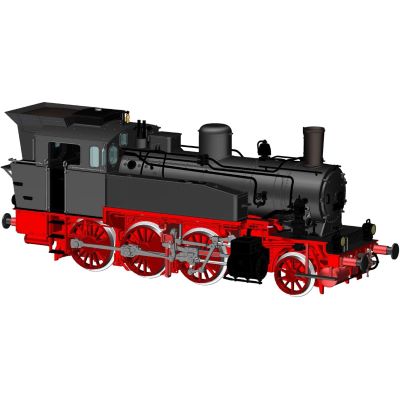
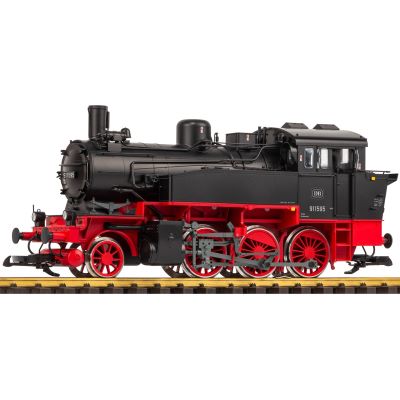
Classes 01, 03, 18, 23, 44, 50, 64, 78 and 86 are typical
steam locomotives. V 60, V 100, V 160 and V 200 represent
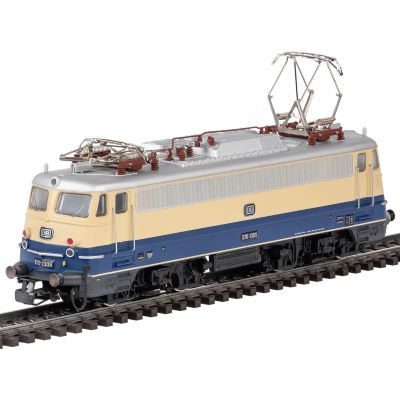
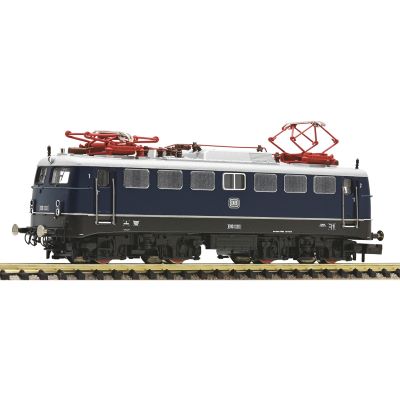
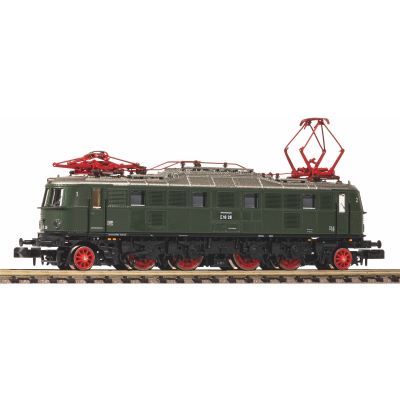
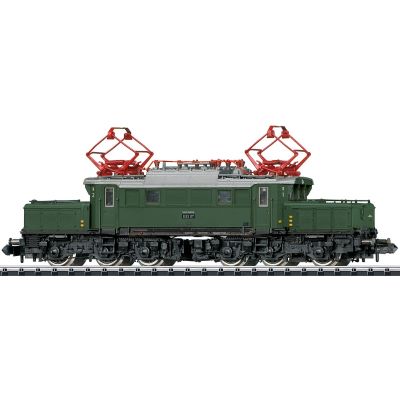
the diesel transition, while E 10, E 18, E 40, E 41 and E 50
define electrified main lines.
Which Locomotives Are Typical of the Deutsche Reichsbahn?
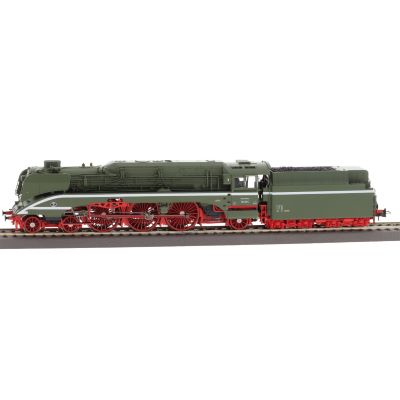
Characteristic steam locomotives include Classes 01.5, 03.10,
18 201, 23.10, 50.35 and 65.10. Diesel and electric traction
includes V 15, V 60, V 100, V 180, E 11 and E 42.
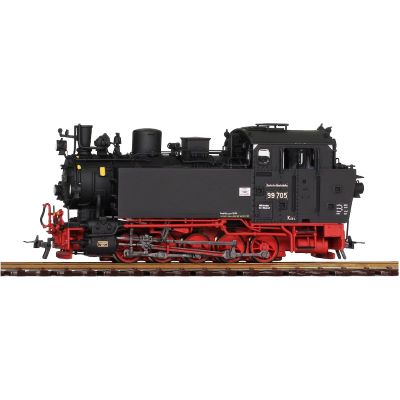
Various Class 99 locomotives remain important on narrow-gauge lines.
Can DB and DR Vehicles Be Operated Together?
Yes, for example on interzonal and international passenger trains,
at border stations or in certain freight services. On an ordinary
home route, however, vehicles from both administrations should not
be mixed without a plausible operational reason.
Which Coaches Suit an Era III Steam Locomotive?
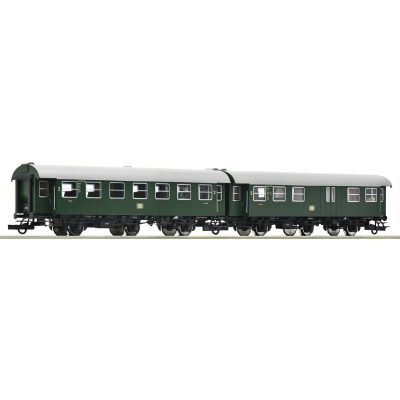
Donnerbüchse coaches, older compartment coaches, conversion coaches
or Reko coaches suit branch lines. Express locomotives can haul green
express coaches as well as dining, sleeping and luggage cars.
Freight locomotives suit a mixed wagon fleet.
Which Gauge Offers the Largest Selection?
H0 offers the largest selection of vehicles, buildings and accessories.
TT is especially strong for DR themes. N and Z allow long trains in
limited space, while H0e is excellent for Saxon narrow-gauge railways.
Which Era III Layout Requires Little Space?
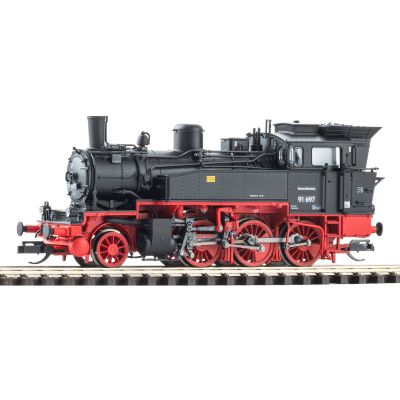
A railbus, tank locomotive or V 100 with two to four short coaches
is especially suitable. A small terminus or through station with
a goods shed and factory siding still provides extensive operation.
Which Signals Suit Era III?
Semaphore signals are typical on many main and branch lines.
Colour-light signals can be used on modernised and heavily used routes.
The signalling system should suit both the railway administration
and the selected year.
Which Road Vehicles Suit a West German Era III Layout?
VW Beetles and Transporters, Opel, Mercedes, Borgward, motorcycles,
bicycles and early delivery vans are particularly suitable for
West German scenes of the 1950s and 1960s.
Which Road Vehicles Suit an East German Era III Layout?
Framo, Wartburg, early IFA vehicles, Barkas, Robur and Trabant
models characterise East German road scenes. Agricultural vehicles,
motorcycles and buses complete the picture.
Can an Era III Layout Use Digital Control?
Yes. The era describes the historical prototype rather than the
model railway technology. Decoders, sound, feedback systems,
digital couplings and computer-controlled routes can be integrated
discreetly.
Can Era II and Era III Be Combined?
Many Era II vehicles remained in service after the war. The decisive
factor is the appropriate new lettering. A vehicle still carrying
unchanged DRG markings does not automatically suit a Bundesbahn or
East German Reichsbahn layout of the 1960s.
Which Era III Theme Provides Plenty of Shunting?
A branch-line station with a goods shed, loading road, coal merchant,
factory siding and small locomotive facility is ideal. Transfer and
local freight trains provide many delivery and collection movements
while requiring relatively little space.