Measure the Setup Area Precisely
In addition to the track oval, allow a safe distance from the edge, operating space and room for storage.

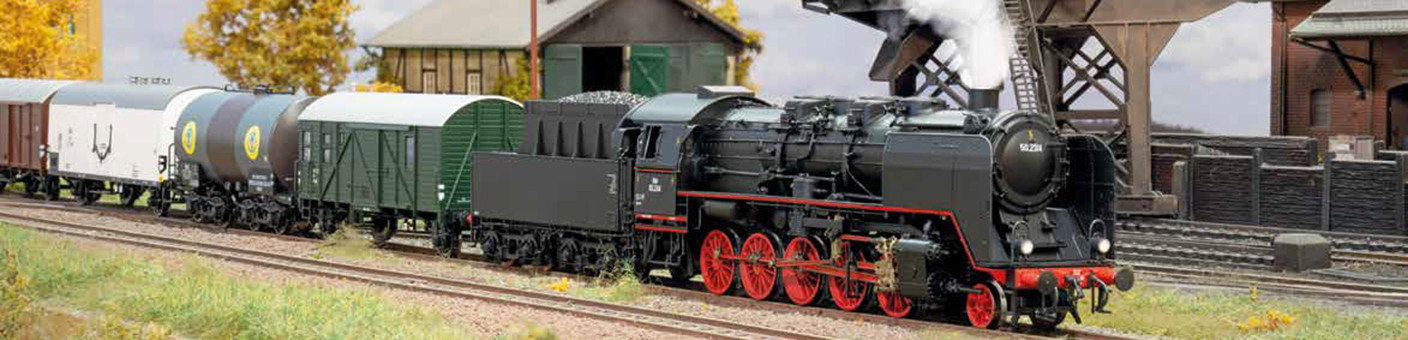
Analogue or digital, H0 two-rail or centre-contact, a compact N-gauge set or a robust garden railway? This guide helps you select a starter set that suits the available space, intended user, preferred type of operation and future expansion plans.
Do not begin by selecting the most attractive train. First determine the available setup area, suitable gauge, track and current system and preferred method of control.
A complete starter set normally includes a locomotive, coaches or wagons, track, a controller and the required power supply. These components are coordinated and permit the first train operation without an extensive compatibility check for individual parts.
An analogue starter set is useful for an uncomplicated introduction with one train. Anyone who wants to control several locomotives independently, switch lighting or sound functions and later operate turnouts digitally should consider a digital starter set .
H0 requires one further decision. Märklin starter sets generally use centre-contact track and C Track. PIKO, Roco, Trix and many other H0 sets usually use two-rail track. These vehicle and track systems must not be treated as interchangeable.
Without an existing collection, H0 is frequently the most versatile choice. N, TT and Z are suitable when space is limited. Gauges 0 and G provide large, clearly visible models but require considerably more room.
Answer five questions. The finder recommends a suitable system category and identifies the most useful next step. An existing track system normally carries more weight than a single preferred locomotive.
Similar names can describe products with substantially different contents. An attractive train alone is not necessarily a complete starter set.
| Designation | Typical Contents | Ready to Run Immediately? | Best Suited For |
|---|---|---|---|
| Starter set or starter kit | Train, track, controller and power supply | Usually yes | New beginners and entry into a new system |
| Train pack | Locomotive and coaches or wagons, or a complete multiple unit | Only with an existing railway | Expanding an existing vehicle collection |
| Track expansion set | Turnouts, straight sections, curves or a buffer stop | Only with a basic track circuit | A station, siding or shunting track |
| Play system | Robust battery train, play track and simple controller | Yes, within the same play system | Younger children and imaginative play |
Verify that the power supply, analogue controller or digital command station, track connection and a complete track circuit are actually included. A locomotive with matching rolling stock may still be only a train pack.
Make these decisions in the order shown. This prevents an attractive train from forcing the layout into an unsuitable technical system or an area that is too small.
In addition to the track oval, allow a safe distance from the edge, operating space and room for storage.
Smaller gauges permit longer routes. Larger models are easier to see, rerail and handle.
Analogue control is especially simple for one train. Operating several trains independently usually favours digital control.
Two-rail and centre-contact vehicles use different methods of current collection and require a matching track system.
Freight trains provide shunting possibilities. Passenger trains are particularly effective with a station and longer route.
Check matching turnouts, track sets, additional rolling stock and the available digital technology before committing to a system.
Analogue or digital describes the type of control. Two-rail or centre-contact describes the H0 track and current-collection system. These decisions must be considered separately.
The controller changes the train speed and direction directly through the voltage supplied to the track.
Each locomotive has its own address. Lighting, sound and further functions can be switched separately when supported by the model.
The two running rails carry separate electrical poles. Many starter sets from PIKO, Roco, Trix and other manufacturers use this system.
Common track systems include PIKO A-Track with roadbed and ROCO LINE track with roadbed .
Stud contacts in the centre of the track supply the locomotive through a pickup shoe. Märklin C Track is a widely used entry into this system.
Compare H0 AC and H0 DC or explore Märklin H0 C Track .
Regular complete starter sets concentrate on H0, N, TT, Z, 0 and G. Narrow-gauge and specialist sizes more frequently begin with individually selected components.
| Gauge and Variants | Typical Scale | Typical Starting Point | Particular Strength | Check Before Buying |
|---|---|---|---|---|
| Z and Zm | 1:220 | Compact analogue starter set | Very long routes within the smallest area | Delicate handling and clean track |
| N, Nm, Ne and Nf | 1:160 | Analogue or digital standard-gauge set | Long trains and compact stations | Track system and digital command station |
| TT, TTm, TTe and TTf | 1:120 | TT set with roadbed or conventional model track | Good balance between visible size and space requirements | Future track expansion and train theme |
| H0, H0m, H0e and H0f | 1:87 | Very large selection of analogue and digital sets | Easy handling and an extensive product range | Two-rail, centre-contact or narrow-gauge system |
| 00 and S | Approximately 1:76 and 1:64 | Country- or manufacturer-specific package | British and international railway themes | Couplings, power supply and national standards |
| 0, 0m, 0e and 0f | Usually 1:45 | Digital shunting or freight-train set | Large details and intensive shunting operation | Radius, train length and stable baseboard |
| 1, 1m, 1e and 1f | 1:32 | Usually train packs and individual components | Impressive technology and excellent visibility | Weight, curve radius and storage area |
| II, IIm/G, IIe and IIf | 1:22.5 | G-gauge or garden-railway starter set | Robust vehicles for indoor and outdoor operation | Track diameter and protected outdoor power supply |
| III, V, VII, X and specialist sizes | Depends on the system | Specialist project assembled from individual components | Large models and park railways | Structural requirements, safety and substantial space |
Nothing else is usually required for the first train movement. A few carefully selected additions become useful for safe, reliable and more varied operation.
It protects vehicles from carpet fibres and helps prevent trains from falling from the edge of a table.
Smaller gauges particularly benefit from correct rerailing, clean wheels and regular track cleaning.
A turnout and siding usually provide more play and operating value than a second locomotive on an unchanged circuit.
Additional power feeds and cables become necessary only when the route or track plan is expanded.
It helps prevent unsuitable turnouts, incorrect connectors and unnecessary track purchases.
The station, buildings and ballast should be added only after every section of track operates reliably.
Most problems result from an overlooked decision about space, track system, current collection or the actual package contents.
Train length, curve radius, system compatibility and the available setup area must also be suitable.
The same model track gauge does not mean that current collection, wheelsets and track systems are identical.
The track oval requires an additional safe border and enough room for assembly and operation.
Plastic play track represents a different system from electrically powered model railway track.
Roadbed, geometry, connectors, rail profile and conductor system must all be compatible.
A turnout and siding usually provide more immediate operating value than another locomotive on the original oval.
Check the complete package contents, age labelling, technical system and required setup area on the individual product page before ordering.
These three options range from a robust battery-operated play train to a genuine and permanently expandable H0 model railway.
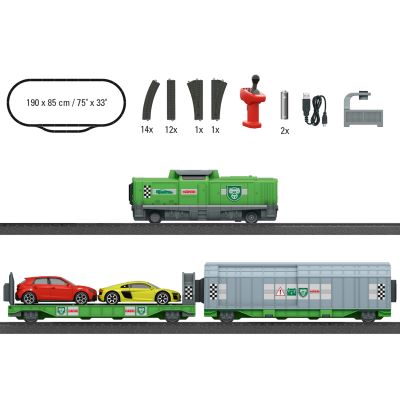
Battery-operated train with magnetic couplings, loading functions, plastic track and Power Control Stick.
View Product Details →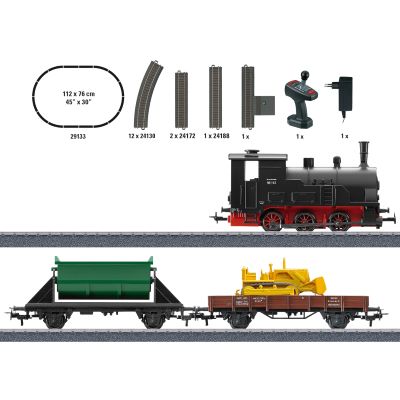
Digital train, expandable C Track and a wireless Power Control Stick for an accessible introduction to H0.
View Product Details →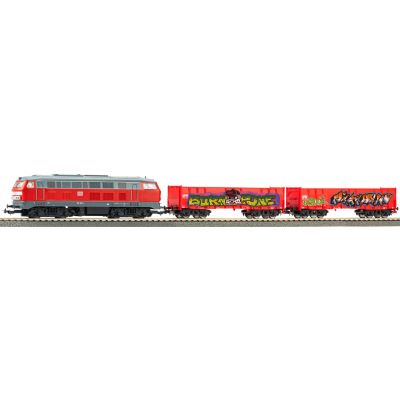
Analogue Class 218 freight train with two wagons and PIKO A-Track with integrated roadbed.
View Product Details →H0 provides the largest selection. The distinction between two-rail and centre-contact operation is essential.

Steam locomotive, three wagons, analogue controller and roadbed track for straightforward operation.
View Product Details →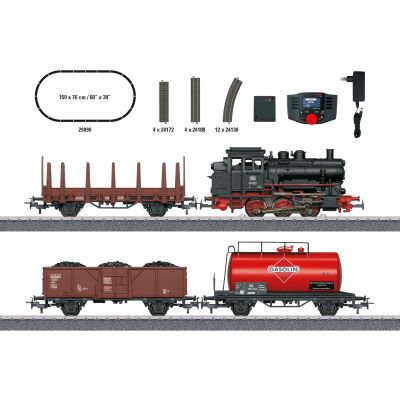
mfx steam locomotive, three wagons, Mobile Station and C Track form an expandable digital foundation.
View Product Details →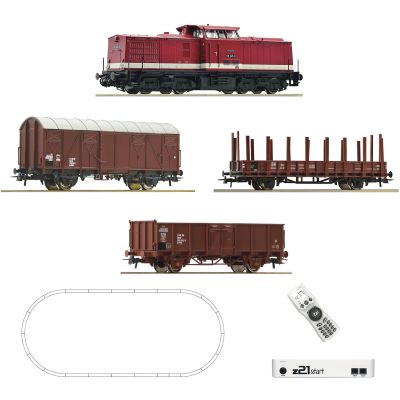
Digital train with z21 start, multiMAUS and ROCO LINE track with integrated roadbed.
View Product Details →These examples demonstrate how model size and setup area change the character and practical use of a starter set.
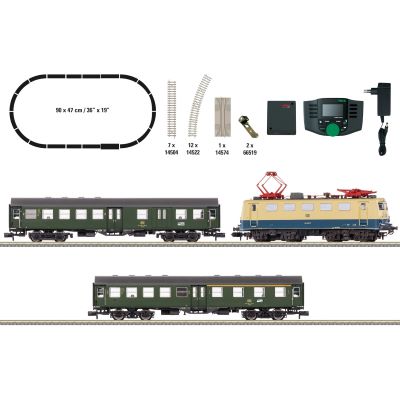
Sound-equipped passenger train, Mobile Station and compact track oval for an expandable N-gauge railway.
View Product Details →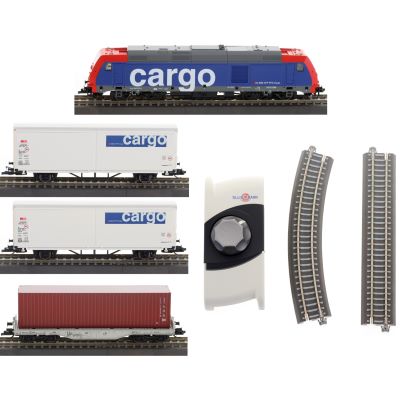
Analogue freight train, roadbed-track oval, controller and a locomotive prepared for later digital conversion.
View Product Details →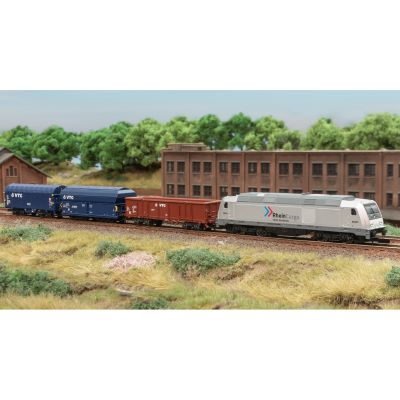
Modern freight train, Z-gauge track oval, controller and rerailing equipment for a very small setup area.
View Product Details →
Robust Stainz locomotive, two coaches, controller and weather-resistant track circuit for large-scale operation.
View Product Details →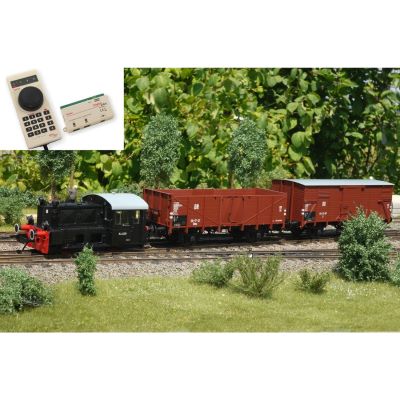
Digital Köf locomotive, two freight wagons and a large two-rail track oval at a scale of 1:45.
View Product Details →The brand alone is not decisive. Always check the exact gauge, track system, conductor system, controller and expansion options of the individual starter set.
These answers cover system selection, space requirements, intended users and the first useful expansion.
A complete H0 set with roadbed track is suitable for many beginners. Before buying, decide between analogue and digital control and between an H0 two-rail or centre-contact system.
Many compact analogue H0 sets fit within this area. N gauge provides additional space, while larger digital H0 track plans may require a wider or longer base.
Analogue control is particularly simple for one train. Digital control is useful when several locomotives or separately switchable lighting and sound functions are planned.
Robust play systems are available from the age of three. Märklin Start up is aimed at young H0 operators from the age of six, while PIKO kids begins from the age of eight. The exact product labelling and safety information always take priority.
N gauge combines a small base area with comparatively long trains. Z gauge saves even more space but requires especially careful handling and clean track.
Not in every case. Märklin H0 locomotives frequently use centre-contact current collection, while PIKO and Roco starter sets are generally designed for two-rail operation.
It provides more functions and better conditions for operating several trains. Long-term expandability also depends on the track system, digital protocols and available accessories.
A matching turnout, siding, rerailer and cleaning equipment usually provide more practical value than immediately buying a second locomotive.
Freight trains provide numerous shunting and loading ideas. Passenger trains are particularly effective with a station and longer route. Both are technically suitable.
For a first complete operating railway, it usually is. Buying individual parts provides greater freedom but requires the train, track, controller and power supply to be checked and coordinated separately.
Explore gauges, track systems, digital technology, layout planning, vehicles and practical expansion options in the central model railway guide.
Editorially reviewed and updated on 30 July 2026. The package contents, age labelling and technical information on the individual product page remain decisive.