
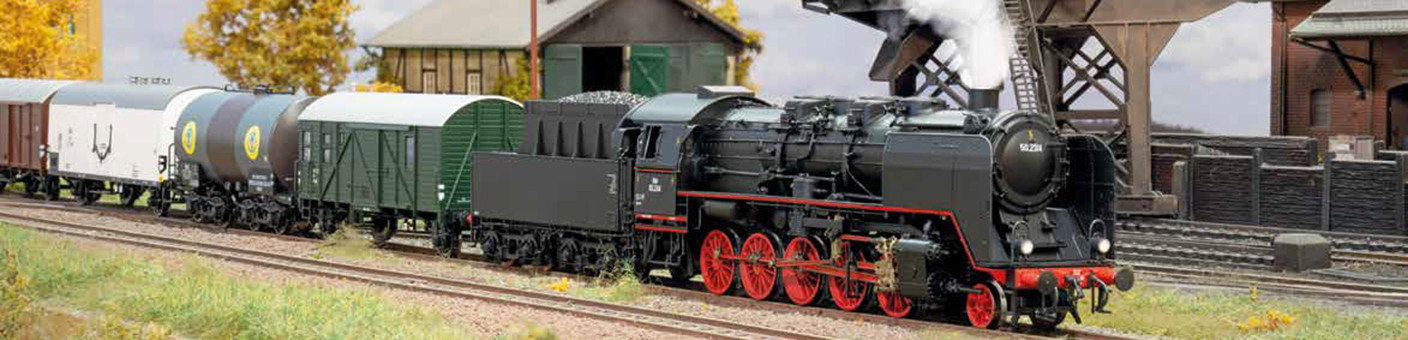
Choose the gauge that suits your space and operation
H0 Gauge or TT Gauge? The Complete Model Railway Comparison
Compare scale, model track gauge, space requirements, curve radii, handling, railway systems and product choice—and find the gauge that fits your layout and the trains you want to run.
The most important answer first
When Is H0 Better, and When Is TT Worth Choosing?
H0 gauge or TT gauge? The comparison shows that the best choice is not automatically the best-known gauge, but the one that suits the available room and your preferred type of operation. H0 is particularly suitable when vehicles should be easy to handle and visible details, sound functions and a very broad product range are important. TT is particularly convincing when long trains, extensive stations and more scenery are required on a limited or medium-sized area.
Standard-gauge prototypes in H0 are generally represented at a scale of 1:87 on model track with a gauge of 16.5 millimetres. The larger vehicles are easier to rerail, maintain and equip digitally. H0 also offers a choice between centre-contact and two-rail systems.
TT represents standard-gauge prototypes at 1:120 on 12-millimetre model track. Vehicles remain clearly recognisable but require less length and curve space. TT is therefore not merely a smaller version of H0. It is a model railway world in its own right, with matching track, couplings, buildings, figures and vehicles.
Scale, model track gauge and visual effect
H0 and TT in a Direct Data Comparison
The table compares the most important planning values. The radii shown are typical entry-level and system values, not universal approvals. The selected track plan and the minimum radius specified by the vehicle manufacturer always remain decisive.
| Comparison Point | H0 Gauge | TT Gauge |
|---|---|---|
| Scale | 1:87 | 1:120 |
| Standard-Gauge Model Track | 16.5 mm | 12 mm |
| 100 Metres of Prototype Length | Approximately 1.15 m in the model | Approximately 0.83 m in the model |
| 24-Metre Passenger Coach | Approximately 276 mm | Approximately 200 mm |
| Typical Compact Radii | Approximately 358–420 mm | Approximately 267–310 mm |
| System World | Centre-contact or two-rail | Predominantly two-rail |
| Product Choice | Very broad and international | Varied, with particularly strong DR subjects |
| Principal Strength | Visible detail and system variety | Efficient use of space and longer trains |
The complete model railway gauge comparison covers further gauges from Z to G. The technical classification of nominal size, scale and model track gauge follows the NEM standards published by MOROP .
Use the available room realistically
How Much Layout Space Does TT Save?
A corresponding TT model has mathematically about 72.5 per cent of the linear dimensions of an H0 model. If a complete track plan is reduced geometrically, its theoretical footprint falls to approximately 53 per cent. In a real model railway room, the difference is smaller because operating aisles, layout edges, access openings and working areas do not shrink by the same ratio.
The practical advantage of TT is particularly noticeable in usable track length. On an area that permits only a short station in H0, TT can provide longer platforms, additional sidings or more visible route. This can be decisive for Intercity trains, Städteexpress services, double-deck formations and long goods trains. A compact H0 layout, by contrast, can look especially convincing with a branch line, terminus, shunting operation or industrial siding.
The smallest available radius should never automatically become the planning target. Broader curves reduce the sideways overhang of long coaches, appear more realistic and often improve operational reliability. Start by selecting the longest locomotive and longest coach you want to use. Curves, station tracks, hidden yards and gradients can then be planned around them.
Small Area with Shunting Operation
H0 can look highly convincing with short goods workings, railcars and a compact terminus.
Medium Area with Long Trains
TT permits longer platforms, more generous curves and a greater length of visible route.
Narrow Wall or Shelf Layout
TT gains route length, while H0 is well suited to point-to-point and shunting concepts.
Safe Accessibility
Turnouts, tunnels and concealed tracks must remain accessible in both gauges.
Check before making the first purchase
Six Steps to the Right Gauge
The decision should not depend on one locomotive alone. Available room, train length, railway system, handling and existing models must work together.
Measure the Usable Layout Area
Include doors, windows, radiators, sloping ceilings, reachable depth and possible later extensions in the first sketch.
Room-planning question
Which train should fit completely alongside the platform?
Define Your Longest Desired Train
A short railcar requires different planning from an express train with five coaches. Usable track length and turning curves must suit the intended formation.
Test Handling in Practice
H0 is easier to hold and rerail. TT remains clearly visible but requires slightly more care when handling small separately fitted parts.
Select the Power and Digital System
H0 offers centre-contact and two-rail systems. TT is predominantly operated as a two-rail railway, either with analogue control or DCC.
Include Your Existing Collection
Existing vehicles, track, decoders and buildings may be more valuable than the calculated space saved by changing the entire system.
Plan Later Expansion Stages
Turnouts, flexible track, expansion sets, feedback modules and digital equipment should remain available for later construction stages.
Common planning mistake
A starter-set radius may be suitable for the train supplied in the
box but too tight for a later express locomotive or long passenger
coach. Allow some reserve and check the specified minimum radius of
every vehicle individually.
Half-zero at a scale of 1:87
H0
H0 Gauge for Visible Detail and Maximum Choice
H0 is particularly suitable when locomotives, lettering, driving cabs, lighting and sound should have a strong visual effect. The range extends from historical state railways and DRG trains through Deutsche Bundesbahn and Deutsche Reichsbahn subjects to international high-speed, regional and goods trains. Buildings, road vehicles, figures, overhead equipment, signals and digital technology are also available in a very broad selection.
H0 Steam Locomotives
Express, goods, tank and branch-line locomotives.
Open Category →H0 Diesel Locomotives
Shunting, branch-line and heavy main-line traction.
Open Category →H0 Electric Locomotives
Classic classes and modern multi-system locomotives.
Open Category →H0 Railcars
Railbuses, regional services and high-speed operation.
Open Category →H0 Passenger Coaches
Local services, express trains, Intercity and night trains.
Open Category →H0 Goods Wagons
Tank, container, bulk-material and special wagons.
Open Category →Märklin C Track
Robust H0 centre-contact track with an integrated roadbed.
Explore Track System →PIKO A Track with Roadbed
Two-rail track for quick assembly and later expansion.
Explore Track System →
Table Top at a scale of 1:120
TT
TT Gauge for Longer Trains and Generous Routes
TT lies between H0 and N. Vehicles retain a strong visual presence but need less length and curve space than H0. This creates balanced proportions between the train, station and surrounding scenery. The range is particularly strong for DR, DB, DB AG, ČD, PKP and private-railway subjects. Modern Vectron, Taurus and TRAXX locomotives complement classic steam locomotives, diesel locomotives, rebuilt coaches and double-deck trains.
TT Steam Locomotives
DRG, DR, DB and European steam-locomotive subjects.
Open Category →TT Diesel Locomotives
V 100, Ludmilla, private railways and modern traction.
Open Category →TT Electric Locomotives
Reichsbahn classics, Taurus, TRAXX and Vectron.
Open Category →TT Railcars
Branch lines, regional services and compact train concepts.
Open Category →TT Passenger Coaches
Rebuilt coaches, express trains and modern regional services.
Open Category →TT Goods Wagons
Local workings, block trains and international transport.
Open Category →Tillig TT Roadbed Track
A stable track system for starter layouts and mobile assembly.
Explore Track System →Roco TT Track
Track and extensions for planning a TT model railway.
Explore Track System →
Starter sets, vehicles, coaches, wagons and track
Selected Products for H0 and TT
These examples cover different product groups. Before purchasing, compare the gauge, power system, digital interface, coupling and minimum radius with your existing railway.
Selected H0 Products
Starter sets, locomotives, coaches and track for different H0 operating concepts.
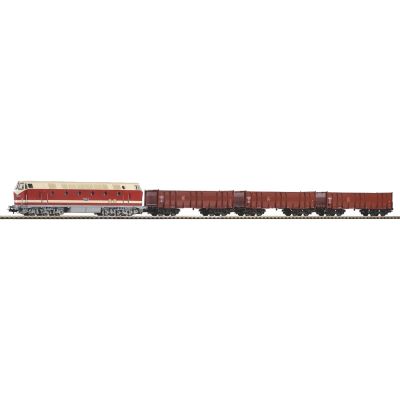
PIKO · H0 · Starter Set
PIKO 57138 Goods Train Starter Set
Class 119, three high-sided wagons, controller and roadbed track.
View Product →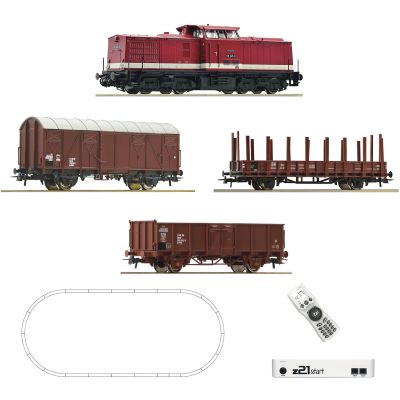
Roco · H0 · Digital Set
Roco 5110009 with z21 Start
Digital DR goods train with controller and a track oval.
View Product →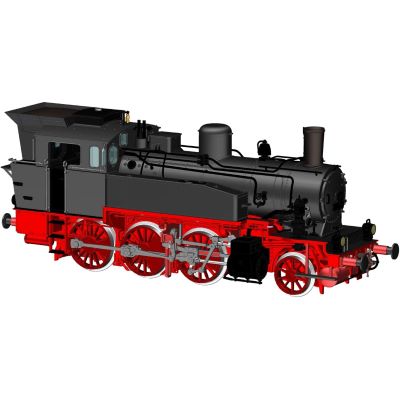
PIKO · H0 · Steam Locomotive
PIKO 50734 Class 91.3
Tank locomotive for Deutsche Reichsbahn branch-line trains.
View Product →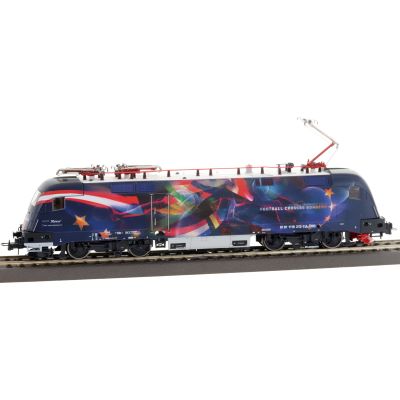
Roco · H0 · Digital Electric Locomotive
Roco 7510062 ÖBB Class 1116
Modern Taurus locomotive with digitally controlled lighting functions.
View Product →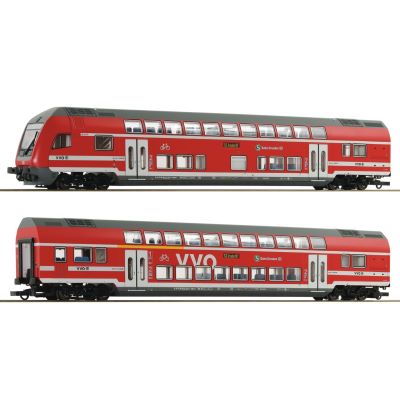
Roco · H0 · Passenger Coaches
Roco 6200066 Double-Deck Coach Set
Digital regional-transport set with a driving trailer and lighting.
View Product →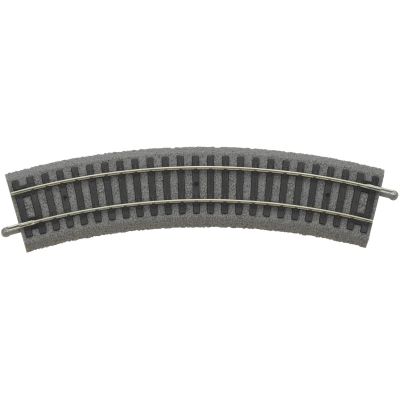
PIKO · H0 · Track
PIKO 55411 A Track R1
Compact curve for the H0 roadbed-track system.
View Product →Selected TT Products
Starter sets, locomotives, goods wagons and track for compact TT layouts and longer trains.
Tillig · TT · Starter Set
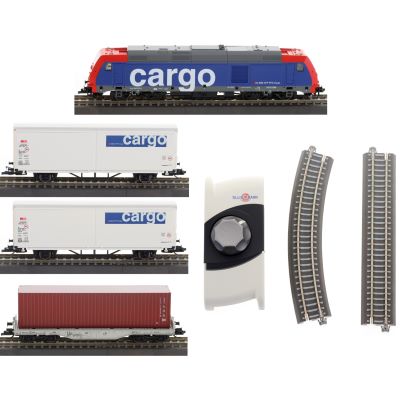
Tillig 01501 SBB Goods Train
Locomotive, three wagons, controller and roadbed track.
View Product →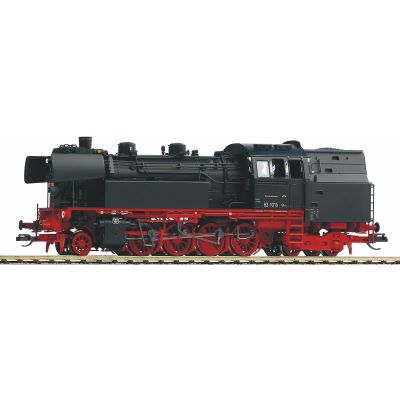
PIKO · TT · Steam Locomotive
PIKO 47124 Class 83.10
DR tank locomotive for passenger and goods services.
View Product →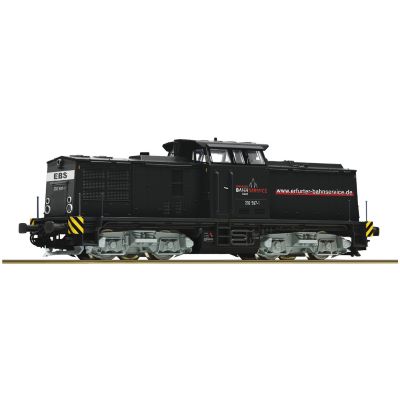
Roco · TT · Diesel Locomotive
Roco 7380010 EBS Class 202
Private-railway locomotive for modern passenger and goods trains.
View Product →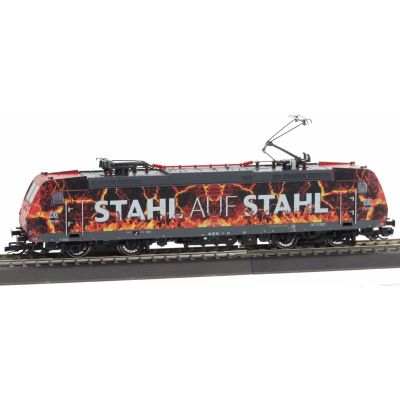
Roco · TT · Digital Electric Locomotive
Roco 7590019 Class 185
Digital TRAXX locomotive for modern goods trains.
View Product →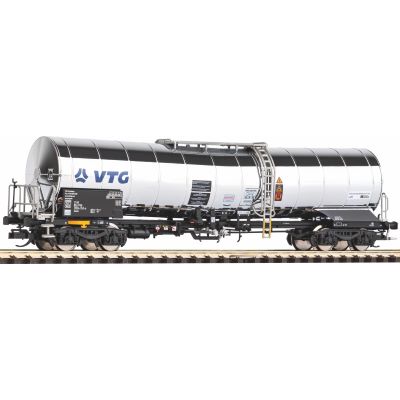
PIKO · TT · Goods Wagon
PIKO 47782 VTG Tank Wagon
Modern wagon for chemical traffic, local goods services and block trains.
View Product →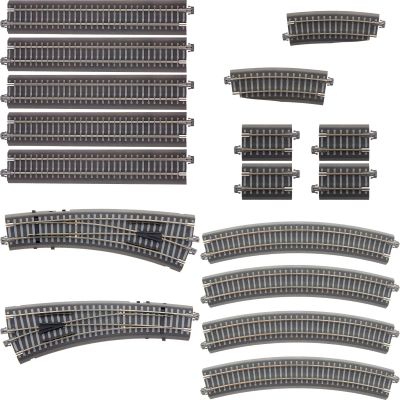
Tillig · TT · Track
Tillig 01835 Parallel Circuit
Coordinated extension set for Tillig TT roadbed track.
View Product →
Manufacturer ranges at Modellbahnshop
Compare Manufacturers for H0 and TT
PIKO and Roco offer vehicles in both gauges. Märklin and Trix define important H0 system worlds. Tillig, Kuehn, KRES, Hädl and Arnold complement the TT range. Auhagen supplies matching buildings and accessories.
PIKO
H0 and TT vehicles, track and starter sets
Roco
H0 and TT locomotives, rolling stock and digital sets
Märklin
Centre-contact H0 system and model railway equipment
Trix
Two-rail H0 vehicles, sets and accessories
Tillig
TT vehicles, coaches, wagons and track systems
Kuehn
TT vehicles, track and digital model railway products
KRES
TT railcars and distinctive railway models
Hädl
TT vehicles, goods wagons and detailed models
Arnold
Selected TT railway models and accessories
Auhagen
Buildings, scenery and accessories for H0 and TT
Check Existing Equipment Before Changing Gauge
Anyone who already owns vehicles, track or digital equipment should first compare the power system, decoders, wheelsets and couplings in the compatibility overview.
Answers for a specific purchasing decision
Frequently Asked Questions About H0 and TT Gauge
The answers consider space requirements, train length, handling, digital operation, power systems and the most important narrow-gauge variants.
Is H0 or TT Better for Beginners?
Both gauges are suitable for beginners. H0 is easier to handle and offers a particularly broad choice. TT requires less space and permits longer routes. The selected starter set should use the track system you intend to expand later.
How Much Smaller Is TT Than H0?
A corresponding TT model has approximately 72.5 per cent of the linear dimensions of the H0 model. A 24-metre prototype passenger coach measures approximately 276 mm in H0 and approximately 200 mm in TT.
Which Gauge Is Better for Long Trains?
On the same layout area, TT generally permits longer platforms, sidings and visible routes. TT therefore often has an advantage for express trains, Städteexpress services, Intercity trains and long goods trains.
Does TT Offer Enough Locomotives and Rolling Stock?
Yes. The range includes steam, diesel and electric locomotives, railcars, passenger coaches and goods wagons, as well as historical and modern vehicles from German and other European railway companies.
Can H0 and TT Operate Together on the Same Track?
No. Their scale, standard-gauge model track gauge, couplings, vehicle profiles and accessories differ. Separate layout sections or dioramas are possible, but the vehicles cannot share the same track.
Are TT Track and H0m Track the Same Because Both Use 12 mm?
The model track gauge is the same, but the represented railway is different. TT depicts standard gauge at 1:120, while H0m depicts metre gauge at 1:87. Sleeper spacing, vehicle size and loading gauge must suit the selected system.
Which Gauge Is Particularly Suitable for Deutsche Reichsbahn Subjects?
H0 and TT both offer many DR models. TT traditionally has a strong selection of rebuilt coaches, Städteexpress trains, double-deck trains and characteristic steam, diesel and electric locomotives from Eras III and IV.
Is Digital Operation as Practical in TT as in H0?
Yes. Both gauges can be controlled digitally. TT provides less installation space, so the interface, decoder dimensions, speaker and energy-storage module must be checked particularly carefully.
Which Gauge Is More Suitable When Fine Motor Skills Are Limited?
H0 is generally easier to handle because vehicles, couplings and separately fitted parts are larger. A rerailer, good lighting and an ergonomic layout height make operation easier as well.
What Curve Radius Makes Sense for H0 or TT?
Compact H0 system radii often begin at approximately 358–360 mm, while TT systems may begin at approximately 267–310 mm. Long coaches and large locomotives benefit from significantly broader curves.
The Right Gauge Begins with the Operation You Want
Draw H0 and TT track plans on your available area, add the longest train you want to run and then compare track systems, starter sets and vehicles.
Content reviewed in August 2026