Modellbahn Keks
Welcome!
Our cookies offer you a fast, relaxed and full-featured shopping experience. Some are necessary to operate the website and its functions. Others help us to improve our services. If you agree to this, simply consent to the use of cookies for preferences, statistics and marketing by clicking on "OK". Alternatively, you can deactivate individual cookies under "Customise cookies" or all cookies, except those required for the function of our website, under "Reject all".
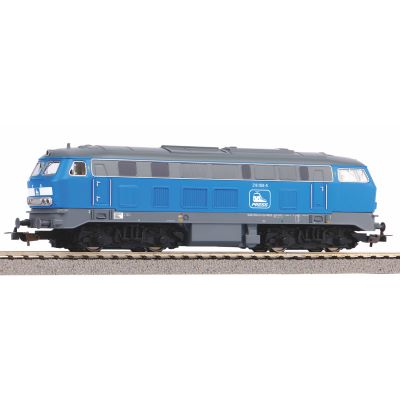
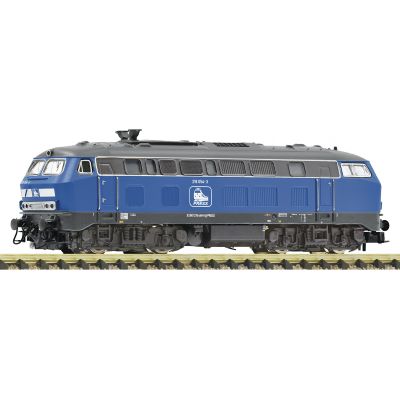
Blue PRESS Class 218 diesel locomotive as an H0 model railway locomotive
Private Railway, Freight Transport and Railway Tradition

PRESS Model Trains in H0, TT, N, G & Narrow Gauge

Discover blue PRESS locomotives, modern dual-power vehicles, freight wagons, engineering-train models, complete train sets and historic narrow-gauge vehicles. The selection includes analogue and digital models from several manufacturers and is checked directly against the English Modellbahnshop product pages when the landing page is opened.

H0 TT N G H0e TTe Eras V–VI
A Modern Private Railway with Historic Roots

What Does PRESS Mean on a Model Railway?

The overview PRESS Model Trains in H0, TT, N, G & Narrow Gauge connects today’s railway undertaking with suitable model vehicles. PRESS is the commonly used abbreviation for Eisenbahn-Bau- und Betriebsgesellschaft Pressnitztalbahn mbH. The company is not a model railway manufacturer. It is the real-life prototype for locomotives and rolling stock produced by PIKO , Roco , Tillig and further brands.

Typical subjects include modern freight trains, engineering and logistics services, shunting duties, special trains and regional transport. The vivid blue used on many PRESS locomotives is particularly recognisable. Classes 204, 218, 346, 140, 145, 155, 185 and 248 allow very different operating scenes. The theme therefore suits main lines, industrial sidings, ports, construction sites, freight yards and non-electrified branch lines.

There is also a close historical connection with the Preßnitz Valley Railway in the Ore Mountains. Some models therefore represent a steam locomotive, diesel locomotive or coach used in museum-railway operation rather than a modern blue freight locomotive. For a convincing layout, today’s PRESS, the IG Preßnitztalbahn and narrow-gauge themes should not be mixed indiscriminately. They should be classified according to prototype, gauge and represented period.

2000 Company Founded
96 Locomotives
450+ Freight Wagons
162–5600 Power in kW
The Real Railway Behind the Models

From Jöhstadt into German and International Rail Transport

PRESS was founded in January 2000 and received its licence as a railway undertaking later that year. Its roots in the historic Preßnitz Valley Railway environment developed into a company combining modern transport and logistics with traditional railway activities.

2000
Founded Jöhstadt

Railway Tradition Becomes a Transport Company

People associated with IG Preßnitztalbahn helped create the basis for today’s company. Its headquarters remained in Jöhstadt in the Ore Mountains. This historical origin explains why modern freight locomotives and carefully maintained heritage vehicles both form part of the company’s identity.

Cargo
Freight Logistics

From Individual Wagons to Heavy Block Trains

The range of services includes wagonload and block-train traffic, shunting, first- and last-mile operation, dangerous goods, building materials, timber, steel, coal, chemicals, grain and combined transport. Cross-border services and complete logistics chains make modern PRESS trains particularly varied.

750 mm
Rügen Regional Rail

Rügen Resort Railway and Regional Services

PRESS has operated the Rügen Resort Railway since 2008. The “Rasender Roland” runs on 750-millimetre track between Putbus and Göhren, with services also reaching Lauterbach Mole according to the operating programme. Further regional and special passenger services extend the broad prototype theme.

Heritage
Steam Special Train

Historic Vehicles Remain Operational

Historic steam, diesel and electric locomotives are used for special journeys and railway experiences. The fleet includes vehicles with DR and DB history as well as narrow-gauge museum locomotives. Under the exPRESSzugreisen name, these vehicles create separate excursion and special-train themes.

Select Models by Operating Purpose

PRESS Vehicle Worlds from Class 218 to Narrow-Gauge Coaches

A blue livery alone does not determine whether vehicles form a suitable combination. Locomotive class, power system, gauge, transport task and era should be considered together.

BR 218
Diesel H0 TT N G

Main-Line Diesel Locomotives for Flexible Duties

Class 218 is one of the best-known PRESS prototypes. Models are available in analogue, digital and sound-equipped versions. They suit freight trains, vehicle transfers, special trains and non-electrified sections of main and branch lines.

Filter Diesel Locomotives
V 100
Shunting BR 204 BR 346

DR Diesel Classics in Modern Private-Railway Service

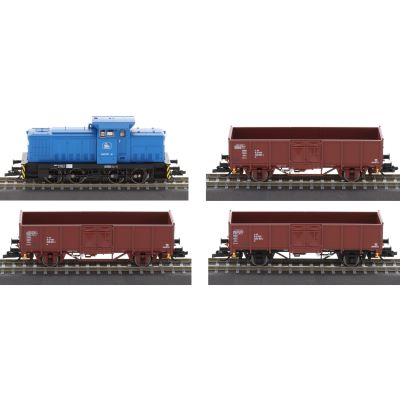
The V 100 family, Class 204 and Class 346 suit shunting, transfer workings, engineering trains and short freight trains. The combination of older vehicle technology and current Era VI operation is typical of private railway companies.

Open Shunting and Diesel Locomotives
140–185
Electric Freight Train

Electric Locomotives for Main-Line Freight

Classes 140, 145, 155 and 185 represent several generations of electric freight operation. Container, open, stake, tank and bulk wagons all form credible trains behind them. Class 155 additionally brings distinctive Deutsche Reichsbahn technology into the present day.

Filter Electric Locomotives
BR 248
Dual Mode H0 AC H0 DC

Represent Dual-Power Operation without Changing Locomotives

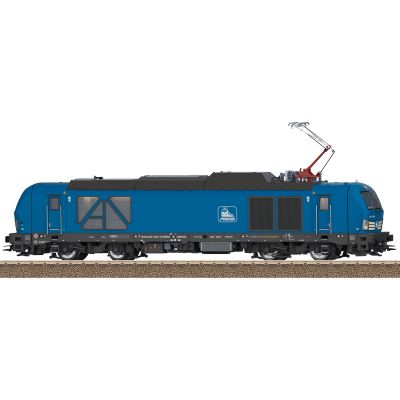
The Vectron Dual Mode operates electrically beneath overhead wires and uses its diesel engine on non-electrified sections. Märklin, Trix and PIKO reproduce the PRESS Class 248 for different H0 systems. The model is particularly suitable for modern main-line services and industrial sidings.

View Dual-Mode Models
Fc / Res
Freight Wagons Engineering Train

Bulk, Stake and Engineering Wagons

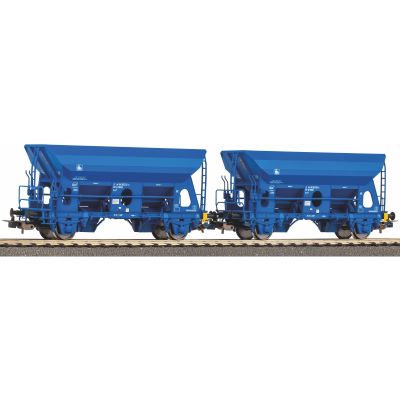
Bulk wagons suit ballast, building materials and engineering-train logistics. Stake wagons carry timber, profiles, sleepers and other long loads. Wagons belonging to other keepers such as GATX , VTG and Wascosa may appear in the same train.

Filter Freight Wagons
99 4511
Narrow Gauge H0e TTe G

Museum Railway, Steam Locomotive and Observation Coaches

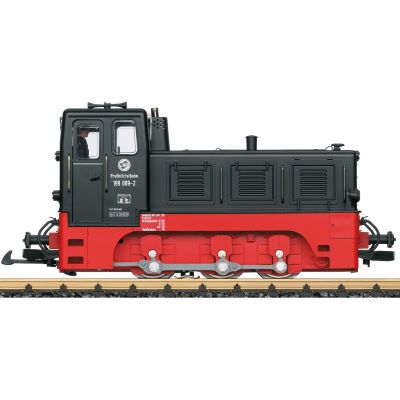
H0e steam locomotives from Modellbau Veit, TTe coaches from Karsei and large-scale models from LGB represent the historic side of the theme. These vehicles belong on a narrow-gauge layout and not in a standard-gauge PRESS freight train.

View Historic Models
Scale, Model Track and Layout Concept

In Which Gauges Are PRESS Models Available?

The PRESS theme extends from long modern freight trains to compact museum railways. H0 offers the broadest technical selection, TT combines visible detail with lower space requirements, N enables long trains and G provides a strong visual presence. H0e and TTe are independent narrow-gauge systems.

Gauge Scale and Model Track Particular Strength Typical PRESS Models
H0 1:87 · 16.5 mm Large selection for two-rail and centre-contact layouts Classes 204, 218, 140, 185 and 248, bulk and stake wagons
TT 1:120 · 12 mm Balanced relationship between train length and visible detail Classes 346, 145, 185 and 218 as well as freight-train sets
N 1:160 · 9 mm Long freight trains and generous routes within a small area Class 218 and modern Class 155 versions
G often 1:22.5 · 45 mm Large, robust vehicles for indoor and garden railways V 10 C, Classes 346 and 218, and self-unloading wagons
H0e 1:87 · 9 mm 750-millimetre narrow gauge at H0 scale Steam locomotive 99 4511-4 as a ready-to-run model or kit
TTe 1:120 · 6.5 mm Very compact historic narrow-gauge layouts Museum and observation coaches of the Preßnitz Valley Railway
Z 1:220 · 6.5 mm Very long routes with minimal space requirements Selected special models; only reconfirmed product pages are displayed

The comparisons H0 or TT Gauge and H0 or N Gauge help with choosing between standard-gauge systems. The guide Small Model Railway in Limited Space provides additional planning advice for compact projects.

Directly from the Current English Webshop

Search and Filter PRESS Models Intelligently

The product browser combines a checked initial selection with product links discovered on the English PRESS page. It then requests every product page again. Pages containing a discontinued-product notice, an error page, no clear PRESS reference or no product image are not displayed. The cards show only the product name, image, manufacturer, gauge, era, technical version and direct product link.

The product browser starts when this section approaches the viewport.

Editorial content reviewed: . The product pages are checked independently whenever the page is opened.

Brands Offering PRESS Models

Manufacturer Pages at Modellbahnshop

The theme extends across major manufacturers and specialist model builders. Modellbau Veit and Karsei particularly complement the familiar brands in the narrow-gauge sector.

Specialist Models for H0e and TTe

Historic steam locomotives and narrow-gauge coaches are additionally available from Modellbau Veit and Karsei. These vehicles represent the museum-railway side of the theme and use different model track gauges from standard-gauge PRESS locomotives.

From an Individual Model to Credible Operation

How Can PRESS Models Be Used Prototypically?

The real PRESS covers very different operating tasks. More than one type of train can therefore be credible on a layout. The important point is to define a clear operating concept for each formation and avoid mixing modern standard gauge indiscriminately with historic narrow gauge.

1
Operating Idea

Heavy Freight Train on the Main Line

Suitable Vehicle Combination

Classes 155, 185 and 248 can haul container, tank, stake and open freight wagons. The wagons do not need to carry PRESS markings themselves. A mixed train containing GATX, VTG or Wascosa vehicles is plausible when the load, route and era are compatible.

2
Layout Theme

Engineering Train, Ballast Traffic and Industrial Siding

Shunting Instead of Continuous Circulation

Classes 204, 218 and 346 suit bulk wagons, flat wagons, engineering vehicles and construction machinery. A loading track, parked work wagons and repeated shunting movements create convincing operation even on a small layout.

3
Special Service

Historic Locomotive with an Excursion or Charter Train

Select Coaches to Suit the Represented Period

Historic locomotives can be combined with suitable passenger coaches for special journeys. The formation may deliberately contain older vehicles even when the operation takes place in Era VI. Modern running numbers and museum markings explain the historic train in the present day.

4
Narrow-Gauge Project

Preßnitz Valley Railway or Rügen as a Separate Railway World

Do Not Confuse H0e, TTe and G

Steam locomotives, the V 10 C and observation coaches suit museum operation, a small terminus, water crane, engine shed and tight curves. H0e uses 9-millimetre track, TTe uses 6.5 millimetres and G gauge uses 45 millimetres. Vehicles from these systems cannot operate together on the same track.

Common Mistake: Treating PRESS and the Preßnitz Valley Railway as Exactly the Same Thing

The modern Eisenbahn-Bau- und Betriebsgesellschaft Pressnitztalbahn mbH is a standard-gauge railway and logistics company with further passenger services. The historic Preßnitz Valley Railway is a separate museum-railway theme on 750-millimetre narrow gauge. The two areas are closely connected, but require different track, vehicles and train-formation concepts in model form.

Answers About Model Selection and Layout Planning

Frequently Asked Questions About PRESS Model Trains

These answers help with the company name, gauge, era, power system, vehicle selection and realistic train formation.

What Does PRESS Stand For?

PRESS is the commonly used abbreviation for Eisenbahn-Bau- und Betriebsgesellschaft Pressnitztalbahn mbH. The company provides freight, engineering, logistics, regional and special-train services. On models, PRESS usually appears as an operator or vehicle marking.

When Was Today’s PRESS Founded?

The present company was founded in Jöhstadt in January 2000 and received its licence as a railway undertaking in summer 2000. The earlier date 1991 did not refer to the founding of today’s company and is therefore not used on this page.

Is PRESS the Same as IG Preßnitztalbahn?

No. There is a close historical and personal connection, but they are not the same organisation. The IG operates and preserves the historic narrow-gauge railway, while PRESS is a modern railway undertaking.

In Which Gauges Are PRESS Models Available?

Active product pages are available particularly for H0, TT, N, G, H0e and TTe. Individual special models may also appear in other scales. The product browser displays only pages that can be clearly reconfirmed during the current visit.

Which Era Suits Blue PRESS Locomotives?

Most models in the current blue appearance belong to Era VI. Earlier markings, museum locomotives and historic narrow-gauge coaches may represent Era V or older prototype conditions. The era stated on the individual product page remains decisive.

Are PRESS Models Available for Both H0 AC and H0 DC?

Yes. Märklin offers typical centre-contact versions, while Trix, Roco, PIKO, BRAWA and other manufacturers offer two-rail versions. Some ESU models are technically suitable for both systems. The power system, wheelsets and decoder must nevertheless be checked for every individual model.

Which Locomotives Are Particularly Typical of PRESS?

Frequently represented model classes include 204, 218, 346, 140, 145, 155, 185 and 248. Historic steam and diesel locomotives additionally support special-train and narrow-gauge themes.

What Is Special About the PRESS Class 248?

Class 248 is a Vectron Dual Mode locomotive. It can operate electrically beneath overhead wires and use its diesel engine on routes without overhead equipment. On a model railway it therefore suits main lines, industrial sidings, terminals and transfer workings without a represented locomotive change.

How Do I Assemble a Realistic PRESS Freight Train?

Begin by defining the load and destination industry. Then select the locomotive, wagon types and train length. Bulk wagons suit building materials, stake wagons suit timber and container flat wagons suit combined transport. Wagons belonging to different owners may operate together.

Can PRESS, GATX, VTG and Wascosa Appear in the Same Train?

Yes. PRESS can act as the railway undertaking hauling the train while the wagons belong to other keepers. Such combinations are common in modern freight transport. The era, load, route and technically sensible wagon order should be compatible.

Which PRESS Models Suit a Small Layout?

Classes 204 or 346 with a few freight wagons suit a compact shunting layout. TT and N save space, while H0e and TTe make small narrow-gauge and museum-railway projects possible.

How Are Archived Product Pages Excluded?

The product module reloads every stored and discovered product page. A page is rejected when it contains a discontinued-product notice, represents an error page, has no clear PRESS reference or provides no identifiable product image. A merely historic product link is therefore not displayed as a current product card.

From a Private-Railway Locomotive to a Complete Model Railway

The comprehensive model railway guide continues with gauges, track systems, digital technology, eras, train formation, layout planning, scenery construction, maintenance and repair.

Open the Main Model Railway Guide