
A hobby with many possible areas of focus
Which model railway is suitable for adults?
An adult model railway is not a particular gauge. It may be a small digital tabletop railway, a prototype-orientated shunting layout, a collection of high-quality vehicles or an extensive garden railway.
Begin with the experience you want
Would you primarily like to run trains, collect vehicles, create scenery or automate technical processes? This decision affects the required space more strongly than the choice of one particular locomotive. Long passenger trains require generous radii and usable track lengths, whereas a shunting yard can provide varied operation on a narrow shelf.
The gauge comes next. H0 offers a particularly broad selection and comfortable handling. TT and N save space, Gauge 0 displays large details, and G Gauge is suitable for generous indoor and garden projects. Narrow gauges such as H0e and H0m permit short trains, tight routes and characterful mountain- or light-railway themes.
Divide the budget sensibly: begin with reliable train operation, then add track extensions, followed by scenery, buildings and further vehicles. This creates a railway that can be used from an early stage and grows in a controlled way with your interests.
Interactive decision aid
Which model railway path fits your everyday life?
The finder combines the hobby objective, available space, preferred model size, control method and any existing collection to provide personal guidance.
Your personal focus determines the project
Six ways into the adult model railway hobby
These areas can be combined. A small initial setup helps you discover your preferred focus without making a large initial investment.
Train operation
Watch and control trains
An oval with a station and siding combines relaxed running with initial shunting tasks. Digital technology makes operating several locomotives easier.
Layout building
Create your own miniature world
The baseboard, track, buildings, scenery and lighting become a long-term craft project containing many manageable and completed sub-projects.
Collection
Select vehicles systematically
A collection may follow a manufacturer, locomotive class, era, railway company or region. Documentation and secure storage provide a clear overview.
Digital technology
Switch, detect and automate
Decoders, command stations, feedback modules and software enable routes, storage-yard control and prototype-orientated operating processes.
Shunting
Extensive operation on a narrow area
An industrial siding or small goods station provides varied tasks without requiring a large closed track circuit.
Garden railway
Large vehicles outdoors
G Gauge combines robust track with a strong visual effect. The foundation, drainage, power supply and weather-protected storage require careful planning.
From a miniature railway to a large-scale railway
Which gauge suits adult model railway hobbyists?
Every model size can be suitable for adults. The available space, desired train length, visual comfort, handling and product selection determine the most useful size.
| Model size and variants | Scale | Standard-gauge model track | Typical strength | Suitable projects |
|---|---|---|---|---|
| Z and Zm | 1:220 | 6.5 mm | Very long routes within the smallest area. | Case, shelf and scenery-focused layouts. |
| N, Nm, Ne and Nf | 1:160 | 9 mm | Long trains and generous stations. | Main lines, storage yards and rented homes. |
| TT, TTm, TTe and TTf | 1:120 | 12 mm | A good compromise between model size and space requirements. | Branch lines, main lines and DR subjects. |
| H0, H0m, H0e and H0f | 1:87 | 16.5 mm | A broad selection and comfortable handling. | Almost every standard-, narrow- and field-railway subject. |
| S, Sm, Se and Sf | 1:64 | 22.5 mm | Clearly visible models. | Specialist collections and international layouts. |
| 0, 0m, 0e and 0f | Usually 1:45 | 32 mm | Large details and intensive shunting operation. | Modules, segments and shelf layouts. |
| 1, 1m, 1e and 1f | 1:32 | 45 mm | Impressive vehicles and functions. | Large rooms, collections and exhibition layouts. |
| II, IIm/G, IIe and IIf | 1:22.5 | 64 mm; IIm usually 45 mm | A large-scale railway with a strong visual impact. | Garden railways and large indoor layouts. |
| III, V, VII, X and special sizes | Depends on the system | 89 to 260 mm | Large models, some of which can carry passengers. | Garden, park and specialist railways. |
Consider control and current collection separately
Analogue, digital, two-rail or centre contact?
Analogue and digital describe the control system. Two-rail and centre contact describe, particularly in H0, how power is supplied through the track and vehicle.
Analogue operation for a straightforward start
The controller changes the track voltage. One train can be operated without addresses or programming.
- Straightforward construction and direct operation
- Suitable for small circuits and shunting layouts
- Several trains require separate electrical circuits
Digital operation for functions and several trains
Each locomotive receives an address. Lighting, sound and further functions can be switched individually, depending on the vehicle.
- Several locomotives on the same track
- Can later be expanded with turnouts and feedback
- The command station and decoder require a shared protocol
H0 two-rail or DC
The two rails carry separate electrical poles. Vehicles require insulated wheel sides and suitable two-rail current collection. DCC is widely used for digital operation.
H0 centre contact or AC
Stud contacts in the centre of the track supply the locomotive through a pickup shoe. mfx, Motorola and DCC are among the protocols used in the Märklin environment.
From the first idea to reliable operation
Eight steps to your own adult model railway
This sequence prevents vehicles, track and control equipment from being purchased before the available space and layout objective have been established.
Define the hobby objective
Choose between running, collecting, scenery construction, shunting, digital technology or a garden railway.
Measure the area accurately
Doors, furniture, operating aisles, comfortable reach and future expansion areas belong in the plan.
Select the gauge
Compare model size, possible radii, train length and handling, preferably using real vehicles.
Define the system
Choose the track system, conductor type and analogue or digital control before purchasing vehicles.
Choose a starter set or individual components
Starter sets reduce compatibility questions. Individual components provide greater freedom when selecting the train and track plan.
Test the track plan
Assemble critical curves, turnouts and transitions loosely first and carry out test runs.
Build the layout in sections
Construct the baseboard, electrics and scenery in manageable areas that become fully usable.
Expand operation deliberately
Add turnouts, wagons, vehicles and digital technology to provide a specific new operating task.
Avoid typical mistakes when starting
Buying a favourite locomotive before the track plan
Its length and minimum radius may exceed the available area.
Confusing H0 AC and H0 DC
The same model track gauge does not automatically mean the same current-collection system.
Planning too much track
Accessibility and clearly defined operating tasks are more important than the highest possible track density.
Choosing very small models solely to save space
Visibility and safe, comfortable handling must also remain suitable.
Building the scenery before test runs
Concealed faults become considerably more difficult to reach after the track has been ballasted.
Spending the entire budget on vehicles
Track, power supplies, tools and maintenance products are also part of the basic equipment.
Suitable products for each project phase
Starter sets, digital control systems and layout building
These examples represent different gauges and system routes. Check the required assembly area, conductor type, digital protocol and minimum radius in the full product description.
Starter sets for coordinated initial operation
A starter set combines a train, track, control equipment and a power supply. It can also be used as a test circuit before a larger layout is built.
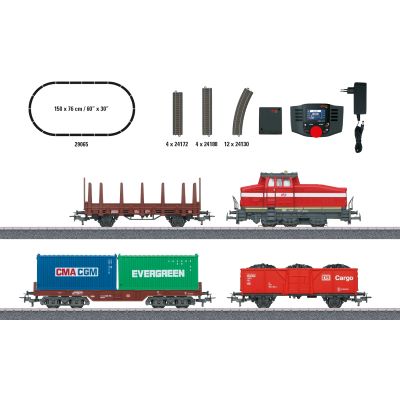
H0 centre contact and digital operation
Märklin 29065 Modern Shunting Operation
C Track, a Mobile Station and a compact freight train provide an introduction to running and shunting.
Open Product Details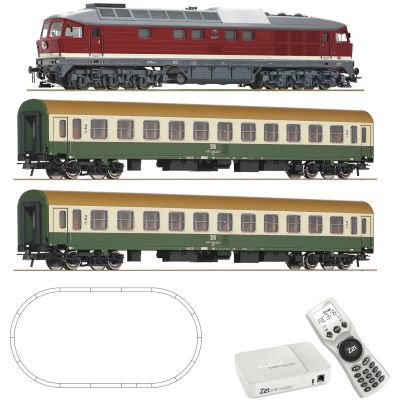
H0 two-rail and DCC
Roco 5110015 Class 132 DR Starter Set
A digital package with Z21 start newGen, multiMAUS and Roco Line track with roadbed.
Open Product Details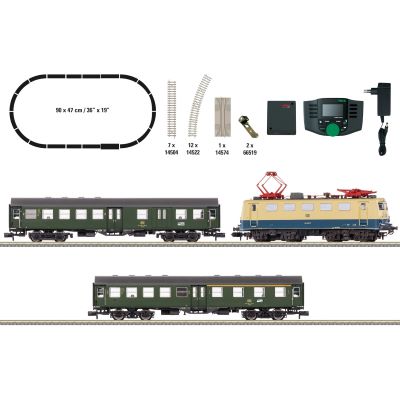
Compact digital N Gauge
Minitrix 11132 Passenger Train
A digital introduction with a Mobile Station, sound-equipped locomotive and a compact required base area.
Open Product Details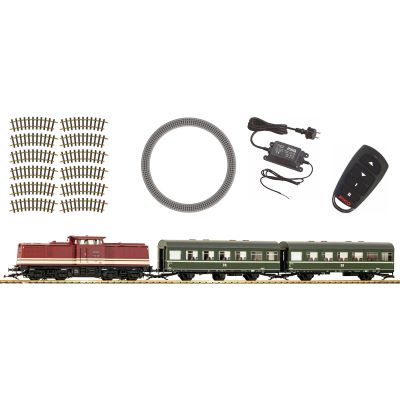
Large-scale and garden railway
PIKO 37145 V 100 Passenger Train
Large DR vehicles, a track circle and radio control provide a foundation for indoor or garden projects.
Open Product DetailsDigital command stations and planned layout construction
Larger command stations become useful when several trains, solenoid accessories, feedback modules or routes are added. A trackbed construction kit supports precise baseboard construction.
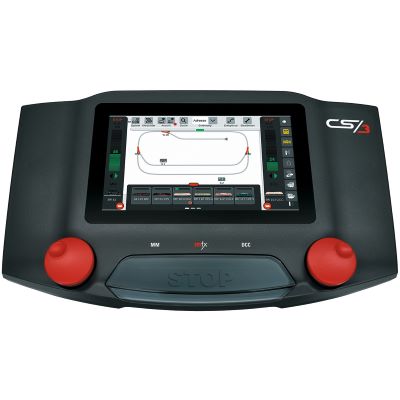
Multiprotocol command station
Märklin 60226 Central Station 3
A touchscreen command station for mfx, mfx+, Motorola and DCC together with extensive layout control functions.
Open Product Details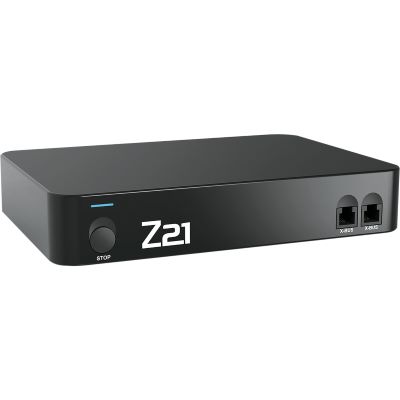
Network-enabled digital system
Roco 10820 Z21 Digital Command Station
DCC control with network, app and expansion functions for a model railway layout that continues to grow.
Open Product Details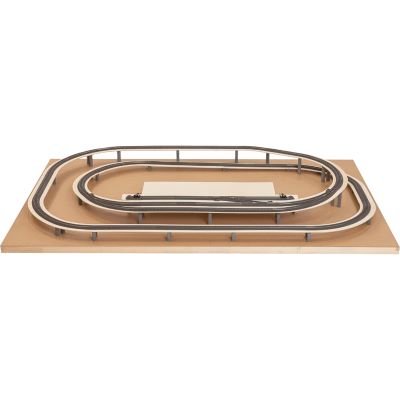
Planned layout baseboard construction
NOCH 53600 Easy-Track Karlsberg
An H0 trackbed construction kit with track-plan documentation for several widely used track systems.
Open Product DetailsStarter Sets
Compare coordinated packages for an immediate introduction.
Digital Command Stations
Select protocols, output and operating concepts.
Decoders
Select a suitable interface, protocol and range of functions.
Track and Turnouts
Plan and extend the railway within one compatible system.
Track Sets
Add circuits, stations, sidings and further routes.
Layout Design
Build terrain, vegetation, roads and detailed scenes.
Figures and Scenes
Add credible life and activity to the model railway world.
Cleaning and Maintenance
Preserve reliable current collection and running quality.
Brand worlds for different hobby paths
Manufacturers of vehicles, track, technology and scenery
Products from different manufacturers can be combined when the gauge, electrical system, wheelsets, couplings, minimum radius and digital protocol match.








Answers before beginning the project
Frequently asked questions about model railways for adults
These answers help with the gauge, space requirements, system choice, time planning and the use of products from different manufacturers.
Is model railroading a suitable hobby for adults?
Yes. The hobby combines technology, craftsmanship, history, design and collecting. Its size and difficulty can range freely from a small test circuit to an automated layout.
Which model railway gauge is best for adults?
H0 is a versatile middle ground with a large product selection. N and TT save space, Gauge 0 provides large details, and G Gauge is suitable for garden and large-scale railway projects.
Which model railway fits an area of approximately 2 × 1 metres?
N permits a longer route, TT provides a good compromise, and H0 is suitable for a clearly structured branch-line or shunting layout.
Should an adult begin with analogue or digital control?
Analogue control is sufficient for one train and straightforward operation. Digital control is useful when several locomotives, sound, lighting or later automation are planned.
Is a starter set better than buying individual components?
A starter set reduces compatibility questions and permits an immediate start to train operation. Individual components provide greater freedom but require precise coordination.
Should I collect vehicles or build a layout?
Both can be combined. A small test or presentation circuit provides train operation without requiring a large permanent layout to be built immediately.
Can products from different manufacturers be combined?
Yes, when the model size, model track gauge, conductor type, current collection, wheelsets, coupling, minimum radius and digital protocol match.
How can I begin when little time is available?
Choose a starter set, small shunting board or individual module. Short, completed construction stages can be used at any time and extended later.
How much space does an adult model railway require?
A shunting module requires only a narrow shelf. A layout with long trains needs larger curves, platforms, operating aisles and accessible hidden routes.
Can a garden railway be a first model railway project?
Yes. G Gauge provides large and clearly visible vehicles. The foundation, weather, drainage, power supply and secure storage must nevertheless be considered from the beginning.
Develop the first circuit into a personal project
The first operating circuit becomes your personal model railway project
Explore further information about gauges, track, digital technology, layout planning, vehicles, scenery construction, operation and maintenance on the central English model railway guide page.
Go to the Model Railway GuideTechnical basis: linked product information and gauge classification according to NEM 010. Content updated: 30 July 2026. The full technical specifications and instructions for each individual product remain authoritative.