Large H0 layout with a mixed vehicle fleet
DCC-, Motorola-, Selectrix- and mfx-compatible vehicles should operate together. A graphical control panel and two physical speed controllers are required.
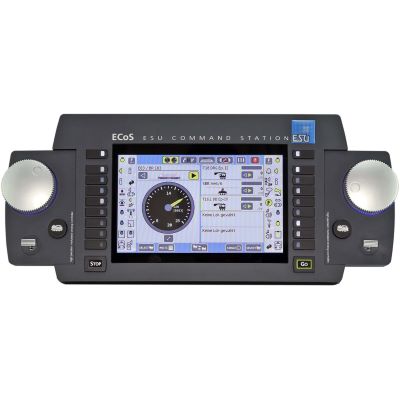
Suitable: ESU ECoS or Uhlenbrock Intellibox 3










Large model railway layouts need more than a powerful track supply. Booster districts, feedback, networking, several handheld controllers, a separate programming track and straightforward operation must be combined into one reliable overall system.
The physical area alone is not decisive. A layout becomes technically demanding when many locomotives run simultaneously, several hidden staging yards are monitored, numerous turnouts are controlled or several operating positions are used. Even a compact layout can be complex when it is fully automated.
The digital command station generates the driving and switching commands. It must support the protocols used by the locomotive and accessory decoders. DCC is especially widespread on two-rail layouts. Märklin layouts frequently use mfx, mfx+ and Motorola. A multi-protocol command station may be useful for a mixed vehicle fleet.
The available track current is calculated according to the consumers operating at the same time, not the number of stored locomotives. Motors, sound decoders, smoke generators, interior lighting and illuminated coaches increase the load. Accessory decoders should preferably be supplied from a separate power source.
A large layout should not be planned as a single electrical circuit. Several booster districts limit the effects of a short circuit and make troubleshooting easier. Feedback modules detect occupied track sections, while LAN, Wi-Fi or USB provides the connection to apps and model railway software.
DCC-, Motorola-, Selectrix- and mfx-compatible vehicles should operate together. A graphical control panel and two physical speed controllers are required.
mfx vehicles, accessories and feedback should work closely together within the Märklin system. Further command stations may be added later.
LAN, Wi-Fi, feedback modules and model railway software are the priorities. Several handheld controllers and apps should be used simultaneously.
Distributed handheld controllers, stable bus lines and easily expandable operating positions are more important than a large permanently installed display.
Sound, smoke and large motors result in greater current consumption. Adjustable track voltage and adequately sized power districts are required.
Long cables, several large-scale locomotives and mobile operation require powerful equipment, robust connections and a clear division of the route into separate districts.
The table shows the typical strengths of each system. The power supply, boosters, handheld controllers, feedback modules and existing decoders must also be checked before a decision is made.
| Command station | Protocols | Track output | Network and bus | Typical application |
|---|---|---|---|---|
| ESU ECoS 2.5 | DCC, M4, Motorola, Selectrix | 6 A, adjustable from 15 to 21 V | LAN, ECoSlink and booster connection | Multi-protocol operation, control panel and mixed vehicle fleets |
| Märklin CS3 plus | mfx, mfx+, Motorola and DCC | Integrated booster; choose a suitable power supply | LAN, CAN, USB and direct S88 connection | Large Märklin layouts and several CS3 devices |
| Roco Z21 | DCC and Motorola | 3 A with adjustable track voltage | LAN, Wi-Fi, X-BUS, R-BUS and LocoNet | Apps, feedback and computer control |
| Roco Z21 XL | DCC | 6 A at 20 V | Wi-Fi, app and Z-CAN for XL boosters | Gauge 0, 1, II and G |
| Uhlenbrock Intellibox 3 | DCC, mfx, Motorola and Selectrix | Integrated output stage | Wi-Fi, LocoNet and additional connections | Several operating positions and multi-protocol operation |
| Lenz LZV200 | DCC and RailCom | 2.5 to 5 A, 11 to 22 V | XpressNet and additional interfaces | Modular DCC layouts with a clear system structure |
| ZIMO MX10 | DCC and ZIMO system functions | Two outputs rated at 12 A and 8 A | CAN, XNet, LAN, USB and LocoNet | Very high output and demanding layouts |
| Massoth DiMAX 1210Z | DCC | Selectable 4, 7 or 12 A, 14 to 22 V | DiMAX bus, wireless control and USB | Large garden railways and powerful large-scale vehicles |
Divide the main station, hidden staging yard, main line, branch line and locomotive depot into logical power districts. A short circuit will then not stop the entire layout.
Every automatically operated section requires unambiguous feedback. Entry, braking and stopping sections must match the control software being used.
Turnouts, signals, servos and lighting should not place an unnecessary load on the traction supply. Separate power supplies improve clarity and operational reliability.
LocoNet, XpressNet, CAN, ECoSlink, S88 and R-BUS perform different tasks. Use each bus specifically for operation, feedback and expansion.
A permanent LAN connection is normally especially reliable for computer control. Wi-Fi is ideal for handheld controllers, smartphones and tablets.
On long layouts, operators at several positions should be able to switch off the track supply quickly. Large systems support additional controllers or external stop buttons for this purpose.
This calculator does not replace an actual measurement. Enter realistic average values for your vehicles and illuminated trains.
Plan at least two separate power districts.
Large layouts in these scales frequently have long routes, extensive hidden staging yards and many vehicles standing ready at the same time. Each locomotive requires little current, but numerous illuminated trains can create a substantial combined load.
ECoS, Z21, Intellibox, Lenz LZV200, YaMoRC and CabControl.
Adjustable track voltage, finely divided feedback sections and short shutdown times.
Numerous sound locomotives, long passenger trains and several stations require a clear separation between the traction supply and accessory supply. On H0 centre-conductor layouts, the existing mfx and Motorola fleet determines the most suitable system.
Central Station 3, ECoS, Intellibox 3, Z21, Lenz and ZIMO.
Protocol compatibility, booster transitions and several ergonomic operating positions.
Large motors, smoke, sound and long cable runs increase the requirements. High output must be supported by appropriately sized cables, secure isolation gaps and suitable short-circuit protection.
Z21 XL, ZIMO MX10, Massoth DiMAX and PIKO G SmartControl.
Track voltage, cable cross-section and protected installation of the electronics.
The product selection combines command stations with suitable handheld controllers and expansions. For individual controllers, check which command station, connection box or network component is additionally required.
DCC and multi-protocol systems for long routes, hidden staging yards, feedback and computer control.
A powerful command station with two speed controllers, networking and a graphical control panel.
View product →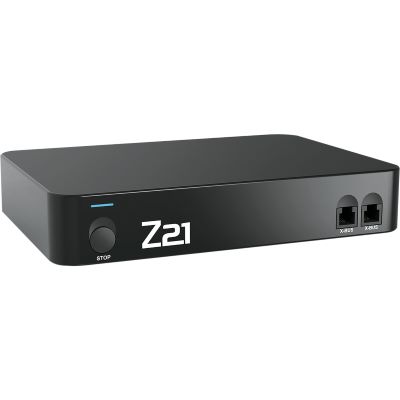
An open network command station with numerous feedback and handheld-controller connections.
View product →
Two speed controllers, a colour display, Wi-Fi and versatile system connections.
View product →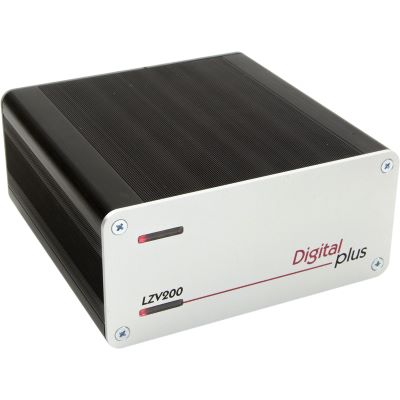
A robust DCC base unit with adjustable voltage and XpressNet expansion.
View product →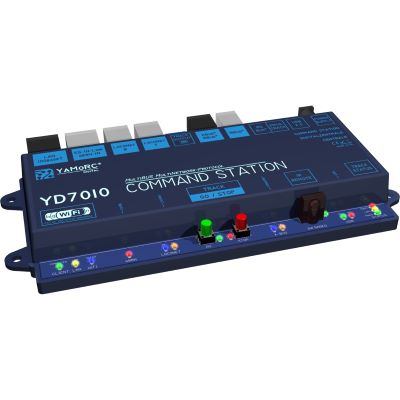
A networked DCC command station for apps, computers and existing digital components.
View product →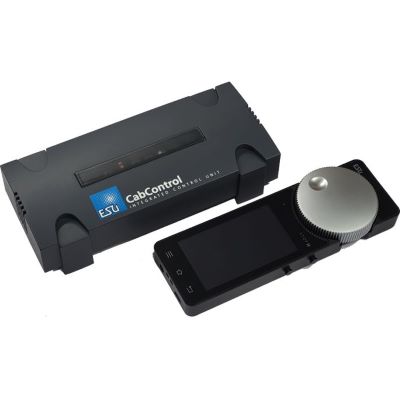
A DCC system with an ergonomic wireless controller for extensive layouts.
View product →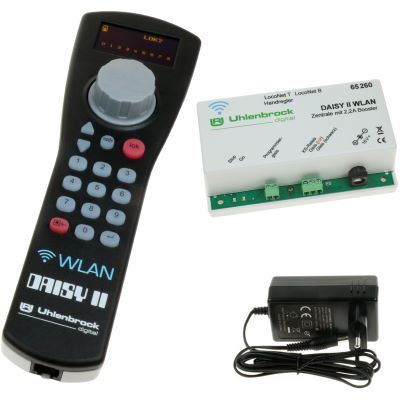
A wireless DCC set for additional operating positions and modular expansion.
View product →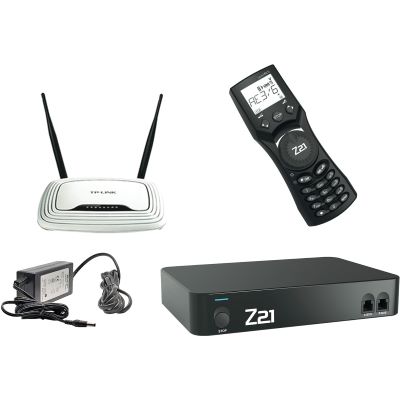
A Z21 system with a wireless controller for train and layout operation.
View product →Command stations and additional operating positions for Märklin, multi-protocol operation and large home layouts.
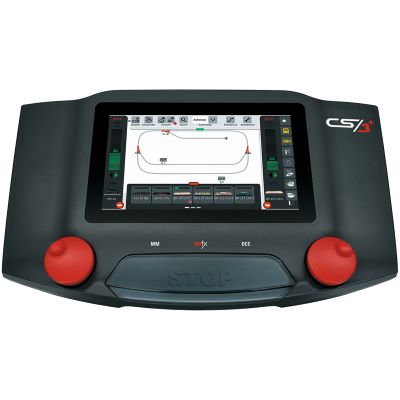
A powerful system command station with networking, touchscreen and feedback connection.
View product →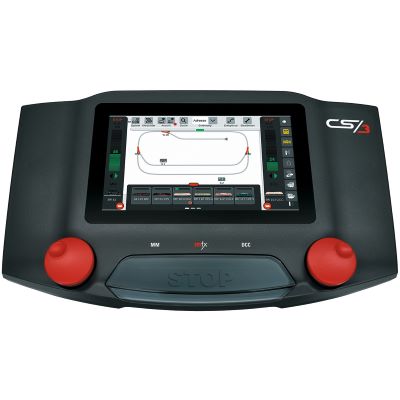
A touchscreen command station for locomotives, accessories and routes.
View product →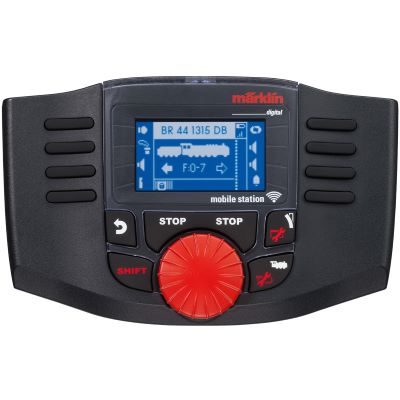
A wireless operating position for compatible Märklin network components.
View product →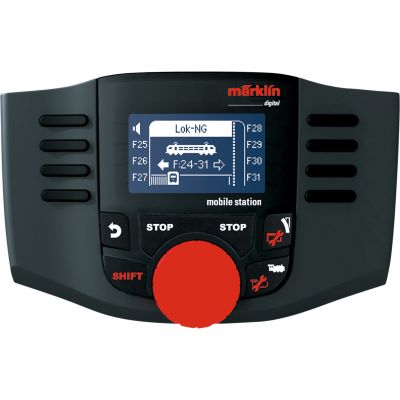
A convenient speed controller for shared driving and shunting.
View product →
Two additional speed controllers for extensive Intellibox and LocoNet layouts.
View product →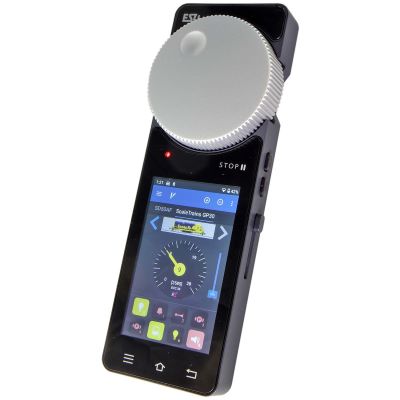
A mobile operating position with a motorised speed controller for supported command stations.
View product →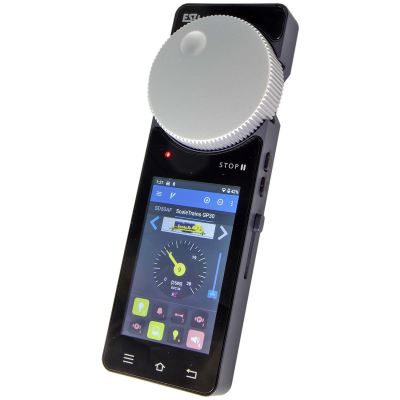
A mobile control device for extensive layouts and several operating locations.
View product →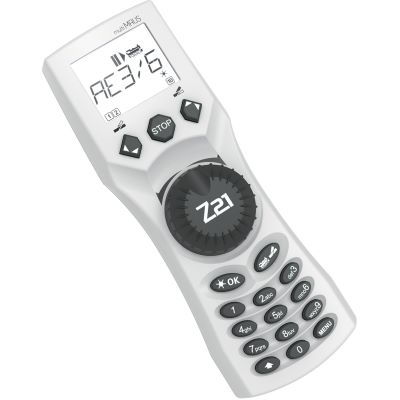
Direct control of locomotives and accessories through the X-BUS.
View product →Powerful digital command stations and mobile controllers for large vehicles, long cable runs and demanding garden railway operation.
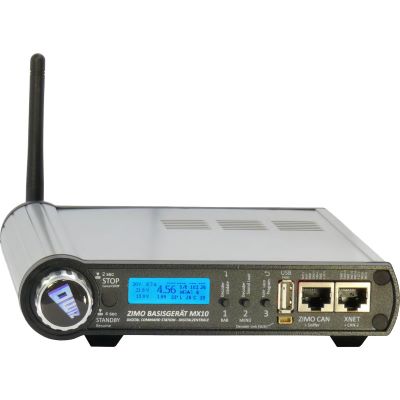
Two separately adjustable track outputs and numerous system connections.
View product →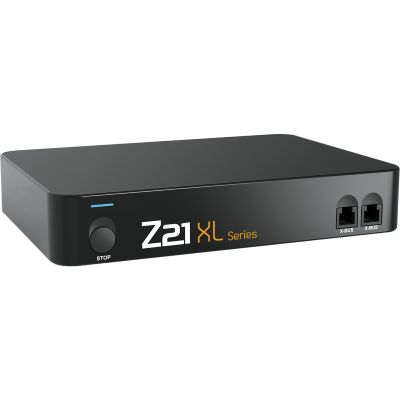
Six amperes, Wi-Fi control and Z-CAN for additional XL boosters.
View product →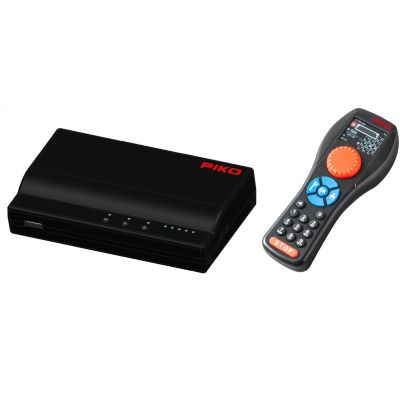
Wireless DCC control for several large Gauge G vehicles.
View product →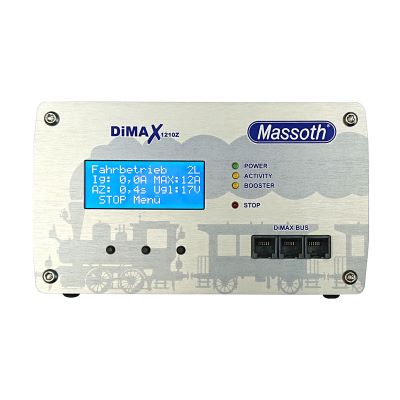
Adjustable output power for extensive Gauge G layouts.
View product →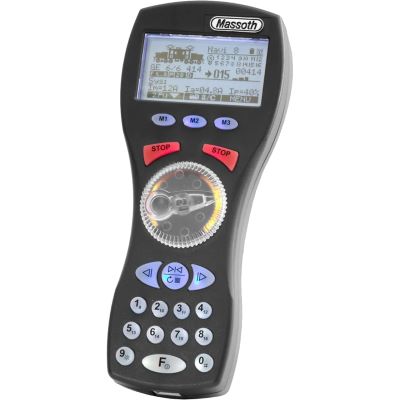
A mobile handheld controller for convenient operation alongside the garden railway.
View product →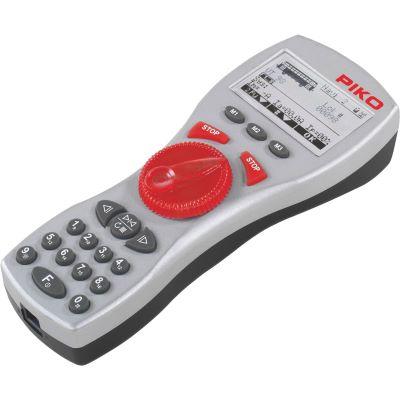
A handheld controller for wired and wireless large-scale operation.
View product →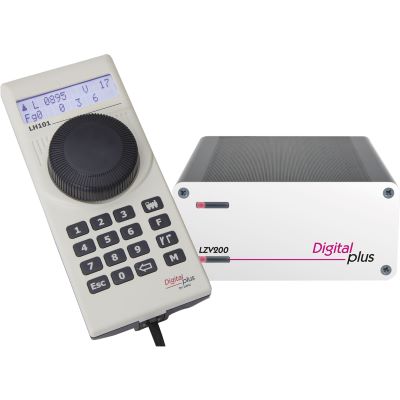
A powerful LZV200 system with a direct handheld controller for large DCC layouts.
View product →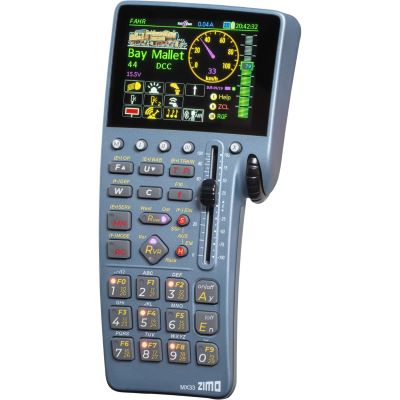
A comprehensive mobile operating position for the powerful ZIMO system.
View product →The Z21, Lenz, YaMoRC and ZIMO systems are examples suitable for a fleet consisting entirely of DCC vehicles. ECoS and Intellibox are interesting options for mixed decoder fleets. Märklin layouts with numerous mfx vehicles are frequently planned around a Central Station.
Add the measured current consumption of all locomotives, illuminated trains and other consumers operating at the same time, then include an appropriate reserve. Several suitably rated booster districts are normally more reliable than one extremely powerful output.
A district should be operationally logical and easily accessible. Suitable boundaries include stations, hidden staging-yard levels, route branches and locomotive depots. The maximum load must not exceed the permissible rating of the booster, cables and feedback modules.
Feedback modules indicate whether track sections are occupied. This allows routes to be protected, hidden staging yards to be monitored and trains to be tracked by software. Detection sections should be considered during track planning for reliable automatic operation.
Many modern command stations support several operating methods in parallel. One person can control the layout panel with an app while other operators drive trains with handheld controllers. Check how many devices the system and local network can manage reliably.
LAN is normally the more stable connection for a permanently installed computer. Wi-Fi provides freedom of movement for handheld controllers, smartphones and tablets. In large rooms, test the wireless network and expand it with suitable access points where necessary.
Massoth DiMAX, PIKO G SmartControl, Z21 XL and ZIMO MX10 provide solutions for large scales. In addition to output power, weather-protected installation, large cable cross-sections, several power feeds and reliable short-circuit protection are important.
This depends on its bus and booster connections. Some systems can be expanded with power amplifiers, feedback modules and network interfaces. When important connections or protocols are missing, a planned change of system may be more economical.
The main model railway guide covers scales, digital technology, wiring, feedback, track planning, layout construction, vehicles and maintenance.