
Computerised Numbers · InterCity · Städteexpress
Era IV Model Railway | DB & DR 1965–1990
Class 103 at the head of an InterCity, Class 218 on branch lines, Ludmilla locomotives and Städteexpress trains on the Deutsche Reichsbahn, Silberling coaches, double-deck trains, container traffic and bold new colour schemes: Era IV combines classic railways with the modern railway traffic of the 1970s and 1980s.
1965–1990
IVa · IVb · IVc
DB · DR
Computerised Numbers
InterCity · Städteexpress
Z · N · TT · H0 · H0m · G
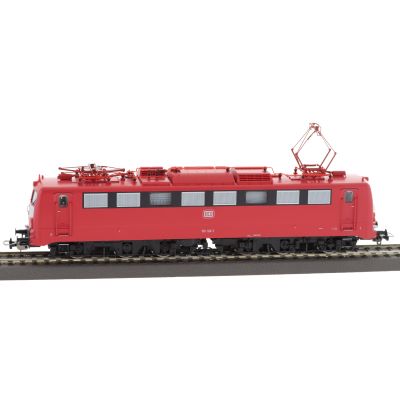
A New Numbering System Changes the Railway
What Does Era IV Mean in Model Railways?
Under NEM 806 D, German Era IV in model railways covers the period from 1965 to 1990. Its most important characteristics include internationally standardised vehicle numbers and new computer-compatible class numbers for locomotives and multiple units. The era can therefore often be recognised from the running number alone.
The Deutsche Bundesbahn electric locomotive E 10, for example, becomes Class 110. The V 200 appears as Class 220. In East Germany, the V 180 becomes Class 118, the V 200 becomes Class 120 and the E 42 becomes Class 242. These renumberings did not happen on a single day, so early Era IV offers many interesting transitional operating conditions.
The railway scene also becomes considerably more colourful. At the Deutsche Bundesbahn, classic green, TEE red and beige, Pop colours, ocean blue and beige and later orient red overlap. The Deutsche Reichsbahn combines wine-red diesel locomotives, green passenger coaches, fawn-and-beige vehicles, orange-and-beige Städteexpress formations and red or burgundy electric locomotives.
The range of operations is exceptionally wide: InterCity, TEE, D trains, S-Bahn services, push-pull trains, Städteexpress, transit trains, international passenger trains, local freight trains, container trains and heavy industrial traffic all belong to this era. Steam locomotives also remain in service for longer at the DR, while narrow-gauge railways continue operating steam traction beyond the end of the era.
From Renumbering to German Reunification
1965–1970
1970–1980
1980–1990
How Do Era IVa, IVb and IVc Differ?
Three periods make it easier to combine computerised numbers, vehicle colours, train types and road vehicles consistently. A layout representing 1968 looks noticeably different from a railway scene set in 1988.
Era IVa – Renumbering and Transition
Passenger and freight rolling stock receives international markings, followed by new locomotive and multiple-unit numbers. Many locomotives initially retain their Era III colours. Old and new numbering systems can appear side by side during limited transitional periods. Numerous steam locomotives continue to operate at both DB and DR.
Era IVb – InterCity and the Change of Traction
The DB launches its initially first-class-only InterCity system and experiments with Pop colours. Red and beige, followed by ocean blue and beige, become increasingly widespread. Regular DB steam operation ends in 1977. Steam remains more important at the DR while Classes 118, 120 and 132 take over an increasing number of services.
Era IVc – Städteexpress and New Technology
Two-class InterCity trains, Class 120 and orient red towards the end of the period characterise the DB. At the DR, Classes 132 and 243, double-deck trains, Bmhe coaches and Städteexpress services are typical. Steam largely disappears from standard-gauge operation while remaining part of everyday service on several narrow-gauge railways.
Two Railway Administrations – Two Distinctive Model Railway Worlds
Deutsche Bundesbahn and Deutsche Reichsbahn in Era IV
DB and DR develop their own vehicle fleets, colour concepts and train services. It is therefore worthwhile choosing deliberately between West Germany, East Germany or a believable international or inter-German border-traffic theme.
DB
Deutsche Bundesbahn
InterCity · TEE · S-Bahn · Ocean Blue/Beige
The Bundesbahn completes the transition from steam to diesel and electric traction. Fast long-distance services and regular interval timetables gain importance, while Silberling coaches, railbuses and diesel locomotives continue to define branch-line operation.
- Classes 103, 110, 111, 120, 140, 150, 151 and 194
- Classes 211/212, 215/216, 218, 220/221, 260 and 290
- Silberling, UIC-X, Eurofima and TEE coaches
- InterCity, TEE, D trains, S-Bahn and local traffic
- Pop colours, red/beige, ocean blue/beige and orient red
- Container, car, tank and heavy freight trains
DR
Deutsche Reichsbahn
Städteexpress · Ludmilla · Reko Locomotives · Narrow Gauge
Steam locomotives remain present for longer at the DR. Powerful diesel and electric locomotives simultaneously take over more duties. International connections and extensive freight operation create an especially varied model railway world.
- Classes 01.5, 35.10, 50.35, 52.80 and 65.10
- Classes 106, 110, 118, 119, 120, 130, 131 and 132
- Classes 211, 242 and 243 in electric operation
- Reko, Bmhe, Y/B and double-deck coaches
- Städteexpress, transit, holiday and international trains
- Industrial traffic and important narrow-gauge operation
More Colour on the Railway
Typical Colours of the 1970s and 1980s
Era IV is especially attractive visually because several colour schemes follow one another and partially overlap. Choosing a specific year makes it possible to create a particularly characteristic railway scene.
TEE Red/Beige
DB long-distance traffic
Ocean Blue
DB from the mid-1970s
Beige
DB combination colour
Orient Red
Late DB Era IV
Wine Red
DR diesel locomotives
Orange/Beige
DR Städteexpress
Do Not Mix Colour Schemes Arbitrarily
Ocean blue/beige, Pop colours, orient red and Städteexpress colours belong to different periods and types of service. Defining a specific year therefore makes model selection considerably easier.
The End of Steam and Modern Traction
103
218
50
IC
EX
S
F
99
Which Vehicles Suit Era IV?
Fast Electric Locomotives
Classes 103, 110, 111 and later 120 haul prestigious DB passenger trains. At the DR, Classes 211, 242 and 243 handle important electric duties.
Diesel Locomotives
Classes 211/212, 218, 220 and 290 define many West German routes. In East Germany, Classes 110, 118, 119, 120 and 132 represent diesel operation.
The Final Steam Locomotives
The DB still operates steam locomotives during early Era IV. At the DR, rebuilt and other steam locomotives remain in service considerably longer.
InterCity and TEE
Red-and-beige coaches, later two-class InterCity trains and fast electric locomotives make DB long-distance traffic especially attractive.
Städteexpress
Orange-and-beige coaches with Class 132, 211, 242 or 243 locomotives are among the best-known passenger train themes of the later Deutsche Reichsbahn.
S-Bahn and Local Traffic
Silberling coaches, double-deck trains, driving trailers and modern electric locomotives enable intensive push-pull operation without constantly repositioning locomotives.
Freight Traffic
Tank, bulk, refrigerated, container, car and heavy-duty wagons allow both local transfer workings and long block trains.
Narrow-Gauge Railways
Steam remains alive particularly on DR routes. Saxony and the Harz offer strong prototypes for H0e, H0m, TT narrow gauge and garden railways.
Prototypical Operation
DB Long-Distance
DR Long-Distance
Local Traffic
Freight Traffic
Compare Railway Companies
Typical Train Formations of Era IV
InterCity with Class 103
A Class 103 with red-and-beige express coaches is the classic formation. Early InterCity trains are initially first-class only; from 1979 both classes become part of the regular InterCity system.
Städteexpress
Class 132 or electric Classes 211, 242 or 243 with orange-and-beige passenger coaches. Dining and reinforcement coaches allow varied train formations.
Silberling or Double-Deck Train
DB Silberling coaches with Classes 111, 141, 211 or 218 are ideal. At the DR, double-deck, Reko or Bmhe coaches suit diesel and electric locomotives.
Transfer Working or Block Train
Mixed transfer workings are excellent for small layouts. Large main lines allow coal, chemical, ore, petroleum and container trains with considerably greater train lengths.
InterCity or Städteexpress?
Both themes are highly recognisable. Where space is limited, train length can be reduced while concentrating on a characteristic section of the formation.
Stations, Industry and Road Traffic
1
2
3
4
How to Make an Era IV Layout Look Convincing
Old station buildings meet modern rolling stock. Semaphore signals may still stand alongside newer colour-light signals. This contrast between historic infrastructure and increasingly modern operation is exactly what makes Era IV so interesting.
Choose a Specific Year
A railway scene representing 1971 differs considerably from one set in 1988. Locomotive numbers, liveries, road vehicles and train types should therefore first be coordinated around a target year.
Practical Rule
Choose the Year Before the Vehicle Colour
This helps avoid combinations of Pop colours, orient red and train types that do not belong to the same period.
Do Not Forget Freight Facilities
A loading road, goods shed, tank farm, sawmill or factory creates meaningful wagon movements. Large industrial sidings can be particularly characteristic on East German layouts.
Combine Semaphore and Colour-Light Signals
Mechanical railway technology does not disappear immediately. Modernised main lines may use colour-light signals while branch lines continue to operate with semaphore signals and older signal boxes.
Choose Period-Appropriate Road Vehicles
West Germany: VW Golf, Beetle, Mercedes, Opel and Ford. East Germany: Trabant, Wartburg, Barkas, Robur, IFA W50 and Lada. Older vehicles can still appear in everyday road scenes.
From Z Gauge to Garden Railways
Which Gauge Is Suitable for Era IV?
H0 offers the largest selection. TT is particularly strong for Deutsche Reichsbahn vehicles. N and Z are excellent for long main-line trains in limited spaces. H0e and H0m allow convincing narrow-gauge operation.
| Gauge | Scale | Particular Strength | Era IV Themes |
|---|---|---|---|
| Z | 1:220 | Very low space requirements | DB main lines, construction trains and compact freight trains |
| N | 1:160 | Long passenger and freight trains | DB, DR, SBB, ÖBB and international main lines |
| TT | 1:120 | Extensive operation in a moderate space | DR, DB, ČSD, PKP and Städteexpress |
| H0 | 1:87 | Largest selection | InterCity, S-Bahn, freight traffic and Europe |
| H0e / H0m | 1:87 | Narrow gauge and tight radii | DR, Harz, Saxony, RhB and ÖBB |
| 0 / 0e | approx. 1:45 | High level of detail | Branch lines, shunting and industry |
| 1 | 1:32 | Large locomotive models | DB diesel, electric and final steam locomotives |
| G | approx. 1:22.5 | Large-scale and garden railways | DB, DR, narrow gauge and freight traffic |
From Individual Models to Complete Trains
Suitable Product Categories for Era IV
Steam Locomotives
The end of steam, DR Reko locomotives and narrow gauge
Diesel Locomotives
Classes 218, 290, 118, 120, 132 and other classics
Electric Locomotives
Classes 103, 111, 120, 150, 242 and 243
Passenger Coaches
Silberling, InterCity, Städteexpress and double-deck coaches
Freight Cars
Tank, container, heavy-duty and bulk-goods wagons
Manufacturer Worlds
Brands with a Large Era IV Selection
The manufacturer logos lead directly to the corresponding brand pages at Modellbahnshop. The manufacturers complement one another especially well in H0, TT, N, Z and large scales.


Current Shop Selection
Era IV Models by DB, DR, Gauge and Vehicle Type
The selection combines DB, DR, standard gauge and several scales. When the page is opened, it also searches suitable English Modellbahnshop product categories and theme pages. Archived product pages are not added to the dynamic selection.
Current Era IV models are being loaded …
PIKO
51659 Class 150 in Orient Red
Powerful Deutsche Bundesbahn electric locomotive in the distinctive late Era IV colour scheme.
View Product →
Roco
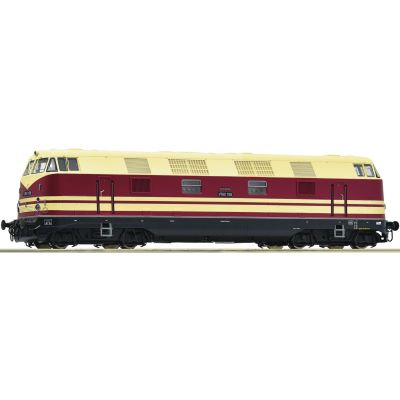
7310085 Class 118 Diesel Locomotive
Versatile Deutsche Reichsbahn diesel locomotive for passenger, express and freight trains.
View Product →
PIKO
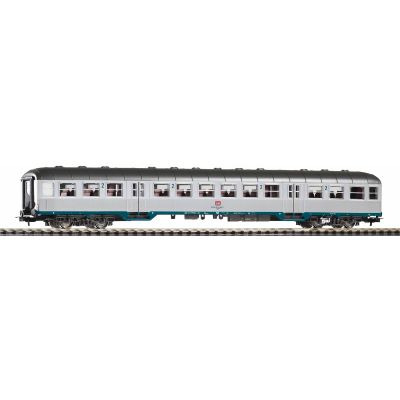
23603 Silberling 2nd Class
Classic n-coach for push-pull, local and semi-fast trains of the Deutsche Bundesbahn.
View Product →
PIKO
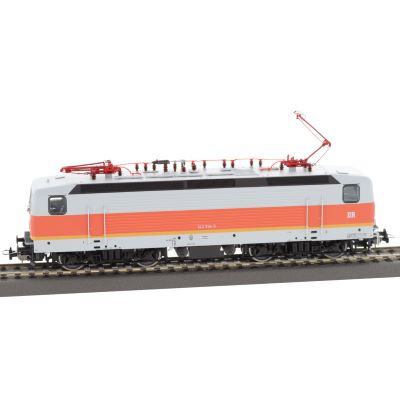
21698 Class 143 S-Bahn
Typical electric locomotive for modern DR local and S-Bahn traffic of late Era IV.
View Product →
Tillig
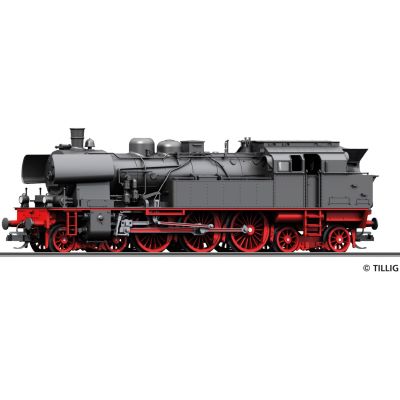
04205 Steam Locomotive 78 1030-2
Classic passenger tank locomotive with a computerised running number for suburban and semi-fast DR trains.
View Product →
Fleischmann
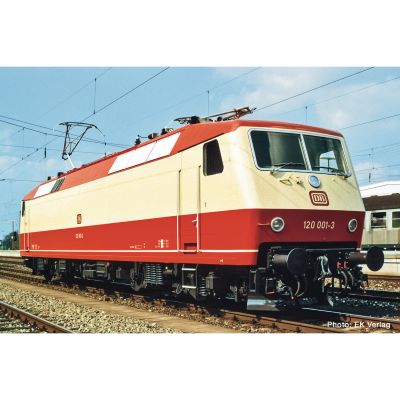
7560059 Class 120 001-3
Pre-series locomotive and technological pioneer of modern three-phase electric locomotives.
View Product →
BRAWA
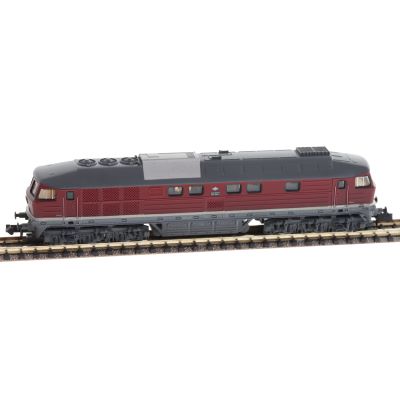
61044 Class 132 306-2
Heavy diesel locomotive for Städteexpress services, international passenger trains and freight traffic.
View Product →
Märklin
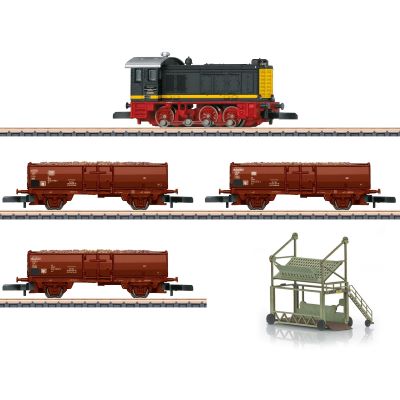
81773 VGH Beet Train
Complete seasonal freight train for agricultural traffic on a northern German branch railway.
View Product →
Frequently Asked Questions
Questions and Answers About Era IV
Key answers about the historical period, computerised numbers, DB and DR, colour schemes, train formations, gauges and layout planning.
When Did Era IV Begin and End?
Under NEM 806 D, German Era IV covers the period from 1965 to 1990. The model railway trade often uses the simplified period of roughly 1970 to 1990 because the new locomotive numbers only became fully visible towards the end of the 1960s.
How Can You Recognise Era IV Vehicles?
International wagon markings and computer-compatible locomotive running numbers are especially characteristic. The E 10 becomes Class 110, for example, while the DR V 180 becomes Class 118.
What Is the Difference Between IVa, IVb and IVc?
IVa from 1965 to 1970 is the transitional period for new vehicle markings. IVb from 1970 to 1980 brings InterCity, Pop colours and a strong change of traction. IVc from 1980 to 1990 represents the two-class InterCity, Class 120, Städteexpress, Class 243 and the increasingly modern railway of the late 1980s.
Which Colours Are Typical of the Deutsche Bundesbahn?
Chrome oxide green, TEE red and beige, various Pop colours, ocean blue and beige and, towards the end of the era, orient red are characteristic. The colour schemes should match the selected year.
Which Colours Are Typical of the Deutsche Reichsbahn?
Wine-red diesel locomotives, green or fawn-and-beige passenger coaches, orange-and-beige Städteexpress coaches and red or burgundy electric locomotives are typical examples.
Did Steam Locomotives Still Operate in Era IV?
Yes. Regular steam operation at the Deutsche Bundesbahn ended in 1977. Steam locomotives remained in scheduled standard-gauge service for longer at the Deutsche Reichsbahn, while several narrow-gauge railways used steam throughout the entire era.
Which Locomotive Suits a DB InterCity?
Class 103 is the classic InterCity locomotive. Depending on the year and route, Classes 110, 111 or the pre-series and production versions of Class 120 can also be suitable.
Which Locomotive Suits a DR Städteexpress?
Class 132 is particularly typical on non-electrified routes. On electrified lines, Classes 211, 242 and later 243 can be used depending on the period represented.
Can Era III and Era IV Be Combined?
Transitional conditions are especially plausible between 1965 and 1970. The actual lettering and running number are decisive. Vehicles with old and already-renumbered identities can appear together for a limited period.
Which Gauge Offers the Largest Selection?
H0 offers the largest selection. TT is particularly strong for Deutsche Reichsbahn models. N and Z allow long main-line trains in limited space. H0e and H0m are suitable for narrow gauge, while G gauge provides large vehicles.
Which Era IV Layout Requires Little Space?
A small terminus or through station with a Class 211, 212, DR Class 110 or 118, or a railcar works very well. Short push-pull trains and an industrial siding provide plenty of operation.
Can an Era IV Layout Use Digital Control?
Yes. The era describes only the historical prototype. Decoders, sound, digitally controlled turnouts, feedback systems and computer control can be used without difficulty.
Which International Railways Suit Era IV?
SBB, ÖBB, SNCF, FS, NS, ČSD, PKP and other European railway administrations can appear together with DB or DR in international passenger and freight trains.
Why Is Era IV Especially Suitable for Freight Traffic?
Wagonload freight remains important while block trains carrying coal, ore, chemicals, petroleum products, cars and containers become increasingly common. This allows both small transfer workings and long main-line freight trains to be represented.
From Era IV to a Complete Model Railway World
The Model Railway Guide also provides information about gauges, railway companies, vehicles, digital technology, track planning, train formations, scenery and maintenance.