DRG
Deutsche Reichsbahn-Gesellschaft
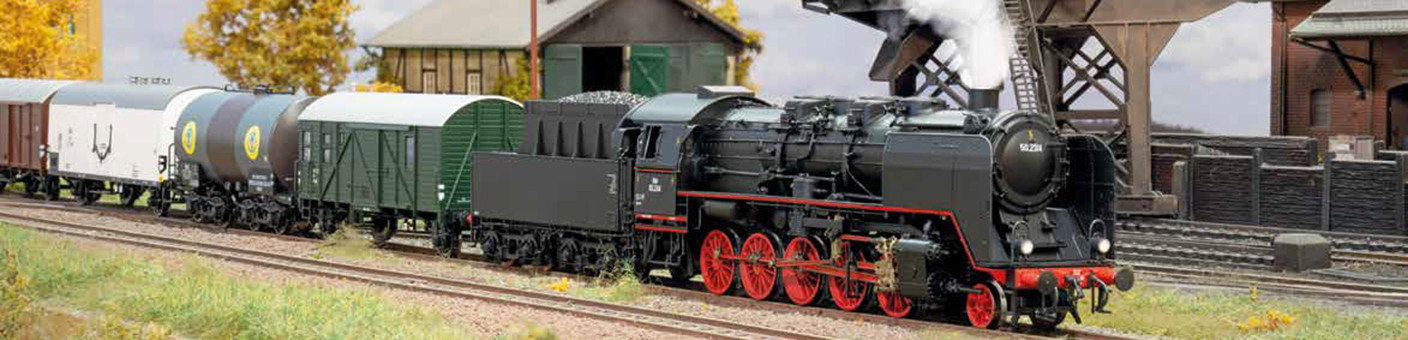
Standard steam locomotives, early electric locomotives, express trains and extensive freight traffic make Era II a particularly varied theme.
Discover DRG →
Discover historic and modern railway companies ranging from DB, DR and DRG to SBB, ÖBB, SNCF and RhB, as well as RegioJet, FlixTrain, Railpool, METRANS, TX Logistik and other private operators – now with a large logo quick-selection, gauge overview and current models.
Model Railway Companies | DB, SBB & Private Railways provides an overview for anyone who wants to choose rolling stock not only by manufacturer but also according to a specific railway prototype. The railway company determines the livery, lettering, typical locomotives, coaches, multiple units, operating regions and often the appropriate era.
A West German layout from Eras III and IV, for example, is strongly associated with the Deutsche Bundesbahn. East German themes focus on the Deutsche Reichsbahn, Städteexpress trains, Reko coaches and typical diesel and electric locomotives. Switzerland offers completely different railway worlds with SBB, BLS and RhB: international Gotthard trains, Lötschberg traffic, red narrow-gauge trains and Alpine panoramic trains.
Modern railway modellers can also design layouts around private railway operators. RegioJet and FlixTrain represent contemporary long-distance passenger services, while METRANS and TX Logistik are particularly interesting for freight trains. Railpool locomotives are leased across many European networks, RailAdventure transfers railway vehicles and TRI Train Rental enables unusual passenger-train formations.
The choice should therefore always be made together with the era, gauge and the desired type of operation.
The logos lead directly to the respective railway themes, making it especially easy to select state railways, private operators, transport companies and wagon keepers.
 DB
DB
 DB
DB
 SBB
SBB
 ÖBB
ÖBB
 RhB
RhB
 FS
FS
 DSB
DSB
 NS
NS
 PKP
PKP
 MÁV
MÁV
 ČD
ČD
 RJ
RJ
 RP
RP
 FLIX
FLIX
 ALEX
ALEX
 ODEG
ODEG
 PRESS
PRESS
 VTG
VTG
 GATX
GATX
 WASCOSA
 DHL
DHL
German railway history can be divided particularly clearly by railway administration on a model railway. Lettering, liveries and rolling stock changed significantly from era to era.
Standard steam locomotives, early electric locomotives, express trains and extensive freight traffic make Era II a particularly varied theme.
Discover DRG →Reko coaches, Städteexpress trains, double-deck trains, Class 118, Class 132 and Class 243 shape East German layouts of Eras III and IV.
Discover DR →
Steam locomotives, V 100, V 200, Silberling coaches, Class 103 and classic Intercity trains represent West German railway scenes of the post-war period.
Discover the Bundesbahn →Private operators add variety through distinctive liveries and unusual vehicle combinations. From local passenger services to vehicle transfers, they provide many realistic possibilities for Eras V and VI.
Yellow, green and white regional services with modern multiple units and double-deck trains.
Discover ODEG →
Blue-and-white regional trains for Bavaria and cross-border services.
Discover Alex →Rental locomotives and passenger coaches allow unusual replacement, special and charter trains on modern layouts.
Discover TRI →Locomotives, coupling wagons and vehicle transfers are ideal for unusual train formations and brand-new railway vehicles.
Discover RailAdventure →
Blue locomotives combine historic rolling stock with modern freight, engineering and special-train operation.
Discover PRESS →Saxon steam railways with steam locomotives, passenger coaches and characteristic narrow-gauge trains.
Discover SDG →SBB, BLS, RhB, Matterhorn Gotthard Bahn and ÖBB combine spectacular scenery with varied passenger and freight operation.
Crocodile, Re 4/4, Re 6/6, Re 460 and Giruno for Swiss main lines.
Discover SBB →Lötschberg Railway, regional transport, car shuttle services and international freight trains.
Discover BLS →
Allegra, Bernina Express and Glacier Express for impressive metre-gauge routes.
Discover RhB →Rack and metre-gauge operation between Zermatt, Brig, Andermatt and Disentis.
Discover MGB →
Taurus, Vectron and Railjet alongside historic Austrian electric and diesel locomotives.
Discover ÖBB →Cross-border EuroCity, night, high-speed and freight trains make European railway administrations especially interesting. Rolling stock from several countries can be used together convincingly.
TGV, Corail, French electric and diesel locomotives and freight transport.
Discover SNCF →AVE, passenger trains and Spanish electric and diesel locomotives.
Discover RENFE →
Italian passenger trains, ETR multiple units and classic and modern locomotives.
Discover Italy →
NoHAB diesel locomotives and Danish passenger trains for Scandinavian layouts.
Discover DSB →
Yellow-and-blue trains, Hondekop and international Dutch connections.
Discover NS →
Yellow passenger trains and modern international services across Central Europe.
Discover RegioJet →
Green long-distance trains and modern Vectron locomotives for contemporary main lines.
Discover FlixTrain →In modern freight transport, locomotives, railway undertakings and wagon keepers from different countries come together. This is precisely what makes varied and believable block trains possible.
Container trains and modern multi-system locomotives for international corridors.
Discover METRANS →Intermodal freight trains and strikingly liveried modern electric locomotives.
Discover TX Logistik →
Leased electric locomotives can appear with numerous European railway operators.
Discover Railpool →
Tank, sliding-tarpaulin and specialist wagons for realistic freight trains.
Discover VTG →
Tank and leasing wagons for chemical, mineral-oil and industrial traffic.
Discover GATX →
Modern specialist and tank wagons with the distinctive orange brand identity.
Discover Wascosa →The manufacturer logos take you directly to the corresponding brand ranges at Modellbahnshop.


Not every railway company is equally well represented in every model size. H0 offers the greatest overall variety, while TT is particularly strong for German and Eastern European themes. N enables long international trains, H0m and H0e are important for narrow-gauge railways and G gauge is especially suitable for large Alpine vehicles.
| Gauge | Particular Strength | Typical Railway Companies |
|---|---|---|
| Z Gauge | Smallest classic production model size | DB, SBB, ÖBB and selected international railways |
| N Gauge | Long passenger and freight trains in limited space | DB, SBB, ÖBB, SNCF, FS, DSB, NS and freight operators |
| TT Gauge | Germany plus Central and Eastern Europe | DR, DB, ČD, ČSD, PKP, MÁV, PRESS, EBS and ITL |
| H0 Gauge | Largest selection of vehicles and manufacturers | Almost all railway companies shown on this page |
| H0e / H0m / TTe | Narrow gauge and mountain railways | RhB, MGB, SDG and selected DR and ÖBB railways |
| 0 / Gauge 1 | Large, highly detailed vehicle models | DB, DR, SBB and selected European prototypes |
| G / IIm | Garden railways and large-scale narrow gauge | RhB, SDG, DR, ÖBB and various private railways |
The selection begins with current example models and can be expanded directly from the railway-company theme pages in the shop. Search and filters help narrow locomotives, multiple units and coaches or wagons by company and gauge.
Current model railway products are being added from the relevant theme pages.
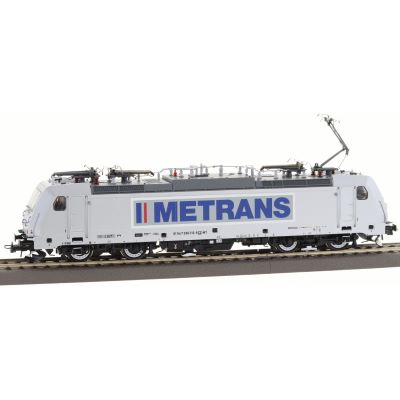
Modern multi-system locomotive for container and international freight trains.
View Product →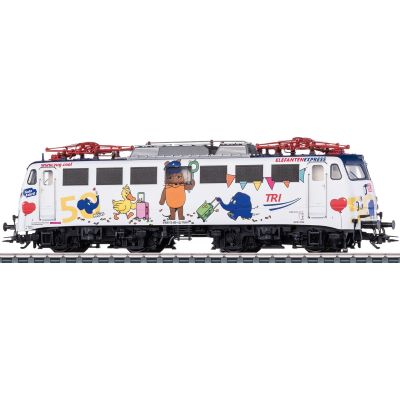
Characteristic electric locomotive for replacement, rental and special trains.
View Product →
Distinctive green electric locomotive for contemporary long-distance trains.
View Product →A clear historical period prevents unwanted mixtures. DRG primarily belongs to Era II, Deutsche Bundesbahn and DR define Eras III and IV, while modern private railway companies mainly belong to Eras V and VI.
Even changed logos, running numbers or liveries can indicate a different era. For prototype-oriented layouts, it is therefore worth checking the precise vehicle lettering.
Gotthard, Lötschberg, Bernina, Saxon narrow gauge or a modern container corridor all require different rolling stock. A clearly defined route theme simplifies every subsequent purchasing decision.
International passenger and freight trains can contain vehicles from different countries. On main lines in particular, this mixture is highly prototypical.
SBB, ÖBB, DB, SNCF and RegioJet are suitable for extensive passenger services. METRANS, TX Logistik, PRESS and EBS create strong accents in modern freight transport.
A wagon keeper is not automatically the railway company operating the train. This distinction makes particularly realistic freight-train combinations possible.
H0 offers the broadest selection, TT is interesting for many German and Eastern European prototypes and N is excellent for long trains. RhB and MGB, on the other hand, often lead to H0m or G gauge.
In addition to the gauge, the power system, couplings, digital equipment and required minimum radius must be compatible with the existing model railway.
Answers covering selection by era, gauge, country and desired type of operation.
The range extends from DRG, DR and Deutsche Bundesbahn through DB, SBB, ÖBB, SNCF, FS, RENFE, PKP and ČD to modern private operators such as RegioJet, FlixTrain, METRANS, TX Logistik, PRESS and many other companies.
For German layouts, DB, Deutsche Bundesbahn and Deutsche Reichsbahn are among the most extensive themes. Internationally, SBB, ÖBB and SNCF are also strongly represented. The exact selection additionally depends on the chosen gauge.
Yes. International passenger trains, border stations and freight trains often contain rolling stock from several railway companies. A believable period and plausible route are the decisive factors.
DRG refers to the Deutsche Reichsbahn-Gesellschaft of Era II. In the model railway sector, DR usually means the Deutsche Reichsbahn of the GDR. The Deutsche Bundesbahn represented West Germany from 1949 until 1993; Deutsche Bahn AG was then established in 1994.
SBB, BLS and ÖBB are particularly suitable for standard-gauge Alpine routes. For narrow-gauge mountain railways, the Rhaetian Railway and Matterhorn Gotthard Bahn are characteristic prototypes.
METRANS, TX Logistik, PRESS, EBS and ITL are attractive Era VI themes. Railpool locomotives and wagons from VTG, GATX and Wascosa further expand the possible train formations.
In addition to DB, SBB, ÖBB, SNCF and other state railways, RegioJet and FlixTrain offer contemporary and distinctive long-distance themes. TRI can additionally be used for replacement and special services.
Regional and branch-line themes are particularly space-efficient. ODEG, Alex, selected DB and DR routes and narrow-gauge railways allow short trains and compact stations.
The Rhaetian Railway and Matterhorn Gotthard Bahn are especially important metre-gauge themes. They make it possible to recreate viaducts, mountain stations, panoramic trains and Alpine scenery in a highly characteristic way.
A railway company operates passenger or freight train services. Companies such as VTG, GATX and Wascosa, by contrast, mainly own or lease freight wagons that can be used in trains operated by different railway undertakings.
The comprehensive Model Railway Guide also provides information on gauges, eras, digital technology, track, layout planning, rolling stock and scenery.