Modellbahn Keks
Welcome!
Our cookies offer you a fast, relaxed and full-featured shopping experience. Some are necessary to operate the website and its functions. Others help us to improve our services. If you agree to this, simply consent to the use of cookies for preferences, statistics and marketing by clicking on "OK". Alternatively, you can deactivate individual cookies under "Customise cookies" or all cookies, except those required for the function of our website, under "Reject all".
29 routes to your perfect track plan

TrackAtlas 29 | Track Systems & Track Sets

Your comprehensive guide to the track ranges from Märklin, Trix, Roco, PIKO, Fleischmann, Minitrix, Tillig, Kato, LGB and NOCH. Choose by gauge, track bed, electrical system or layout type and go straight to the relevant guide.

Go straight to the brands

Ten manufacturers, one shared track plan

The logos take you to each manufacturer's page at Modellbahnshop. Alongside track, you will also find rolling stock, technical equipment and accessories from the brand.

Track systems explained

How to find the right model railway track

Track forms the technical and visual foundation of every model railway. It determines the available radii, turnout connections, platform lengths, gradients and future extensions. Your decision should therefore consider more than appearance alone.

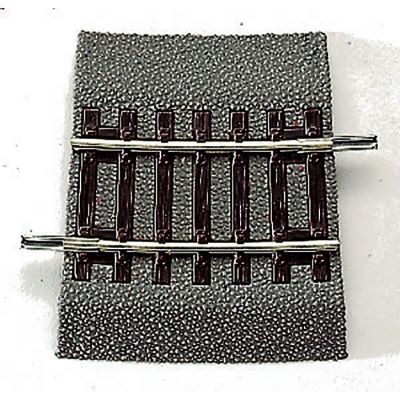
First, choose the scale and gauge. Then consider the electrical system, your preferred track geometry and whether you want an integrated ballast bed. Track with a built-in bed is particularly suitable for quick, stable assembly. Track without a bed allows more individual track alignments, custom ballast profiles and smooth transitions into the scenery.

Straight sections, curves, turnouts, crossings and accessories are generally easiest to combine within a single manufacturer's range. If you want to connect different systems, carefully check rail height, geometry, rail joiners, overall track height and the electrical system.

Unsure about size and space requirements?

The scale and gauge comparison covers Z, N, TT, H0, H0e, H0m, 0, 1 and G, comparing their scales, track gauges, space requirements and typical uses.

View the scale and gauge comparison
Scale 1:87

H0 scale: seven track ranges to choose from

H0 combines an extensive choice of rolling stock with clearly visible detail. Options include two-rail and centre-contact systems, with or without an integrated track bed.

Scale 1:120

TT scale: compact layouts with convincing trains

TT takes up less space than H0 while still offering clearly visible detail. Choose between systems with a ready-made track bed and alternatives for custom scenery construction.

Model track gauges from 6.5 to 45 millimetres

N, H0e, Z, Gauge 1 and garden railways

Smaller scales allow long routes in limited space. H0e models narrow-gauge railways. Gauge 1 and G, by contrast, offer large rolling stock, prominent detail and an impressive presence.

From your first oval to a new route

Ten track set ranges for a well-planned start

Track sets bring together compatible sections for a basic layout, an extension or a predefined track plan. They make getting started easier, but you still need to check space, radius and system compatibility.

From miniature to large scale

Scales and track gauges at a glance

The scale designation describes the model size, while the track gauge is the distance between the rails. Narrow-gauge variants use narrower track at the same model scale. The table shows the main sizes used in European railway modelling and links to relevant guides.

Designation Typical scale Track gauge Typical use Related guide
Z 1:220 6.5 mm Very small layouts, suitcase layouts and long routes in a small space Märklin Z
Nm 1:160 usually 6.5 mm Narrow-gauge railways in N scale Scale and gauge comparison
N 1:160 9 mm Long trains, large stations and compact layouts N gauge track systems
TT 1:120 12 mm A balance between space requirements, train length and detail TT track systems
H0f 1:87 6.5 mm Field railways, industrial railways and very tight routes Scale and gauge comparison
H0e 1:87 9 mm Narrow-gauge, mountain and branch line railways Roco H0e
H0m 1:87 12 mm Metre-gauge railways and Swiss mountain railways Scale and gauge comparison
H0 1:87 16.5 mm A wide choice of models and versatile layout building H0 track systems
0e often 1:45 often 16.5 mm Large narrow-gauge models on layouts of a manageable size Scale and gauge comparison
0 often 1:45 32 mm Detailed rolling stock, modules and shunting layouts Scale and gauge comparison
Gauge 1 1:32 45 mm Large models, display layouts and broad curves Märklin Gauge 1
G / IIm often 1:22.5 45 mm Garden railways and large narrow-gauge rolling stock LGB G gauge
Gauge II 1:22.5 64 mm Very large standard-gauge models and specialist projects Scale and gauge comparison

Other specialist variants, such as Nn3, H0n3, 0m and 1e, follow the same principle: the scale stays the same, while the model track gauge represents the narrower prototype track. Always check the manufacturer's specifications for compatibility between particular vehicles and track.

A guide before buying your first track

Find the right track system in four steps

The best choice depends on your space, operating concept and technical requirements. Plan beyond the first oval to include stations, sidings, future turnouts and the longest vehicles you intend to run.

1

Choose the scale and gauge to suit your space and train lengths

Practical check: available space
A small but crucial detail: your longest planned train

H0 offers a wide choice, TT saves space and N allows long trains. Z suits very small projects. Gauge 1 and G need considerably more room, but their detail makes a strong impression.

2

Match the electrical system to your rolling stock

In H0, you need to distinguish between two-rail and centre-contact operation. Track, locomotives, wheelsets and current collection must suit the chosen system. Coaches and wagons can often be converted, but locomotives need the appropriate technical specification.

3

Choose a track bed to suit your construction method

Track with a bed is quick to lay, holds its shape and is practical for changing layouts. Track without a bed offers more freedom with track height, ballast colour, embankments, transition curves and station approach design.

4

Plan for geometry and future extensions

Check the available radii, long-radius turnouts, curved turnouts, flexible track, parallel track spacing and point motors. A suitable system should support both your first steps and the intended final layout.

Answers for planning and expanding your layout

Frequently asked questions about model railway track systems

These answers help you choose between scales, manufacturers, track beds and different types of layout.

Which track system is particularly suitable for beginners?

Track with a bed and secure plug-in connections makes the first layout easier to assemble. The right scale, gauge and electrical system remain essential. For a permanent layout, track without a bed may also be a sensible choice from the start.

Can I connect track from different manufacturers?

This is sometimes possible, but you need to check rail height, overall track height, geometry, rail joiners and the electrical system. Transition tracks or adapted joiners may help. Assembly is usually easier within a single system.

Which is better: track with or without a bed?

Track with a bed suits quick, tidy assembly and frequently changing layouts. Track without a bed offers greater creative freedom and a distinctive appearance when carefully ballasted. The best choice depends on how you intend to build your layout.

What is the difference between Märklin C Track and K Track?

Both are H0 centre-contact systems. C Track has an integrated bed and robust connections. K Track is laid without a ready-made bed and suits permanently landscaped layouts with custom ballasting.

Which scale suits a small model railway layout?

N and Z allow long routes in a small space. TT offers a balanced middle ground. A compact H0 shunting or branch line layout can also provide varied operation in limited space.

Which track is suitable for a floor layout?

Rigid track beds with durable plug-in connections are particularly practical. They can be assembled and dismantled repeatedly and need no separate ballast bed. The surface underneath should be level and clean.

What does a track set contain?

A track set combines several compatible sections for a basic track plan or an extension. Depending on the set, it may include straights, curves, turnouts or additional connecting pieces. Always refer to the individual set description.

Which track is designed for a garden railway?

Garden railways use robust 45 mm gauge systems such as track from LGB and PIKO. Allow for the foundation, drainage, electrical feeds, dirt and temperature-related expansion during planning.

Can a digital layout use any compatible track?

Digital operation does not require fundamentally different track, but the electrical system, insulated sections, power feeds and feedback detection must suit the digital system. Clean contacts and an adequately rated power supply remain particularly important.

Which track system suits a modular layout?

Repeatable module interfaces, reliable connectors and a precisely defined track position are essential. Track with a bed can speed up assembly; track without a bed allows particularly low-profile, realistic transitions.

From TrackAtlas 29 to a complete model railway project

Track planning is just the beginning. Our main guide hub offers further starting points for scales and gauges, layout planning, digital control, scenery, maintenance, rolling stock and realistic operation.

Go to the model railway guide hub