Our cookies offer you a fast, relaxed and full-featured shopping experience. Some are necessary to operate the website and its functions. Others help us to improve our services. If you agree to this, simply consent to the use of cookies for preferences, statistics and marketing by clicking on "OK". Alternatively, you can deactivate individual cookies under "Customise cookies" or all cookies, except those required for the function of our website, under "Reject all".
Experience model railways · Germany · 2026 / 2027
Model railway exhibitions in Germany
Small worlds. So much to look forward to.
Discover exhibitions, fairs and public running days, with dates, venues and ideas for your own miniature world.
Search by town or event name, then select a German state and month. Open an event card for the address, individual opening dates and a link to the announcement.
Updated: 10 October 2026
Good to know:
This selection includes exhibitions, model railway fairs and public open days. It is not a complete list for Germany. Events listed as a series open only on the stated dates. Please check opening hours, admission charges and any changes with the organiser before travelling.
108 events and series of dates
No events match your selection. Try a different month, another German state or a shorter search term.
From a day out to your own layout
What makes a model railway exhibition special
A model railway exhibition brings miniature worlds to life. Clubs, private layout builders and organisers display trackwork, rolling stock and scenery that have often taken years to create. A small diesel locomotive shunts on a branch line, passenger trains meet at the main station and a narrow gauge railway disappears behind rocks in the mountains. Look closely and you will discover beautiful models and plenty of practical ideas for your own hobby.
This “Model Railway Exhibitions 2026/2027” overview helps you plan a visit in Germany. It combines published dates with background information from our
model railway guide. Whether you are building your first layout, improving an existing model railway or simply looking for a family outing, the key is what you want to experience on the day. A large exhibition centre offers different opportunities from a clubroom where you can chat with the members.
Exhibitions & clubs
Finished layouts, modules and railway operation take centre stage here. Talking to the builders helps you understand their solutions for track planning, scenery and wiring. Ask about the layout concept and their operating experience.
Model railway fairs often combine display layouts, manufacturer presentations and trade stands. The exhibitor directory lists the companies attending and the models on display. Visiting a fair does not guarantee that a particular model you want to see will be there.
A public running day offers an insight into a club’s activities. Permanent display layouts have their own visitor calendars. They are not included in this list of events, but make a useful addition to a holiday, weekend outing or visit outside the exhibition season.
First choose an event and check the linked announcement. Admission charges, opening hours, the exact entrance and any changes all need to be considered when planning your visit. A listing spanning several days does not automatically mean it is open every day. Christmas exhibitions and club layouts, in particular, often open only on selected weekends. The event cards therefore list the individual dates and include notes where published information conflicts.
Families may want to look for hands-on activities, children’s layouts and information about access to the venue. The organiser is the best person to ask about pushchair and wheelchair access or facilities for a short break. Allow time to watch: you may not appreciate a freight train, a shunting movement or a day-to-night sequence fully on your first walk past.
If you are looking for a particular gauge, check the exhibition programme. The calendar does not contain reliably complete information about the scales on display, so we do not assign gauges to events based on assumptions. Our
gauge comparison
helps you explore the visual impact and space requirements of different scales beforehand.
Bring a short observation checklist
Take some specific questions with you: How long are the station tracks? How do the builders keep hidden points accessible? Where do roads disappear convincingly into the background? Which materials create that realistic embankment? Note solutions that suit your space and skills. A well-built small diorama may offer more useful ideas for your own layout than an impressive large project.
Planning: Compare space, train lengths and access arrangements.
Technology: Ask about the command station, feedback and operating controls.
Scenery: Look at colours, transitions and combinations of materials.
Photos: Follow the organiser’s guidance and respect exhibitors’ wishes.
Shopping ideas: Note the product number, gauge and suitable system.
The guides to
layout planning,
model railway calculators
and
track systems
then help you turn your observations into a realistic construction plan. Start with a manageable section and test train operation before completing the scenery around it.
From Z gauge to garden railways
Compare and understand gauges in person
Exhibitions show just how different a railway scene can look. Smaller scales allow long routes and expansive scenery in a limited space. Larger models draw attention to details, sounds and individual shunting movements. Scale alone is not the deciding factor, though: a small H0 terminus may suit your space better than a large N gauge main line.
A guide to scales, not an indication of what is on display at individual events
Gauge
Typical scale
What should you look for during your visit?
Related guide
Z / N
1:220 / 1:160
Long trains, the effect of scenery and access to small rolling stock.
For H0, bear in mind the difference between
centre-rail and two-rail systems. For narrow gauge railways, the suffix denotes a narrower prototype gauge within the same scale. An H0m vehicle will therefore not simply run on H0 standard gauge track. Minimum radius, couplings and digital equipment should also be checked before buying. The guide
Which gauge is right for you?
takes you through the choices.
Develop your ideas
Bring your favourite discoveries home
Scenery with depth
Convincing scenery relies on suitable proportions, subtle colour changes and realistic transitions. At exhibitions, observe how woodland edges, meadows and fields blend together. A few carefully modelled areas often look more coherent than many disconnected scenes. Choosing a consistent season helps bring the scene together.
Materials and colours should work together where track, embankments and terrain meet. Keep maintenance access clear and try techniques on a test piece first. The overview of
scenery modelling
brings the individual steps together.
Stations full of stories
Station buildings, platforms and signal boxes show how a layout works. Look at passenger routes, goods handling and access roads. Figures look particularly convincing when they interact with each other or their surroundings. Small groups tell more of a story than evenly spaced individuals.
For example, begin with a lit waiting room and a few passengers. Add paths, signs and vegetation once the building and platform are securely in place.
Weathering
helps new kits blend visually into their surroundings.
Technology that makes operation possible
Several independently controlled trains, smooth braking and appropriate sounds bring exhibition layouts to life. Ask how the command station, decoders, feedback and controls work together. You do not need to reproduce an elaborate exhibition setup in full at home. What matters is a solution you understand and can expand.
First test a locomotive on a simple section of track. Then add points, lighting and other functions. Advice on
programming
and
smartphone control
will help as you expand.
Prototype, era and train formations
A coherent layout also depends on rolling stock and surroundings that work together. Historic signals, modern containers and old passenger coaches tell different stories. Decide whether you want to recreate a particular period or build an imaginative world for play. Both can be enjoyable, but a clear concept makes choosing easier.
When a model catches your eye, note the manufacturer, product number, gauge and required system. This makes it easier to compare products later without confusing similar-looking versions. For accessories, dimensions, connections and installation space also matter. A starter set can be a sensible first step if its track system and controls suit your plans for expansion.
Read more in the comprehensive model railway guide
Found an idea at an exhibition? Find the related guide here. The selection covers everything from your first starter set, track planning and digital technology to scenery, buildings and small everyday scenes. Try searching for “tunnel”, “decoder”, “winter” or “station”.
No matching topic in this selection. Try a shorter search term or open the
complete guide.
From inspiration to a model
Products for your next idea
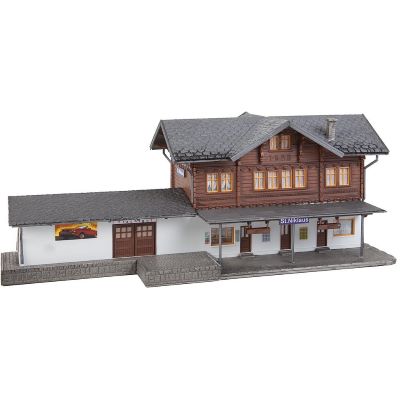
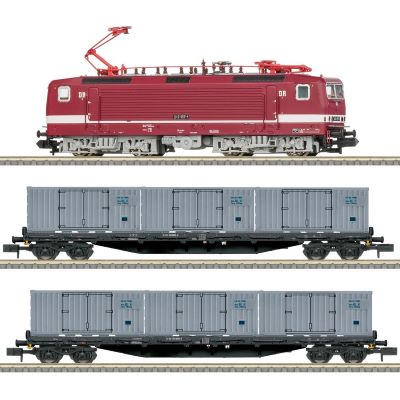
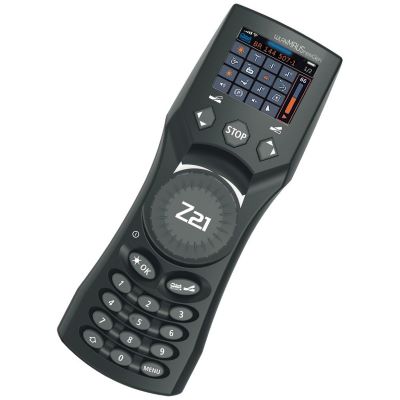
Discover digital starter sets, controls, railway buildings, trees, scenic materials and figures. First choose a product category, then narrow down the loaded products by gauge or search term. You can load more results in stages, so the selection extends beyond the first shop page.
The product images show the respective models. For technical specifications, refer to the individual product page. With a digital starter set, for example, the command station, track connection and expansion options need to work together. For a building scene, establish the footprint, scale and intended location first. Before buying, also consider which parts you already own and could reuse.
Find current products in the linked categories.
No matches among the products loaded so far. Adjust the filters or load more products.
Browse manufacturers of rolling stock, digital equipment, scenery and buildings. The linked ranges offer products for your own modelling projects. These links do not indicate that the manufacturers will attend any particular event.
A short platform with a waiting shelter, path and a few figures is a good way to try out ideas from an exhibition. The scene does not need a large layout and can become part of a module later.
Try the arrangement before adding scenery
First position the buildings, track and platform loosely. Check clearances for passing rolling stock and reserve an accessible space for wiring and lighting. Then add the terrain and vegetation.
The final detail tells the story
A passenger at the entrance, a piece of luggage and a well-worn path are often enough. Assess the effect from your future viewers’ eye level. You will find useful instructions in the guides to
station scenes
and
building lighting.
Frequently asked questions
Answers about dates and visiting
Does this include every model railway exhibition in Germany?
No. This overview contains 108 events and series of dates from the underlying event list, as of 10 October 2026. It includes published dates through to 2027, but does not claim to be complete. Standalone swapmeets and permanent display layouts are not included. You can find further destinations among the
Model railway attractions.
What does a “series of dates” mean for an event?
A series groups together several opening dates for the same event. The exhibition may be closed between the first and last dates. Only the explicitly listed days count as opening dates. For these series, the month filters also use the individual dates rather than an overall date range.
How reliable are the dates for 2027?
The list contains announcements published by the stated update date. Later changes, cancellations and new events are not added automatically. Before a long journey, check the linked source and the organiser’s current visitor information. A note on the card identifies any date discrepancies already known.
Which exhibitions are suitable for beginners?
Events with several different layout concepts and opportunities to talk to the builders are a good choice. Consider size, operation and the work involved in building a layout, rather than focusing only on train length. To help you prepare,
Model railways for beginners
and the
gauge comparison
explain the key decisions.
Can I buy models at every exhibition?
No. Some events display layouts only, while others combine an exhibition with trade stands, a swapmeet or manufacturer stands. The organiser’s programme will explain what to expect. When choosing products, check the gauge, power system and product number regardless of the event format.
How do I find events near me?
Select a German state and enter a town in the search box. The search also covers event names and addresses. It does not calculate distances. Combine the location filter with a month, then open the event card for the venue and source link.
Which guide is most useful after a visit?
That depends on what caught your attention. For a new layout design, start with
Planning a model railway. For convincing miniature worlds, the guide to
scenery modelling
will help you take the next step. For questions about sound, lighting and independently controlled locomotives, the
digital overview
is a useful starting point.
Last seen
Product Search
searching ...
Es ist ein Fehler aufgetreten
loading ...
Cookie settings
Cookies are small piece of data sent from a website and stored on the user's computer by the user's web browser while the user is browsing. Your browser stores each message in a small file, called cookie. When you request another page from the server, your browser sends the cookie back to the server. Cookies were designed to be a reliable mechanism for websites to remember information or to record the user's browsing activity.
Necessary
More information
Technically required cookies ensure that you can view our website and navigate in our offers. Basic functions such as filling the shopping cart, login or the display and selection of products on our websites are not possible without them.
Preferences
More information
Cookies are used here to make your visit to our website as convenient as possible. Already confirmed information or personal settings will be saved during your next visit. Cookies also enable functions such as the display of recommendations or the creation and administration of wish lists. This applies to both registered users and guests without an account.
Marketing
More information
We store information about your user behavior on our website and use this data for individual offers and campaigns in the context of direct marketing and for more comfort when using our website. These cookies are used, for example, to present you with special offers on the website itself or in mailings. Furthermore, we want to make surfing on our website as attractive as possible for you. The responsibility and control for data processing lies with us.
Statistics
More information
We use cookies for statistical purposes in order to better understand your user behavior and to support you in your navigation on our offer pages. This also enables us to record your navigation on our offer pages and to use this information for the design of our services to meet your needs.


 Discover Märklin →
 Discover Roco →
 Discover NOCH →
 Discover FALLER →